Artwork
Invocation to Love
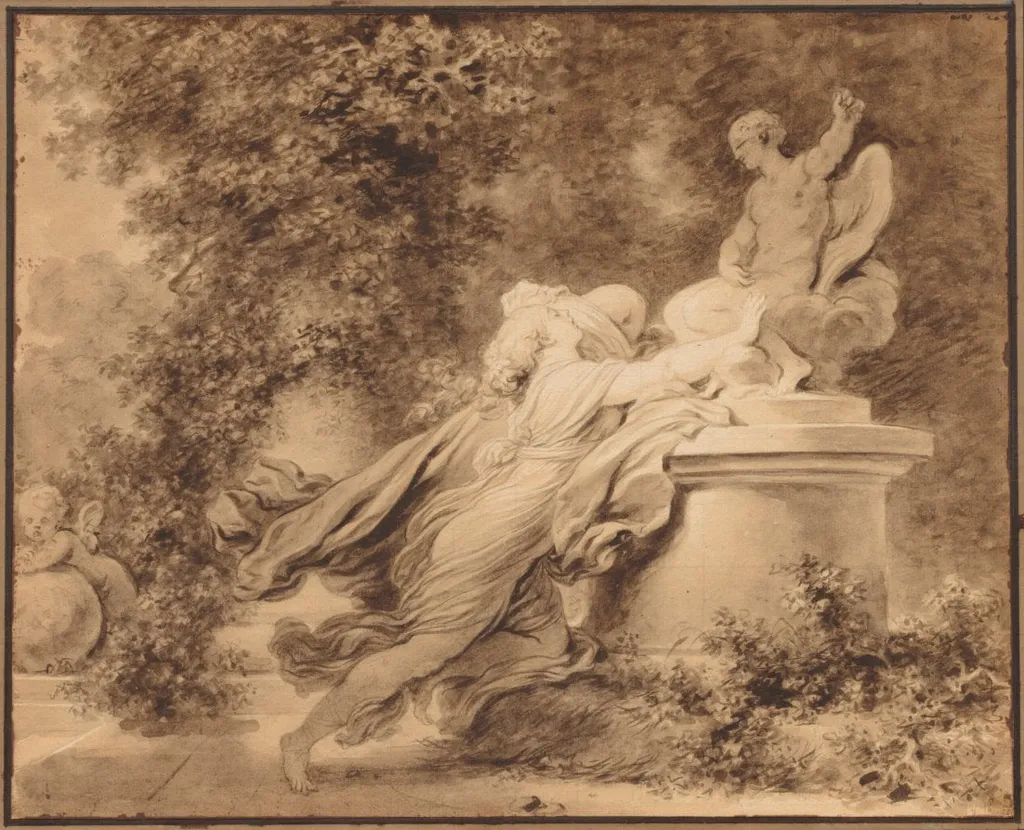
Invocation to Love is a drawing by the Romanticist artist Jean Honoré Fragonard. It dates from 1781 and is held in the collection of the Cleveland Museum of Art.
About this work
Overview
The scene is one of several iterations the artist explored across media, reflecting his sustained interest in themes of romantic longing and ambiguity.
This drawing by Fragonard captures a moment of quiet desperation in a garden setting, where a woman kneels before a statue of Eros, seeking divine intervention in matters of the heart. The scene is one of several iterations the artist explored across media, reflecting his sustained interest in themes of romantic longing and ambiguity. The garden, a recurring motif in 18th-century French art, serves as both a symbolic and physical space for emotional inquiry.
Subject & Meaning
The woman’s plea to the blindfolded Eros suggests vulnerability and uncertainty in love. The god’s obscured vision implies indifference or fate’s caprice, while a nearby Cupid, disengaged and resting on a globe, reinforces emotional detachment. Together, these figures subvert the traditional idealization of love, presenting it as elusive rather than benevolent. The composition invites contemplation on the fragility of desire and the silence of divine response.
Technique & Style
Fragonard employs fluid, delicate lines and subtle tonal shifts to render the figures and foliage with a sense of immediacy. His light, sketchlike brushwork conveys both softness and precision, enhancing the ethereal quality of the scene. The contrast between the woman’s dynamic gesture and the statuesque stillness of Eros and the Cupid creates visual tension, underscoring the emotional imbalance at the heart of the narrative.
History & Provenance
The drawing belongs to a series of related works by Fragonard, including two oil paintings—one in the Louvre and another in a private New York collection—and a second drawing held by Princeton University Art Museum. These variations suggest the subject held personal or thematic significance for the artist. While the exact date of this drawing remains uncertain, it aligns chronologically with his most active period of garden-themed compositions in the 1770s and 1780s.
Context
Fragonard’s treatment of the Garden of Love draws from longstanding European traditions that linked pastoral settings with amorous themes, particularly those rooted in classical mythology. In 18th-century France, such imagery resonated within aristocratic circles that idealized romantic escapism. Yet Fragonard’s version diverges from sentimentality, introducing doubt and detachment—reflecting a broader cultural shift toward psychological nuance in depictions of emotion.
Legacy
The drawing exemplifies Fragonard’s ability to infuse Rococo elegance with subtle emotional complexity. While his more overtly playful scenes dominate popular memory, works like this reveal a quieter, more introspective strand in his oeuvre. Its recurrence across media indicates its importance as a personal motif, influencing later interpretations of love’s unpredictability in 19th-century art and literature.
Artist & collection

Artist
Jean-Honoré Fragonard was born on 5 April 1732 in Grasse, the son of a glover, and moved with his family to Paris in 1738.

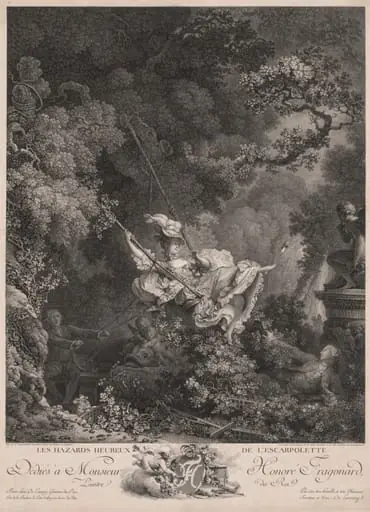 The Swing
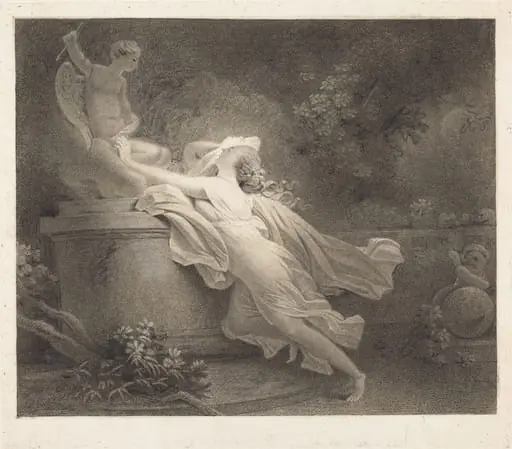 L'invocation a l'amour
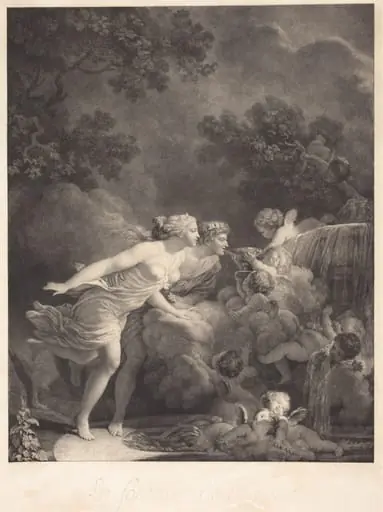 La Fontaine d'Amour (The Fountain of Love)
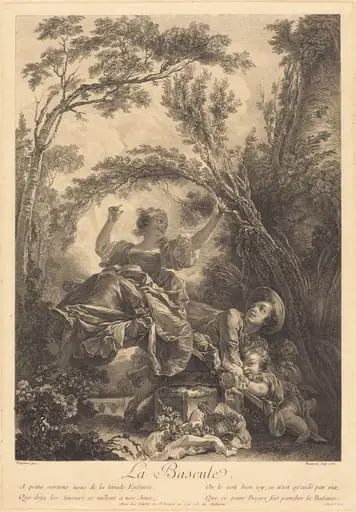 La Bascule
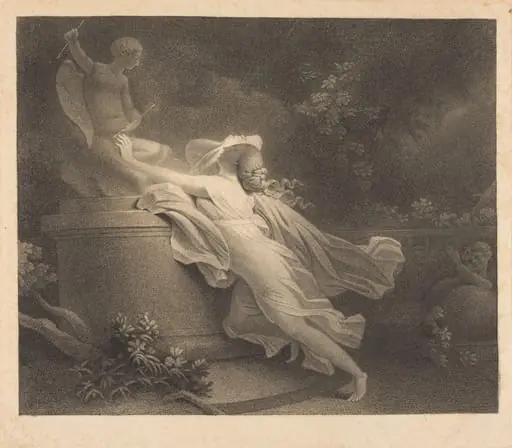 L'invocation a l'amour
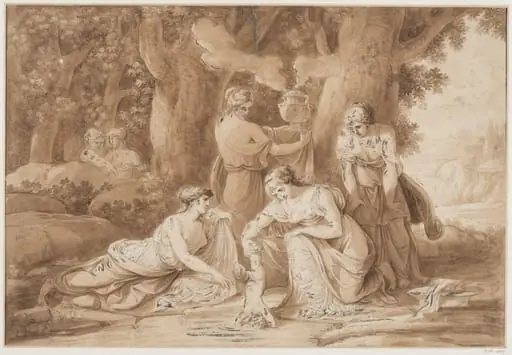 Thetis dipping Achilles
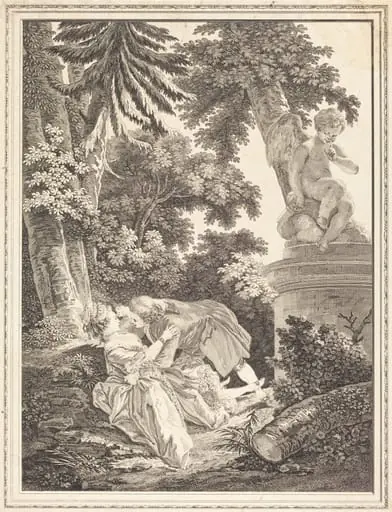 La nuit
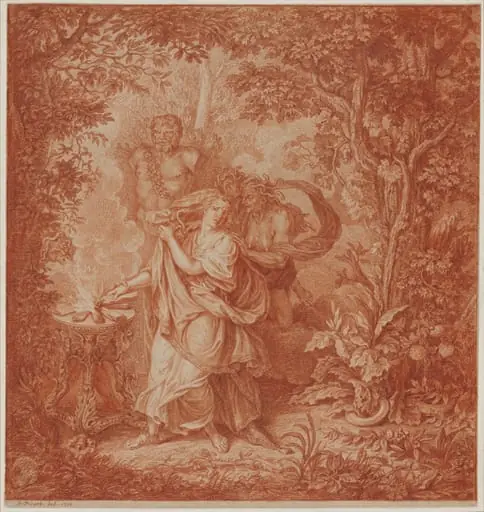 Althaea Putting the Fatal Log on the Fire
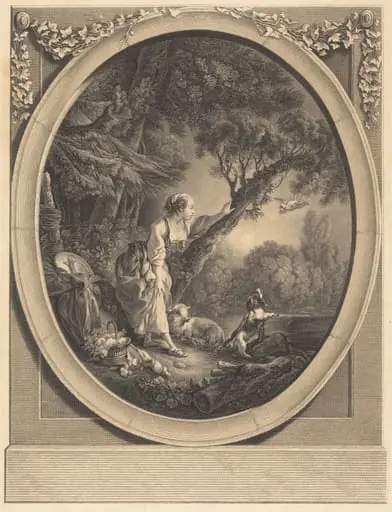 L'Arrivée du Courrier
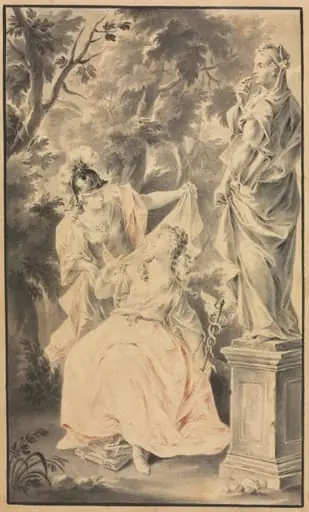 Allegorical Scene: Couple before a Statue
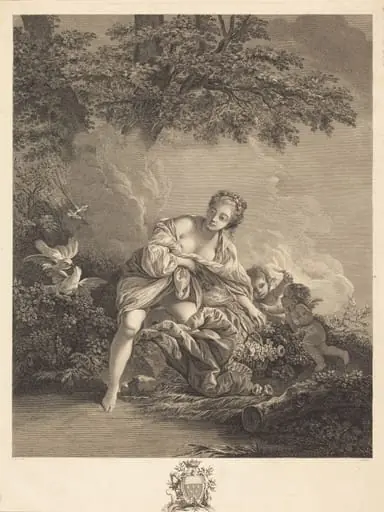 Venus et les amours
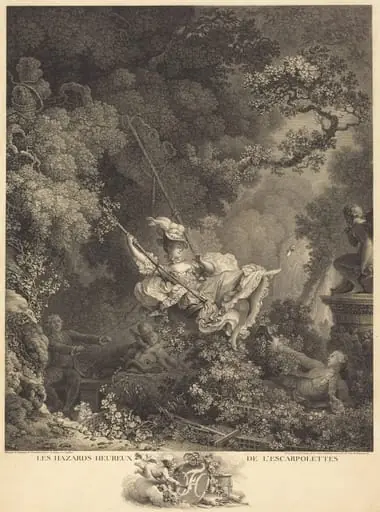 Les Hazards heureux de l'Escarpolettes (The Swing)