Artwork
The Swing
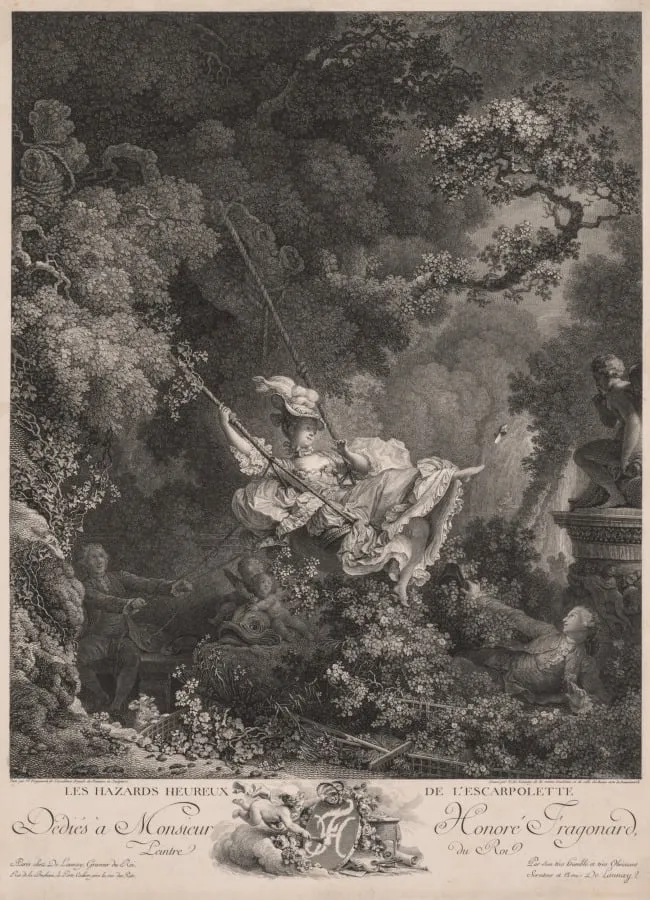
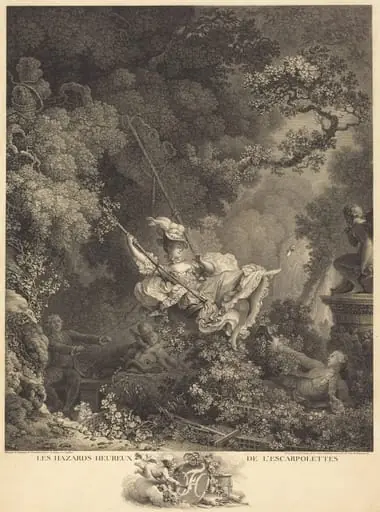
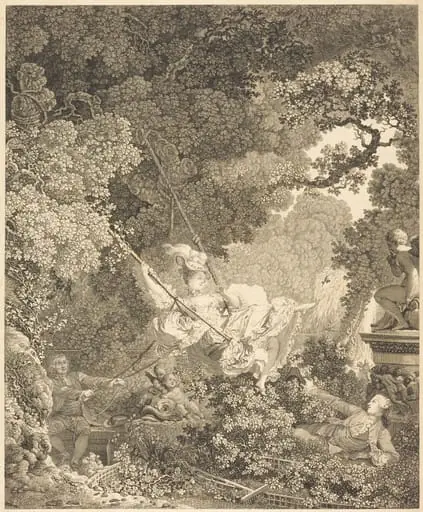
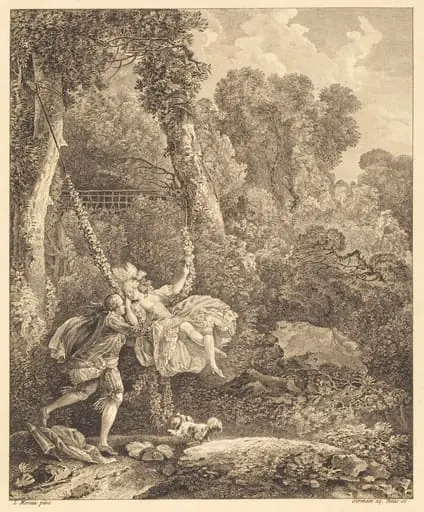
The Swing is a print by the Romanticist artist Nicolas Delaunay. It dates from 1782 and is held in the collection of the Cleveland Museum of Art.
About this work
You see a woman on a swing, flying through the air, surrounded by people and statues.
She's losing her shoe, and a man in the bushes is getting a glimpse under her skirt.
This painting is interesting because it shows the playful and flirtatious side of life in 18th century France.
Check out the work of Jean-Honoré Fragonard, the artist who created the original painting this print is based on.
Overview
This print is a graphic reinterpretation of Jean-Honoré Fragonard’s painted scene of a woman on a swing, executed by Charles-François Delaunay.
This print is a graphic reinterpretation of Jean-Honoré Fragonard’s painted scene of a woman on a swing, executed by Charles-François Delaunay. It captures the lighthearted, intimate atmosphere of the original while adapting its fluid composition to the constraints of printmaking. The work reflects the Rococo era’s fascination with leisure, secrecy, and subtle eroticism, rendered through intricate tonal techniques.
Subject & Meaning
The scene depicts a woman mid-swing, her shoe airborne as a hidden man observes beneath her skirts. The gesture, paired with the cupid statue’s hushing hand and playful nude figures at its base, alludes to clandestine romance. In 18th-century French visual culture, the lost shoe was a recognized symbol of fleeting intimacy, reinforcing the scene’s coded flirtation without overt narration.
Technique & Style
Delaunay employed a nuanced array of hatching, cross-hatching, and stippling to emulate the painterly effects of Fragonard’s brushwork. These graphic methods convey movement, soft light, and spatial depth despite the medium’s limitations. The precision of line and tone preserves the original’s dynamism, transforming oil paint’s fluidity into the controlled precision of etching and engraving.
History & Provenance
The print was made after Fragonard’s 1767 painting, likely during the late 18th century as part of a broader trend to disseminate popular images through prints. Delaunay, known for reproductive engravings, was commissioned to translate elite paintings for wider audiences. This version helped circulate the image beyond aristocratic salons into middle-class collections.
Context
Created during the height of Rococo culture, the scene reflects aristocratic leisure and the era’s tolerance for playful, ambiguous eroticism. Such imagery thrived in private settings, where wit and suggestion replaced overt display. The print’s popularity suggests that even as political tensions rose in France, visual culture still celebrated private indulgence and coded romance.
Legacy
Delaunay’s print preserved Fragonard’s composition for later generations, ensuring its survival beyond the original canvas. While the painting remained in private hands, the print allowed broader access and influenced later interpretations of Rococo themes in graphic arts. It stands as a testament to the role of reproductive prints in shaping artistic reception across social classes.
Artist & collection

 Invocation to Love
 Les Hazards heureux de l'Escarpolettes (The Swing)
 Les Hazards heureux de l'Escarpolettes (The Swing)
 La Bascule
 La coquette fixée
 Colin Maillard
 On y court plus d'un danger
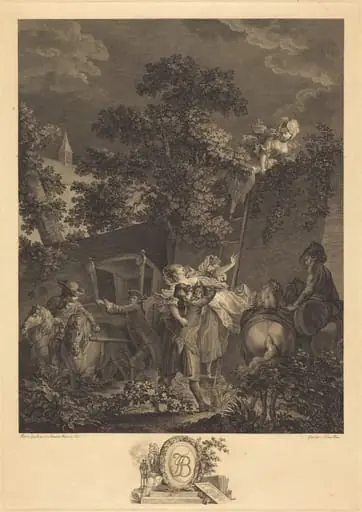 L'enlevement nocturne
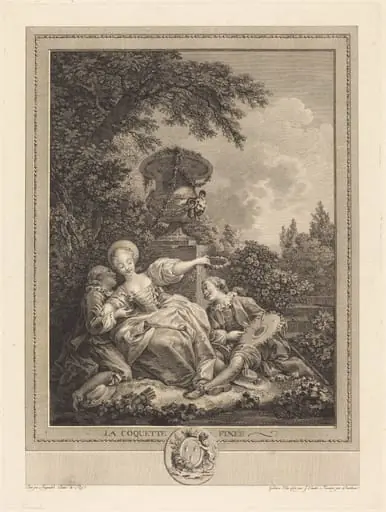 La coquette fixee
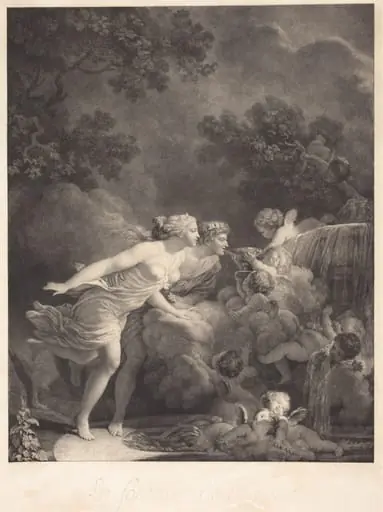 La Fontaine d'Amour (The Fountain of Love)
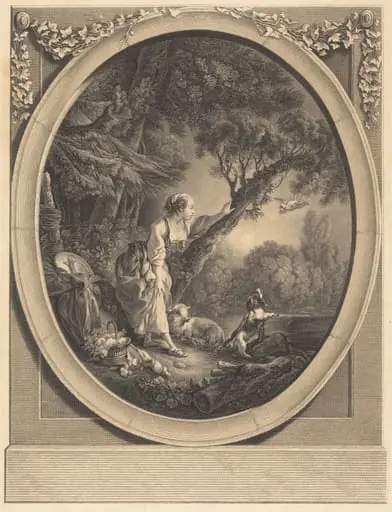 L'Arrivée du Courrier
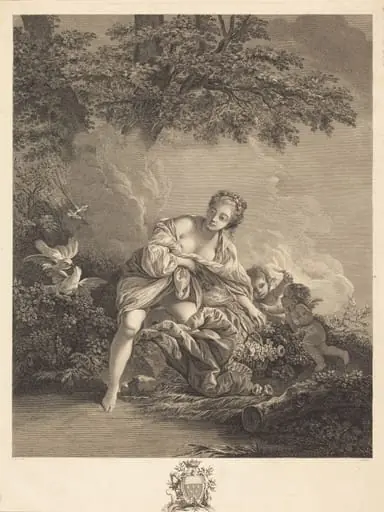 Venus et les amours