Artwork
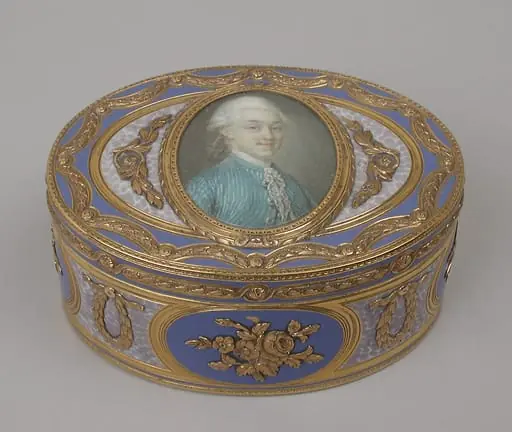
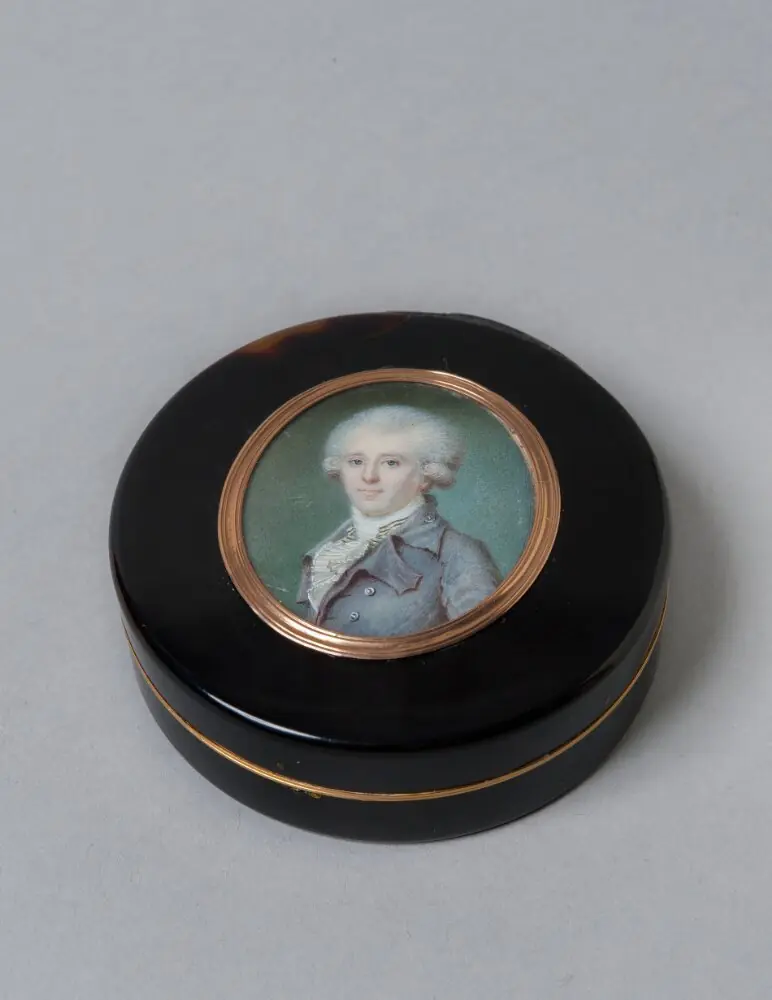
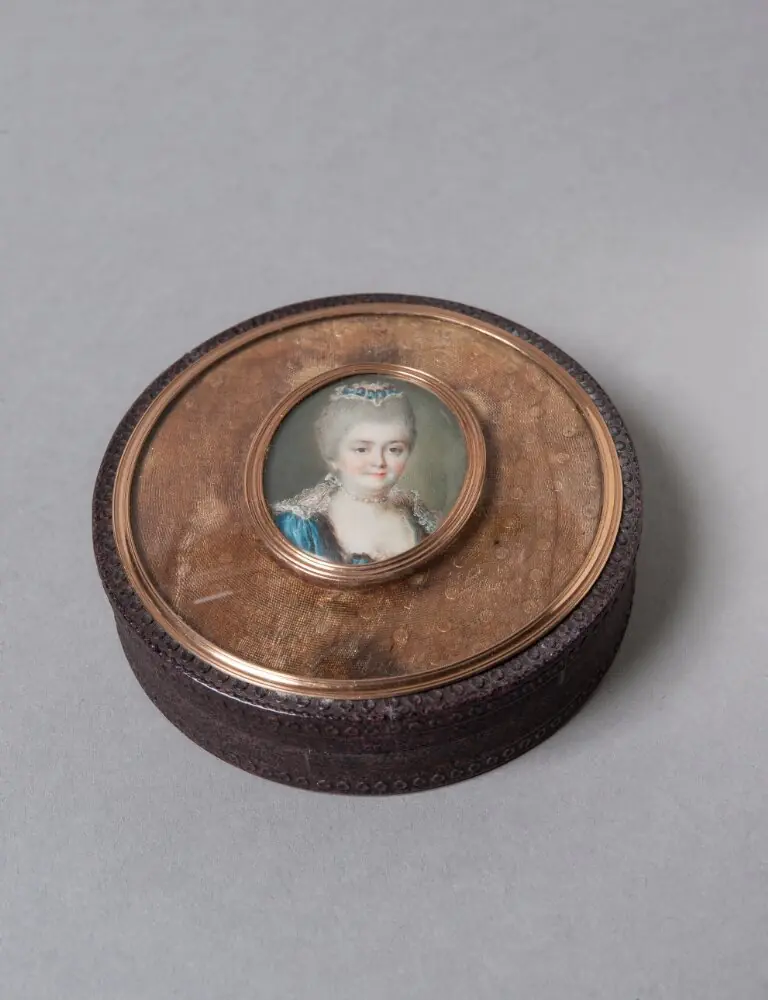
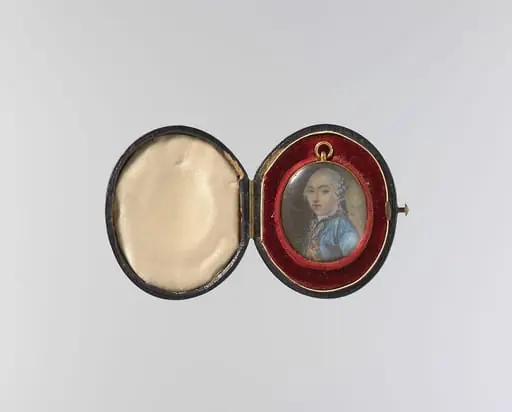
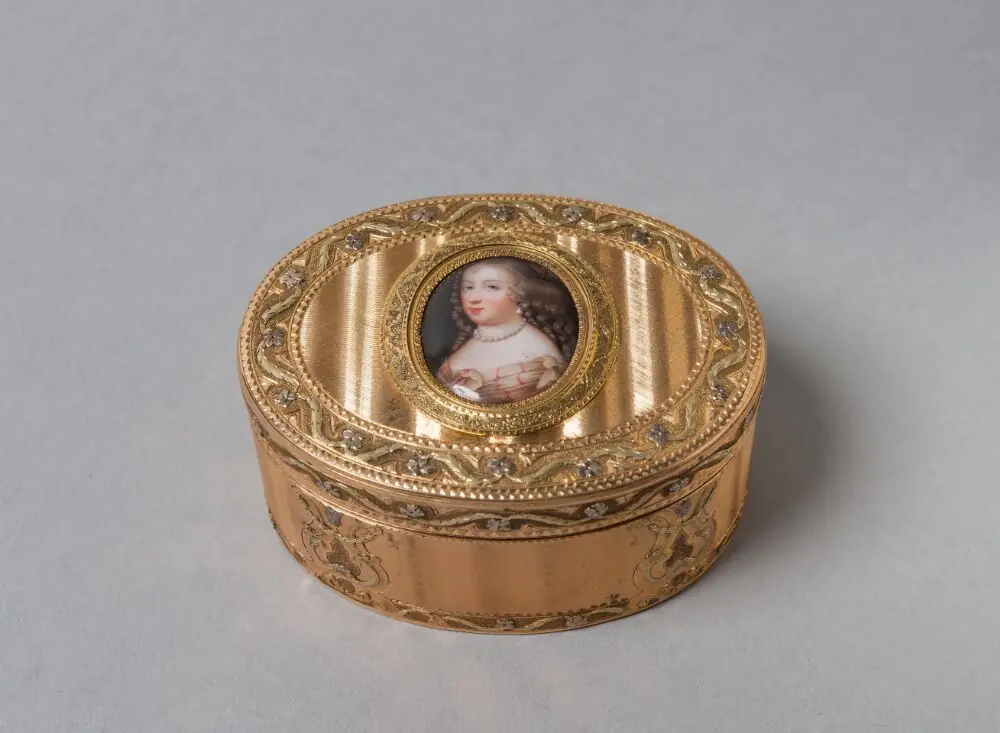
Snuffbox with portrait of a man, probably Prinz Karl von Sachsen (1733–1796)
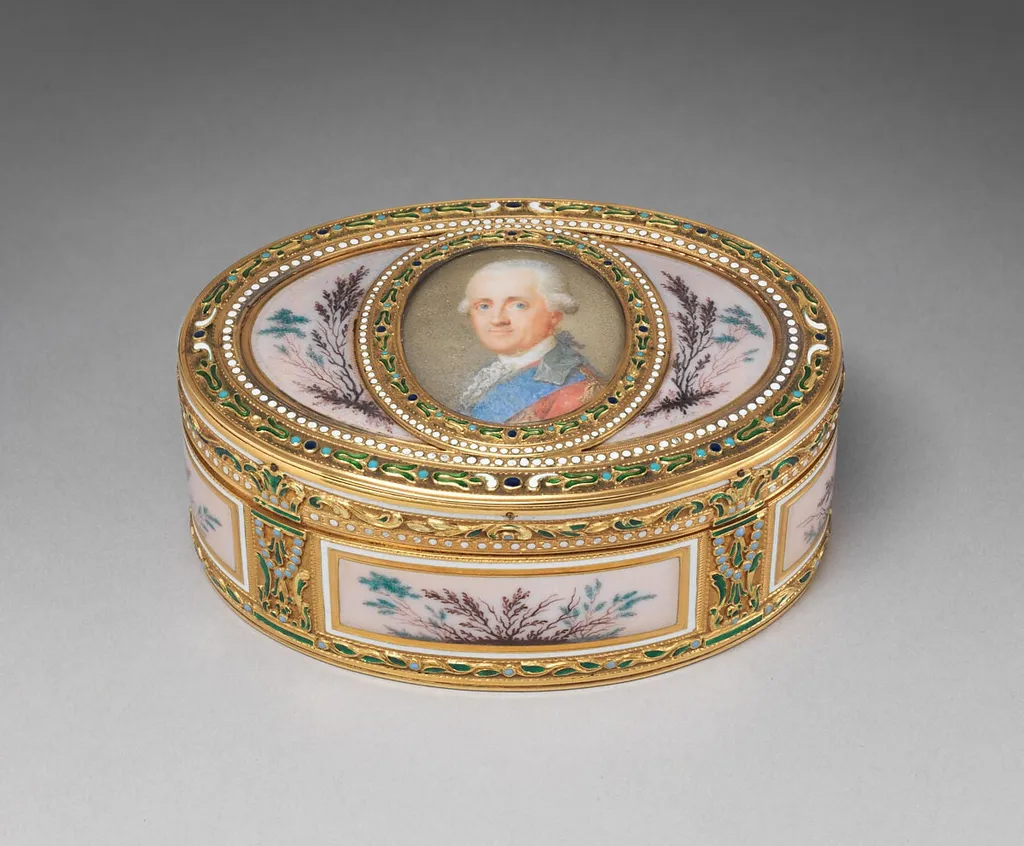
Snuffbox with portrait of a man, probably Prinz Karl von Sachsen (1733–1796) is a glass portrait miniature by the Romanticist artist Jean-Joseph Barrière|Anton Graff. It dates from 1778 and is held in the collection of the Metropolitan Museum of Art.
About this work
Overview
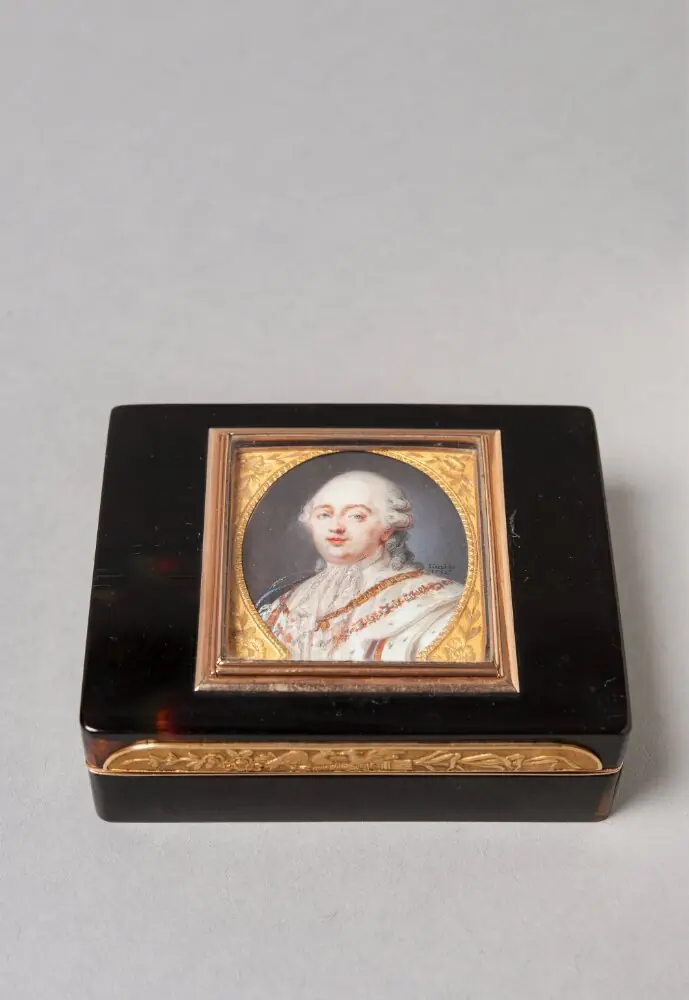
This 1778 gold snuffbox features an enamel portrait of a man likely identified as Prinz Karl von Sachsen (1733–1796), attributed to the work of Jean-Joseph Barrière.
Subject & Meaning
The portrait depicts an elderly man with white hair, dressed in a blue jacket with red sleeves and a white shirt, conveying an air of elegance and refinement. His probable identification as Prinz Karl von Sachsen suggests the piece may have been a commemorative or gift item.
Technique & Style
The portrait is set within a circular, ornate gold frame, adorned with small white dots, green leaves, and a floral design, against a white background bordered in gold. The use of enamel and intricate goldwork highlights Barrière's craftsmanship.
History & Provenance
Created in 1778 by Jean-Joseph Barrière, the snuffbox's ownership history prior to its current location is not detailed here. Its creation during the late 18th century aligns with the prevailing tastes of European nobility for ornate, portable luxury items.
Context
While the piece's style aligns more closely with the ornate tendencies of the Rococo period, the suggestion to explore Romanticism in the original description may indicate a broader artistic contextualization, though the work itself does not strongly embody Romantic ideals.
Legacy
The snuffbox's legacy is tied to its craftsmanship and historical associations. As a portrait of Prinz Karl von Sachsen, it serves as a historical artifact, though its impact on broader artistic movements is not prominently defined.
Artist & collection
Artist
Jean-Joseph Barrière|Anton Graff
Jean-Joseph Barrière carved luxurious snuffboxes in late 18th-century Europe, tiny canvases in gold and enamel where each lid told a portrait.