Artwork
Still Life with Herrings
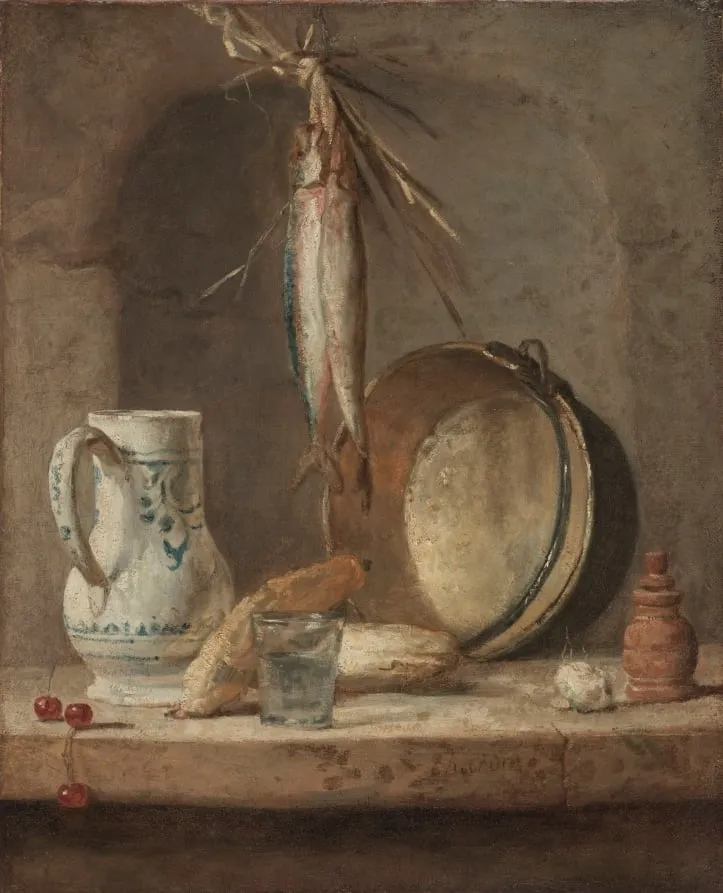
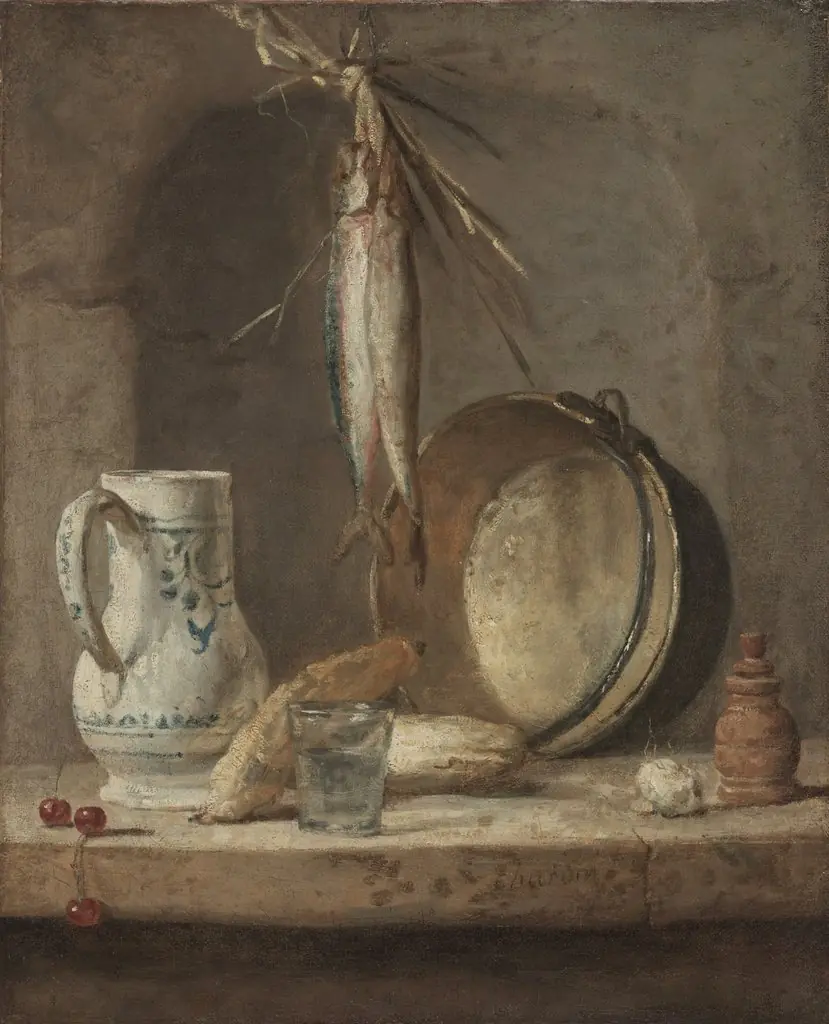
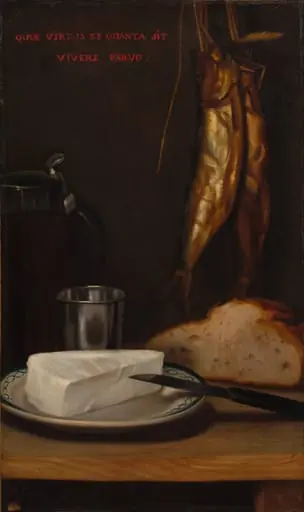
Still Life with Herrings is an unspecified painting by the Baroque artist Jean-Baptiste-Siméon Chardin. It dates from 1735 and is held in the collection of the Cleveland Museum of Art.
About this work
Overview
Still Life with Herrings, a painting by Jean-Siméon Chardin, presents a humble pantry shelf scene, featuring everyday items such as herring, a knife, lemon, and bread on a wooden shelf. Through meticulous technique, Chardin transforms ordinary subjects into a vibrant exploration of texture, light, and atmosphere.
Subject & Meaning
The painting focuses on the mundane, yet Chardin's intent was not merely representation. By capturing the intricate details and lifelike qualities of the subjects—a glistening herring, a curled lemon peel with a tiny shadow—he imbues everyday objects with a sense of vitality, inviting contemplation on the observed world.
Technique & Style
Chardin employed a dual approach, combining delicate glazes for subtle, reflective surfaces (like the herring's sheen) with roughly dragged thick paint (impasto) to achieve textured elements (such as the bread's softness and the wood's dullness), all while anticipating close inspection by the viewer.
History & Provenance
Information on the specific history and ownership timeline of 'Still Life with Herrings' is not provided in the available details.
Context
Created with awareness of contemporary advancements in optics and physics, the work reflects Chardin's exploration of light, shadow, and color, situating it within the broader artistic and scientific inquiries of his time.
Legacy
While specific legacy details of 'Still Life with Herrings' are not outlined, Chardin's overall contribution to still life painting, particularly in capturing lifelike textures and atmospheres, has been notably influential in the development of European art.
Artist & collection

Artist
Jean Siméon Chardin (French: ; November 2, 1699 – December 6, 1779) was an 18th-century French painter.