Artwork
După bal
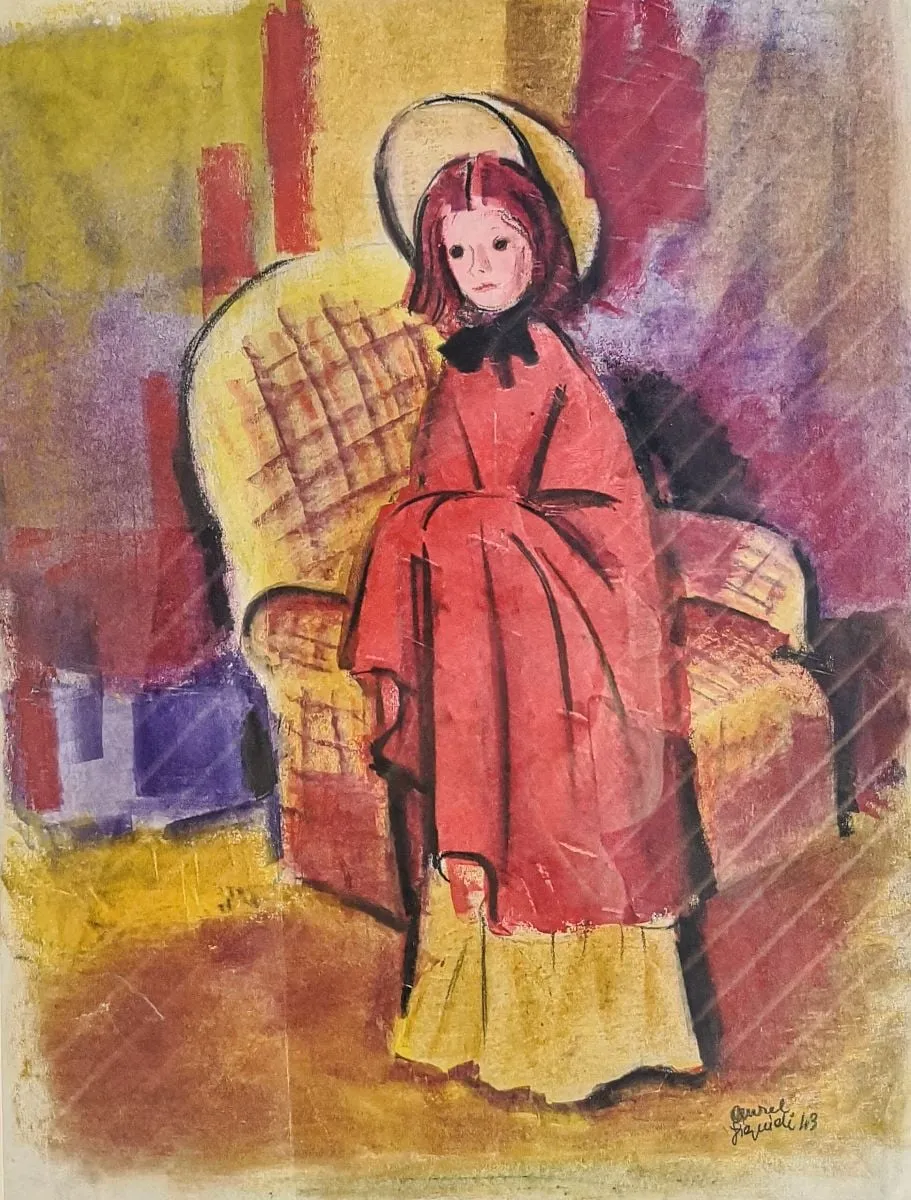
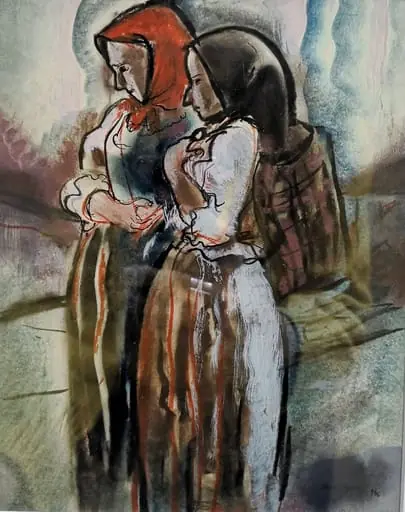
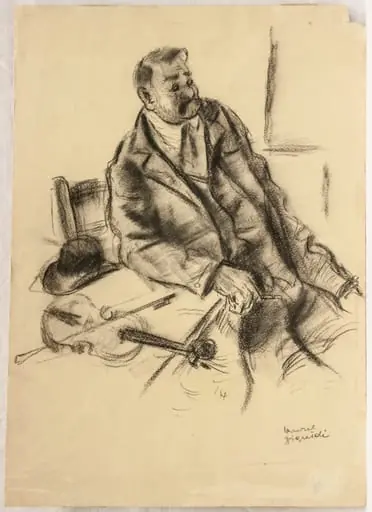
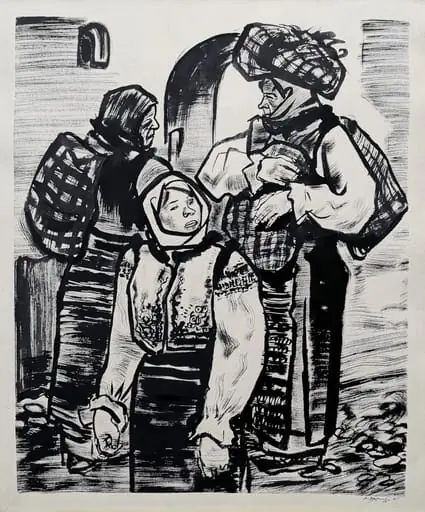
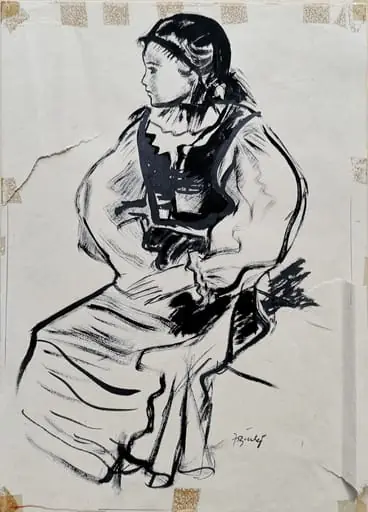
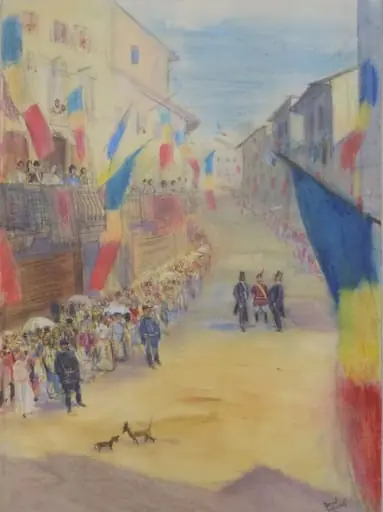
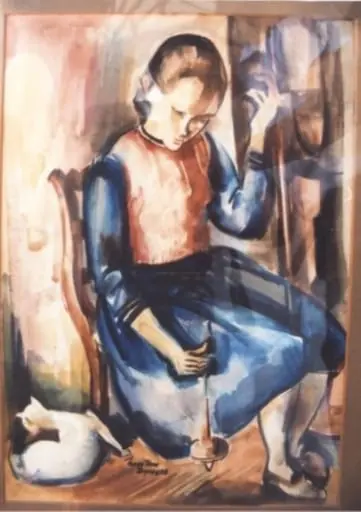
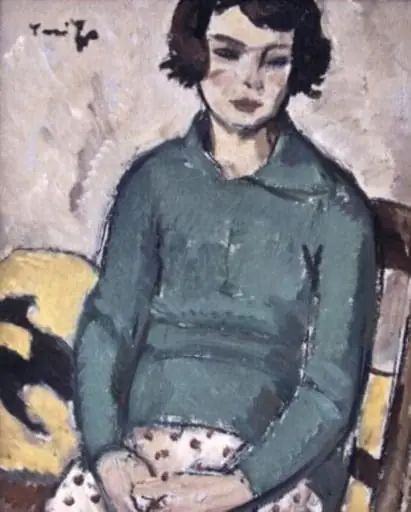
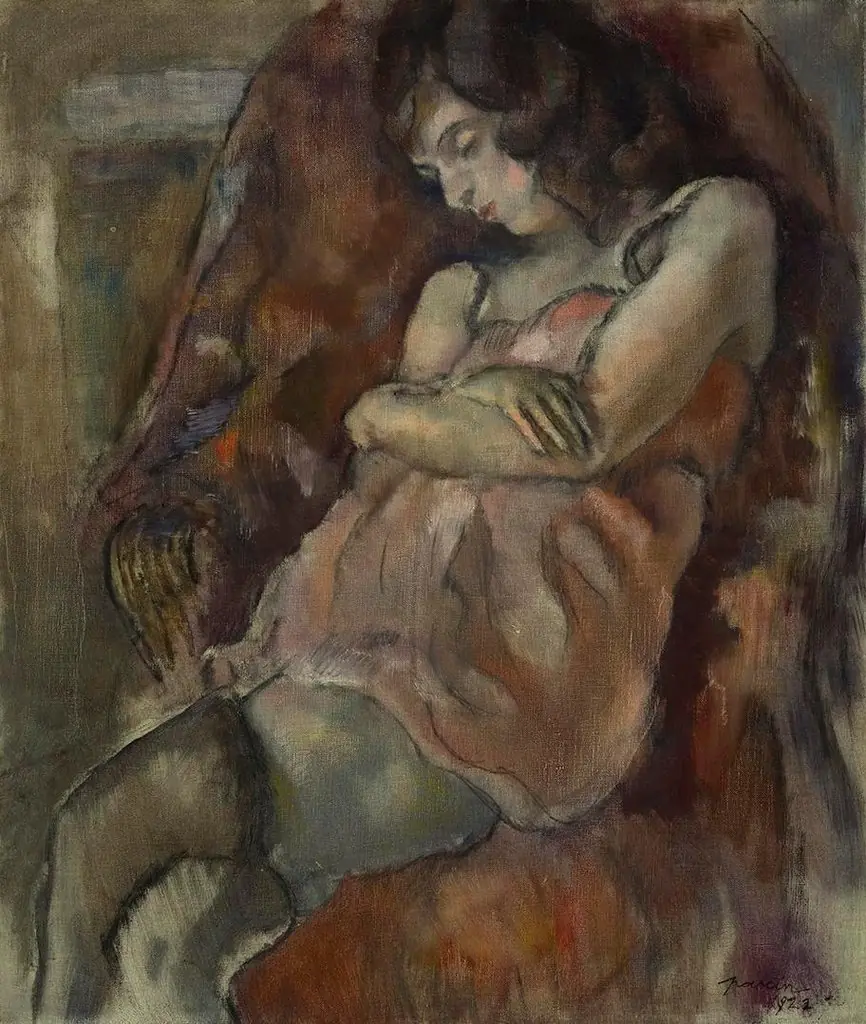
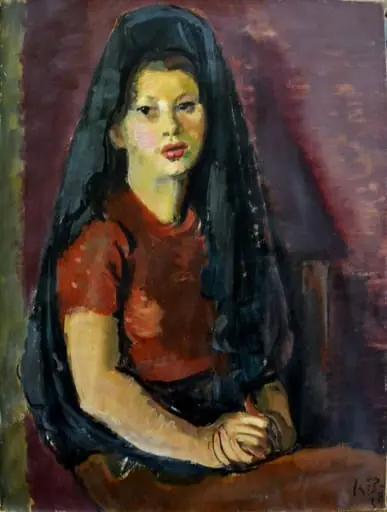
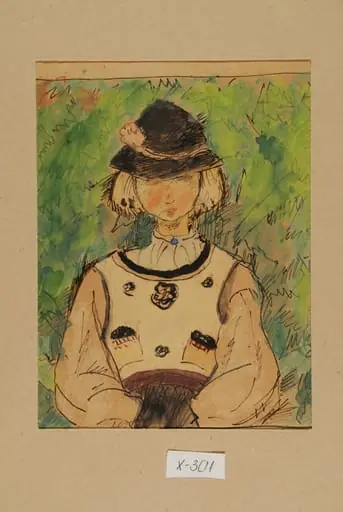
După bal is a drawing by Aurel Jiquidi. It dates from 1943 and is held in the collection of the Visual Art Museum Galați.
About this work
Overview
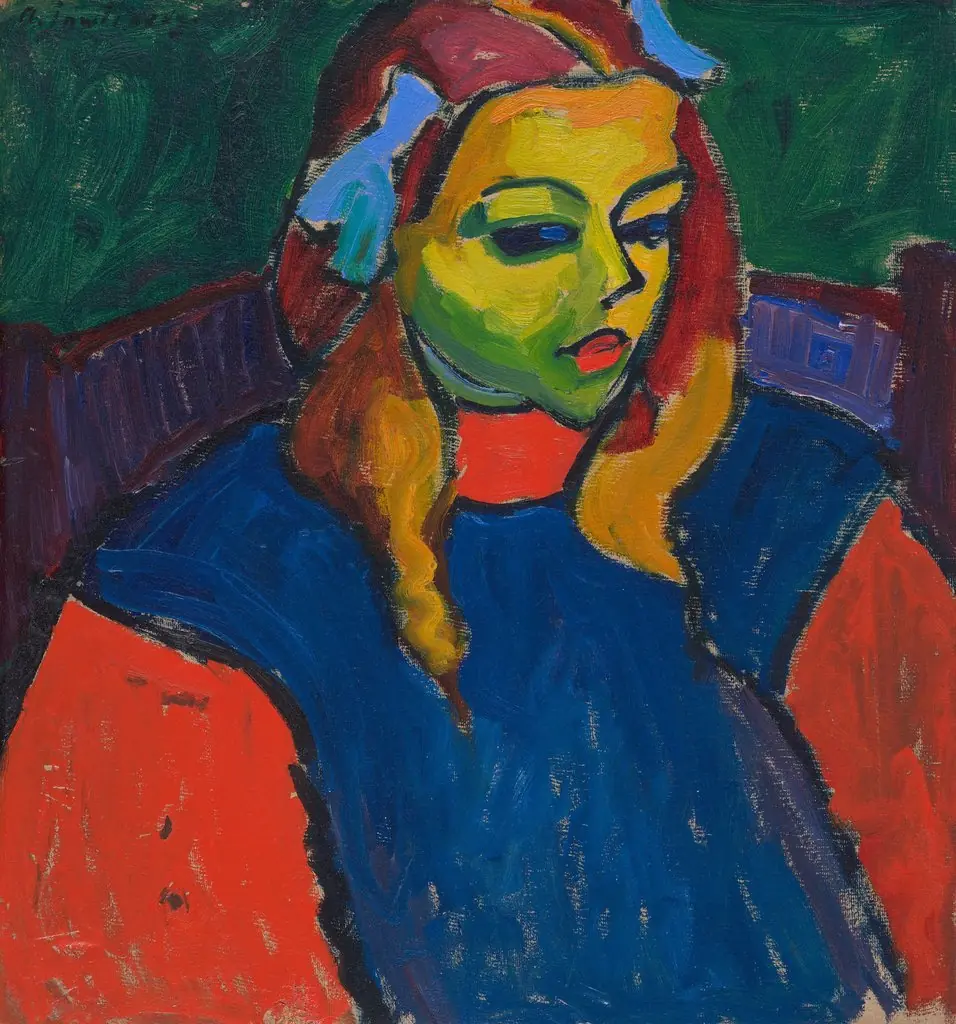
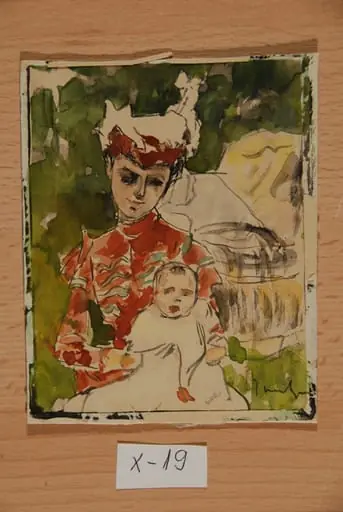
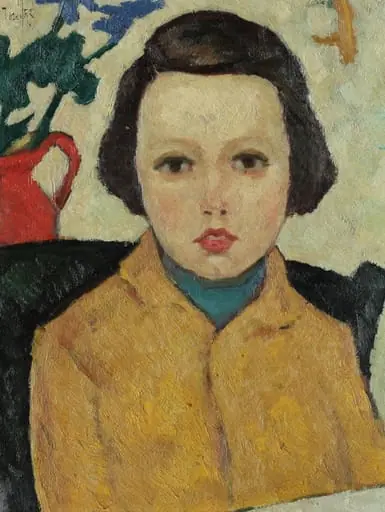
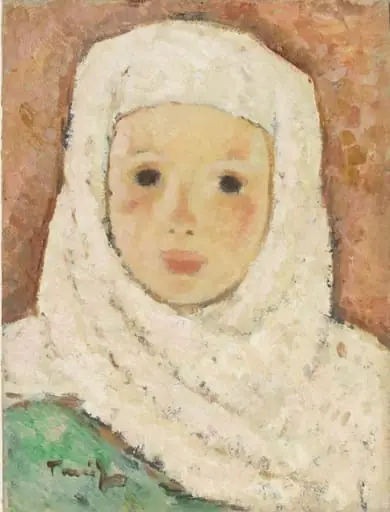
După bal is a 1943 drawing by Romanian artist Aurel Jiquidi, currently held in the collection of the Museum of Ethnography. Executed with expressive, unrefined strokes, the work captures a solitary female figure in traditional dress. Its raw execution and limited palette suggest a spontaneous, almost urgent approach, distinguishing it from polished academic styles of the period.
Subject & Meaning
The clothing and setting imply rural life from an earlier era, possibly referencing customs preserved in memory rather than contemporary reality.
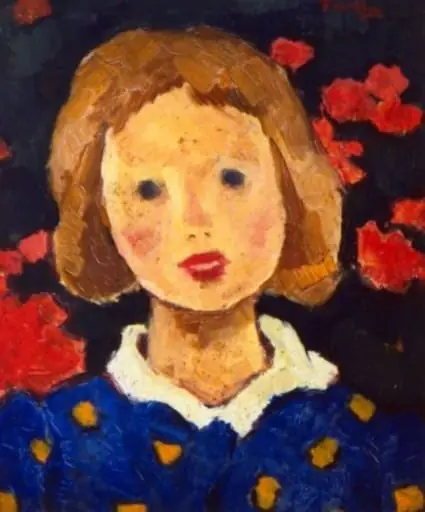
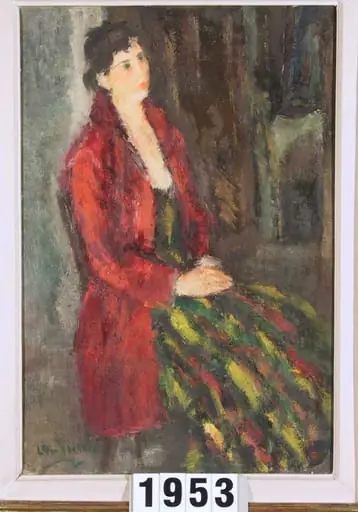
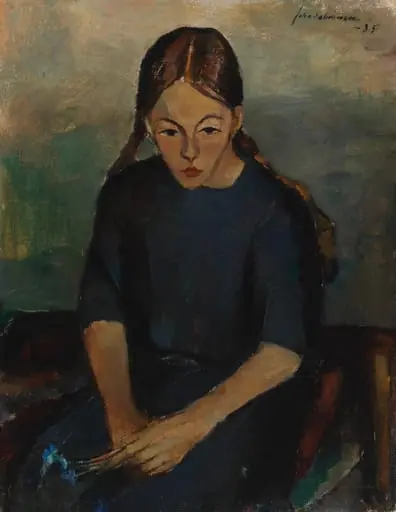
The figure is a woman in a red dress and yellow headscarf, standing beside a woven-chair, holding a basket. Her posture is still, her expression neutral, evoking quiet domesticity. The clothing and setting imply rural life from an earlier era, possibly referencing customs preserved in memory rather than contemporary reality. The scene carries no overt narrative, instead suggesting a contemplative pause after labor.
Technique & Style
Jiquidi employs thick, uneven brushwork and clashing hues—reds, yellows, purples—to construct the background, creating a sense of agitation around the still figure. The woman’s form is rendered with simplified contours, contrasting with the chaotic texture behind her. The lack of fine detail and the visible, hurried strokes suggest a focus on emotional resonance over realism, aligning with expressive folk-inspired modernism.
History & Provenance
Created in 1943 during a period of cultural introspection in Romania, the work entered the Museum of Ethnography’s collection shortly after its completion. Its preservation there reflects institutional interest in documenting vernacular life and regional artistic responses to modernity. No record of prior ownership or exhibition exists beyond its institutional acquisition.
Context
In early 1940s Romania, artists increasingly turned to rural subjects as national identity was redefined amid political upheaval. Jiquidi’s work aligns with this trend, using folk motifs not as idealized nostalgia but as raw, unembellished presence. The painting’s roughness may reflect both material constraints and a deliberate rejection of academic polish in favor of authenticity.
Legacy
După bal remains a quiet example of mid-century Romanian art that bridges ethnographic documentation and modernist expression. It has not been widely reproduced or studied, but its presence in the Museum of Ethnography underscores its role as a record of visual culture during a time of transition. Its unpolished aesthetic continues to invite consideration of how tradition is rendered in art.
Artist & collection
Artist