Artwork
În căutare de angajament
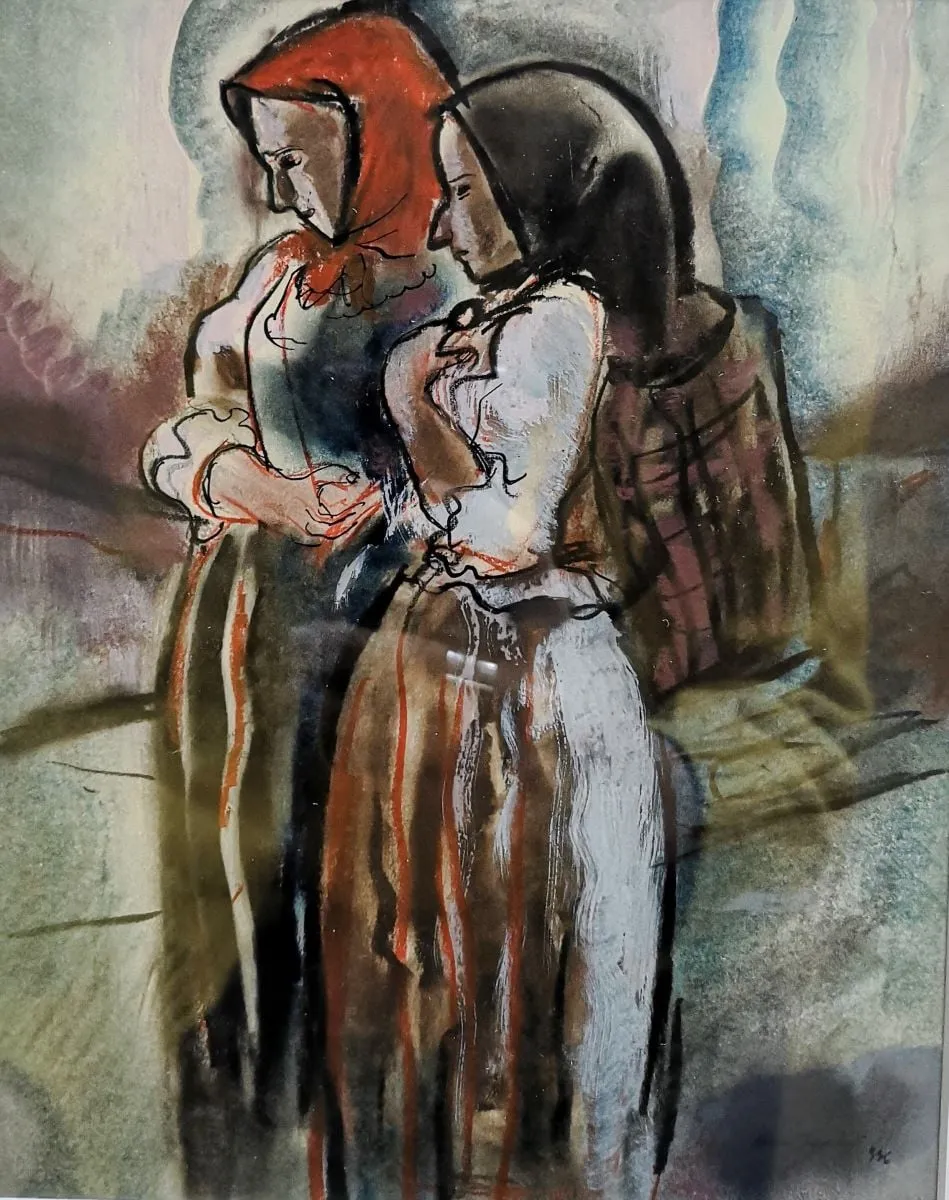
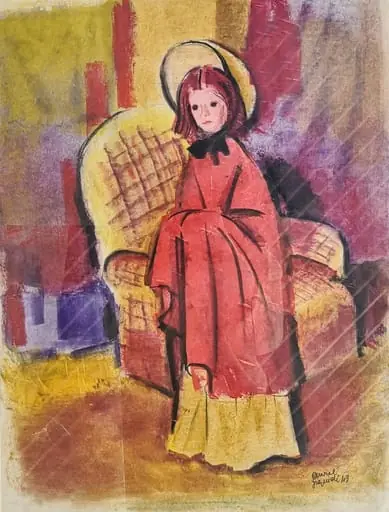
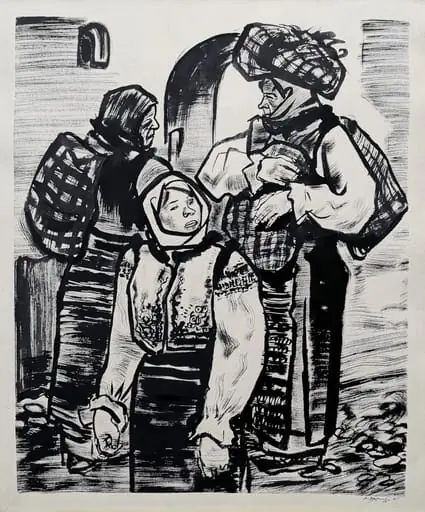
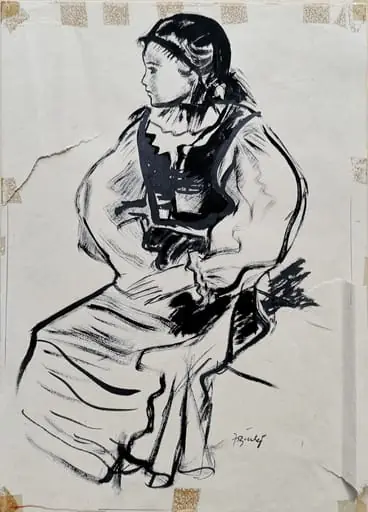
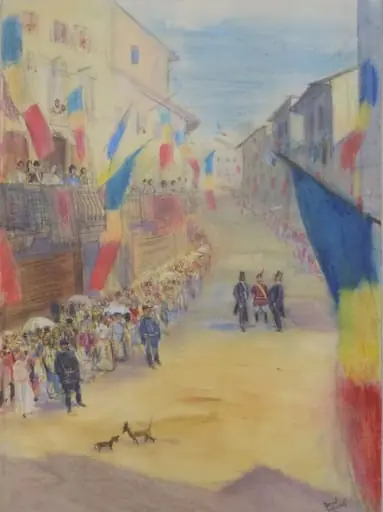
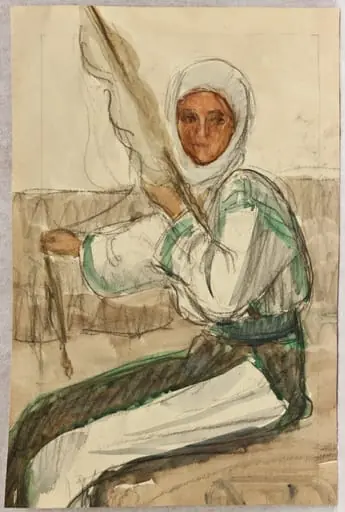
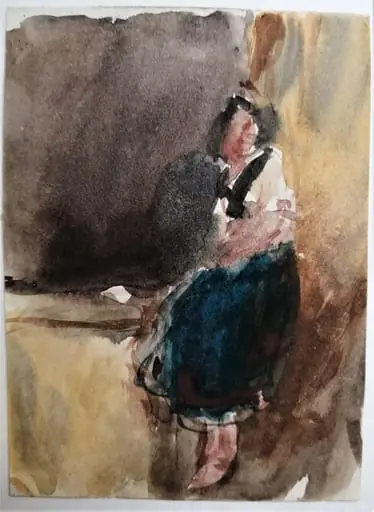
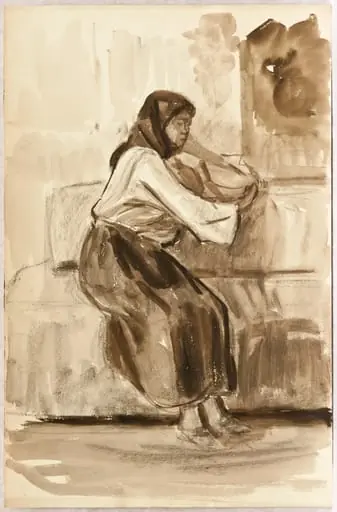
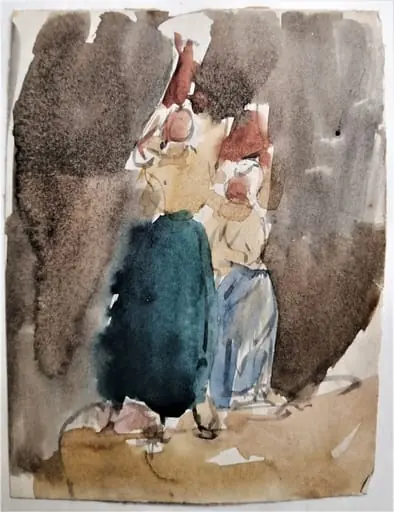
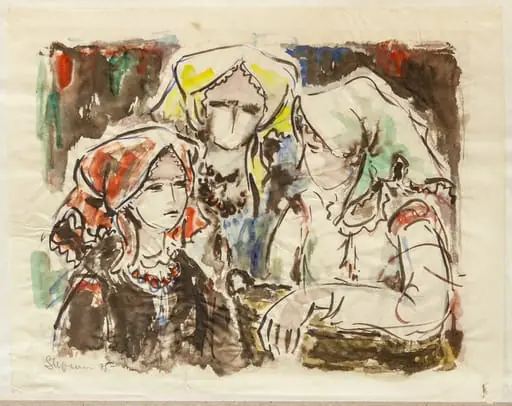
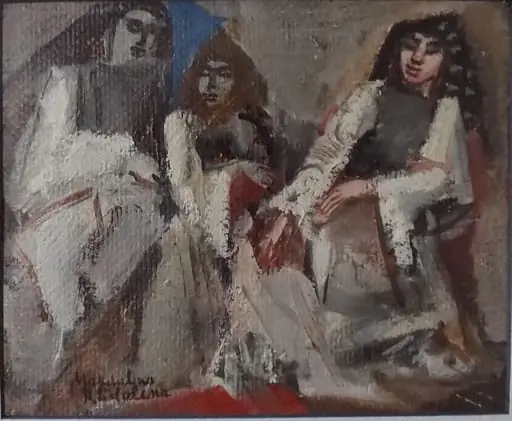
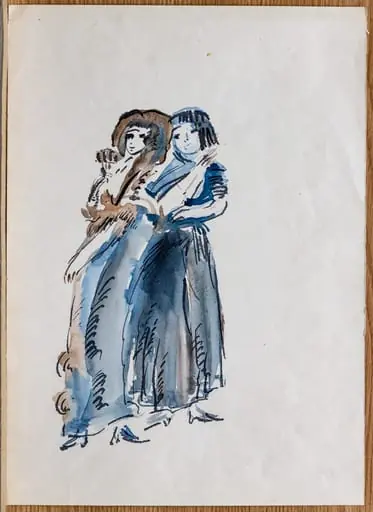
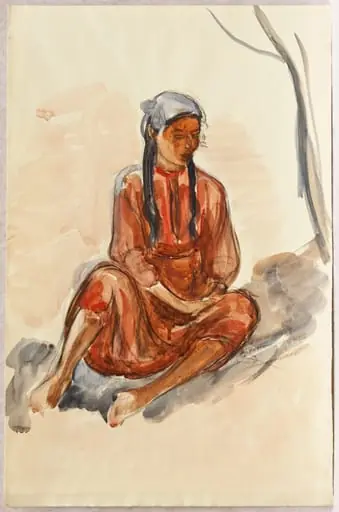
În căutare de angajament is a drawing by Aurel Jiquidi. It dates from 1936 and is held in the collection of the Visual Art Museum Galați.
About this work
Overview
Created in 1936 by Romanian artist Aurel Jiquidi, this ink drawing is part of the Museum of Ethnography’s collection.
Created in 1936 by Romanian artist Aurel Jiquidi, this ink drawing is part of the Museum of Ethnography’s collection. It depicts two anonymous figures in close physical proximity, rendered with minimal detail and restrained color. The work’s emphasis on gesture over individual identity suggests a focus on human connection rather than portraiture. Its sketch-like quality and muted palette reflect a deliberate economy of means.
Subject & Meaning
The two figures, draped in simple, hooded garments, embrace with arms entwined, their faces indistinct. This anonymity shifts attention from personal identity to the act of solidarity itself. The closeness and mutual support implied by their posture may reflect themes of communal resilience or shared vulnerability, common concerns in interwar Eastern Europe. The lack of facial features invites viewers to project their own interpretations onto the relationship depicted.
Technique & Style
Jiquidi employed rapid, expressive linework to suggest fabric folds and bodily weight, avoiding polished detail. Cross-hatching and sparse ink washes define texture and shadow, while bold strokes of red and black introduce focal contrast against a softly blurred background. The drawing’s unfinished appearance enhances its emotional immediacy, prioritizing movement and intimacy over formal refinement.
History & Provenance
The work entered the Museum of Ethnography’s holdings shortly after its creation, likely acquired during a period of active documentation of Romanian cultural expression. Its preservation suggests early recognition of its significance as a document of social sentiment rather than purely aesthetic value. No public record of prior ownership or exhibition exists beyond its institutional acquisition.
Context
Produced in 1936, the drawing emerged amid rising political tensions in Romania and broader European anxieties over social cohesion. While not overtly political, its depiction of quiet solidarity resonates with contemporary efforts to preserve communal bonds under uncertainty. Jiquidi’s focus on everyday human interaction aligns with broader interwar artistic trends that valued emotional authenticity over grand narratives.
Legacy
Though not widely reproduced, the work remains a quiet example of Romanian modernist drawing that prioritizes emotional resonance over spectacle. It contributes to a lesser-known strand of interwar art that explored intimacy and collective experience through minimal means. Its presence in an ethnographic museum underscores its role as a cultural artifact reflecting social attitudes of its time.
Artist & collection
Artist