Artwork
Compoziție (Portret)
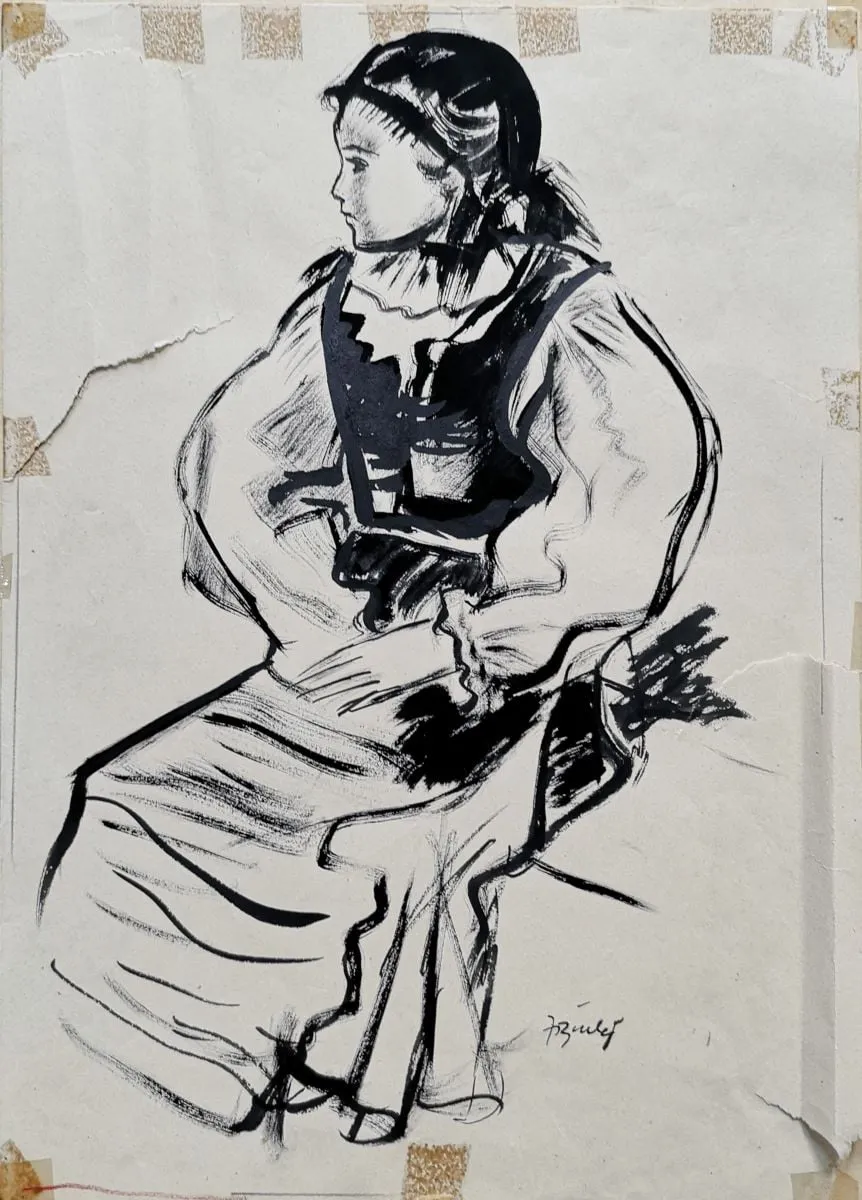
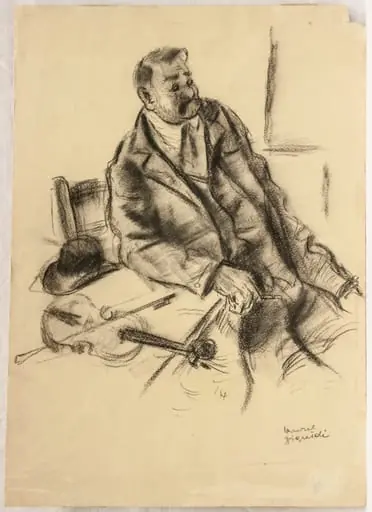
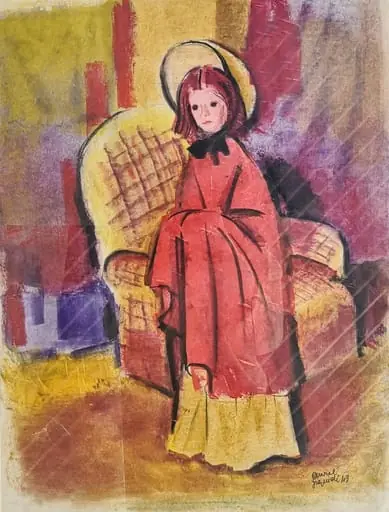
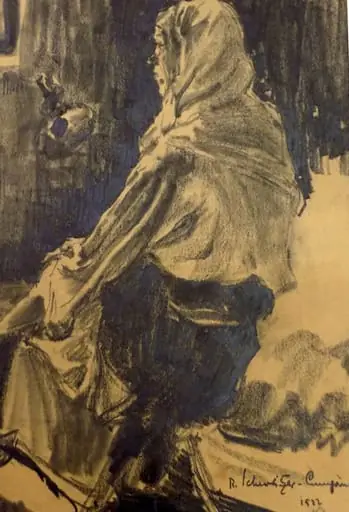
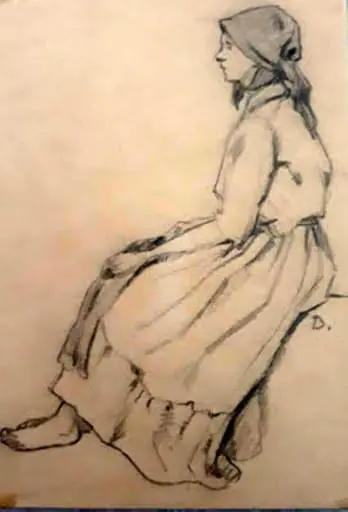
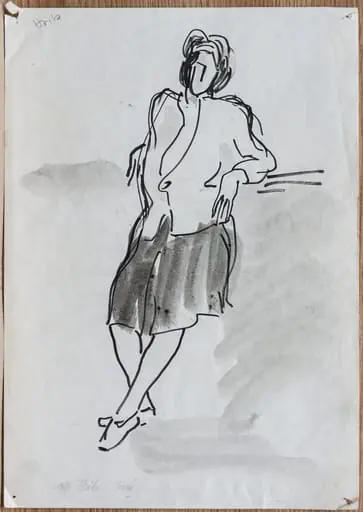
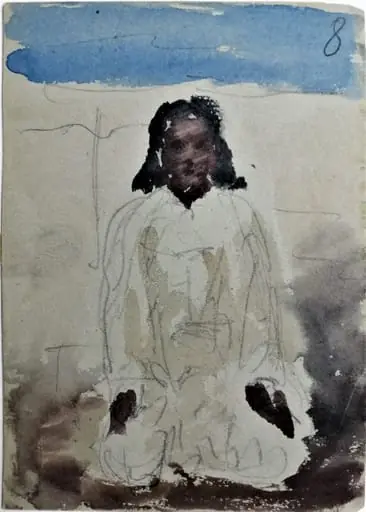
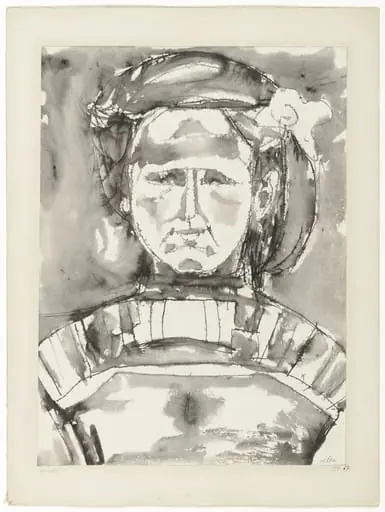
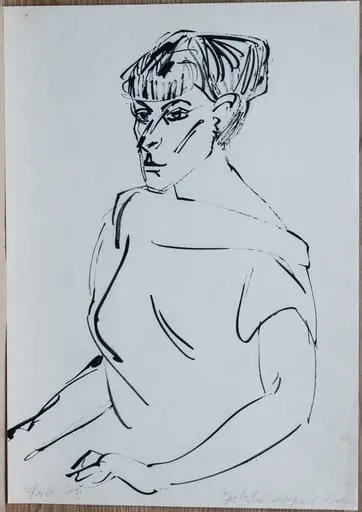
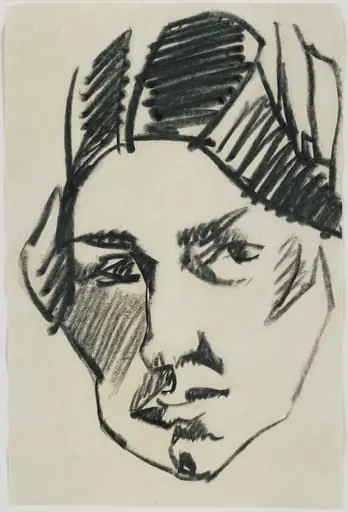
Compoziție (Portret) is a drawing by Aurel Jiquidi. It is held in the collection of the Visual Art Museum Galați. This black-and-white portrait depicts a seated woman rendered with dynamic brushwork and strong linear contours.
About this work
Overview
The absence of color focuses attention on form and gesture, while the interplay of light and shadow defines her presence without embellishment.
This black-and-white portrait depicts a seated woman rendered with dynamic brushwork and strong linear contours. The absence of color focuses attention on form and gesture, while the interplay of light and shadow defines her presence without embellishment. Her posture and expression convey stillness, yet the energetic handling of the paint suggests an underlying vitality. The work stands as a restrained yet forceful study in psychological presence.
Subject & Meaning
The woman, dressed in a high-necked, long-sleeved garment with her hair neatly gathered, appears absorbed in private thought. Her gaze is lowered, her lips curved in a subtle, ambiguous smile that resists easy interpretation. The composition avoids narrative cues, inviting viewers to contemplate an inner state rather than a specific identity. The portrait’s power lies in its silence — a quietude that feels both intimate and elusive.
Technique & Style
The artist employs bold, fluid brushstrokes to define contours and texture, avoiding smooth modeling in favor of expressive marks. Contrast between dense blacks and delicate grays shapes the figure without relying on tonal gradation alone. Lines are decisive yet alive, suggesting motion within stillness. The technique prioritizes emotional resonance over realism, aligning with modernist tendencies that valued gesture and mood over precise detail.
History & Provenance
The painting, titled Compoziție (Portret), originates from a period when the artist was deeply engaged with portraiture as a vehicle for psychological inquiry. While specific ownership history is not documented here, its stylistic traits place it within the artist’s mature phase, likely created during the early to mid-20th century. It remains an example of their consistent focus on the human figure as a site of quiet complexity.
Context
Created amid broader European modernist movements, the work reflects a shift away from academic portraiture toward introspective, emotionally charged representations. The monochromatic palette and emphasis on line echo contemporaneous experiments in expressionism and early abstraction. Unlike formal commissions, this portrait prioritizes mood over social status, aligning with a growing interest in the individual’s inner life during the interwar years.
Legacy
The painting contributes to a body of work that redefined portraiture through emotional immediacy rather than physical likeness. Its influence is seen in later artists who favored gesture and tone over detail to convey psychological depth. Though not widely exhibited, it endures as a quiet testament to the artist’s ability to capture presence through restraint, leaving space for the viewer’s own reflection.
Artist & collection
Artist