Artwork
Omul cu țigara
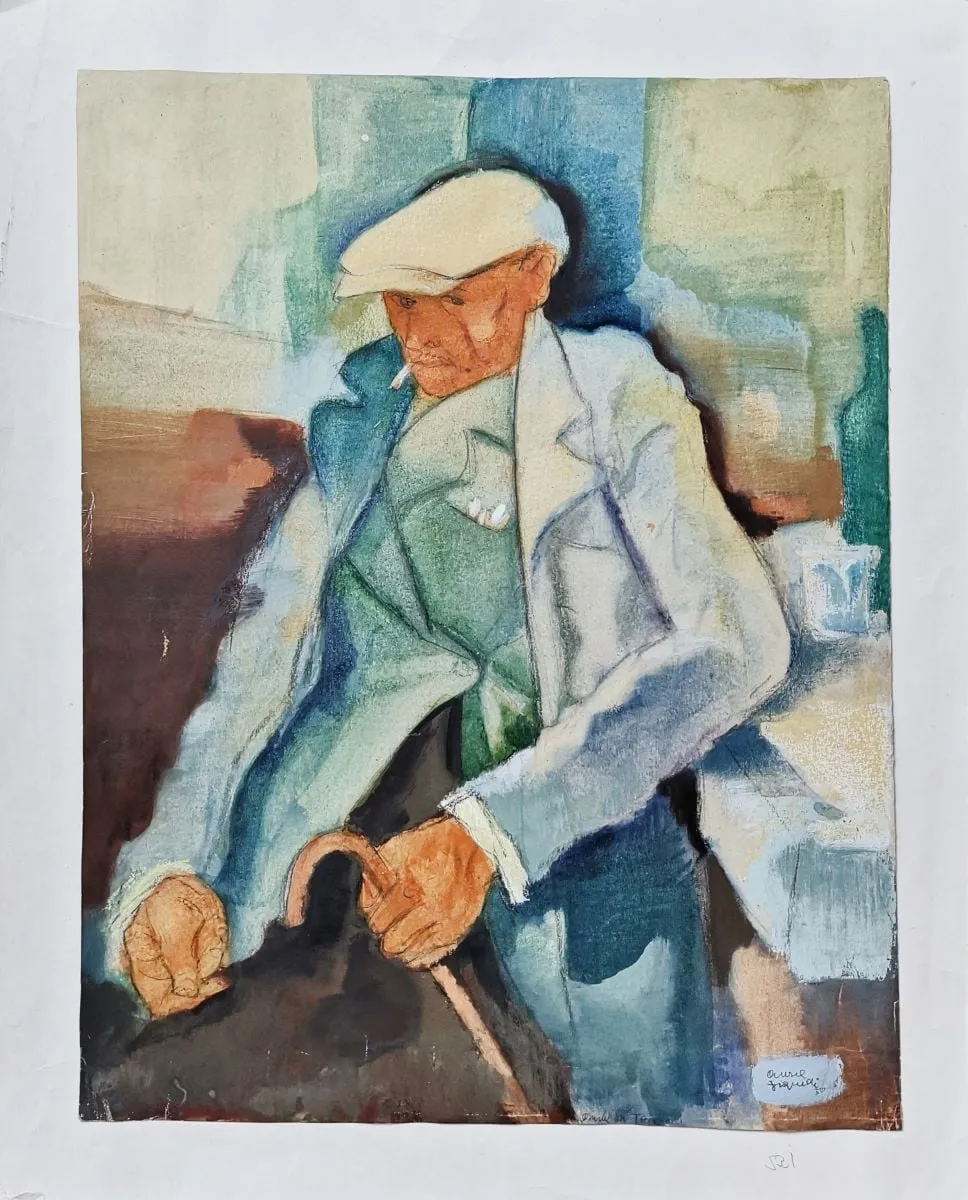
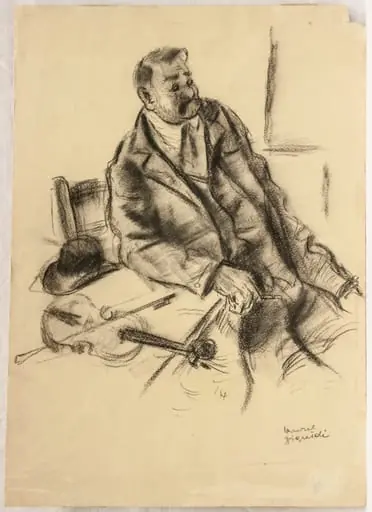
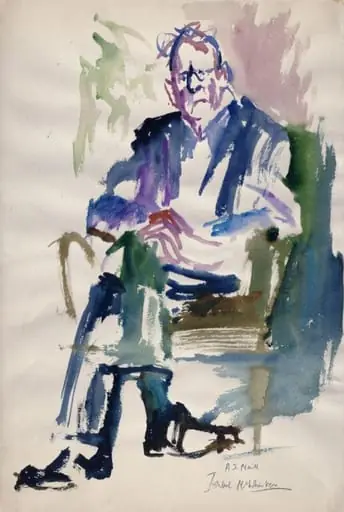
Omul cu țigara is a drawing by Aurel Jiquidi. It dates from 1950 and is held in the collection of the Visual Art Museum Galați.
About this work
Overview
The sketch’s immediacy and unpolished lines reflect a direct observational approach, capturing a quiet, unguarded moment.
Aurel Jiquidi's 1950 drawing, Omul cu țigara, depicts a solitary older man in a modest interior setting. Executed in ink or pencil, the work is part of the Museum of Ethnography’s collection. The figure’s posture and attire suggest rural or working-class life in mid-20th century Romania. The sketch’s immediacy and unpolished lines reflect a direct observational approach, capturing a quiet, unguarded moment.
Subject & Meaning
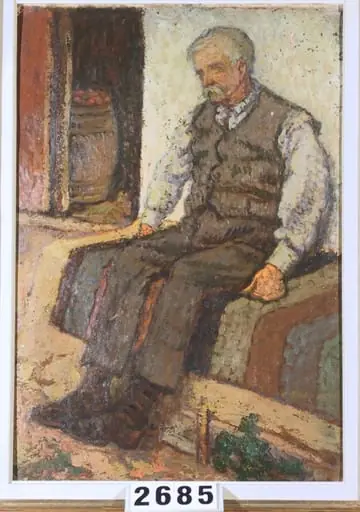
The man, aged and weary, leans on a cane while holding a cigarette, his expression neutral but resolute. His clothing—a light hat, loose jacket, and dark trousers—hints at everyday labor and economic simplicity. The cigarette, a small but deliberate detail, may imply solitude, habit, or a fleeting comfort. The scene avoids narrative drama, instead offering a restrained portrait of dignity in routine.
Technique & Style
Jiquidi employs loose, rapid strokes that convey movement and texture without refinement. The lines are intentionally uneven, avoiding idealization in favor of tactile presence. The background, rendered in muted blues and greens, suggests a plain interior with minimal detail, directing focus to the figure. The absence of shading or perspective reinforces the drawing’s spontaneous, almost diary-like quality.
History & Provenance
Created in 1950, the work entered the Museum of Ethnography’s holdings shortly after its completion. Its preservation there suggests institutional interest in documenting everyday Romanian life during the early communist period. Unlike official art of the era, this piece avoids propaganda, instead preserving a personal, unembellished view of a common individual.
Context
In postwar Romania, state-sponsored art often emphasized idealized labor and collective progress. Jiquidi’s drawing diverges from this norm, focusing on an individual’s quiet endurance. Its ethnographic value lies in its unvarnished portrayal of personal habit and environment, offering insight into private life amid broader political and social transformation.
Legacy
Though not widely exhibited beyond its institutional home, Omul cu țigara remains a quiet example of Romanian drawing that prioritizes authenticity over spectacle. It contributes to a lesser-known strand of mid-century art that valued observation over ideology, preserving the dignity of ordinary lives through understated technique and restrained composition.
Artist & collection
Artist