Artwork
Kaart van Brugge en de waterwegen
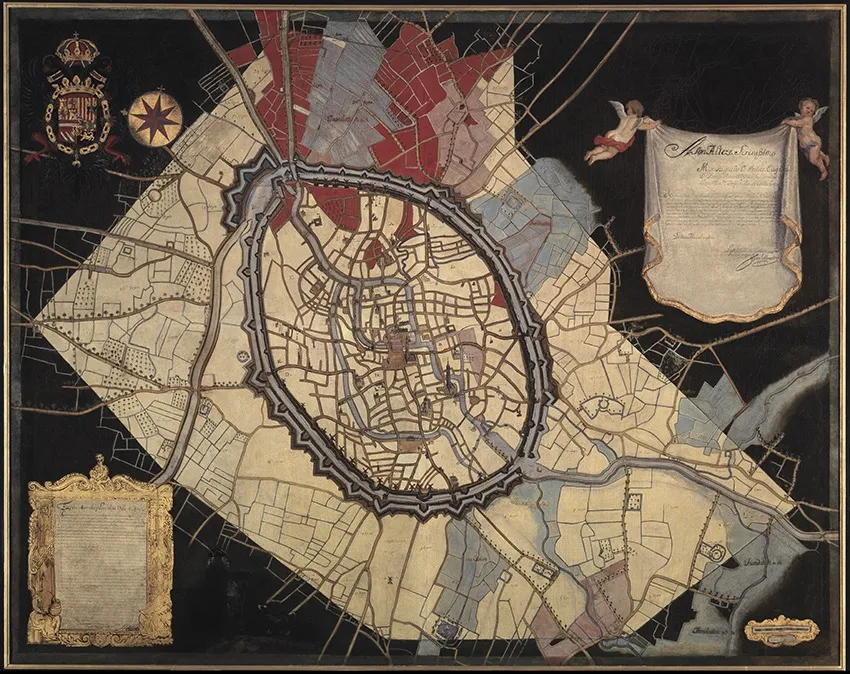
Kaart van Brugge en de waterwegen is an oil painting by the Rococo painting artist Joannes Lobberecht. It dates from 1714 and is held in the collection of the Groeningemuseum.
About this work
The overall effect is one of elegance and sophistication, suggesting that the map was created for a wealthy patron or to commemorate a special occasion.
This painting is a map of Bruges, with a coat of arms in the top left corner and a putto holding a banner in the top right. The map is surrounded by a decorative border, with a compass rose and other symbols. The map itself is detailed, showing the city's streets and canals.
The painting is done in oil paint, with a mix of bright and muted colors. The overall effect is one of elegance and sophistication, suggesting that the map was created for a wealthy patron or to commemorate a special occasion.
The Groeningemuseum holds this painting, which is a great example of the art of cartography in the early 18th century.
Overview
Joannes Lobberecht’s oil painting, dated 1714, presents a detailed cartographic representation of the city of Bruges. Executed on canvas, the work combines geographic precision with decorative elements, including the municipal coat of arms and a cherubic figure bearing a banner. The piece is part of the collection of the Groeningemuseum in Bruges.
Subject & Meaning
The central focus of the painting is a plan of Bruges, illustrating its network of streets and canals. The inclusion of the city’s coat of arms underscores civic identity, while the putto—a classical symbol of innocence and patronage—suggests a celebratory or commemorative purpose, possibly linked to a civic event or a private commission.
Technique & Style
Rendered in oil, the map balances vivid and subdued hues, allowing fine details of the urban layout to emerge against a decorative border. Elements such as a compass rose and ornamental motifs frame the composition, reflecting the early‑18th‑century taste for elegant, embellished cartographic art that blended utility with aesthetic refinement.
History & Provenance
Created in 1714, the painting has remained associated with Bruges, eventually entering the holdings of the Groeningemuseum. Its survival within a public institution indicates its value as both an artistic and historical document of the city’s geography during the early modern period.
Artist & collection
Artist
A quiet hand mapped old Bruges in oil. Joannes Lobberecht rendered the city’s web of canals and cobbled lanes in precise, top-down views, blending cartography with gentle color. Two such works, from 1690 and 1714, let…

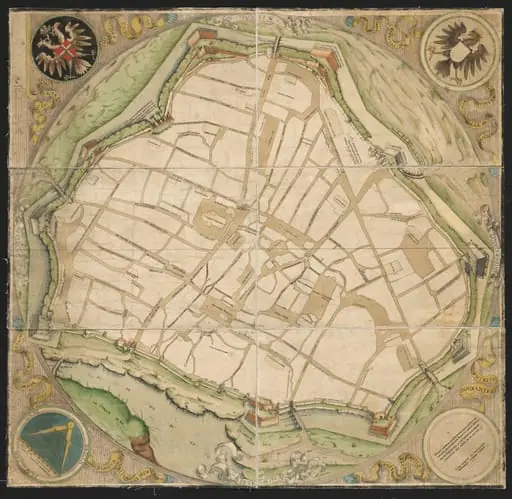 Map of Vienna
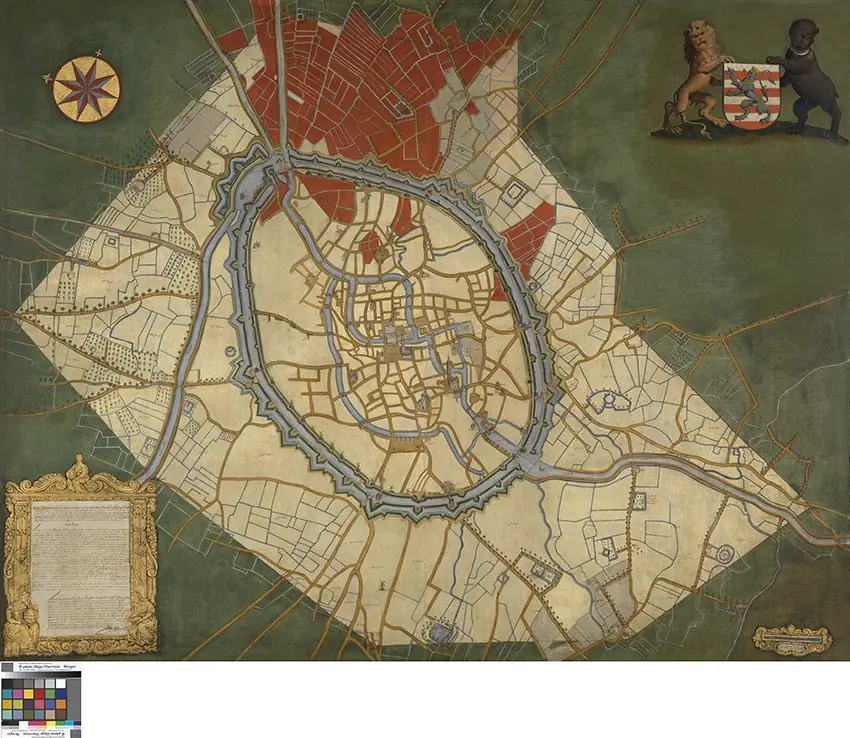 Kaart van Brugge en de feodale gronden
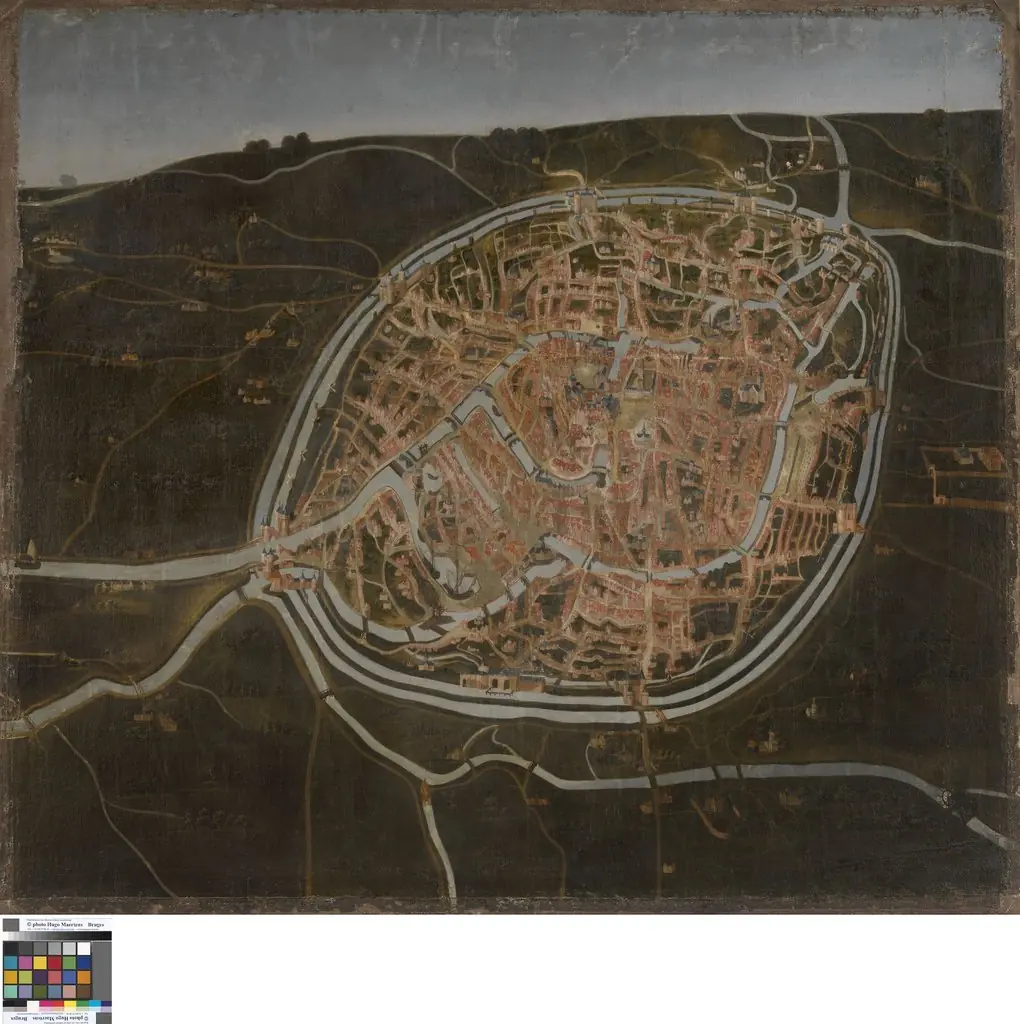 Map of Bruges
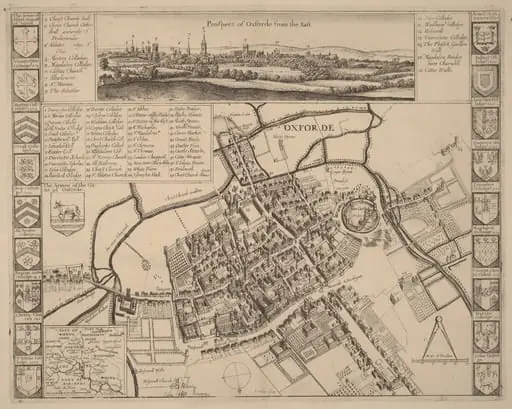 Prospect of Oxford
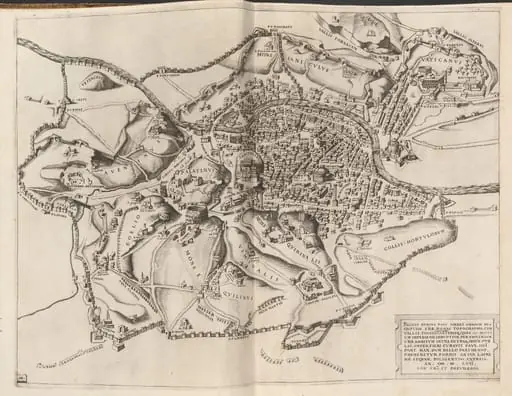 Topographical Map of Ancient Rome
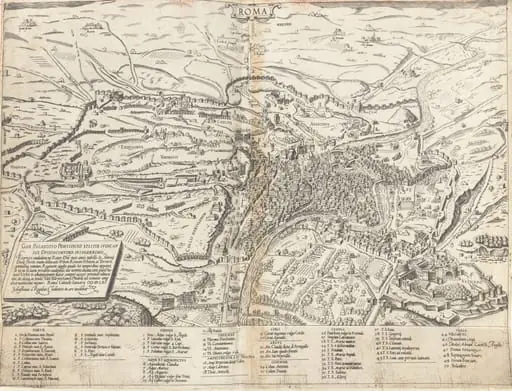 Topographical Map of Modern Rome
![The Siege of La Rochelle [plate 6 of 16; set comprises 1952.8.97-112], by Jacques Callot](https://artifactworldgallery.com/img/jacques-callot--the-siege-of-la-rochelle-plate-6-of-16-set-comprises-1952-8--87e690454dc011ee-w320.webp) The Siege of La Rochelle [plate 6 of 16; set comprises 1952.8.97-112]
The Siege of La Rochelle [plate 6 of 16; set comprises 1952.8.97-112]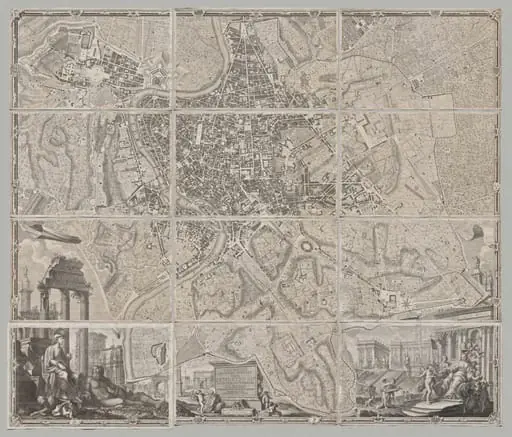 Nuova pianta di Roma data in luce da Giambattista Nolli l’anno MDCCXLVII, known as La Pianta Grande di Roma
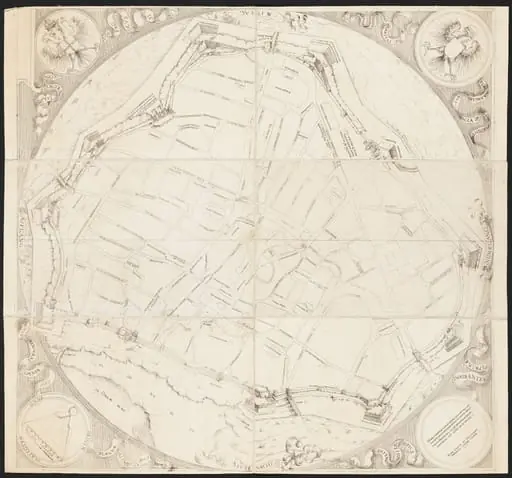 Map of Vienna
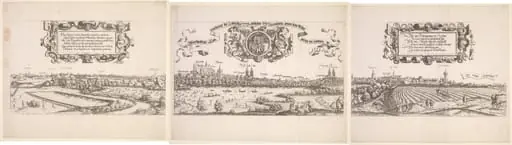 Panoramic View of Nuremberg
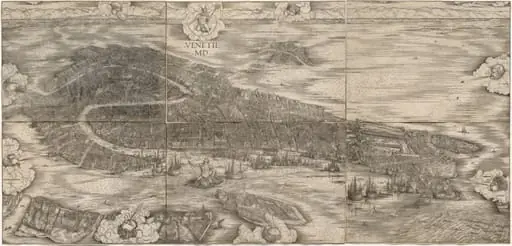 View of Venice
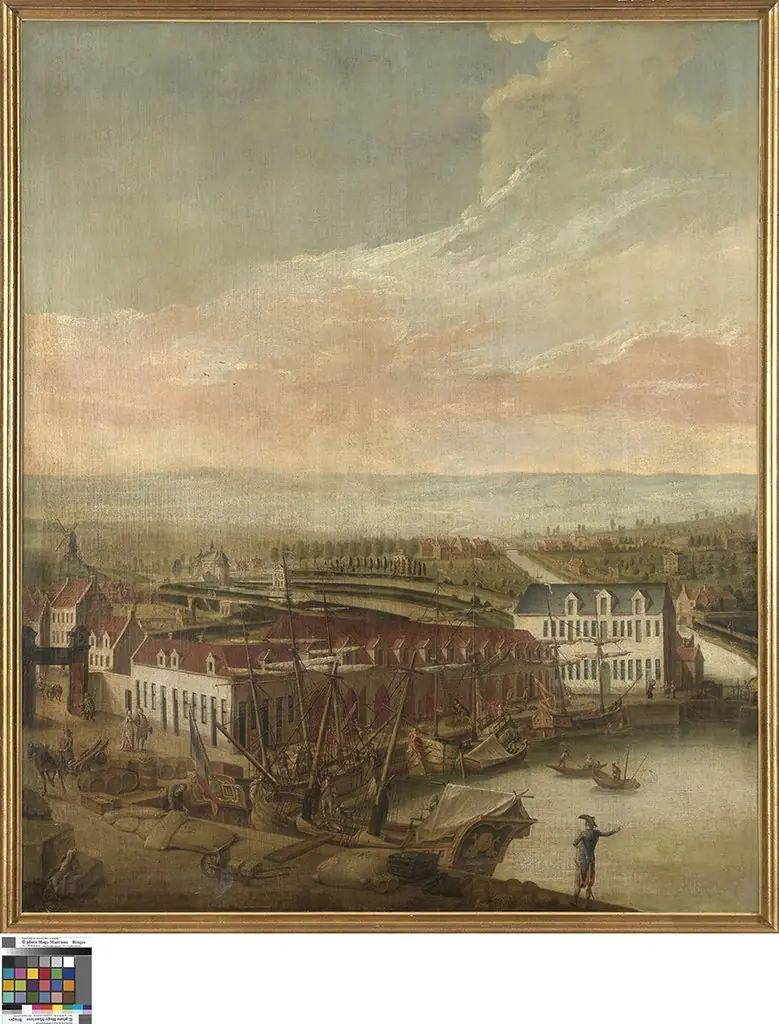 De Handelskom in Brugge