Artwork
Andromache in Despair at the Sight of Hector's Body
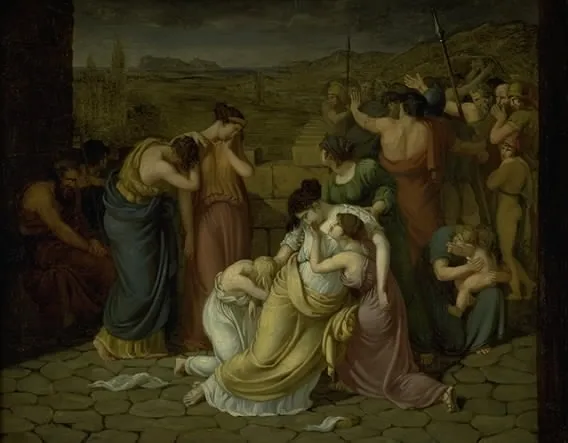
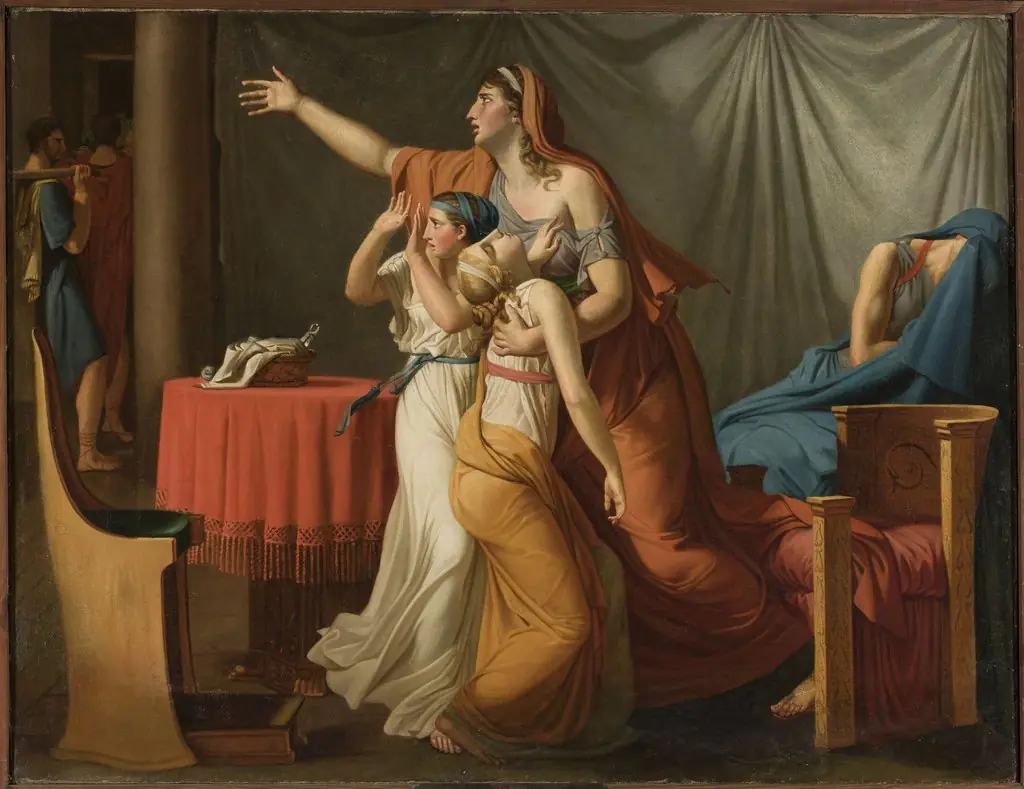
Andromache in Despair at the Sight of Hector's Body is an oil painting by the Neoclassicist artist Johan Ludwig Lund. It dates from 1803 and is held in the collection of the Statens Museum for Kunst.
About this work
Overview
The work is part of the permanent collection of Denmark’s Statens Museum for Kunst.
Johan Ludwig Lund, a Danish painter active at the turn of the nineteenth century, completed the oil painting *Andromache in Despair at the Sight of Hector’s Body* in 1803. The canvas presents a turbulent courtyard scene illuminated by a muted light, where a woman in a yellow dress clutches a fallen companion amid a gathering of onlookers. The work is part of the permanent collection of Denmark’s Statens Museum for Kunst.
Subject & Meaning
The composition draws on the tragic episode from the Trojan saga in which Andromache, widow of the fallen hero Hector, confronts the aftermath of his death. Lund captures the emotional intensity of grief and helplessness, emphasizing the personal loss against a broader backdrop of war and chaos. The central figure’s embrace conveys both mourning and a desperate attempt to preserve dignity amid devastation.
Technique & Style
Executed in oil on canvas, the painting reflects Lund’s neoclassical training through its balanced arrangement and clear delineation of forms, while the atmospheric sky and emotive gestures hint at Romantic sensibilities. Soft, focused lighting isolates key figures, allowing subtle chiaroscuro to model the flesh and drapery, whereas the rough stone floor and stormy horizon contribute a sense of instability.
History & Provenance
Created in 1803, the work entered the holdings of the Statens Museum for Kunst, Denmark’s national gallery, where it remains on display. Lund’s reputation as a history painter and his position within the Danish Academy facilitated the painting’s acquisition, ensuring its preservation as a representative example of early nineteenth‑century Danish art.
Context
The early 1800s saw a resurgence of interest in classical antiquity and heroic narratives, a trend that Lund embraced while also responding to the growing Romantic emphasis on individual emotion. By choosing a moment from the Iliad, the artist aligned his work with contemporary debates about the role of moral exempla and the power of personal suffering in visual storytelling.
Artist & collection
Artist
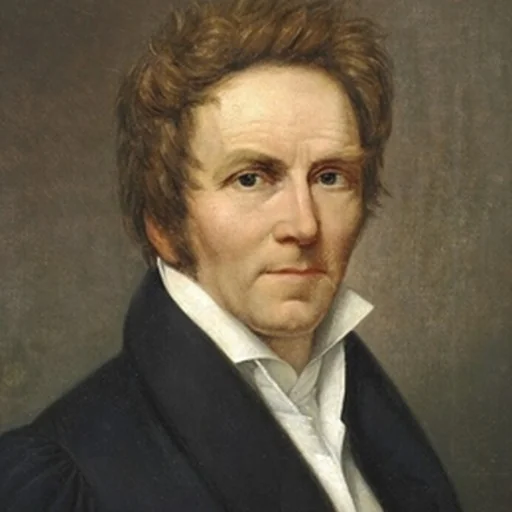
Johan Ludwig Gebhard Lund (primarily known as J. L. Lund) (16 October 1777 – 3 March 1867) was a Danish painter, born in Kiel, Duchy of Holstein, to master painter Hans Giewert Lund and his wife Maria Magdalena…

 Lictors bring to Brutus the bodies of his sons
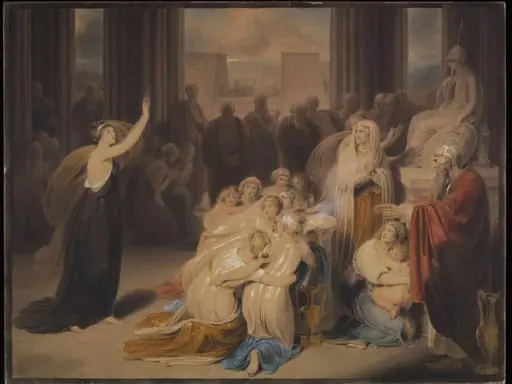 Cassandra in the Temple of Minerva
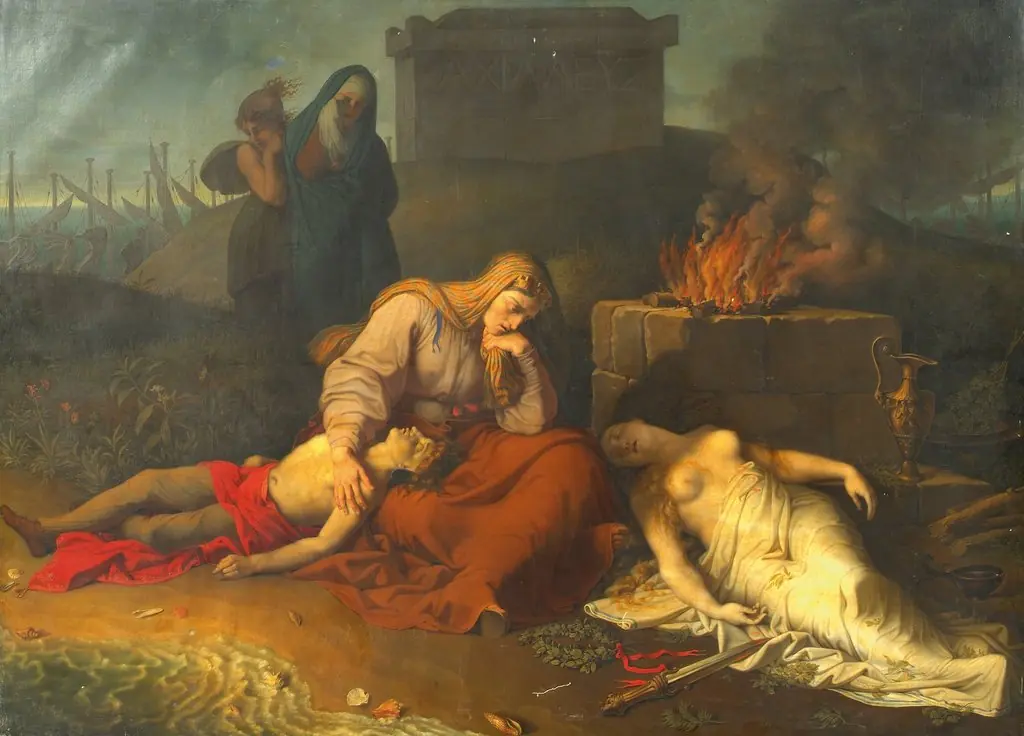 Hecabe mit den Leichnamen ihrer Kinder Polyxena und Polydoros am Grab des Achill
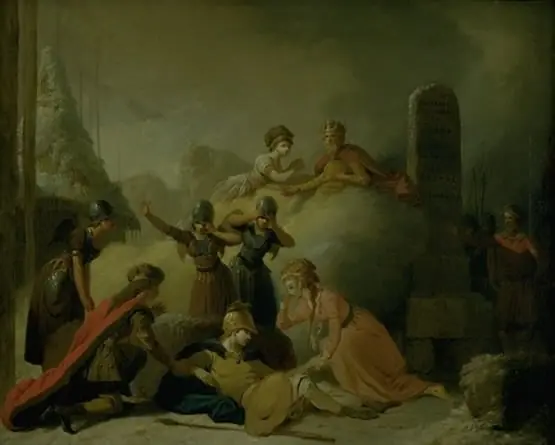 Slutningsscenen af Johannes Ewalds "Balders Død"
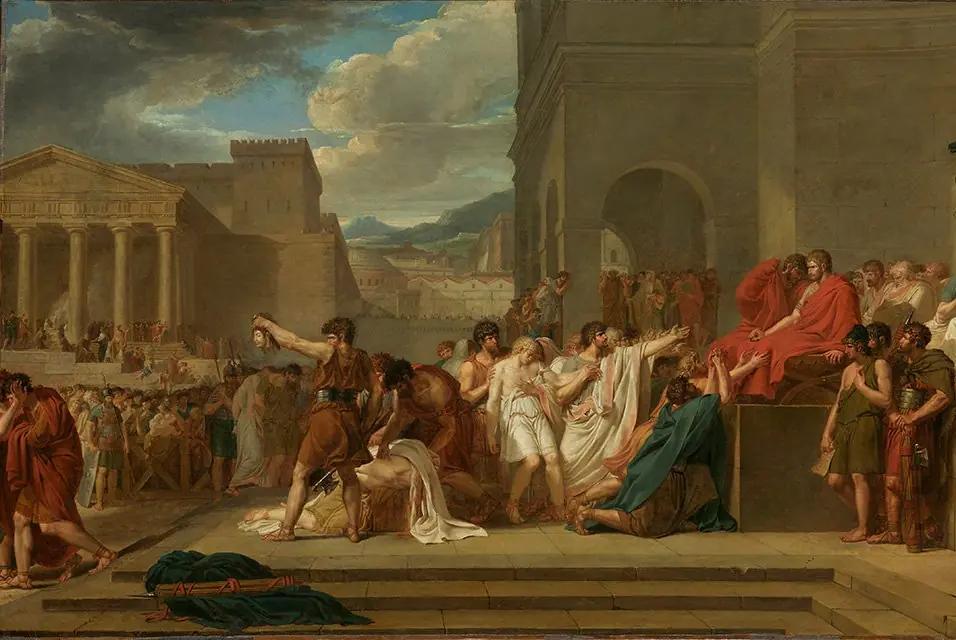 Brutus condemning his sons to death
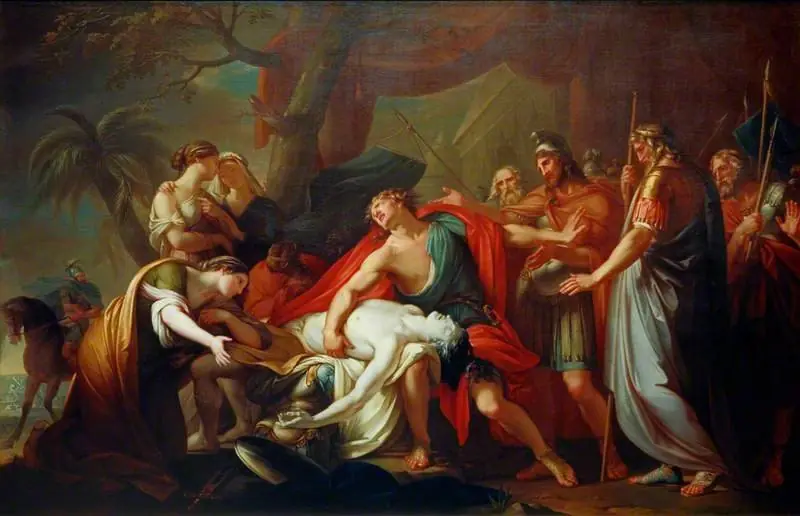 Achilles Lamenting the Death of Patroclus
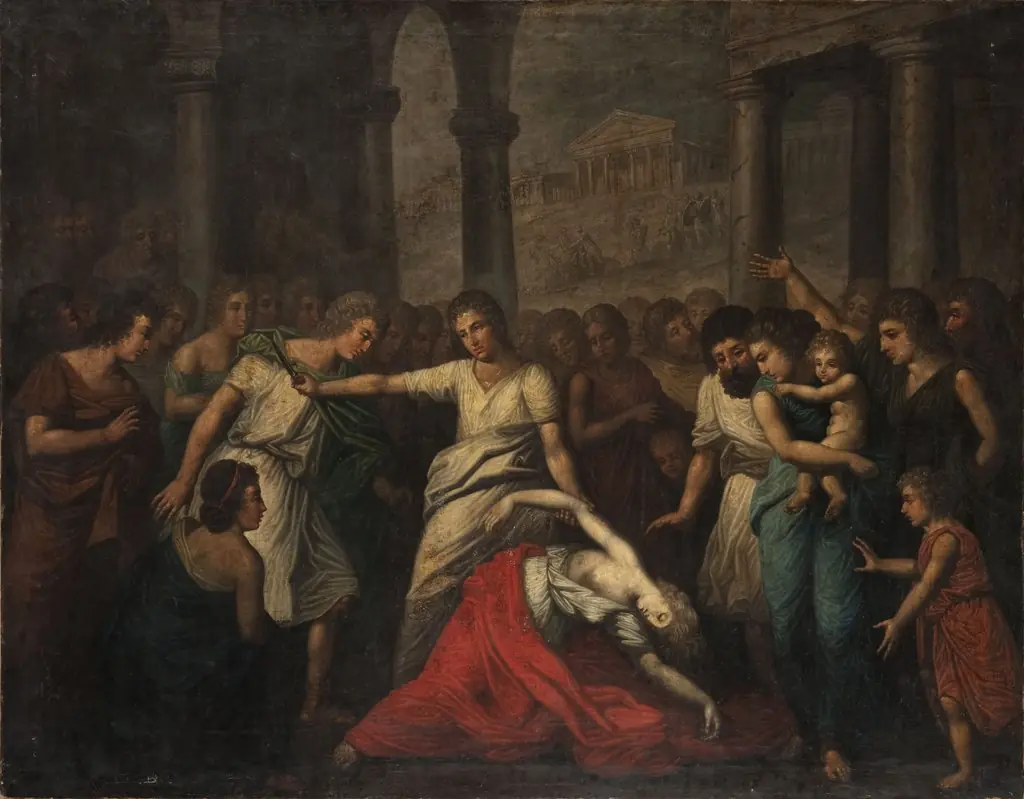 Death of Virginia
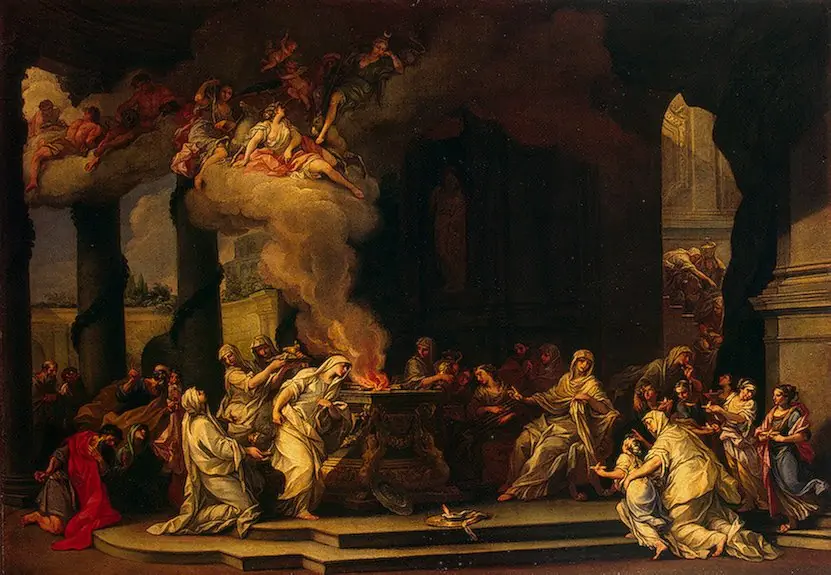 Dedication of a New Vestal Virgin