Artwork
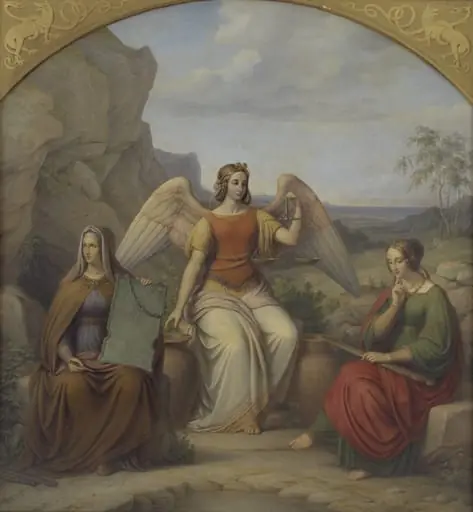
De tre norner
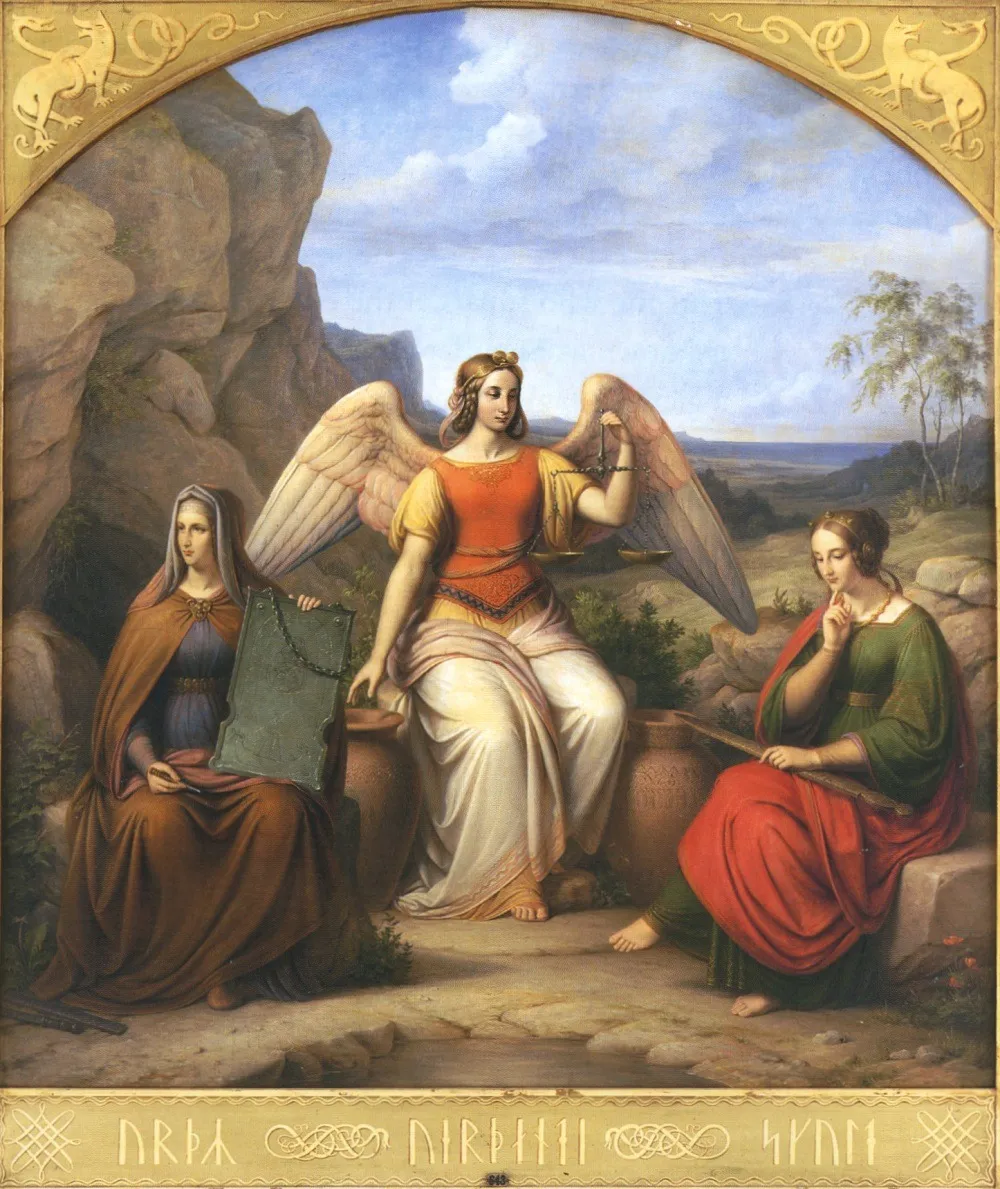
De tre norner is an oil painting by the German Romanticist artist Johan Ludwig Lund. It dates from 1844 and is held in the collection of the Statens Museum for Kunst. J.
About this work
Overview
Lund, a Danish artist active in the early 19th century, completed *De tre norner* in 1844 as an oil painting rooted in Romantic ideals.
J. L. Lund, a Danish artist active in the early 19th century, completed *De tre norner* in 1844 as an oil painting rooted in Romantic ideals. The work belongs to a broader European trend that favored mythic and symbolic narratives over classical restraint. It is currently held in the Statens Museum for Kunst in Copenhagen, where it represents Lund’s contribution to national artistic identity through historical and mythological themes.
Subject & Meaning
The painting portrays three female figures in a rugged natural setting, interpreted as representations of the Norns—mythological beings from Norse tradition who govern fate. The central figure, winged and holding a scale, suggests divine judgment. The two flanking women, one with a shield and the other draped in red, appear to observe or await her verdict. The scene evokes inevitability and cosmic order, aligning with Romanticism’s fascination with destiny and the sublime.
Technique & Style
Lund employed traditional oil techniques to render texture and light with careful precision. The figures are modeled with soft transitions, their garments rendered in rich, contrasting hues against the muted tones of the rocky terrain. The sky and landscape are rendered with atmospheric perspective, enhancing depth. The composition is symmetrical, drawing focus to the central angelic figure, while the drapery and wing details reflect a blend of classical form and Romantic emotionalism.
History & Provenance
Completed in 1844, the painting was acquired by the Danish state and entered the collection of the Statens Museum for Kunst shortly thereafter. It remained relatively unaltered in its institutional custody, with no documented private ownership. Lund’s reputation as a painter of historical subjects ensured its early recognition within Denmark’s cultural institutions, where it continues to be displayed as part of the national Romantic canon.
Context
Lund worked during a period when Scandinavian artists were reinterpreting indigenous myths to forge a distinct cultural identity. *De tre norner* emerged alongside broader European interest in German Romanticism and Norse legend, particularly after the publication of mythological collections by scholars like Grimm. The painting reflects Denmark’s cultural alignment with these movements, even as it sought to assert a uniquely Nordic narrative within art.
Legacy
Though Lund is less widely known today than some of his contemporaries, *De tre norner* remains a significant example of 19th-century Danish Romantic painting. It influenced later artists exploring Norse themes and stands as a visual anchor for the integration of myth into national art. The work continues to be referenced in academic studies of Nordic identity and the reception of German Romantic ideals in Scandinavia.
Artist & collection
Artist
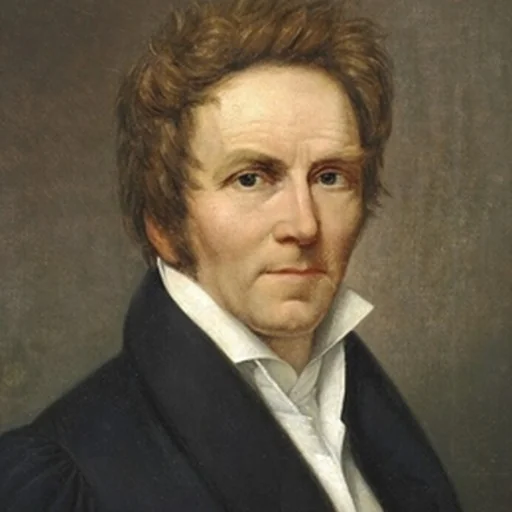
Johan Ludwig Gebhard Lund (primarily known as J. L. Lund) (16 October 1777 – 3 March 1867) was a Danish painter, born in Kiel, Duchy of Holstein, to master painter Hans Giewert Lund and his wife Maria Magdalena…

 Agar în deșert
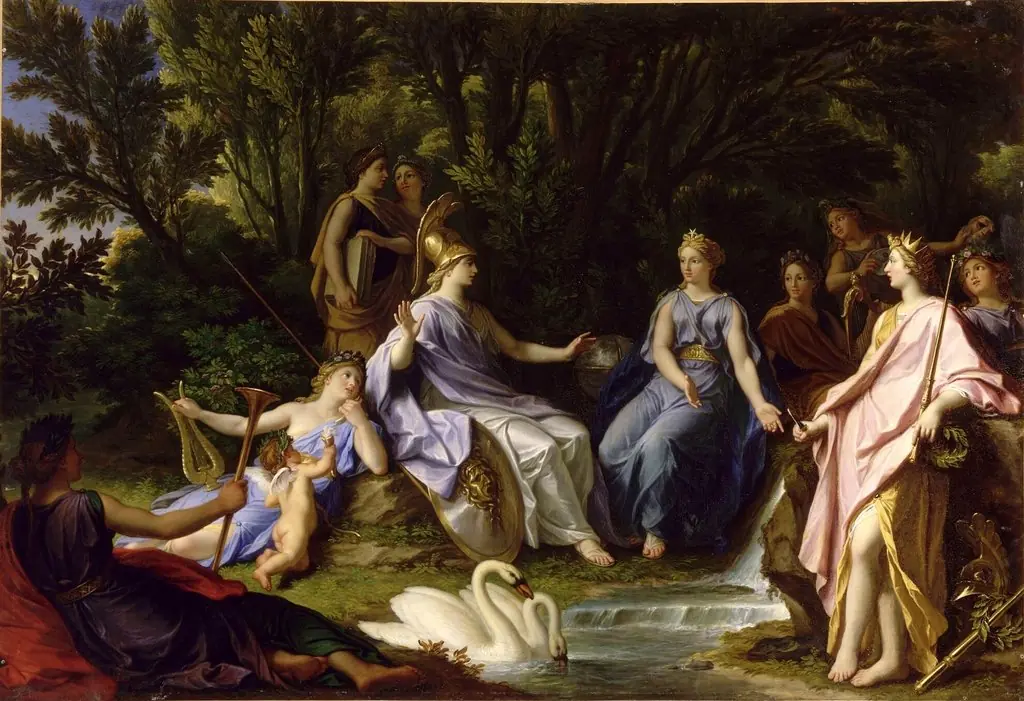 Story of Minerva - The Muses Showing Minerva Hippocrene Waters of the River that Brings Out Pegasus
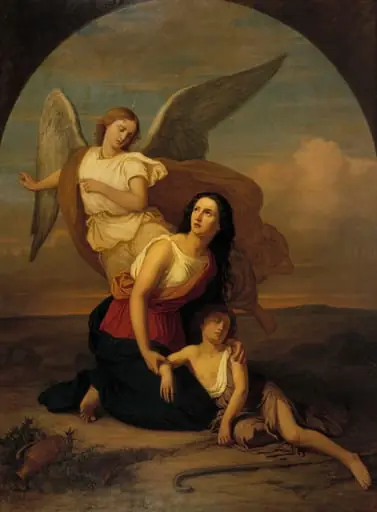 Haagar ja Ismael
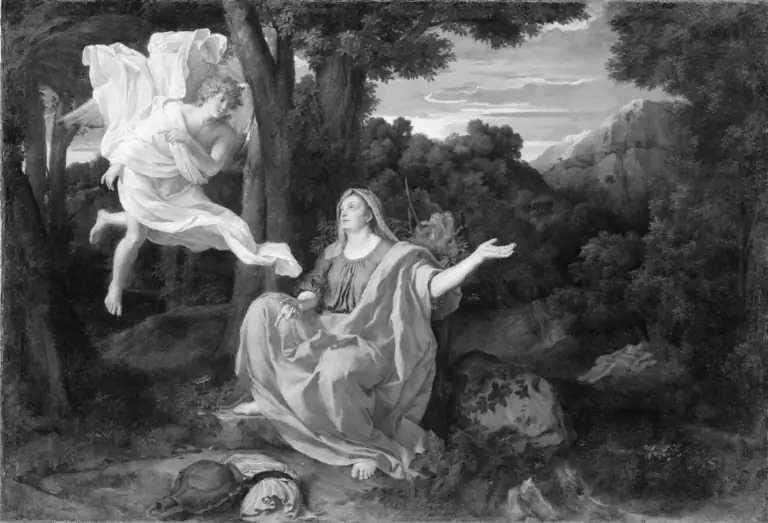 The Angel and Hagar
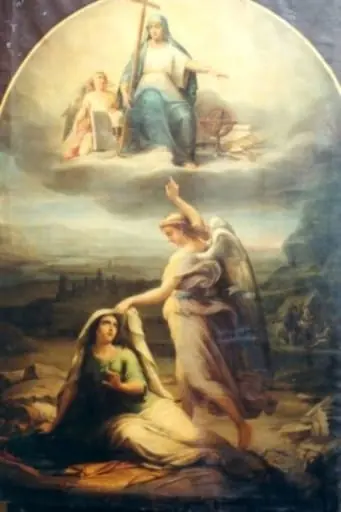 Renașterea României
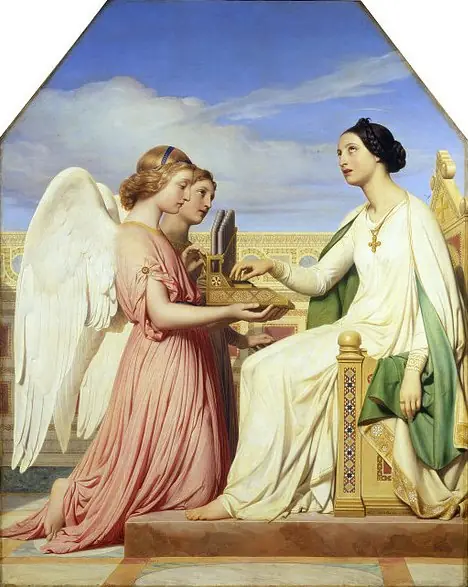 Saint Cecilia and the Angels
 The Angel and Hagar
 Elijah in the Desert
 Italia
 St. Mary Magdalene
 Innocence Choosing Between Love and Riches
 De tre norner