Artwork
Music Title
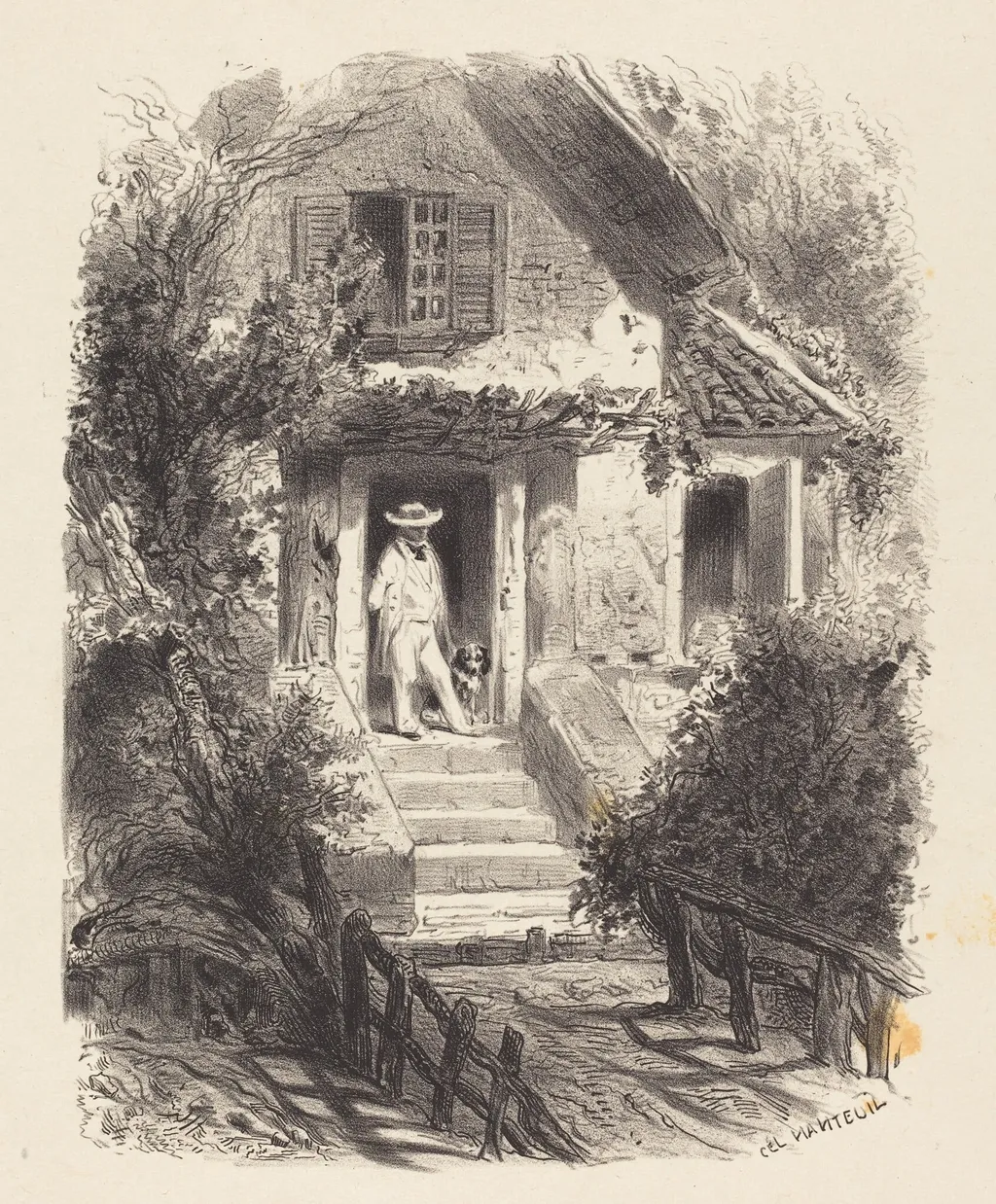
Music Title is an ink print by the Romanticist artist Célestin Nanteuil. It dates from 1843 and is held in the collection of the National Gallery of Art.
About this work
Overview
Created in 1843, *Music* is a lithograph by French artist Célestin Nanteuil, known for his illustrations and prints tied to the Romantic era.
Created in 1843, *Music* is a lithograph by French artist Célestin Nanteuil, known for his illustrations and prints tied to the Romantic era. The work emerged from his training at the École des Beaux-Arts and his time in Ingres’s studio, where he refined his draftsmanship. Unlike grand historical scenes common in academic art, Nanteuil turned to intimate, emotionally charged subjects, using lithography’s tactile qualities to convey vulnerability.
Subject & Meaning
The print depicts a gaunt woman, bent over a cello, her posture suggesting exhaustion rather than performance. Her grip on the bow is rigid, as if the instrument has become a burden rather than an extension of self. The figure’s ragged appearance and isolated stance evoke themes of solitude and diminished dignity, reflecting Romanticism’s interest in marginalized lives and inner turmoil over idealized beauty.
Technique & Style
Nanteuil employed lithography, a process allowing direct drawing on limestone with greasy crayon. The medium’s inherent softness and graininess amplify the work’s emotional texture: smudged lines and uneven ink create a sense of fragility. The rough paper further enhances the rawness, turning technical limitations into expressive tools that mirror the subject’s emotional state.
History & Provenance
Nanteuil, born in Rome to French parents linked to Joseph Bonaparte’s circle, moved in artistic circles that bridged academic training and Romantic sensibility. *Music* was produced during a period when lithography gained popularity for its accessibility and immediacy. Though not widely exhibited in his lifetime, the print circulated among collectors and illustrated publications, aligning with his broader career as a documenter of everyday life.
Context
In 1840s France, Romanticism challenged neoclassical ideals by prioritizing emotion and individual experience. While contemporaries like Delacroix painted dramatic narratives, Nanteuil focused on quiet, unheroic moments. His choice of a destitute musician reflects broader social concerns—poverty, the decline of artistic livelihoods—making *Music* a subtle commentary on cultural neglect amid industrial change.
Legacy
Nanteuil’s *Music* remains a quiet example of lithography’s capacity for psychological depth. Though overshadowed by his more famous peers, his work influenced later illustrators who sought to capture human fragility through print. The piece endures not for its technical brilliance, but for its unflinching portrayal of solitude, resonating with 19th-century realism and modern depictions of artistic struggle.
Artist & collection
Artist
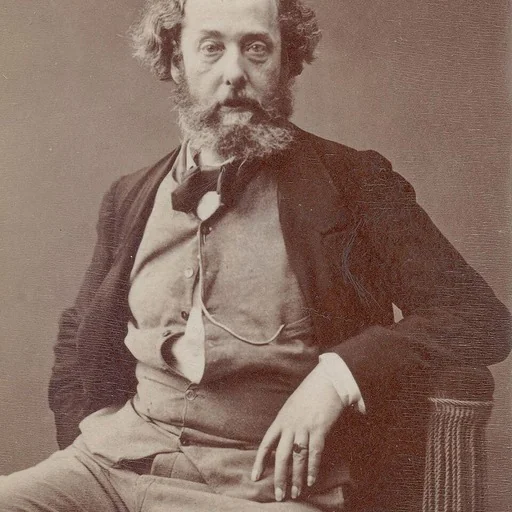
Célestin-François Nanteuil-Lebœuf, known as Célestin Nanteuil (French pronunciation: ; 11 July 1813 – 6 September 1873), was a French painter, engraver and illustrator closely tied to the Romantic movement in France.

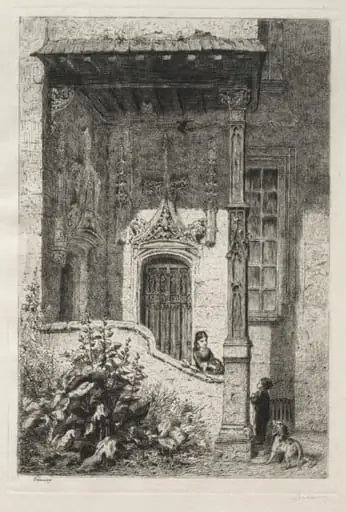 Maison dite de la Reine Blanche, Rue St. Hippolyte
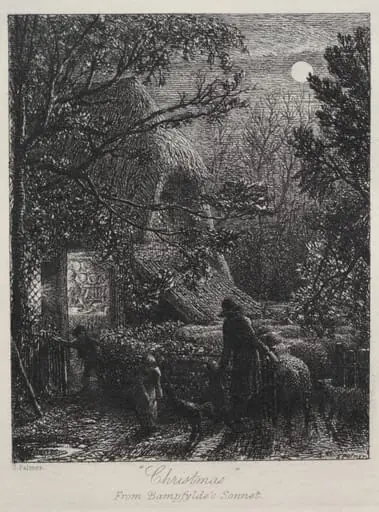 Christmas (Folding the Last Sheep)
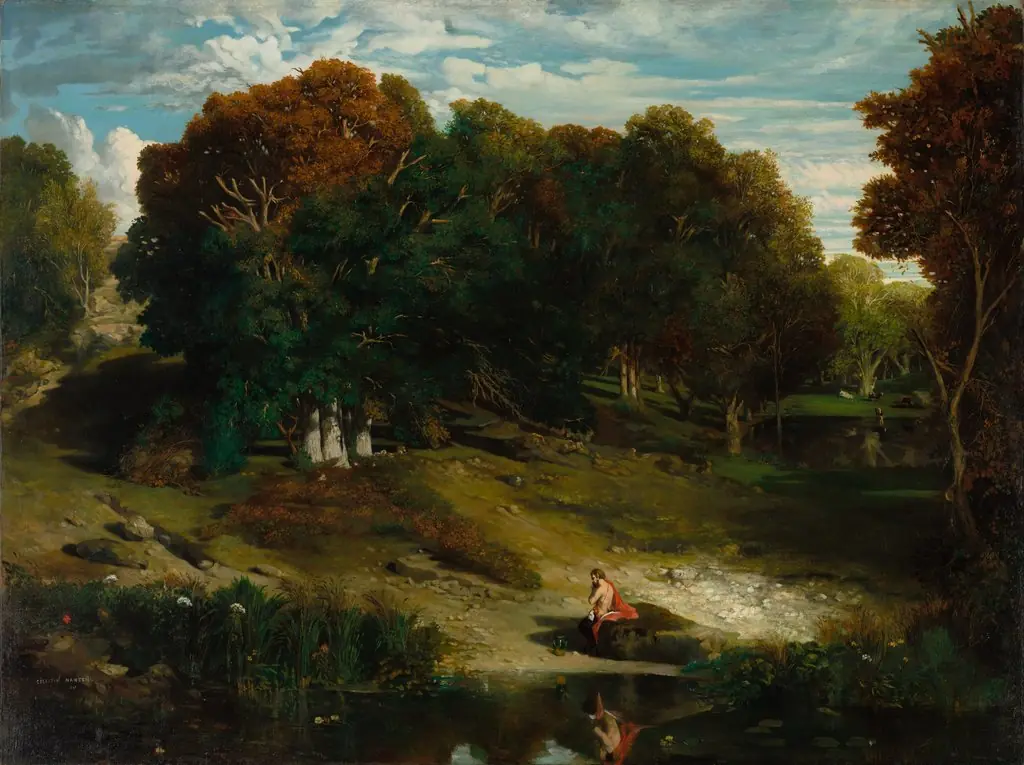
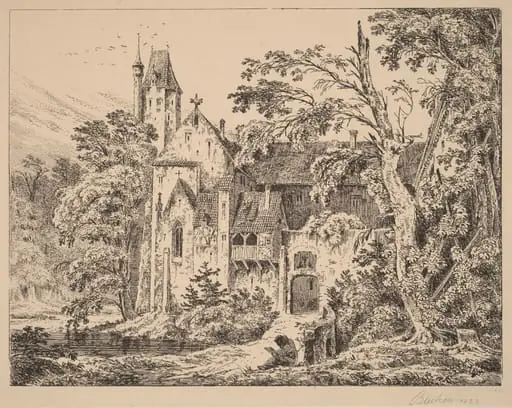 The Monastery in the Forest
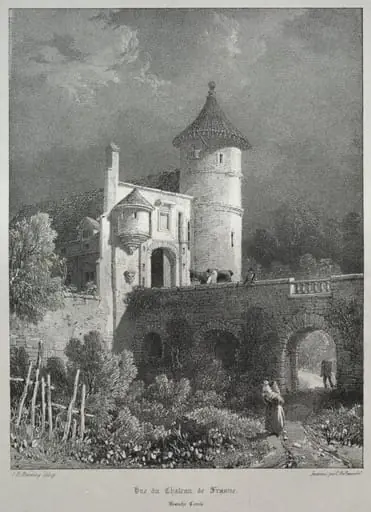 Voyages pittoresques et romantiques dans l'ancienne France. Franche-Comté: Vue du Château de Frasne
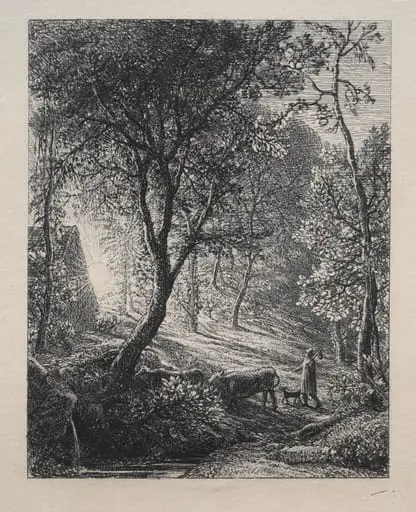 The Herdsman's Cottage
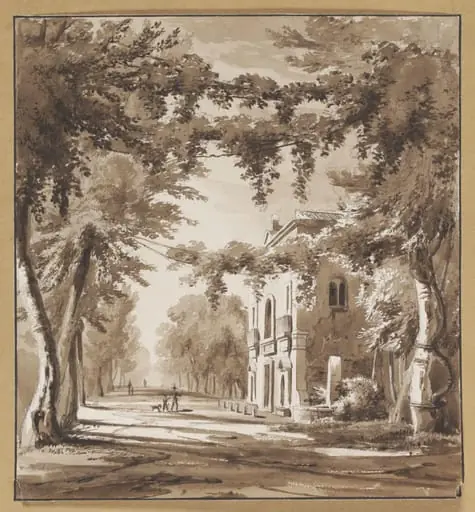 Petit eglise que e trouve sur le chemin da Puzzuoli (sic)
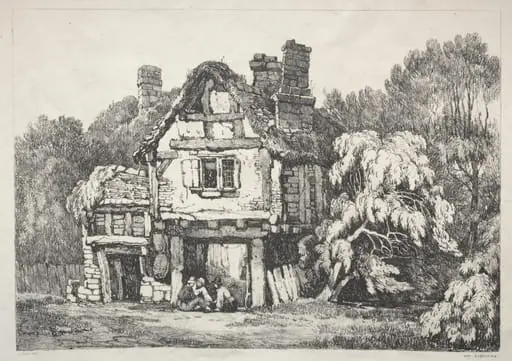 A Series of Ancient Buildings and Rural Cottages in the North of England: Near Ashbourn
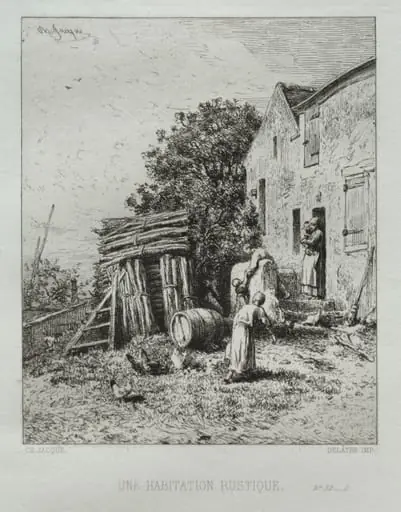 Rustic House
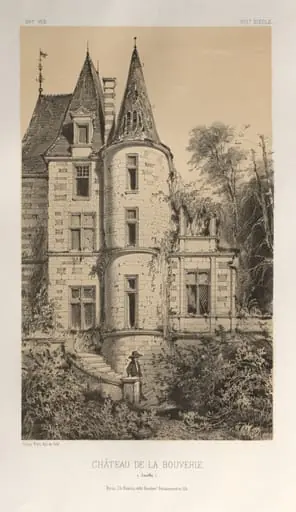 Architecture Pittoresque ou Monuments des xveme. Et xvieme. Siecles: Chateaux De France des XV et XVI Siecles: Pl. 29, Chateau De La Bouverie (Sarthe)
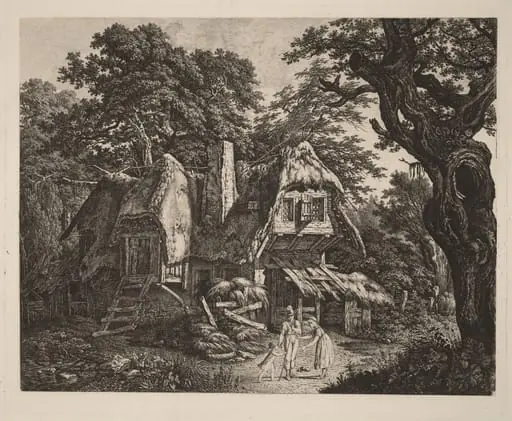 Straw-Thatched Hut with Landscape and Figures
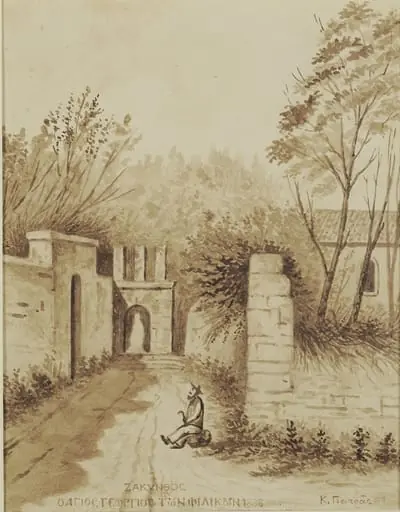 Ο Ναός του Αγίου Γεωργίου των Φιλικών στη Μπόχαλη της Ζάκυνθου
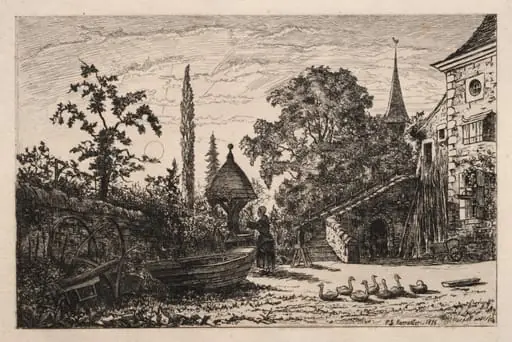 The Courtyard