Artwork
Psyche
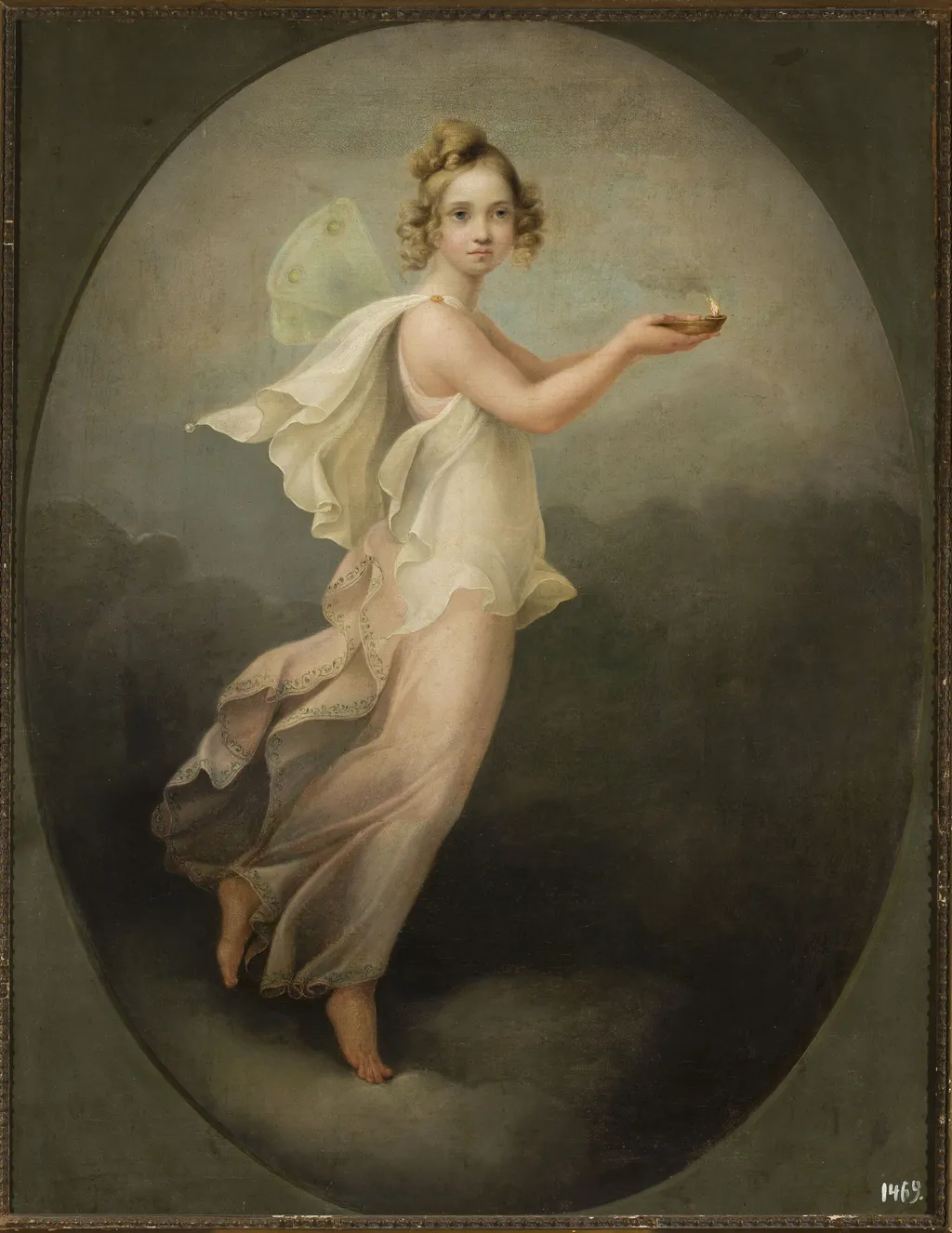
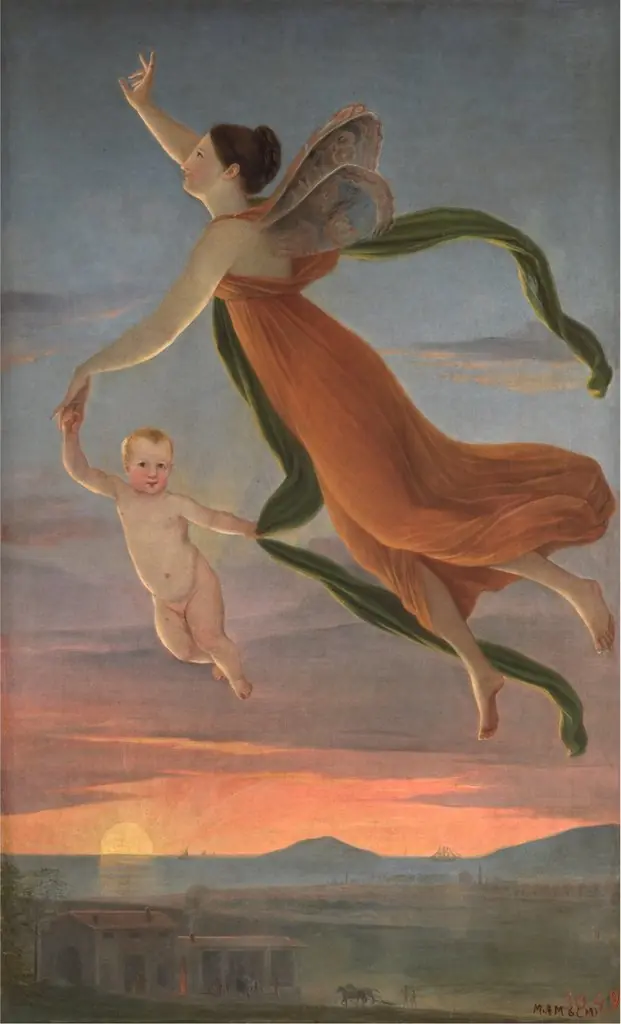
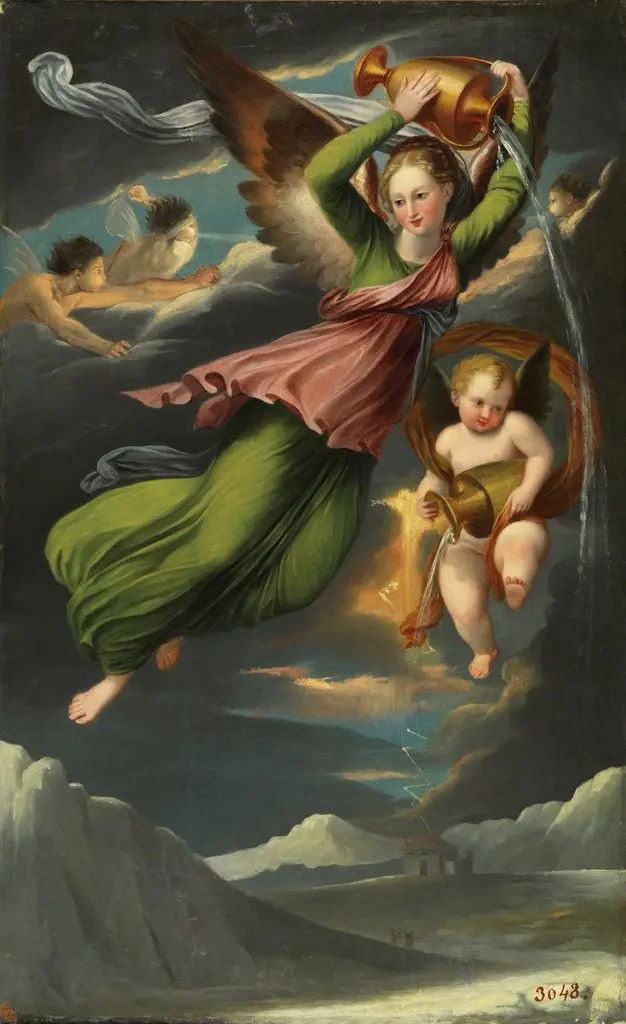
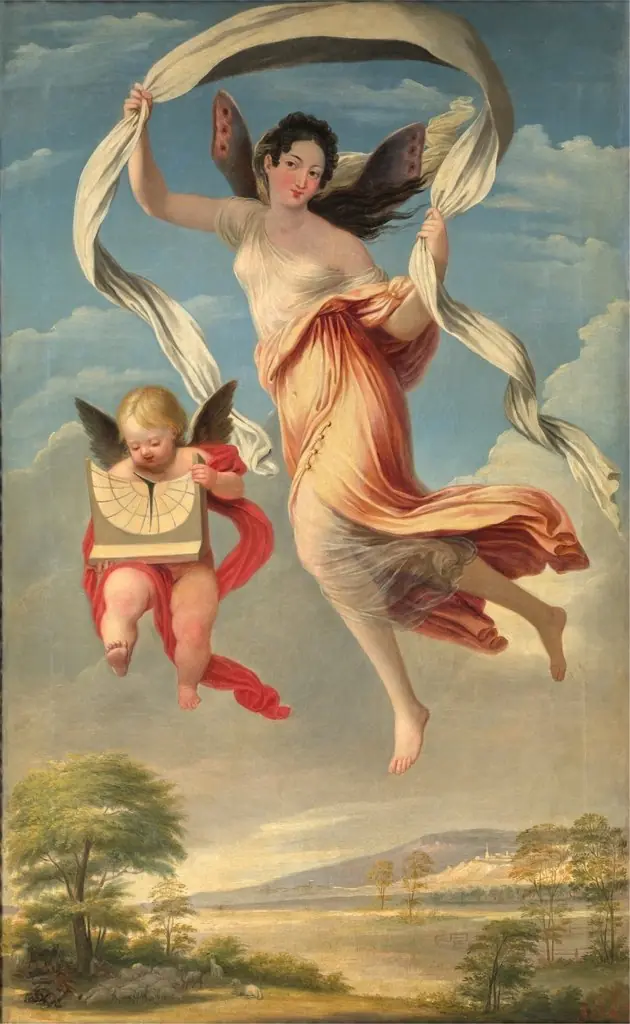
Psyche is an oil painting by the German Romanticist artist Johann Heinrich Beck. It dates from 1814 and is held in the collection of the National Museum in Warsaw.
About this work
Overview
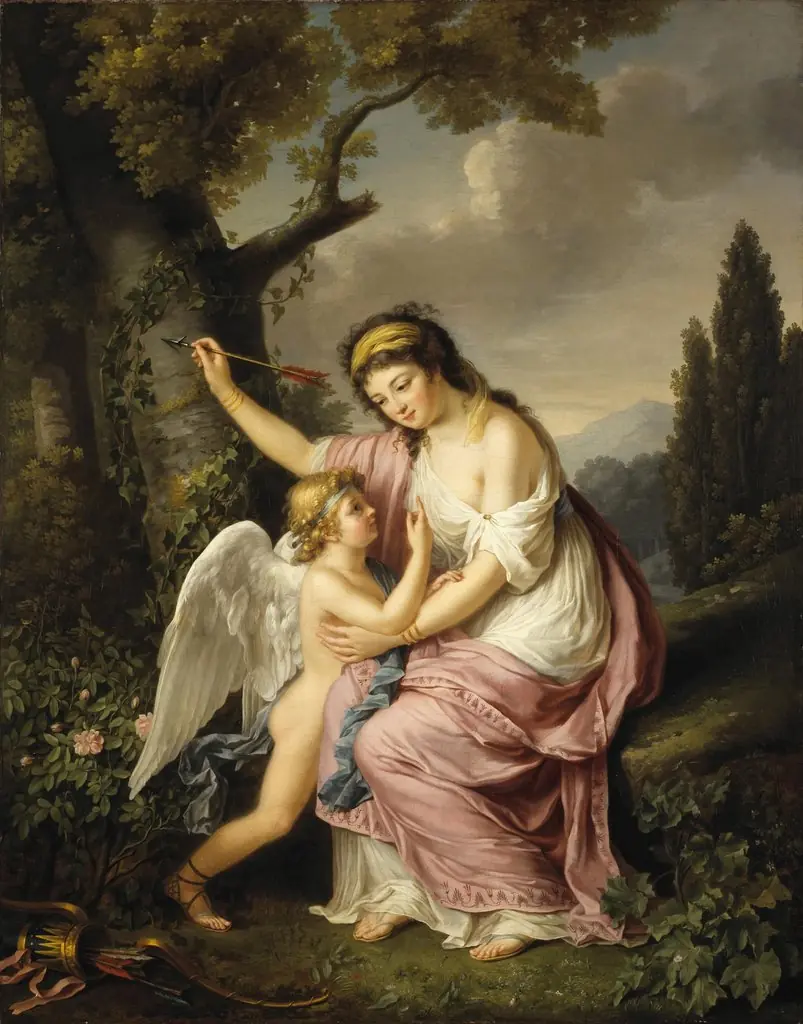
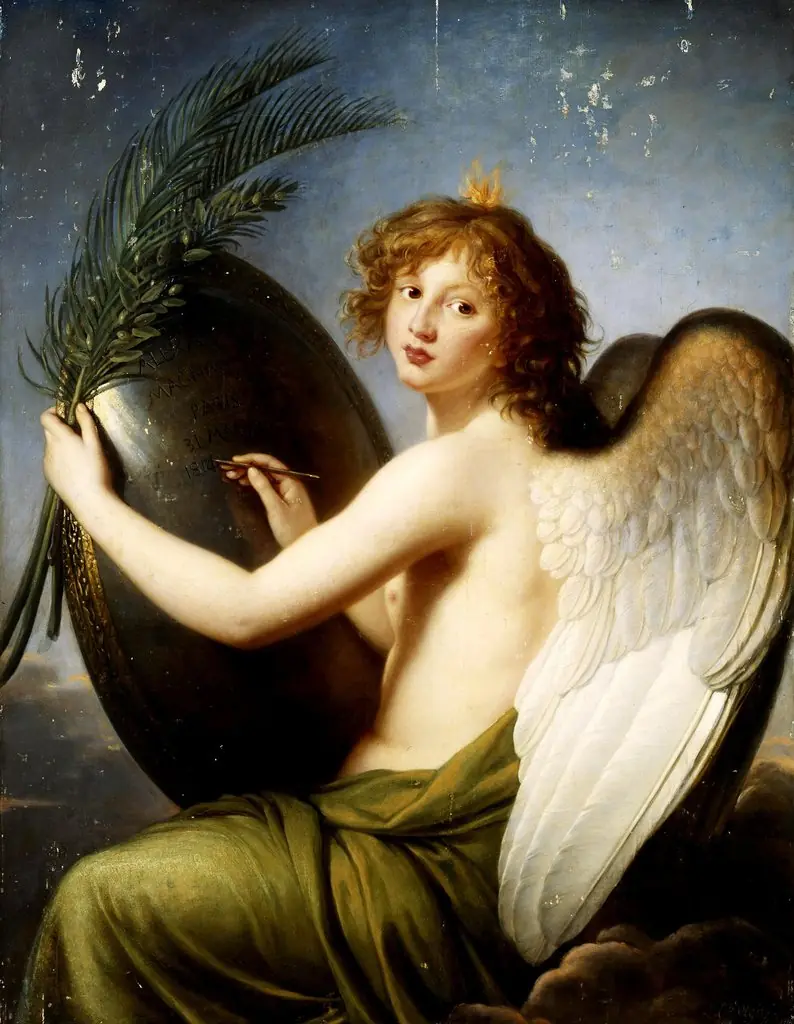
Painted in 1814 by Johann Heinrich Beck, this oil work portrays a winged female figure identified as Psyche. The painting resides in the National Museum in Warsaw. Rendered with careful attention to light and shadow, the composition isolates the figure against a deep, undefined space, emphasizing her ethereal presence through contrast and minimal surroundings.
Subject & Meaning
The figure represents Psyche, the Greek personification of the soul, often depicted with wings in mythological art. She holds a small bowl, possibly alluding to her role in the tale of Cupid and Psyche, where she undertakes trials for divine love. The presence of a putto nearby suggests a divine or supernatural companion, reinforcing the mythic narrative of transformation and spiritual ascent.
Technique & Style
Beck employs chiaroscuro to model the figure’s form, using sharp transitions between light and shadow to create volume and depth.
Beck employs chiaroscuro to model the figure’s form, using sharp transitions between light and shadow to create volume and depth. The flowing white drapery contrasts with the dark background, enhancing the sense of weightlessness. The rendering of the wings and hair suggests delicate detail, while the overall composition remains restrained, focusing attention on the central figure without ornamental distraction.
History & Provenance
The painting was completed in 1814 and entered the collection of the National Museum in Warsaw, where it remains today. Its provenance before acquisition is not well documented, but its style aligns with early 19th-century Neoclassical tendencies in Central European art, reflecting contemporary interest in classical mythology and idealized forms.
Context
Created during the Napoleonic era, the painting reflects a broader European revival of classical themes in art, even amid political upheaval. Artists turned to mythological subjects as vehicles for expressing universal ideals—love, the soul, transcendence—offering a quiet counterpoint to the turbulence of the age.
Legacy
Though not widely exhibited beyond Poland, the painting contributes to the understanding of regional Neoclassical practice in the early 1800s. It preserves a modest yet precise interpretation of Psyche, distinct from more dramatic treatments by major European academies, offering insight into how mythological subjects were adapted in smaller artistic circles.
Artist & collection