Artwork
Genius of Alexander I
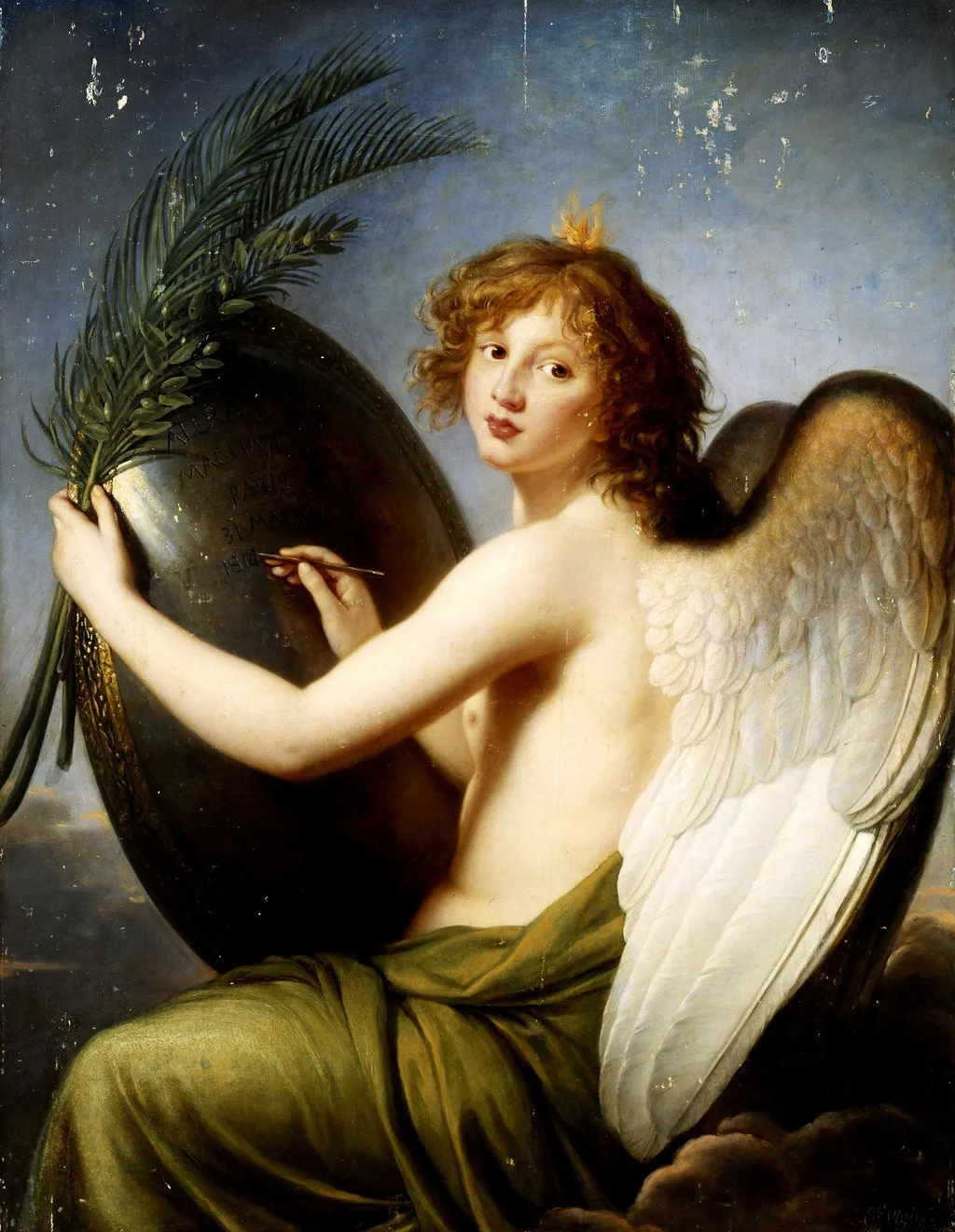
Genius of Alexander I is an oil painting by the Neoclassicist artist Élisabeth Louise Vigée Le Brun. It dates from 1814 and is held in the collection of the Hermitage Museum.
About this work
Overview
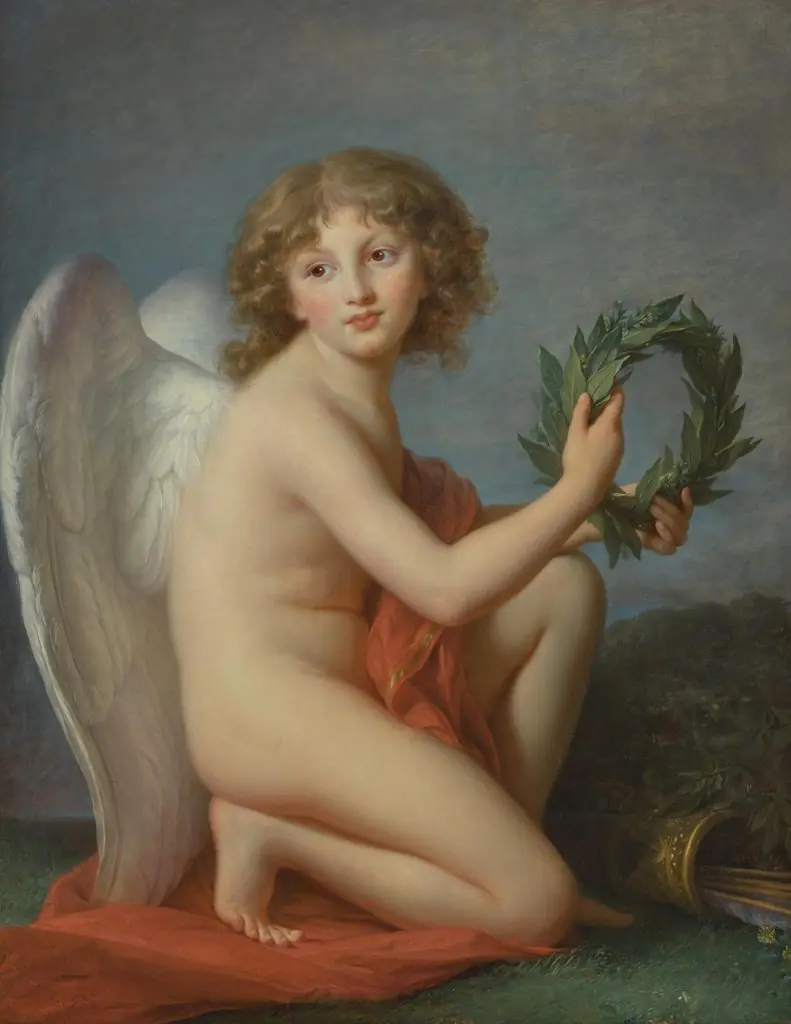
Painted in 1814 by Élisabeth Louise Vigée Le Brun, this oil portrait depicts an allegorical figure representing the Genius of Alexander I, Emperor of Russia. Created during the artist’s time in Russian service, the work reflects her adaptation to Neoclassical ideals after years of working in the Rococo tradition. It is now part of the State Hermitage Museum’s collection in Saint Petersburg.
Subject & Meaning
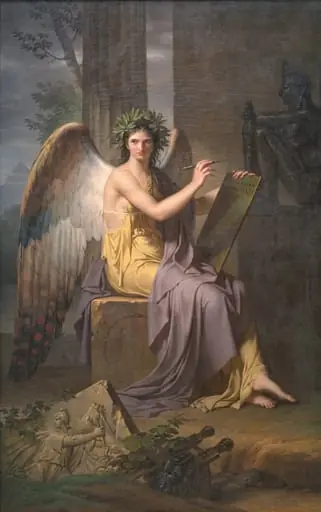
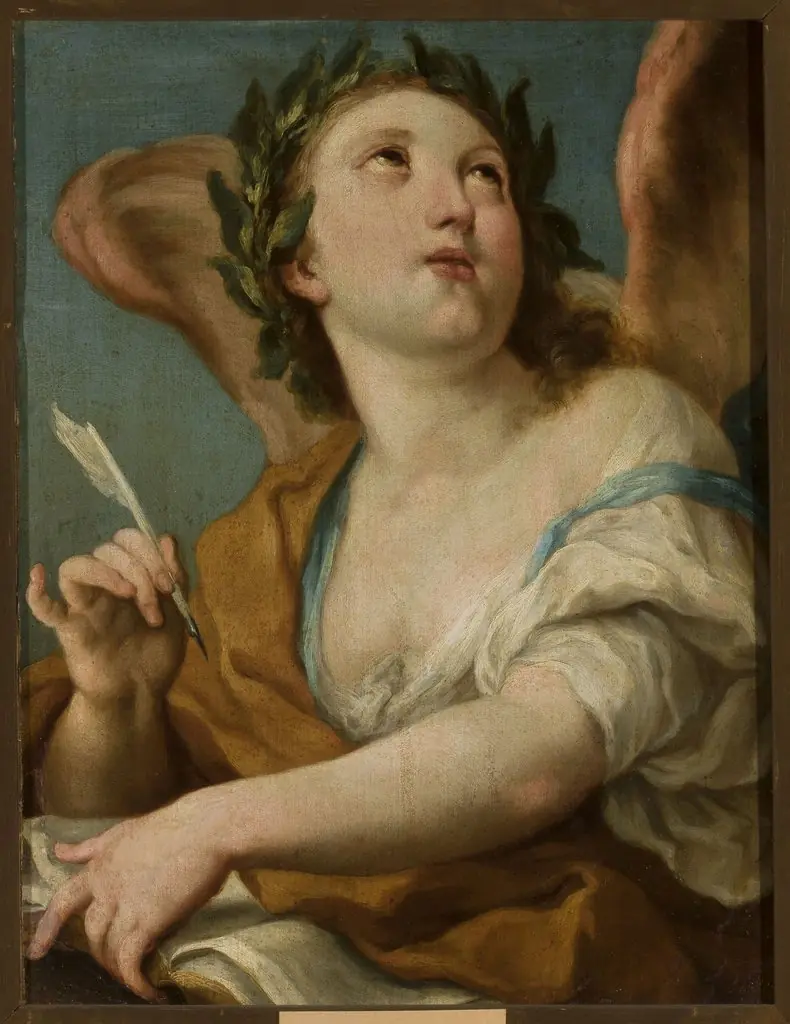
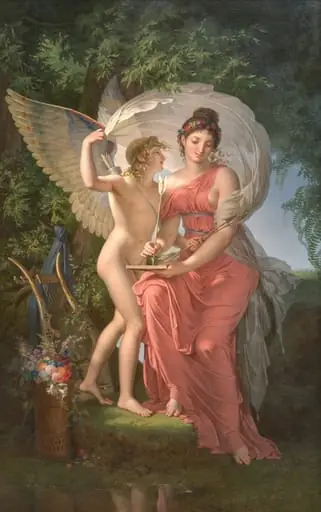
The central figure is an allegory of the imperial spirit, depicted as a winged, contemplative being inscribing a symbolic oval tablet.
The central figure is an allegory of the imperial spirit, depicted as a winged, contemplative being inscribing a symbolic oval tablet. The leaves and inscriptions suggest imperial decree or divine inspiration, while the feathered crown evokes ancient authority. The figure’s serene posture and elevated hand imply the quiet power of enlightened rule, aligning with Alexander I’s public image as a reformist monarch after the Napoleonic Wars.
Technique & Style
Vigée Le Brun employs soft modeling and subtle gradations of light to render the figure’s skin and drapery, blending tactile realism with idealized form. The muted blue-gray background enhances the warmth of the figure’s tones, focusing attention on the central allegory. Her brushwork is precise yet fluid, reflecting her mastery of Neoclassical composition while retaining the delicate handling characteristic of her earlier Rococo training.
History & Provenance
Commissioned during Vigée Le Brun’s tenure at the Russian court, the painting was likely intended to honor Alexander I’s role in the defeat of Napoleon. It entered the Hermitage collection shortly after its completion, possibly as a gift or state acquisition. The work remained in imperial hands through the 19th century and was preserved through the Soviet era without relocation or significant alteration.
Context
Created in the aftermath of the Napoleonic Wars, the painting reflects the political climate of post-revolutionary Europe, where monarchies sought to legitimize power through classical imagery. Vigée Le Brun, having fled France after the Revolution, found patronage in Russia, where her style was valued for its elegance and moral clarity. This work exemplifies how portraiture was used to convey political ideals through mythological allegory.
Legacy
Though less known than her royal portraits of French nobility, this painting illustrates Vigée Le Brun’s adaptability and enduring skill in allegorical representation. It stands as a rare example of her work commissioned by a foreign sovereign and preserved in a major national collection. The piece contributes to understanding how female artists navigated political and artistic transitions in early 19th-century Europe.
Own this work as a print
Artist & collection
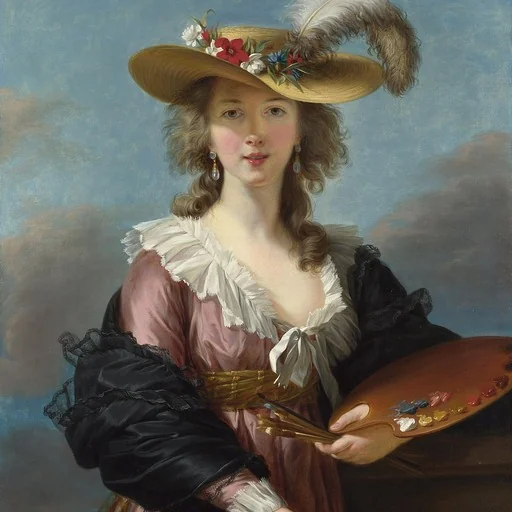
Artist
Élisabeth Louise Vigée Le Brun
Élisabeth Louise Vigée Le Brun (French: ; née Vigée; 16 April 1755 – 30 March 1842), also known as Louise Élisabeth Vigée Le Brun or simply Madame Le Brun, was a French painter who mostly specialized in portrait…

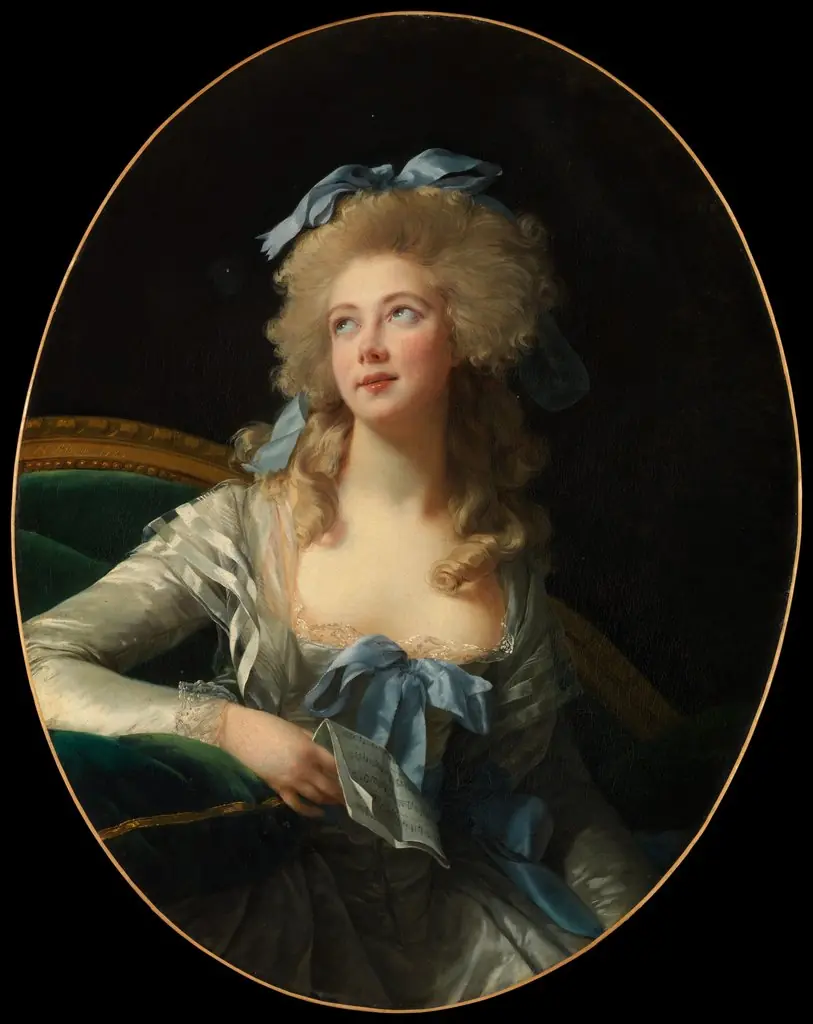 Madame Grand (Noël Catherine Verlée, 1761–1835)
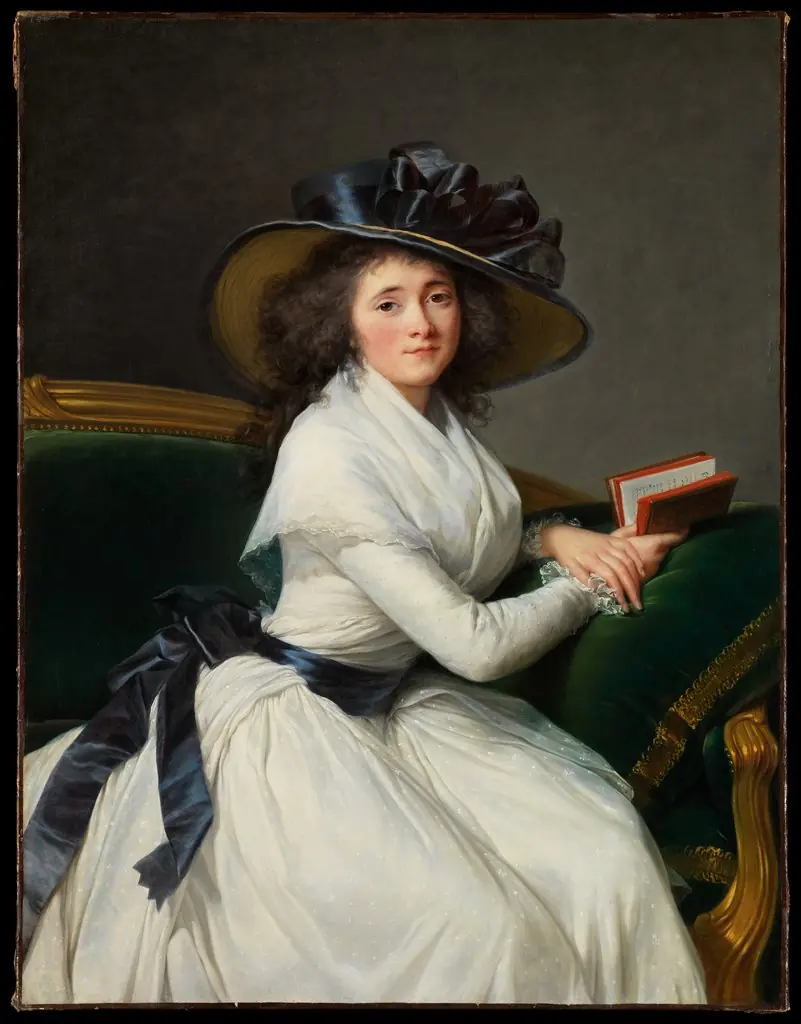 Comtesse de la Châtre (Marie Charlotte Louise Perrette Aglaé Bontemps, 1762–1848)
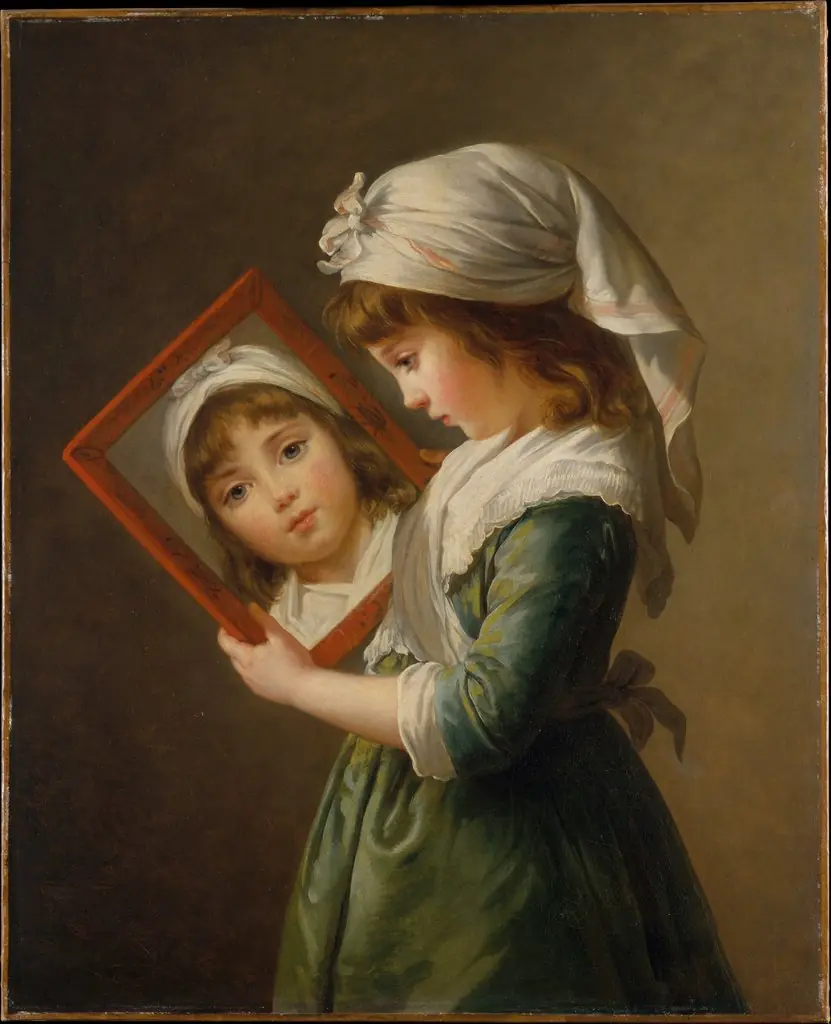 Julie Le Brun (1780–1819) Looking in a Mirror
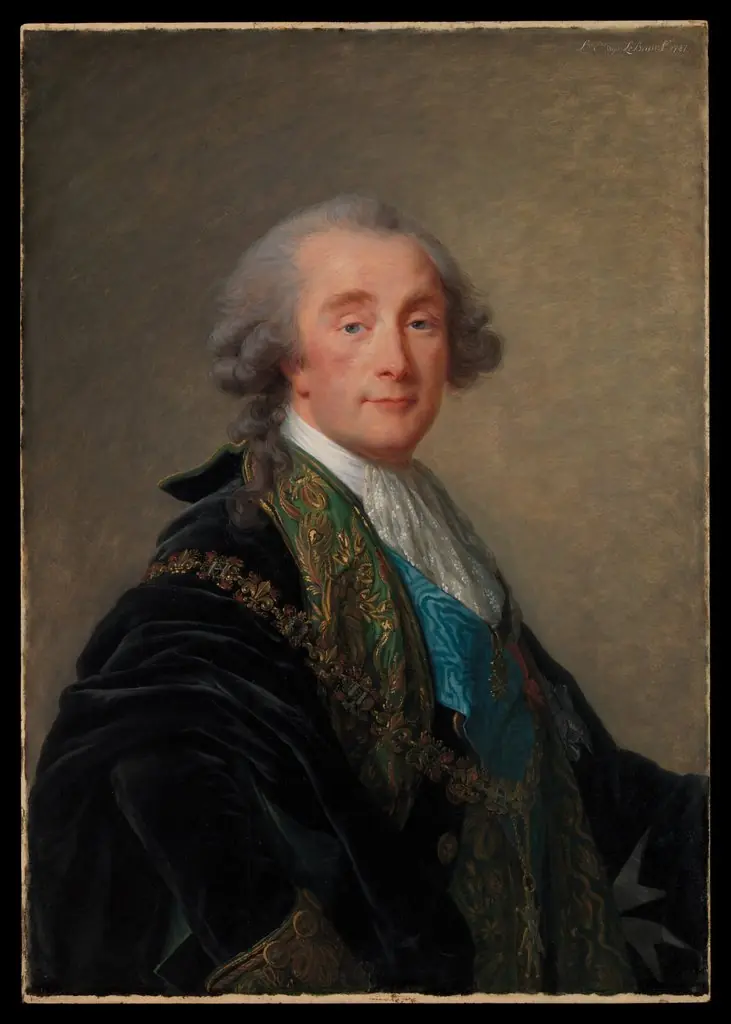 Alexandre Charles Emmanuel de Crussol-Florensac (1743–1815)
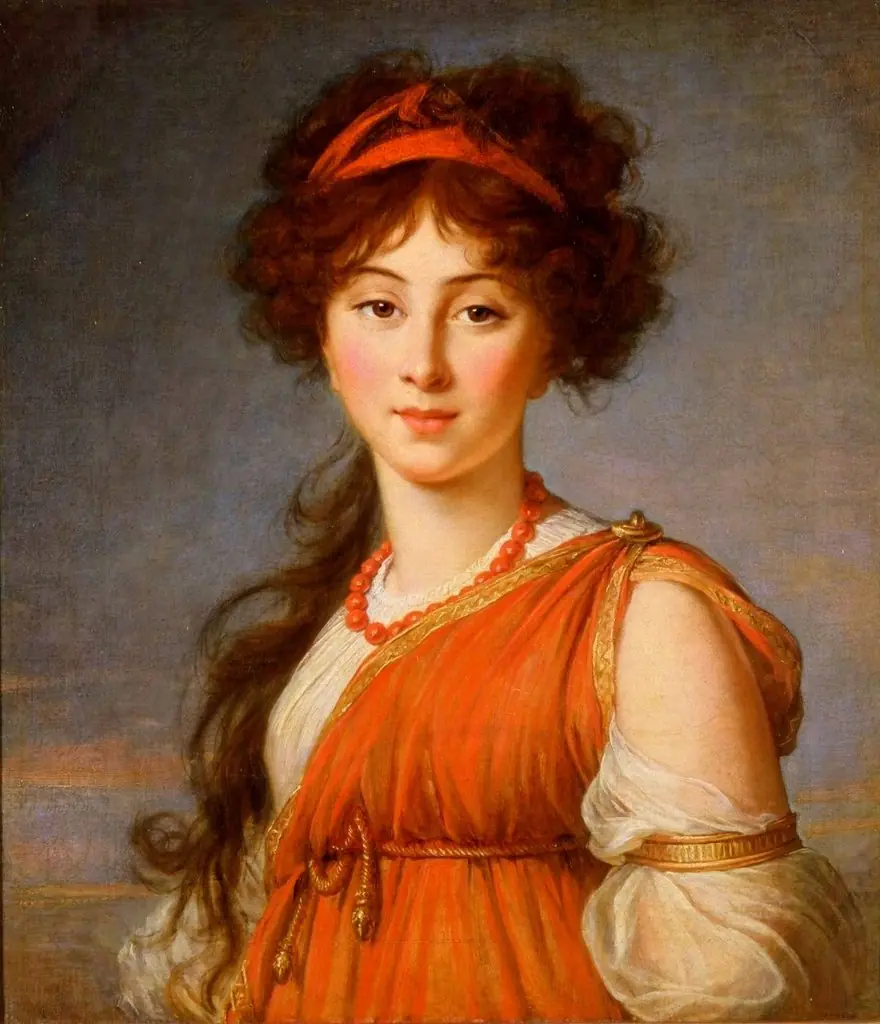 Varvara Ivanovna Ladomirsky
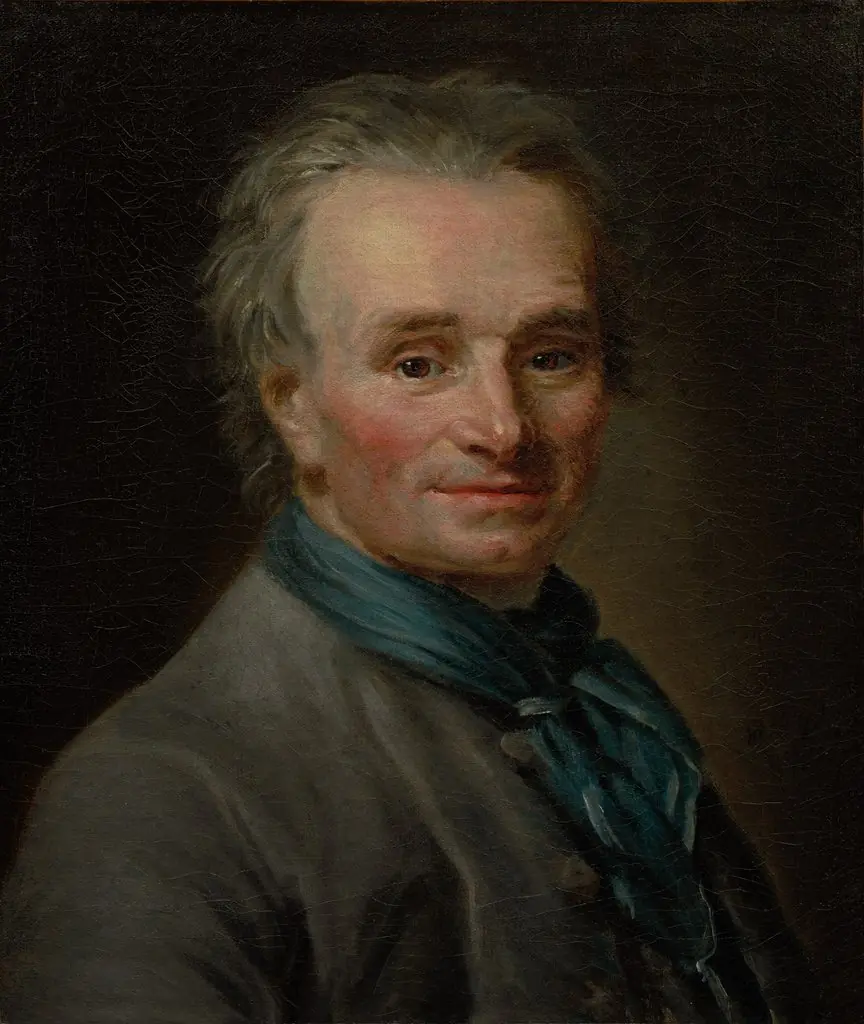 Portrait of Jean-Baptiste Lemoyne the Younger
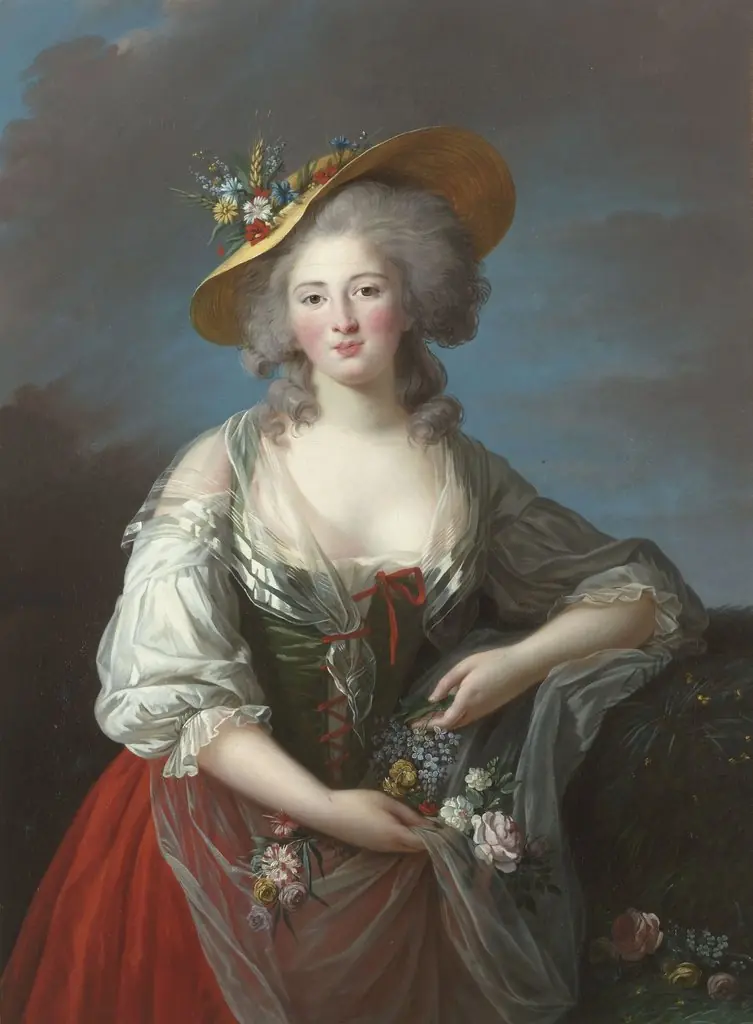 Elisabeth-Philippe-Marie-Hélène de France, dite Madame Elisabeth
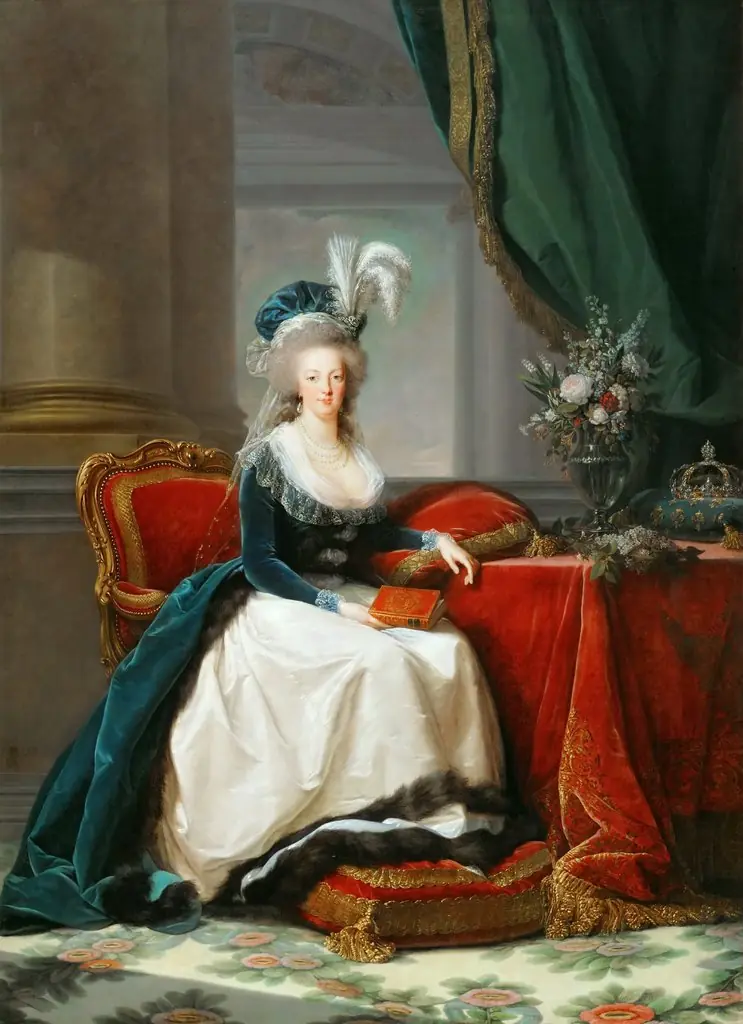 Marie-Antoinette seated, in blue coat and white dress, holding a book in her hand