Artwork
Arcadian Landscape Mercury and Io
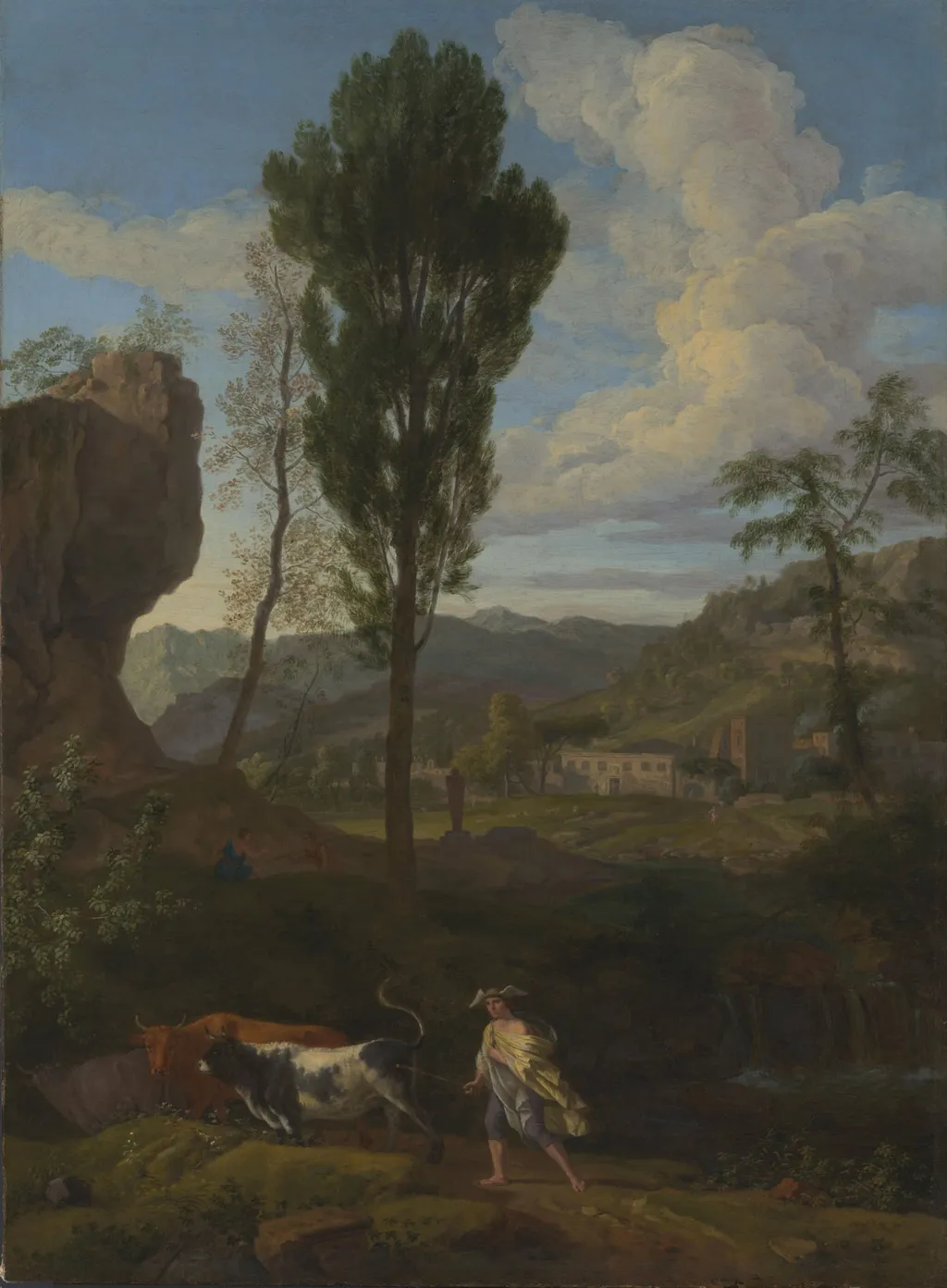
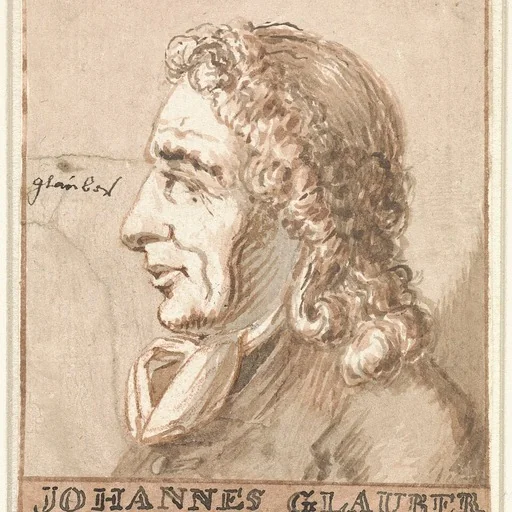
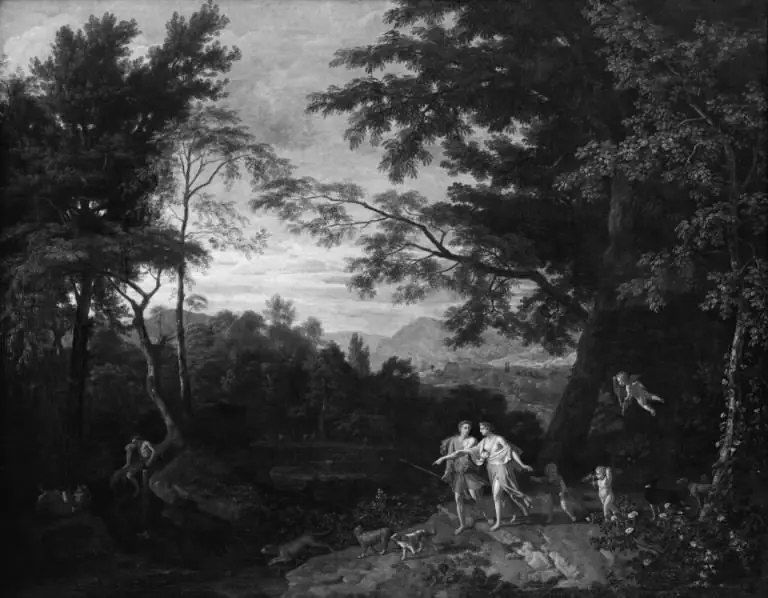
Arcadian Landscape Mercury and Io is an unspecified painting by the Dutch Golden Age artist Johannes Glauber. It dates from 1703 and is held in the collection of the Rijksmuseum.
About this work
Overview
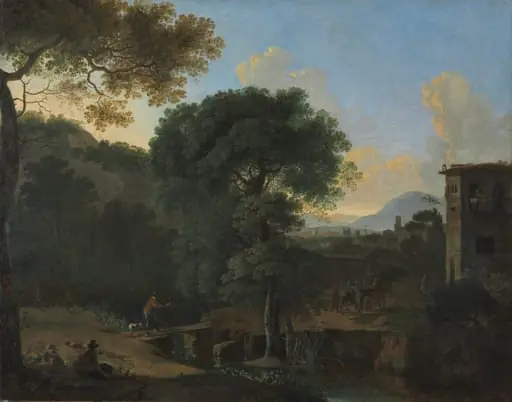
The composition features a verdant valley anchored by a prominent poplar tree and a cascading waterfall, with a distant castle establishing the horizon.
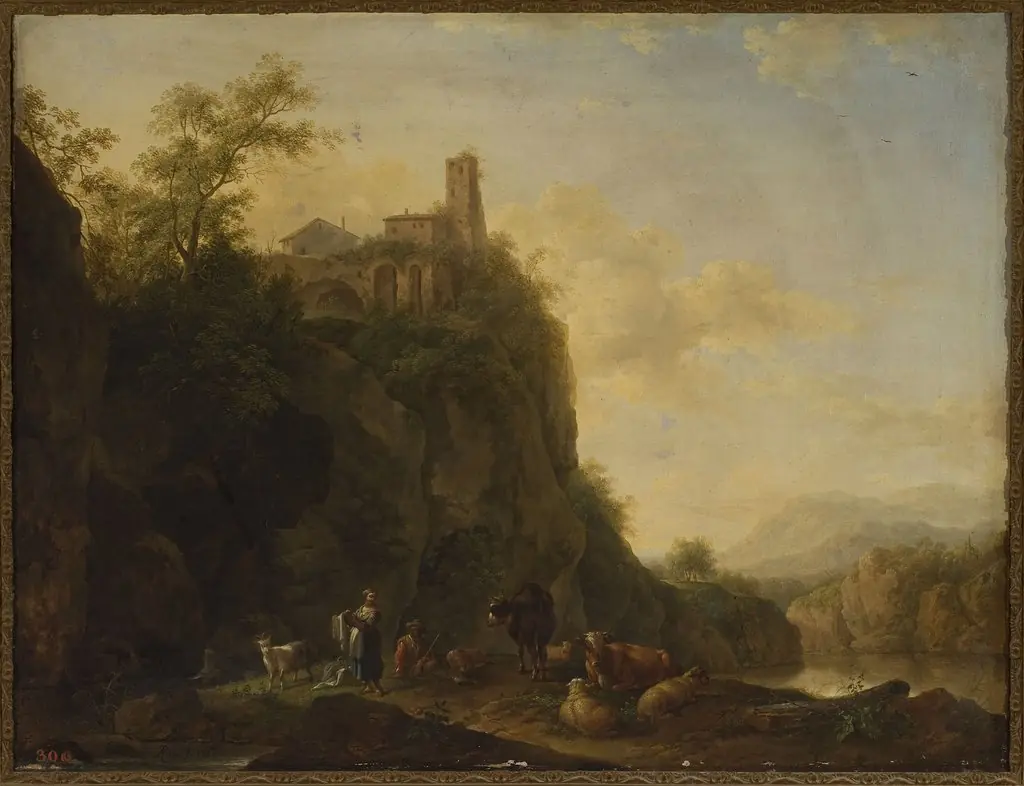
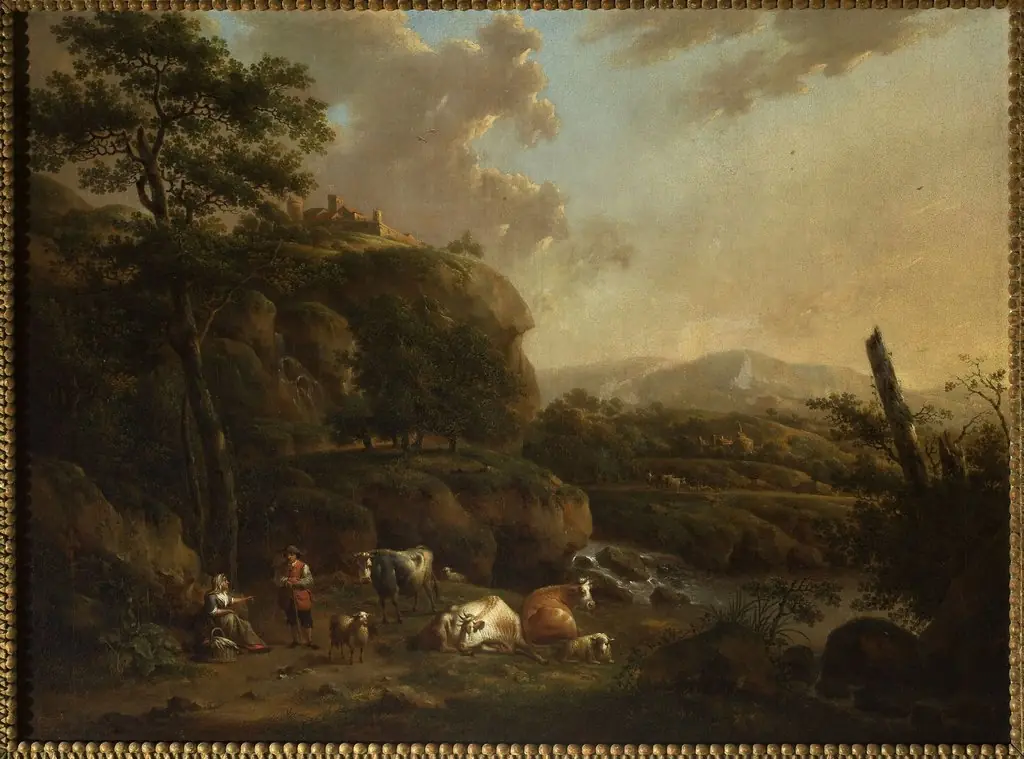
Painted in 1703, Johannes Glauber's Arcadian Landscape: Mercury and Io depicts a mythological narrative set within an idealized pastoral environment. The composition features a verdant valley anchored by a prominent poplar tree and a cascading waterfall, with a distant castle establishing the horizon. In the foreground, the god Mercury, draped in a red cloak, hovers above Io, who has been transformed into a white cow by the goddess Juno. This scene illustrates the moment Mercury prepares to slay the watchman Argus to liberate Io, a story from Ovid's Metamorphoses. Glauber, a Dutch artist known for his Italianate landscapes, integrates the classical subject seamlessly into the natural setting, prioritizing atmospheric perspective and lush vegetation over dramatic figural action. The work reflects the late 17th-century Dutch fascination with Italianate scenery, where mythological figures serve as narrative elements within a harmonious, invented landscape rather than the primary focus. Created during the artist's mature period, this painting exemplifies his skill in blending genre conventions with specific literary allusions, maintaining the serene and decorative qualities characteristic of his oeuvre.
Subject & Meaning
The painting draws on classical mythology: Juno, jealous of Jupiter’s lover Io, transforms Io into a bovine. Mercury, the messenger god, appears poised to intervene and restore her humanity. The juxtaposition of the tranquil landscape with the dramatic mythic moment underscores themes of transformation and divine rescue.
Technique & Style
Rendered in a muted palette, the scene is bathed in soft, diffused light that lends a dreamlike quality. The composition balances natural elements—water, tree, architecture—with the mythological figures, employing a calm, balanced arrangement typical of 17th‑century Dutch landscape painting.
History & Provenance
The artist’s identity remains unknown, as the canvas bears no signature. The painting is part of the Rijksmuseum’s collection, where it is displayed alongside other serene landscapes that emphasize atmospheric harmony over overt drama.
Own this work as a print
Artist & collection

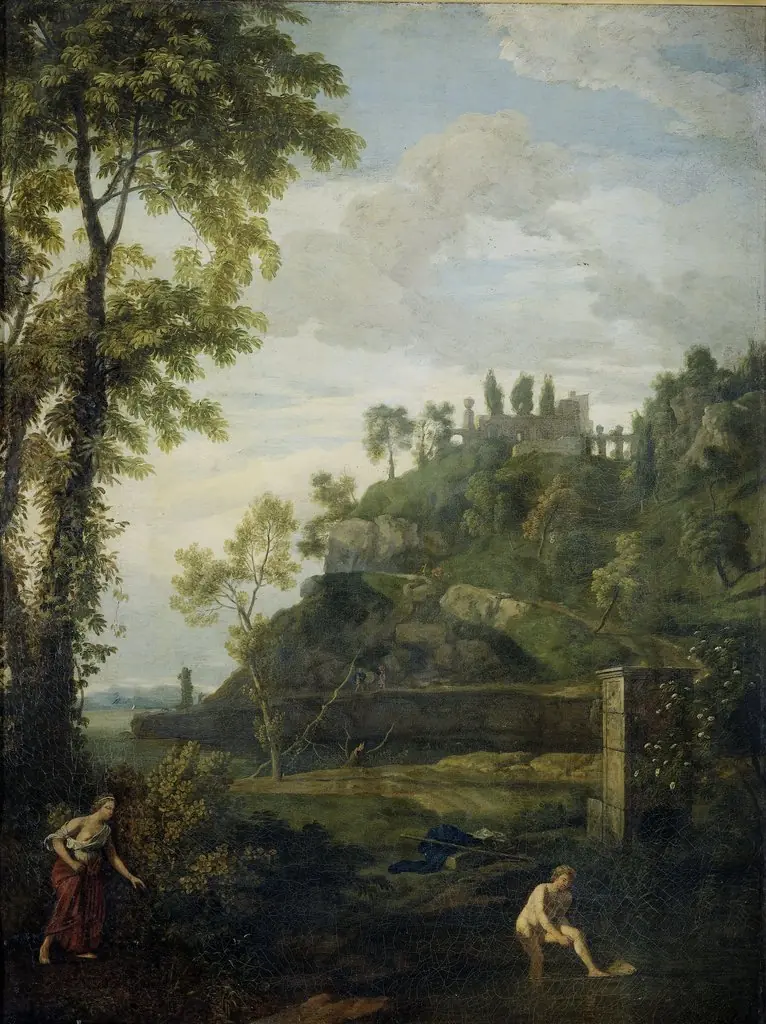 Arcadian landscape with Salmacis and Hermaphroditus
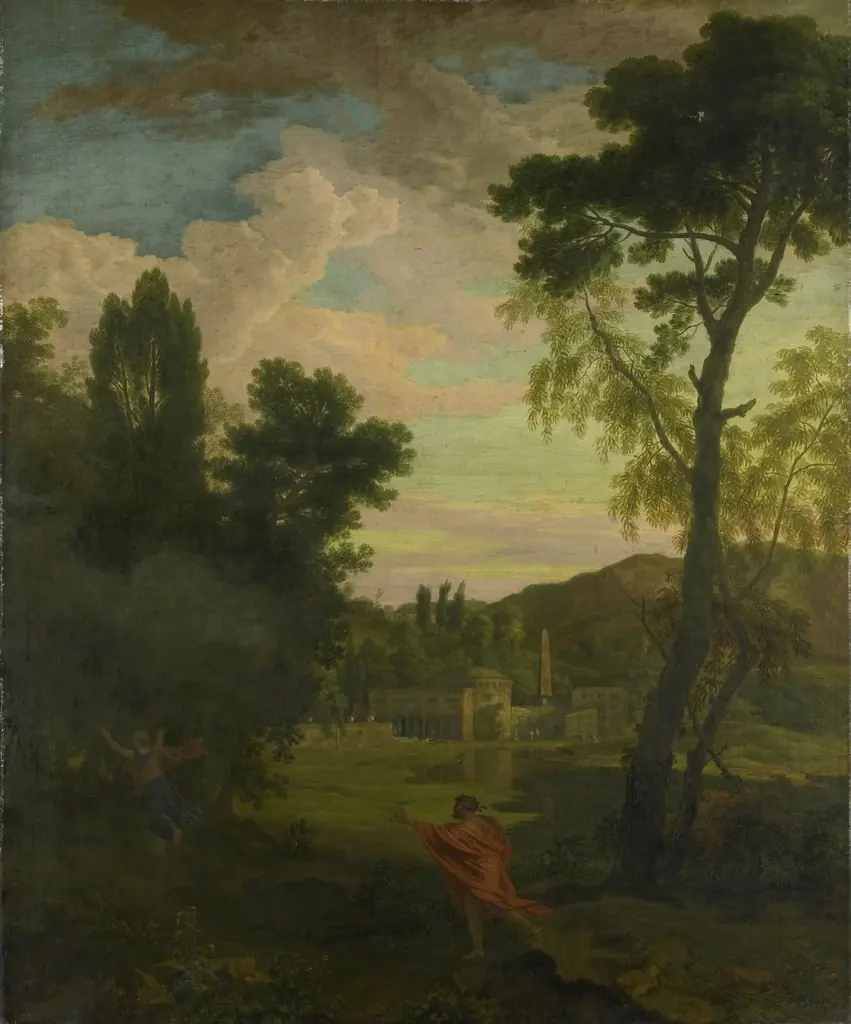 Arcadian landscape with Jupiter and Io
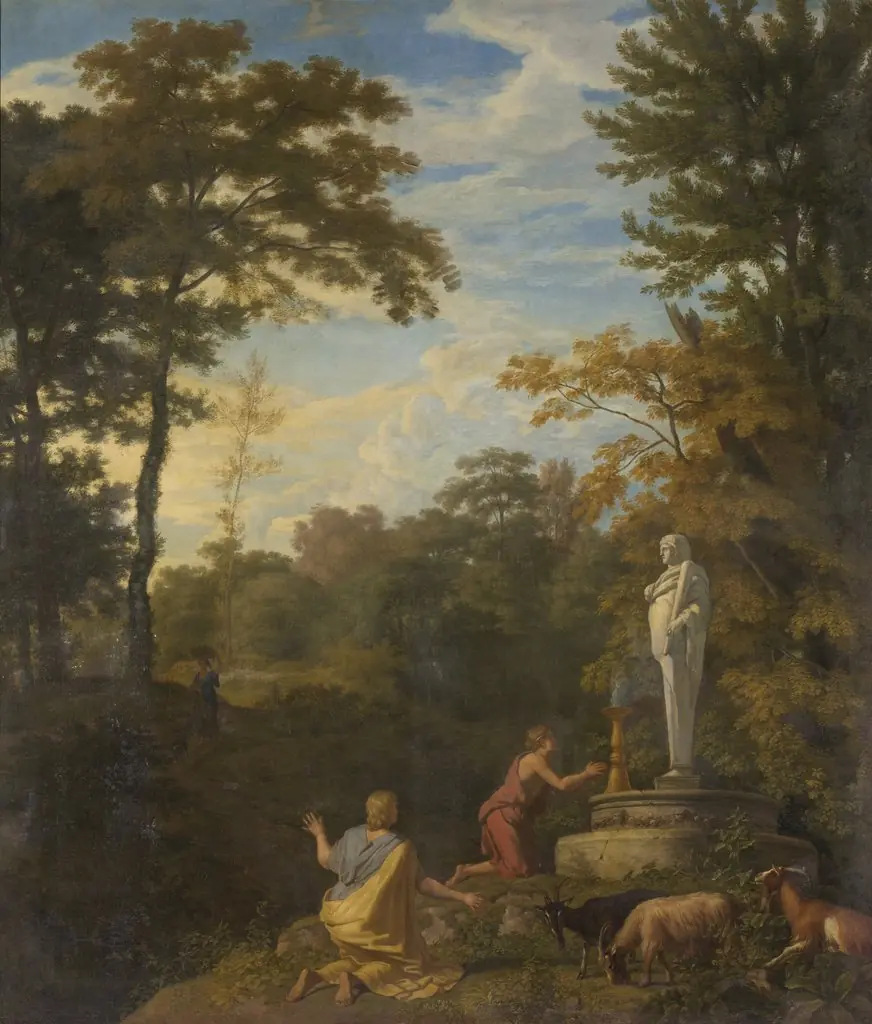 Arcadian landscape
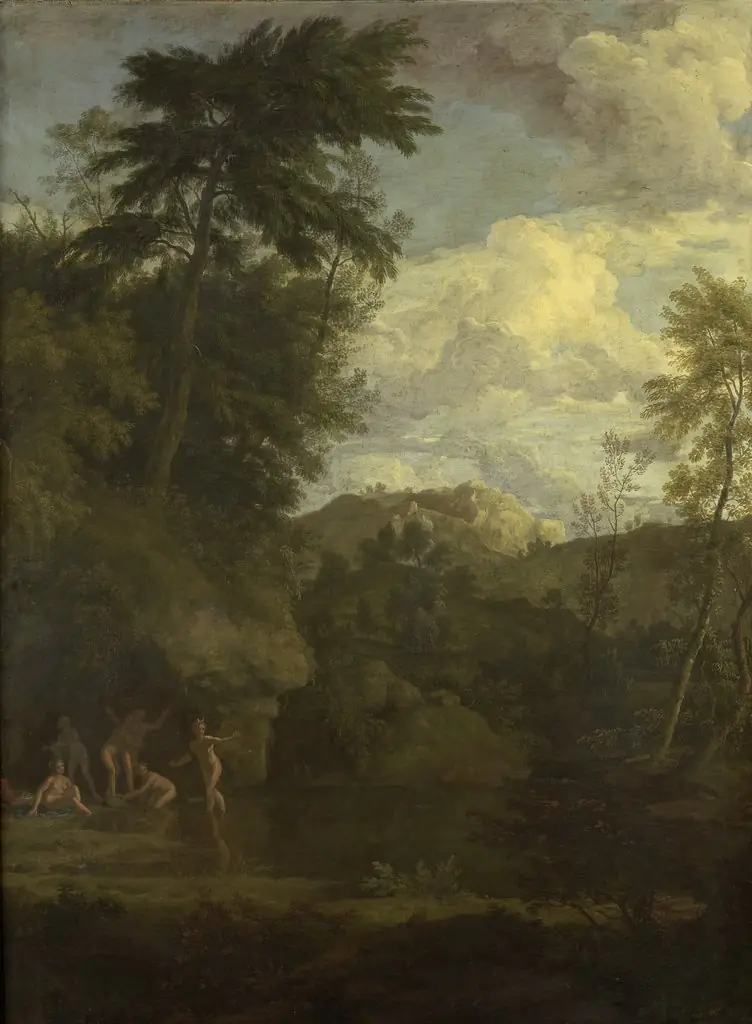 Arcadian landscape with bathing Diana
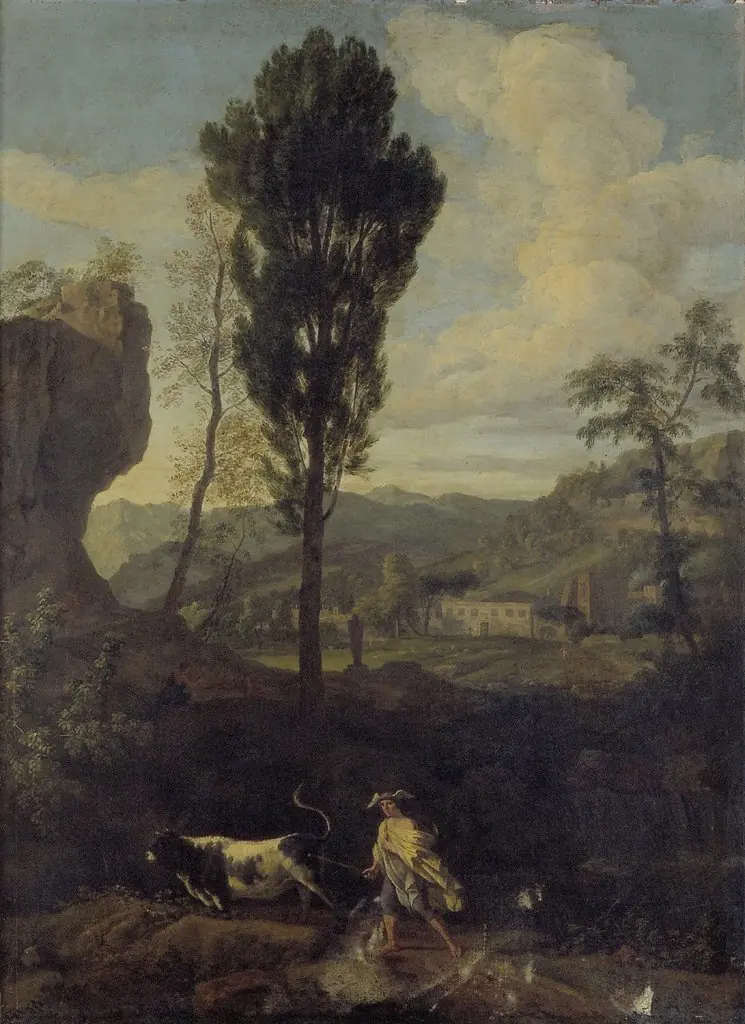 Arcadian landscape with Mercury and Io
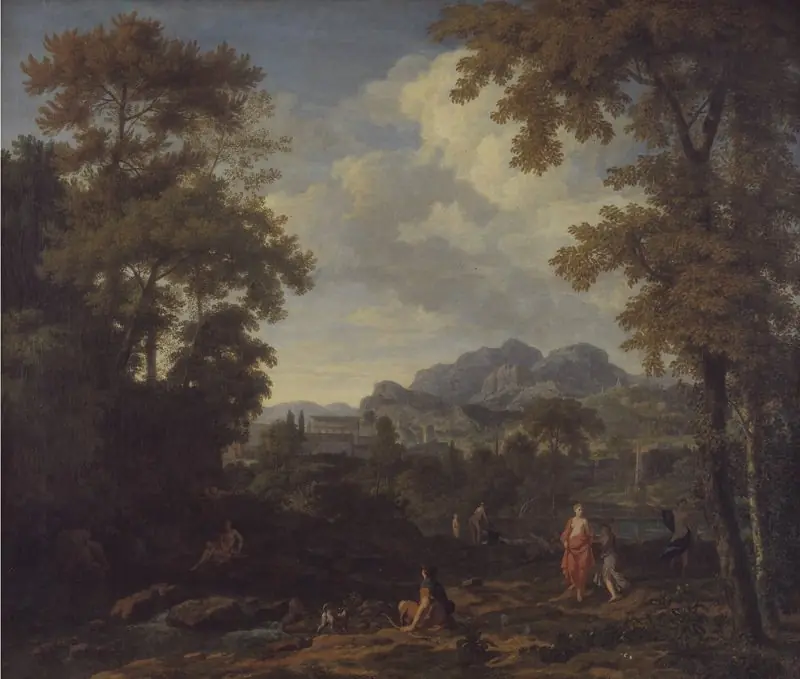 Classical Landscape with Diana (?) and her Nymphs
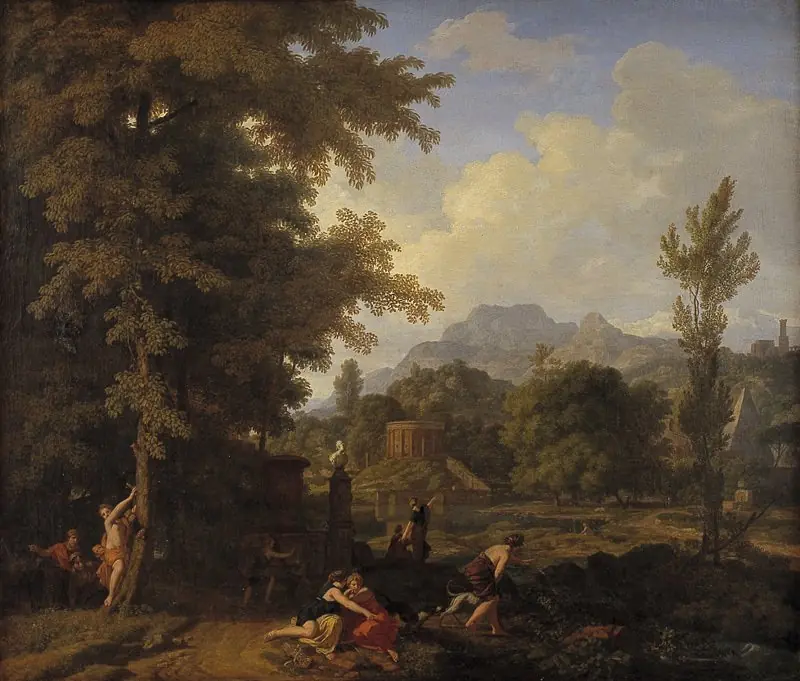 Classical Landscape with Diana (?) and her Nymphs
 Landscape with Venus and Adonis