Artwork
Carnival in Rome
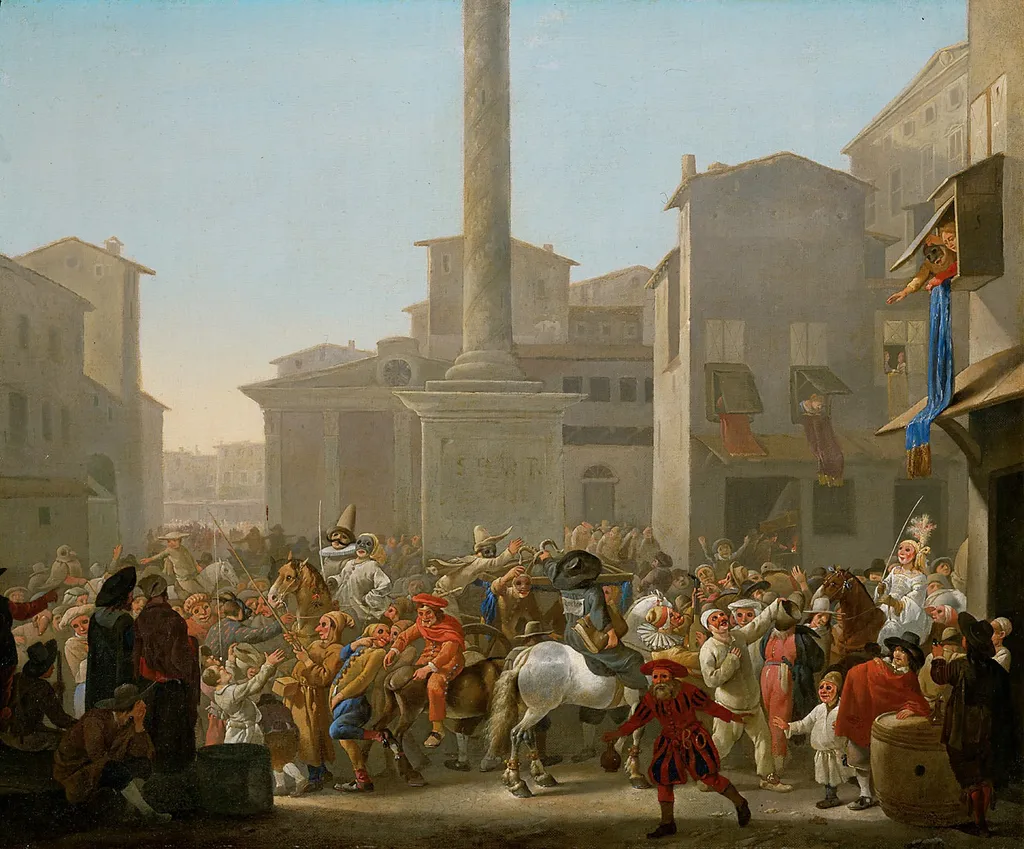
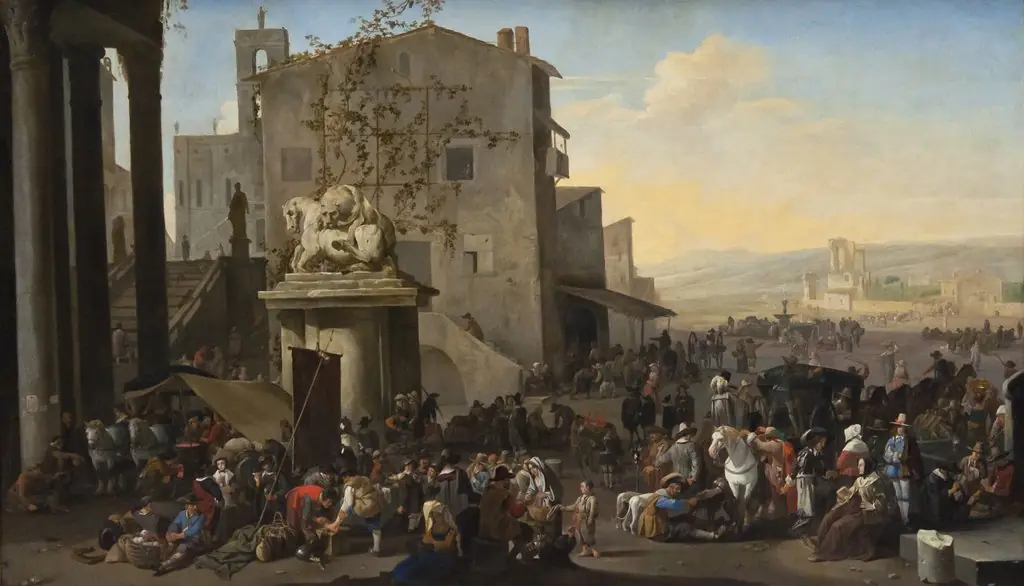
Carnival in Rome is an oil painting by the Dutch Golden Age artist Johannes Lingelbach. It dates from 1650 and is held in the collection of the Kunsthistorisches Museum.
About this work
Overview
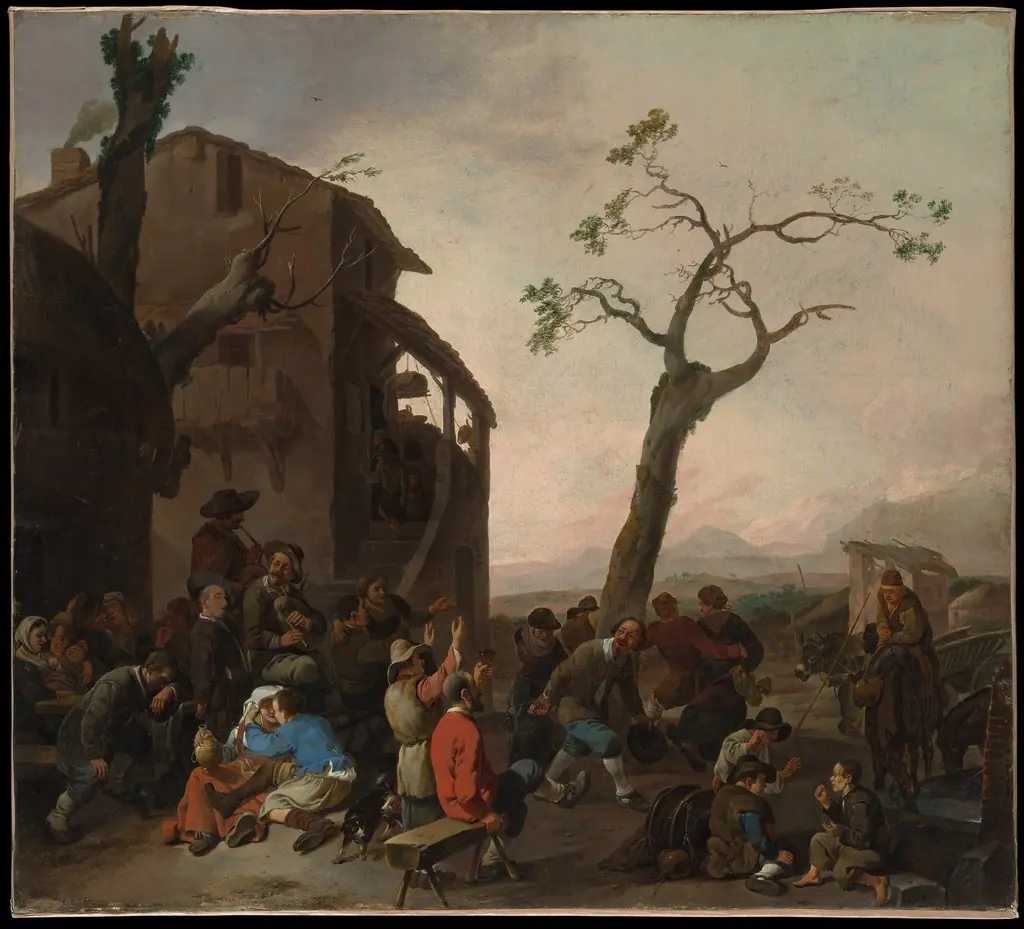
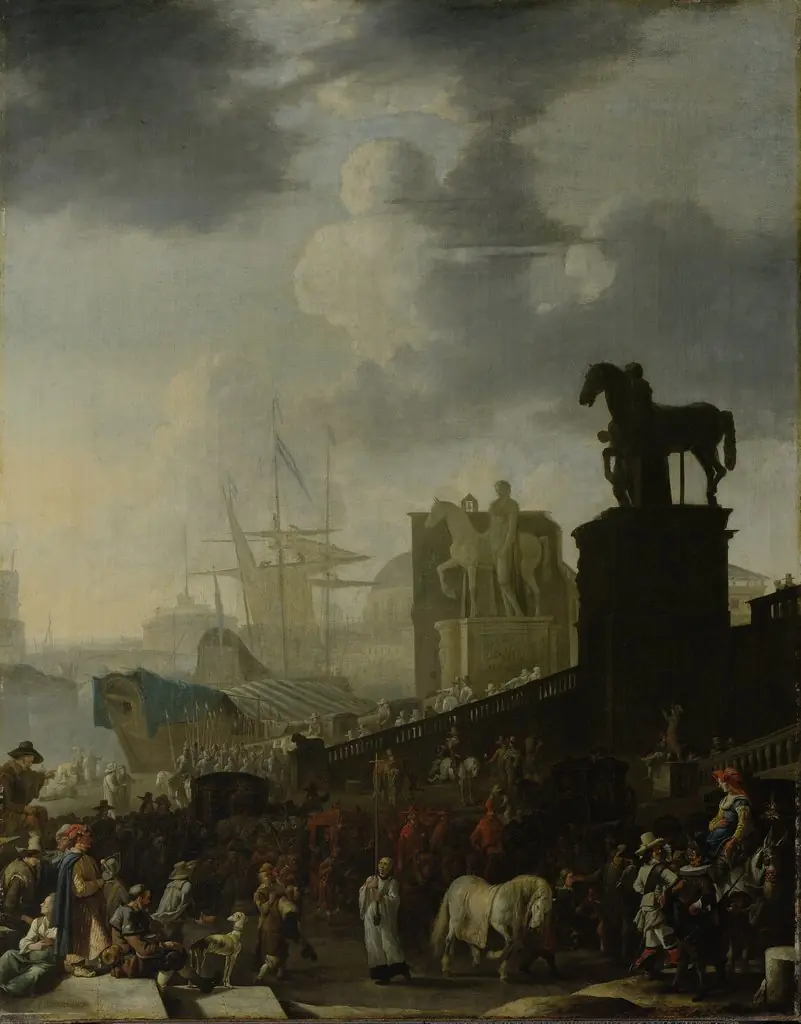
Johannes Lingelbach, a Dutch painter of the mid‑17th century linked to the second wave of the Bamboccianti in Rome, executed the oil on canvas titled Carnival in Rome circa 1650. The composition presents a bustling urban scene filled with figures, animals and architecture, and is part of the permanent collection of the Kunsthistorisches Museum in Vienna.
Subject & Meaning
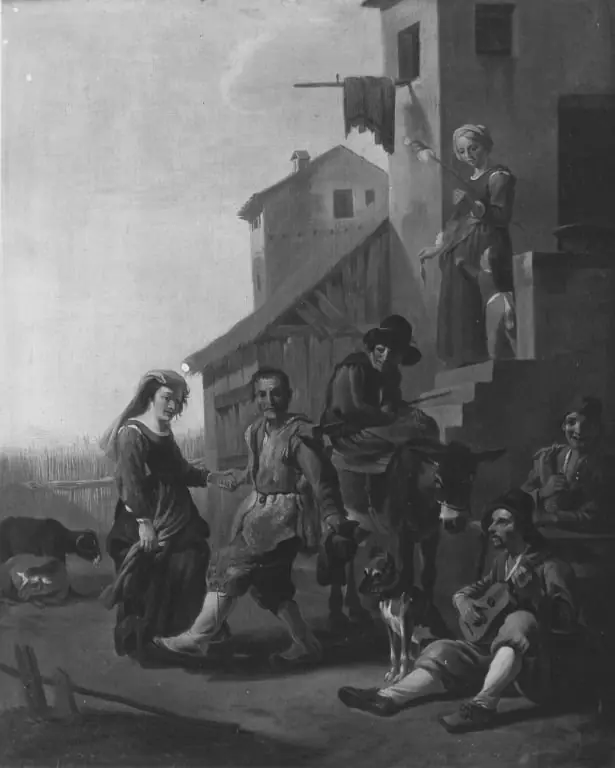
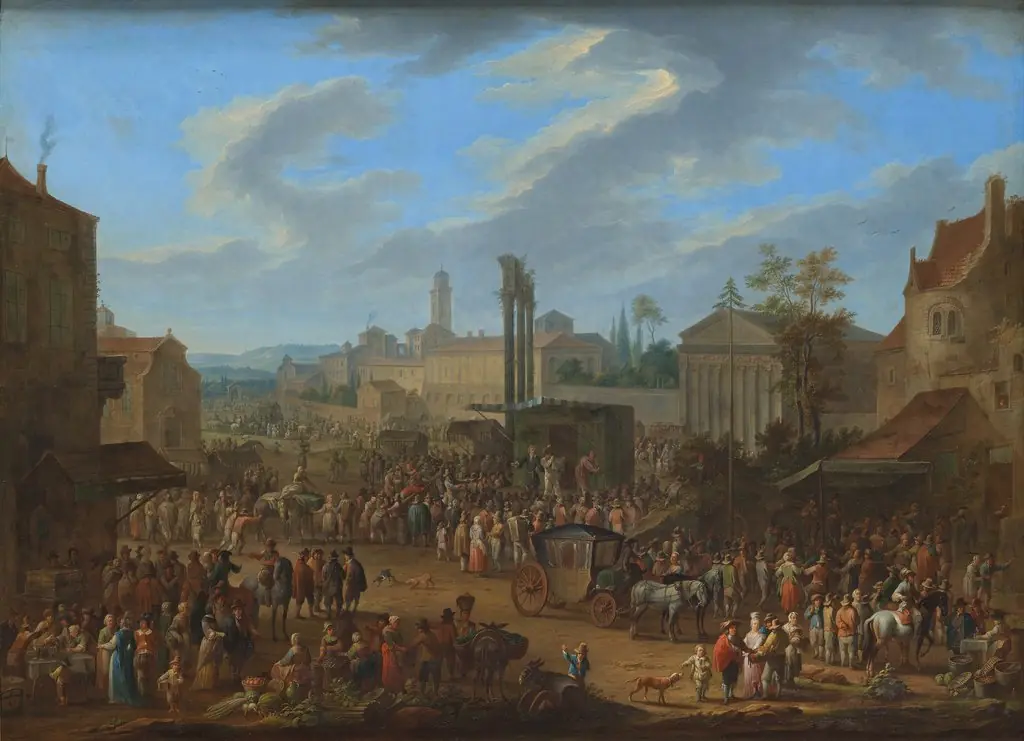
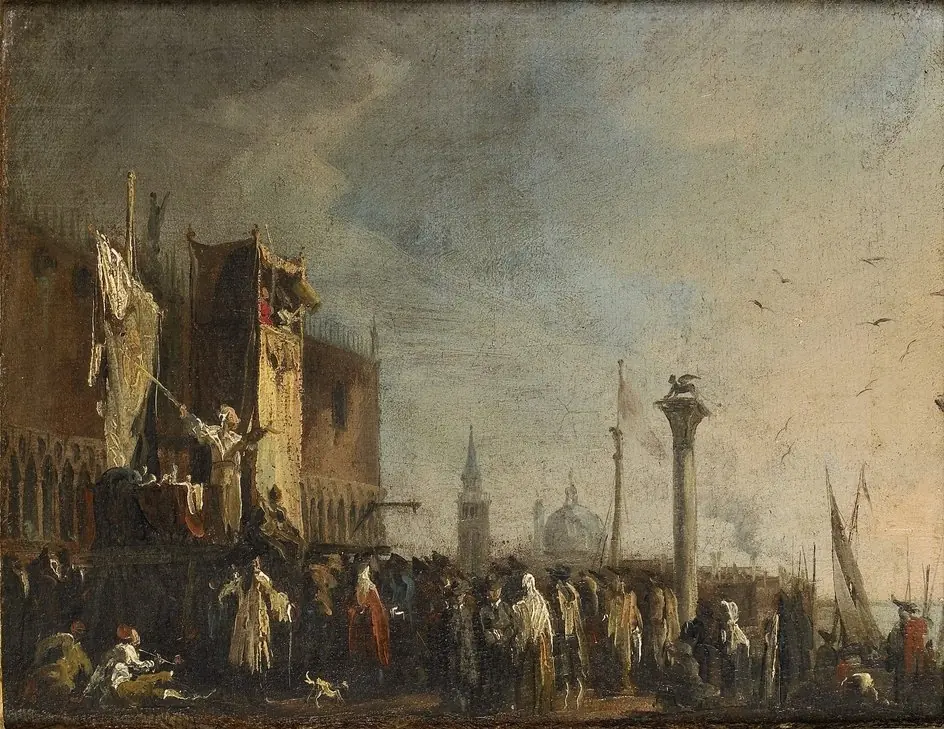
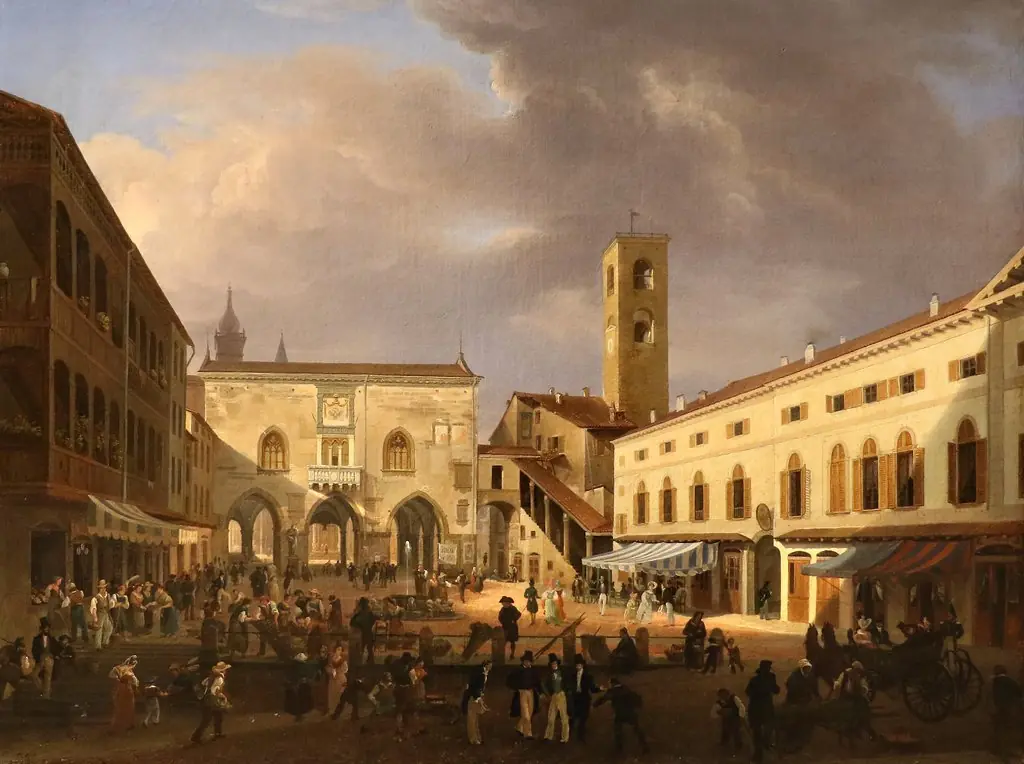
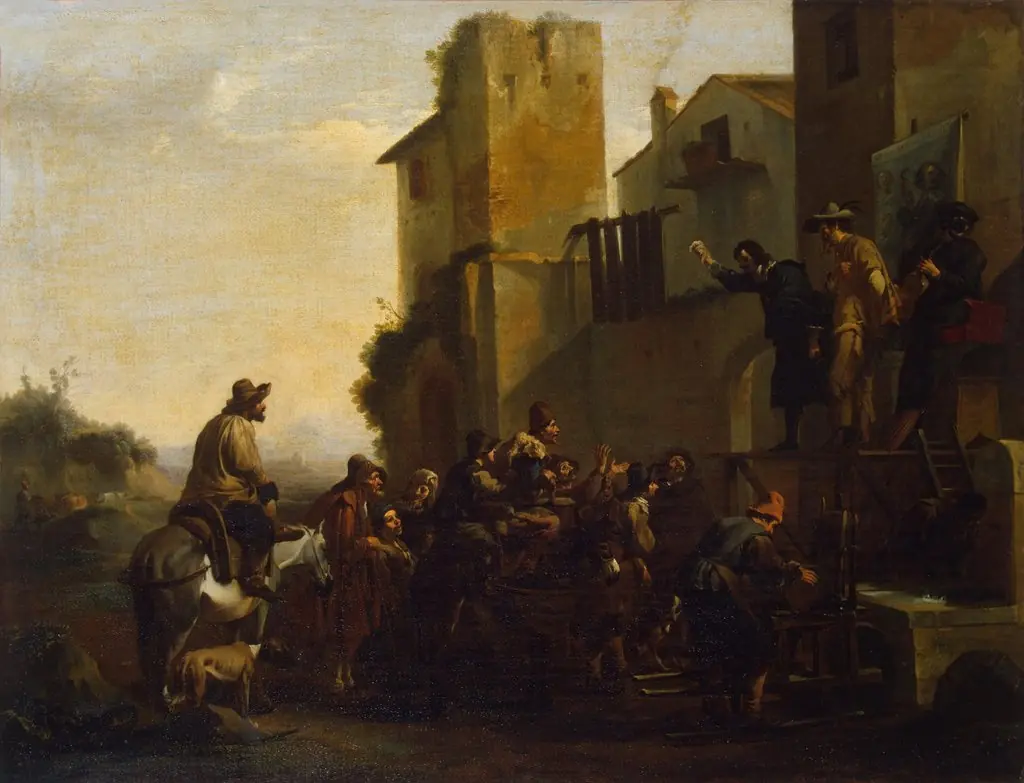
The canvas captures a crowded street during a festive episode, with participants dressed in vivid, often mismatched attire, some masked or wearing elaborate headgear, while others appear as laborers or soldiers. Horses, carriages, and a broken column beside a monumental building dominate the background, conveying a sense of organized chaos that hints at both celebration and the disorder that can accompany public revelry.
Technique & Style
Lingelbach employs a loose yet detailed brushwork typical of the Bamboccianti, emphasizing the lively movement of the crowd through swift, gestural strokes.
Lingelbach employs a loose yet detailed brushwork typical of the Bamboccianti, emphasizing the lively movement of the crowd through swift, gestural strokes. The palette is bright, with contrasting colors that differentiate individual costumes and highlight the bustling atmosphere. Spatial depth is achieved by juxtaposing the crowded foreground with architectural elements receding into the distance, creating a dynamic urban tableau.
History & Provenance
Created around 1650, the painting entered the holdings of the Kunsthistorisches Museum, where it remains on display. Its acquisition reflects the museum’s broader interest in collecting works that document everyday life in 17th‑century Rome, particularly those produced by Northern European artists active in the city.
Context
Lingelbach’s work belongs to the genre tradition that portrayed the lower and middle classes in vivid, anecdotal scenes, a hallmark of the Bamboccianti movement. By focusing on a carnival—a public spectacle that blended social strata—he aligns with contemporary interests in documenting the lived experience of Rome’s diverse populace during the Baroque period.
Artist & collection
Artist
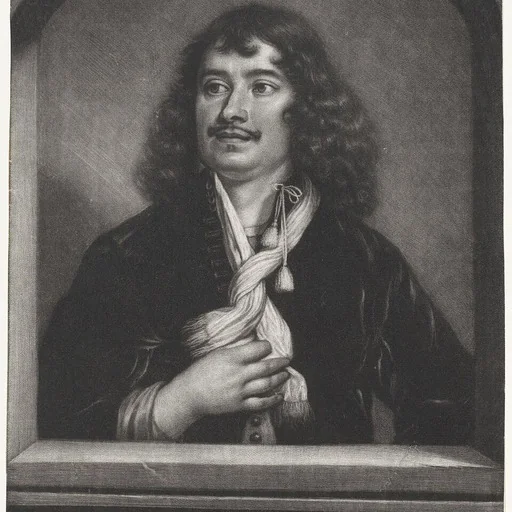
Johannes (or Johann) Lingelbach (1622 – 3 November 1674) was a Dutch Golden Age painter, associated with the second generation of Bambocciate, a group of genre painters working in Rome from 1625–1700.