Artwork
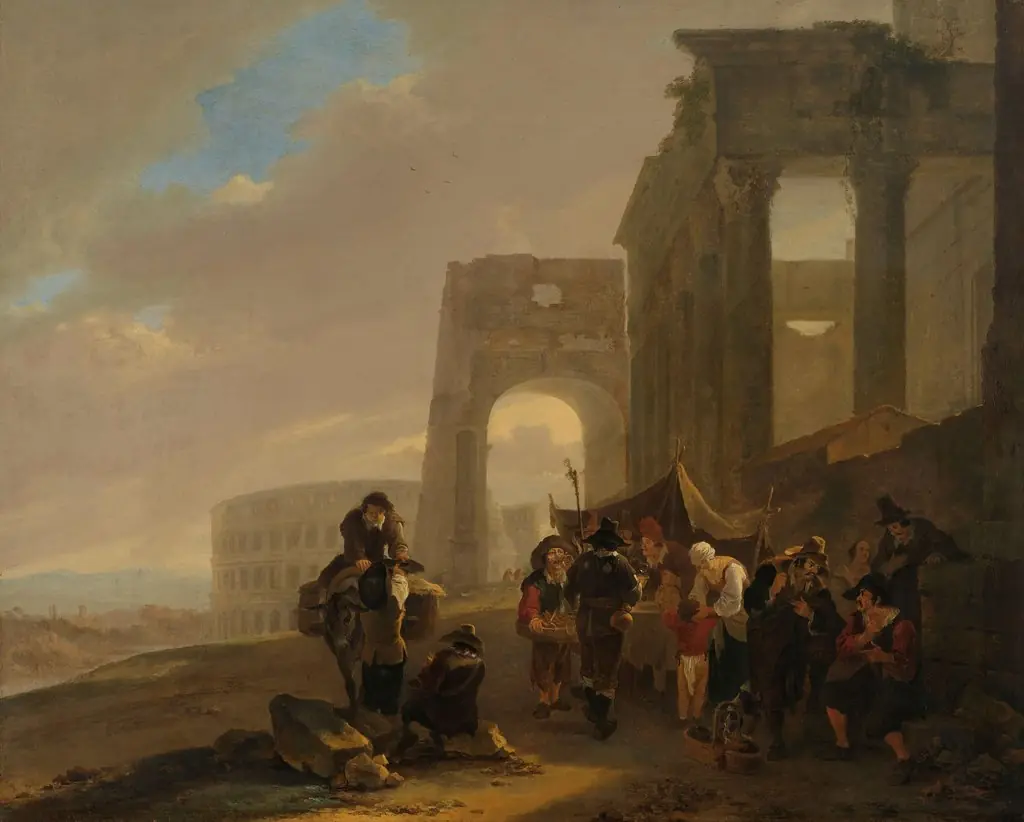
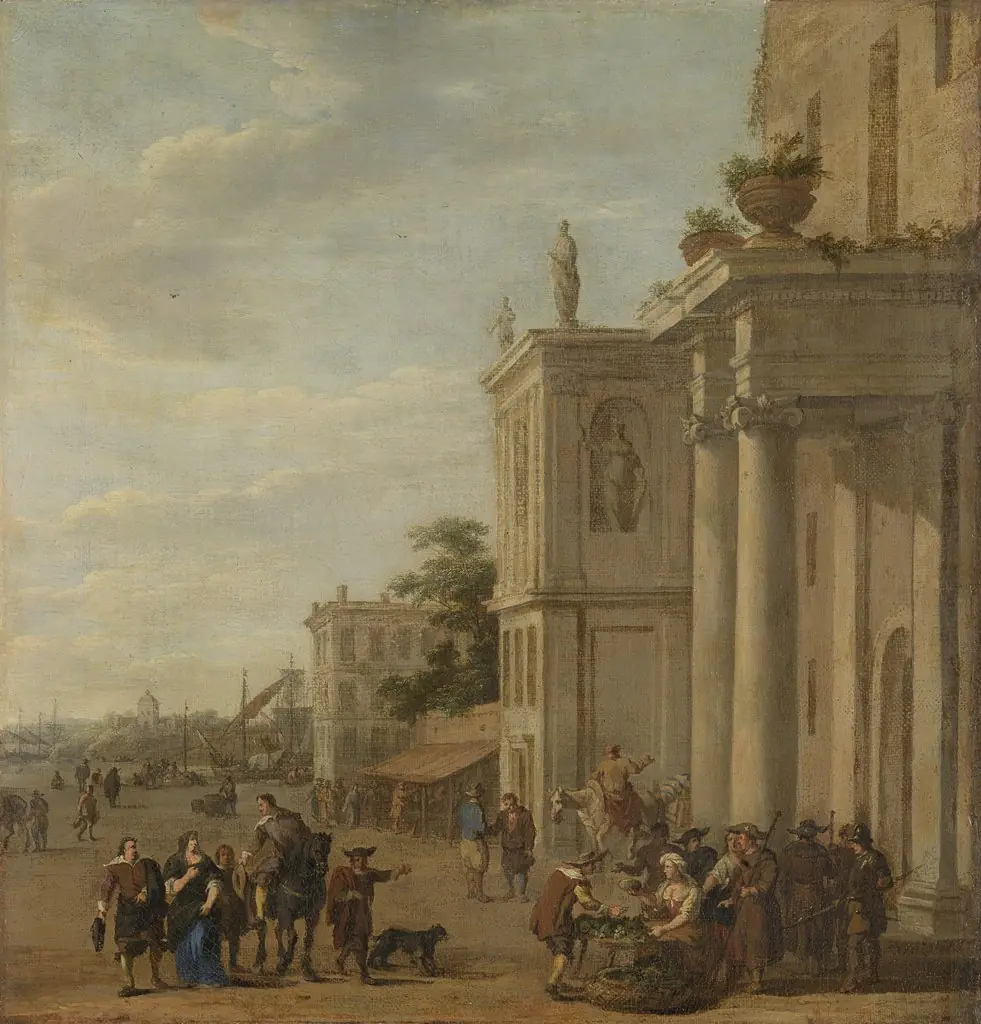
Italian Marketplace with a Quack Dentist
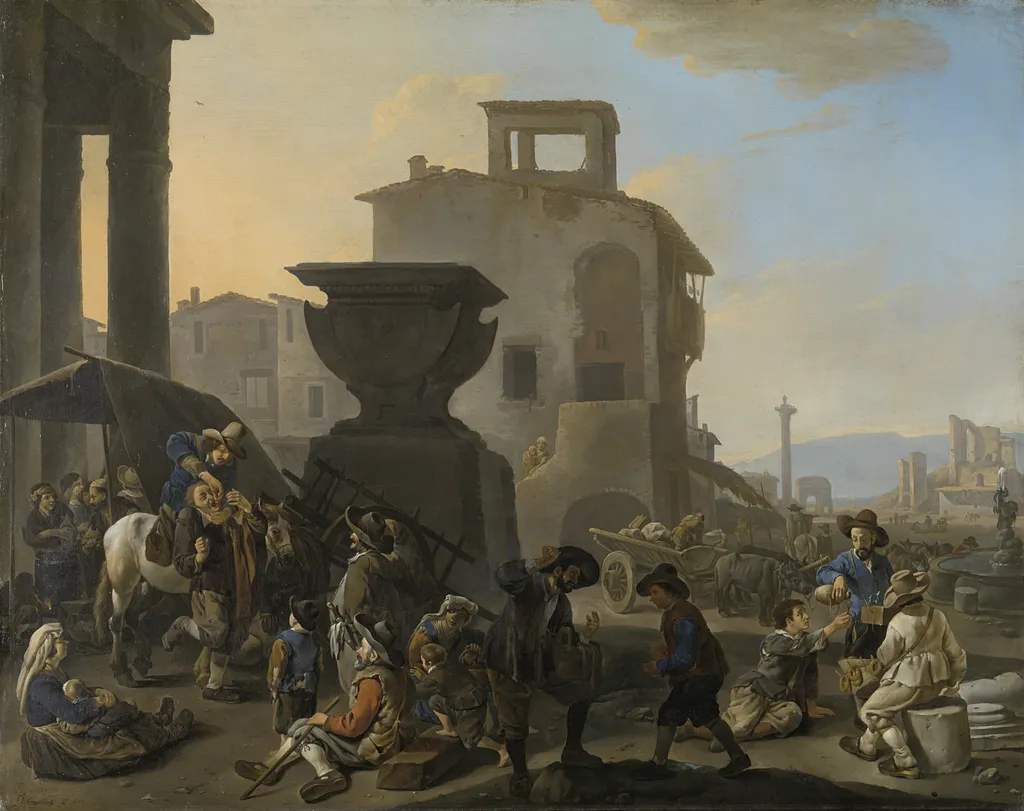
Italian Marketplace with a Quack Dentist is an oil painting by the Dutch Golden Age artist Johannes Lingelbach. It dates from 1651 and is held in the collection of the Rijksmuseum.
About this work
Overview
Johannes Lingelbach’s *Italian Marketplace with a Quack Dentist* (1651) depicts a bustling open‑air market in an Italian town. The composition is crowded with figures engaged in ordinary commerce, while a central column lies broken, and a street‑side practitioner appears to extract a tooth. The scene is rendered in oil on canvas and exemplifies the genre‑scene tradition of the Dutch Golden Age.
Subject & Meaning
The painting captures a slice of everyday life, juxtaposing routine market activity with an unusual medical spectacle. Vendors sell goods beneath a tent, laborers unload a stone‑laden cart, and townspeople mingle, while a figure performing a tooth‑pulling procedure draws attention to the informal, sometimes dubious, health practices common in public squares of the period.
Technique & Style
Lingelbach employs a muted palette and loose brushwork characteristic of the Bamboccianti, emphasizing atmospheric perspective and the warm, hazy sky. The broken column and crumbling façades are rendered with fine detail, creating depth, while the crowd is suggested through broader strokes, balancing realism with a lively, almost theatrical composition.
History & Provenance
Created in 1651, the work reflects Lingelbach’s Dutch background and his interest in Italian genre scenes. It entered the Rijksmuseum’s collection, where it remains part of the museum’s holdings of 17th‑century Dutch painting, illustrating the cross‑cultural influences that shaped the artist’s oeuvre.
Own this work as a print
Artist & collection
Artist
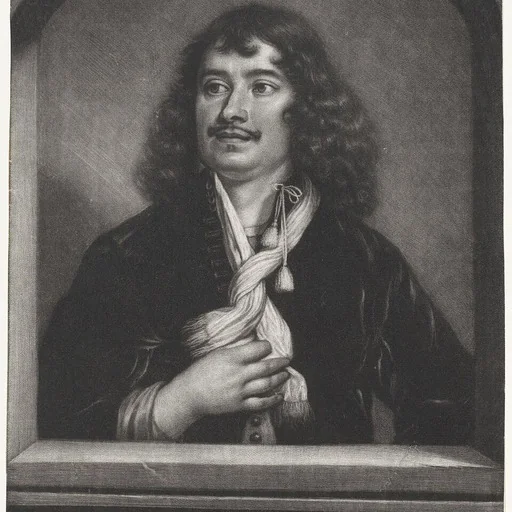
Johannes (or Johann) Lingelbach (1622 – 3 November 1674) was a Dutch Golden Age painter, associated with the second generation of Bambocciate, a group of genre painters working in Rome from 1625–1700.

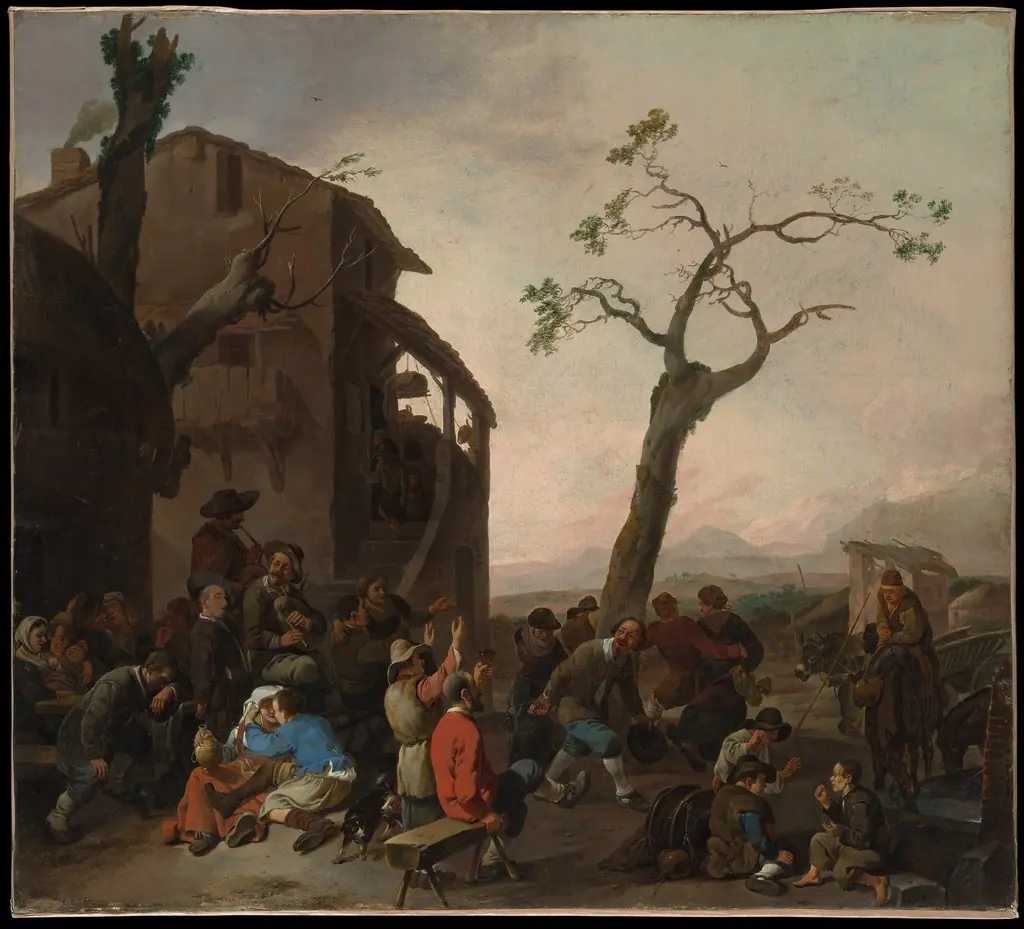
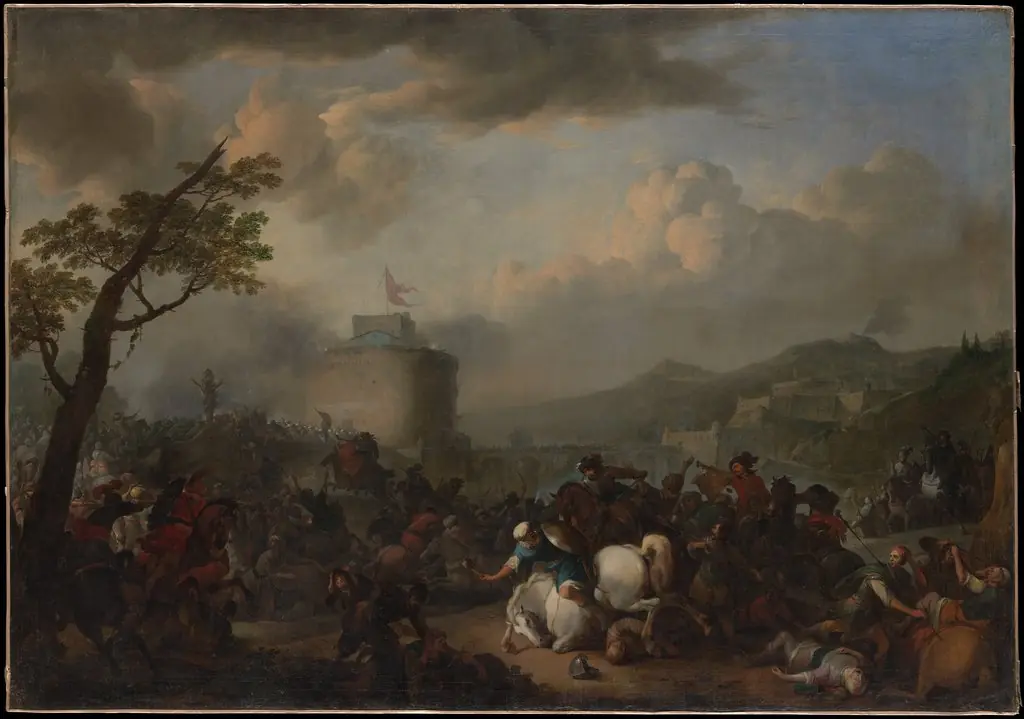
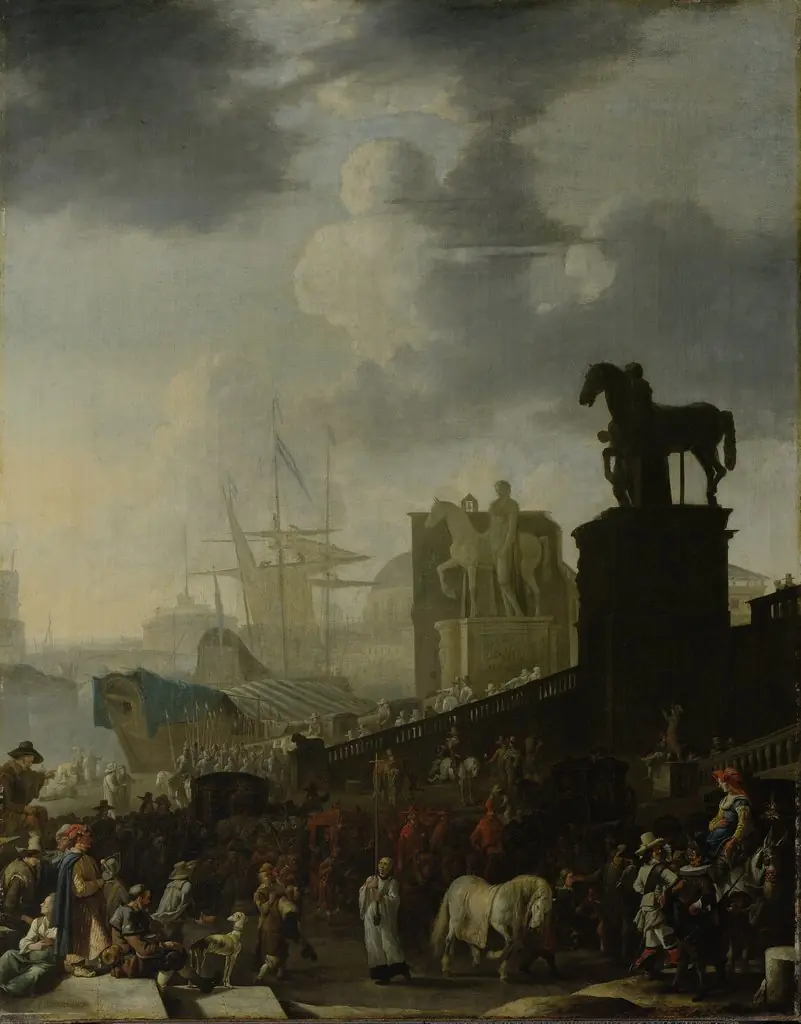
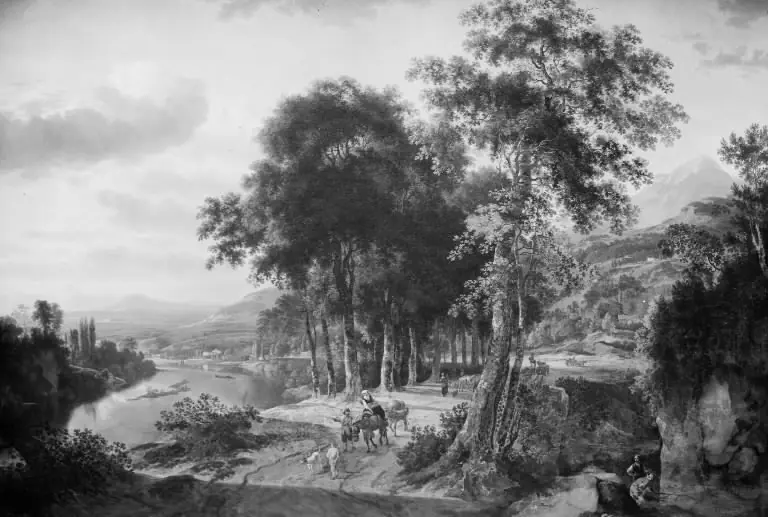
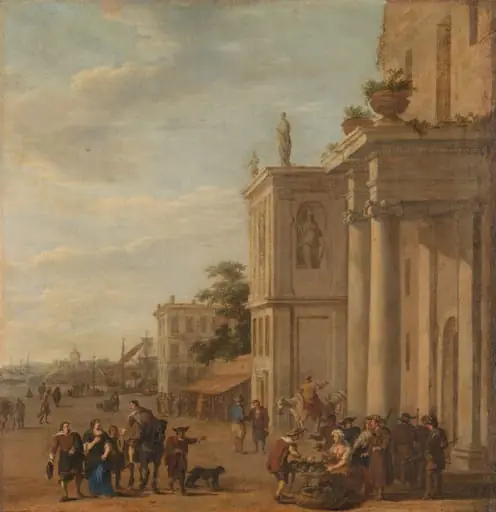 Italian marketplace
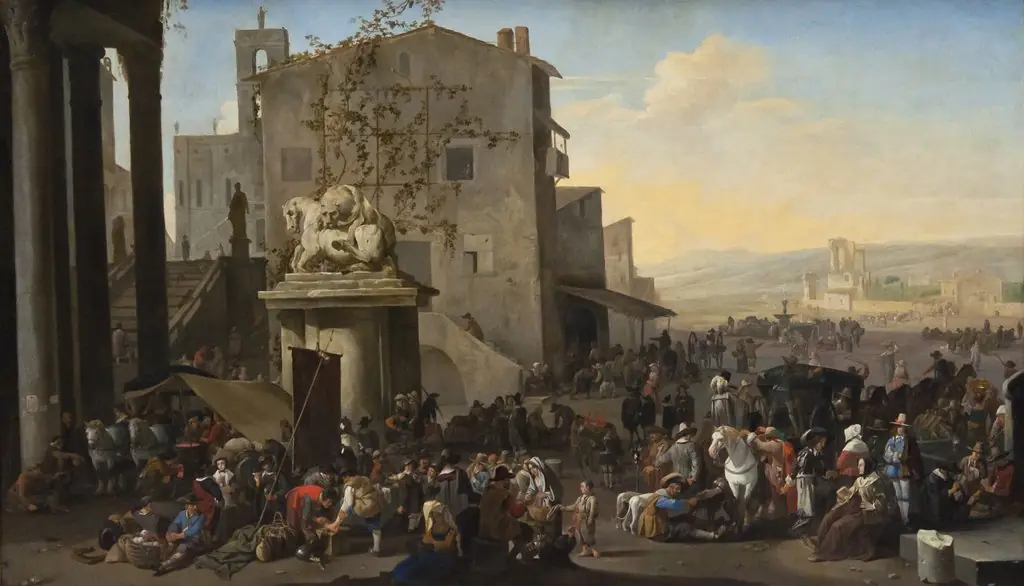 Campo Vaccino in Rome
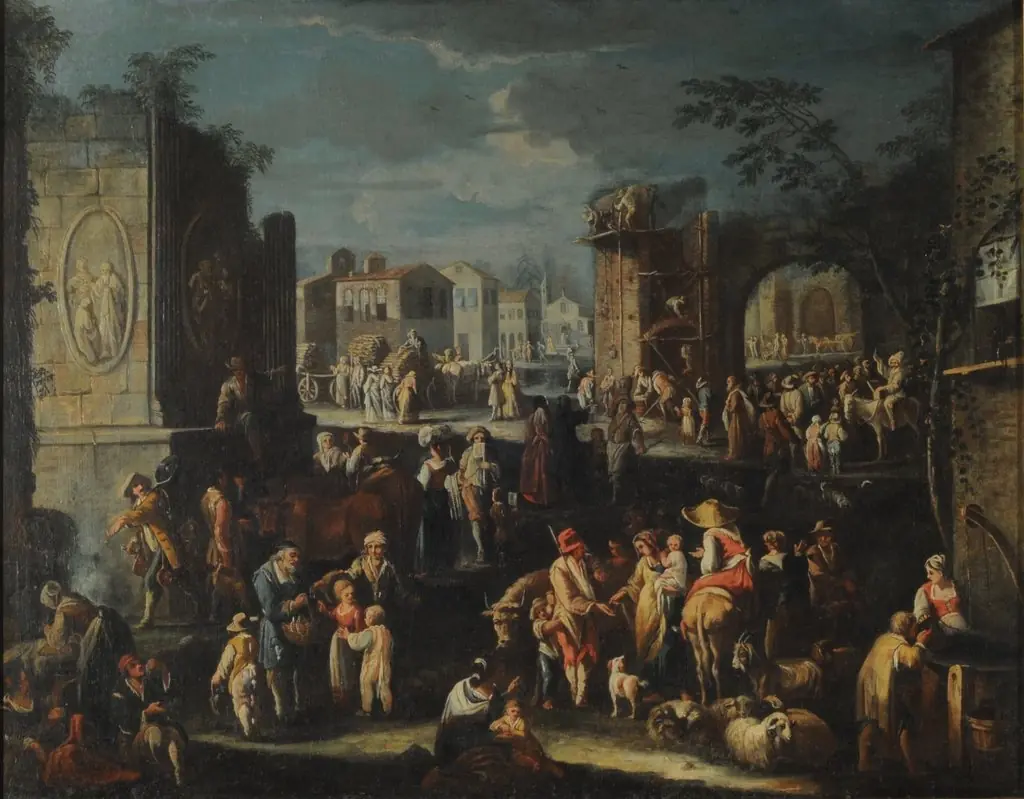 Ferias italianas. (Tit. Ant.: Costumbres genovesas del año 1652)
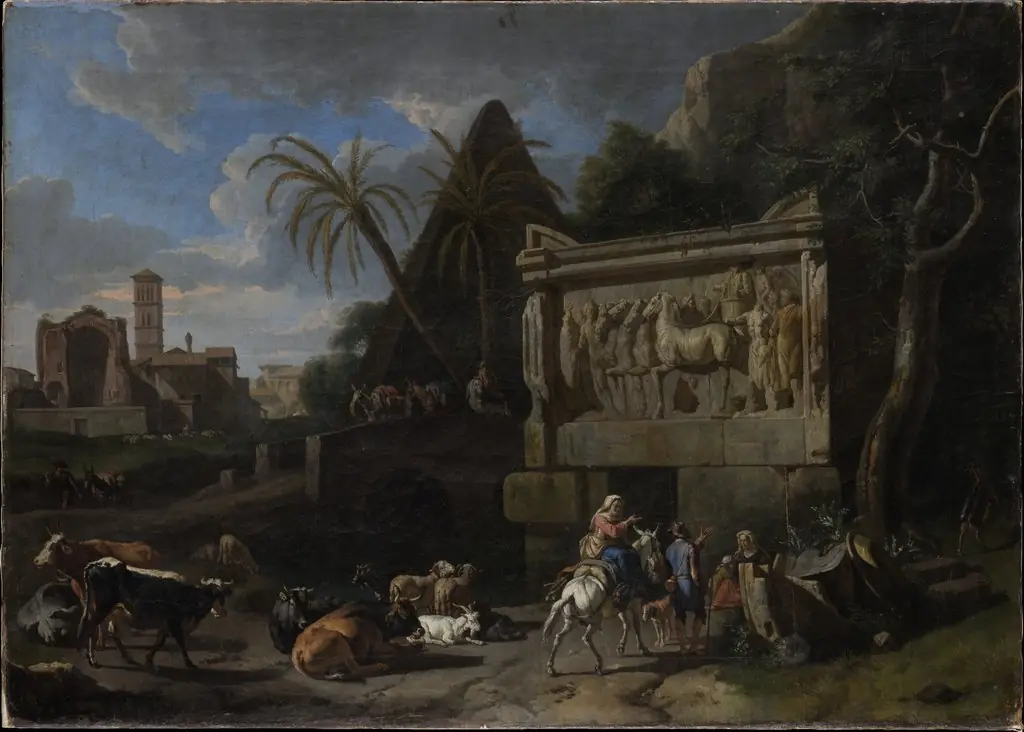 Landscape with Ancient Ruins, a Resting Flock in the Front
 The hunting party
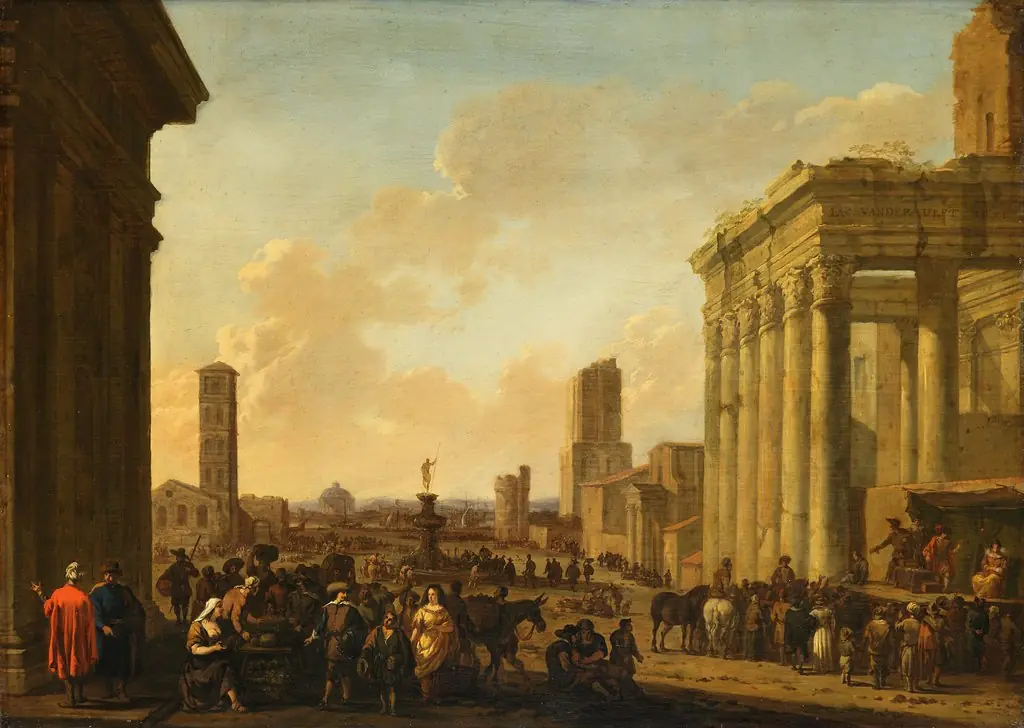 The Roman Forum in Rome
 Street scene placed among Roman ruins
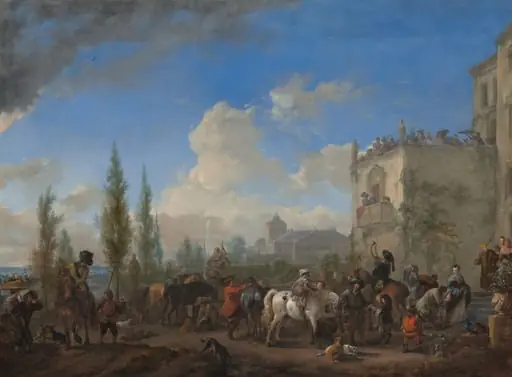 The Departure for the Hunt
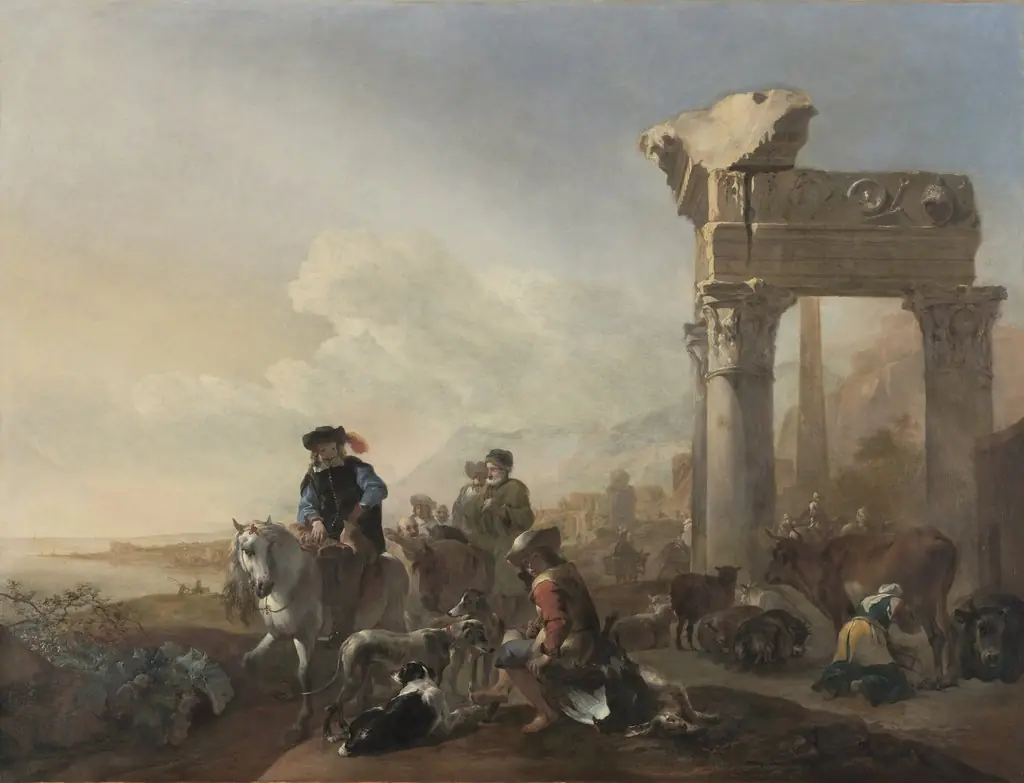 Hunters Near Ruins
 Street Scene with Roman Ruins
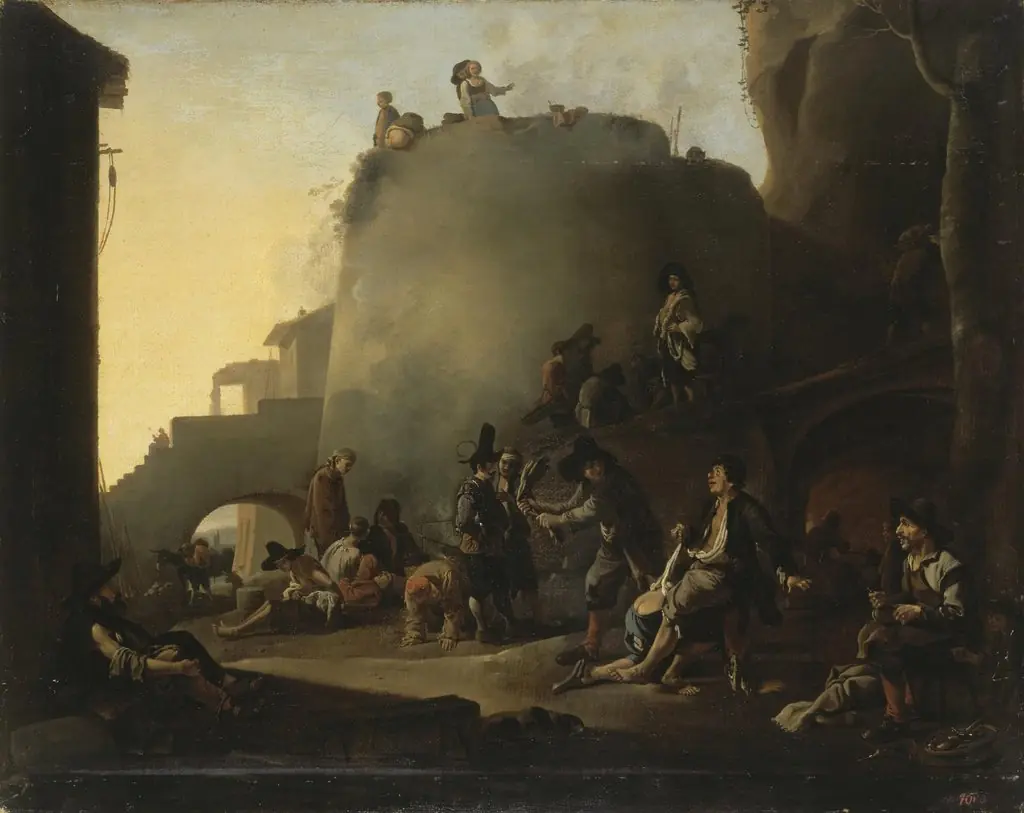 Scene from the Life of Tramps (Lazzaroni)
 Italian marketplace