Artwork
Untitled
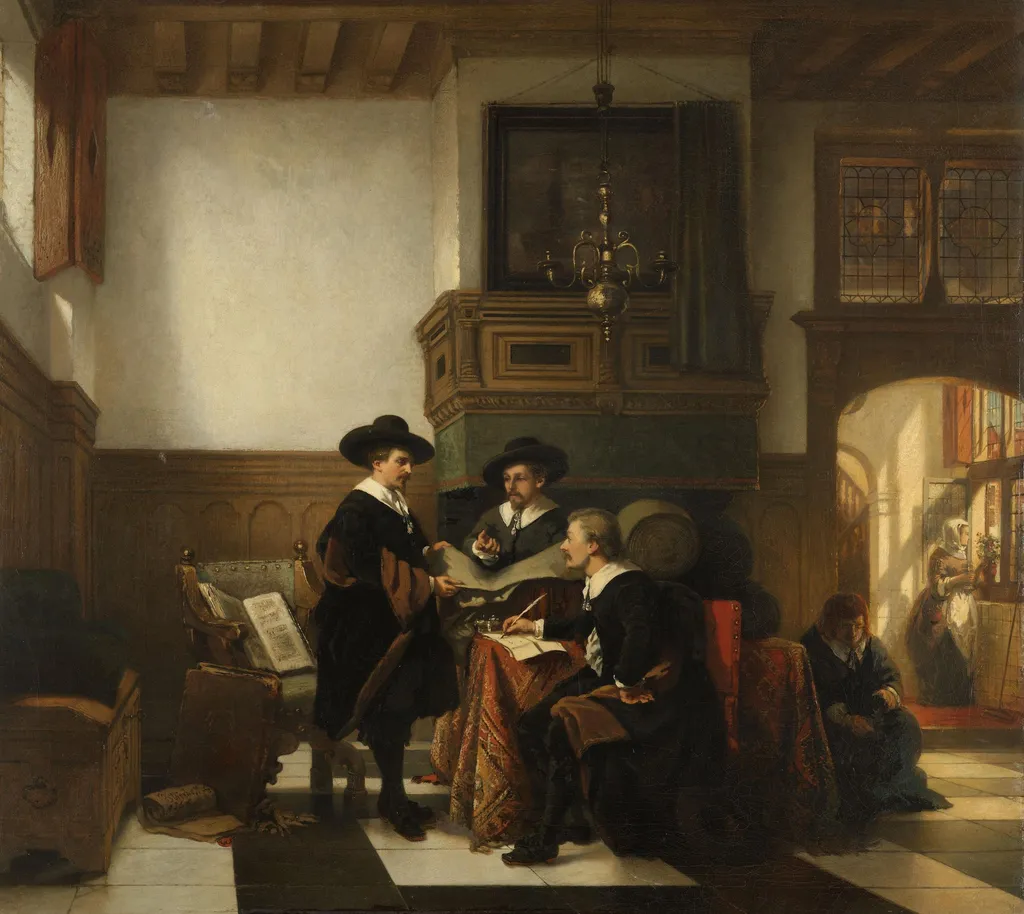
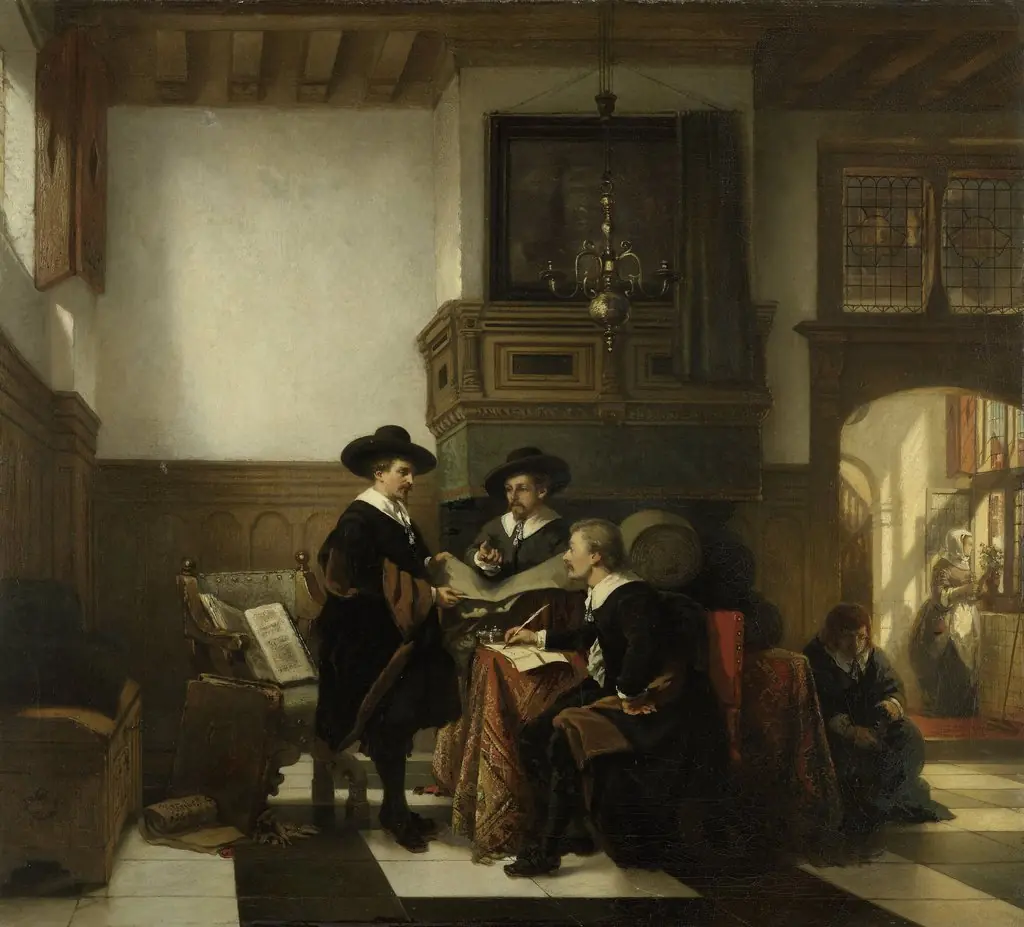
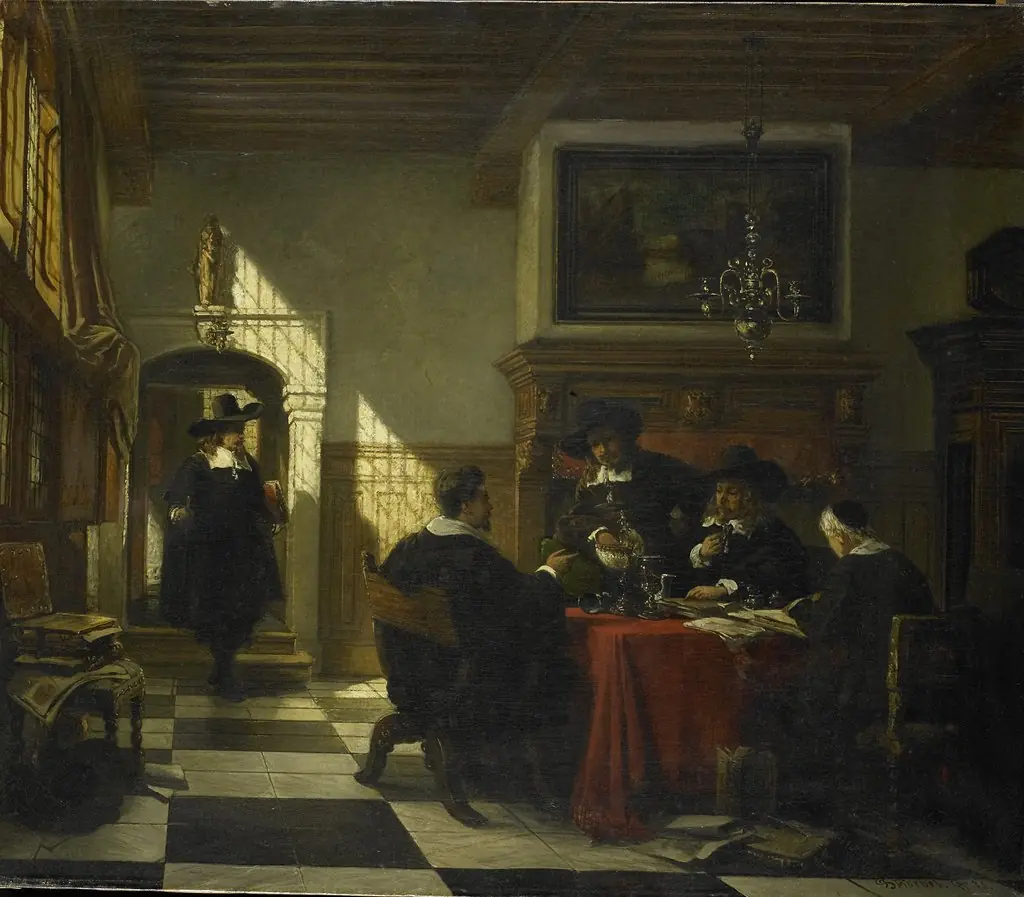
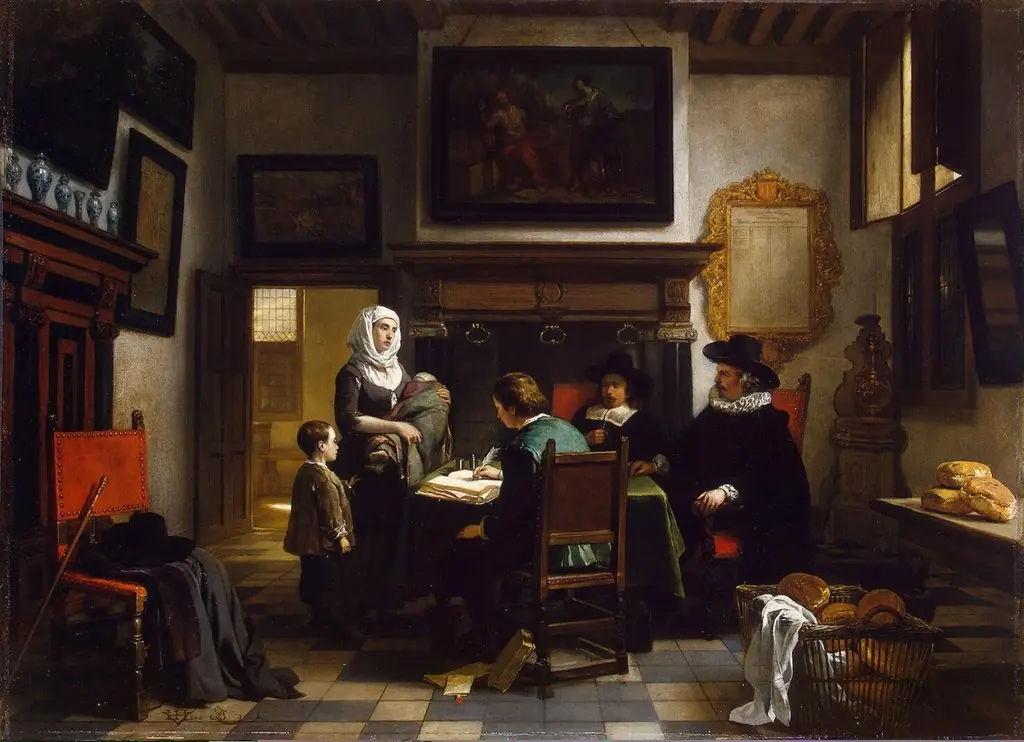
Untitled is an unspecified painting by the Biedermeier artist Johannes Anthonie Balthasar Stroebel. It dates from 1866 and is held in the collection of the Rijksmuseum. Five men in dark, formal coats gather around a wooden table in a spacious interior, carefully examining a length of woven fabric.
About this work
Overview
The setting suggests a guild meeting space, where textile quality was formally assessed, and the atmosphere is subdued, focused, and still.
Five men in dark, formal coats gather around a wooden table in a spacious interior, carefully examining a length of woven fabric. Above them, a painted panel is partially concealed by a draped curtain. To the right, two women stand quietly, observing but not participating. The setting suggests a guild meeting space, where textile quality was formally assessed, and the atmosphere is subdued, focused, and still.
Subject & Meaning
The scene depicts a moment of professional evaluation within a cloth merchants’ guild. The men’s attentive posture and the rolled fabric indicate a ritual of quality control, central to Leiden’s textile economy. The women’s presence at the periphery reflects gendered spatial roles, while the obscured painting behind the curtain introduces ambiguity—perhaps a symbol of hidden value, tradition, or the limits of visible authority.
Technique & Style
Light falls subtly across the figures and fabric, emphasizing texture and form without dramatic contrast. Brushwork is precise yet restrained, capturing the weight of wool, the sheen of wood, and the soft fold of fabric. The composition is balanced and horizontal, drawing attention to the table as the scene’s anchor. The muted palette reinforces the quiet gravity of the moment.
History & Provenance
Painted in the mid-17th century, the work originates from Leiden, a center of the Dutch linen trade. It likely belonged to a guild member or patron connected to textile commerce. The painting remained in Dutch collections through the 18th and 19th centuries before entering a public museum, where it continues to reflect civic pride in artisanal standards.
Context
During this period, Dutch guilds regulated trade with strict oversight, and inspections like this were common. Interiors of guild halls were frequently depicted in art, serving both documentary and commemorative purposes. The inclusion of women, though passive, acknowledges their indirect role in the textile economy, often as weavers or sellers in domestic settings.
Legacy
The painting contributes to a broader tradition of Dutch genre scenes that elevate everyday labor into quiet, dignified narratives. Its understated composition and attention to material detail influenced later realist painters. Today, it remains a key reference for understanding the social and economic structures behind the Dutch Golden Age’s commercial success.
Own this work as a print
Artist & collection
Artist
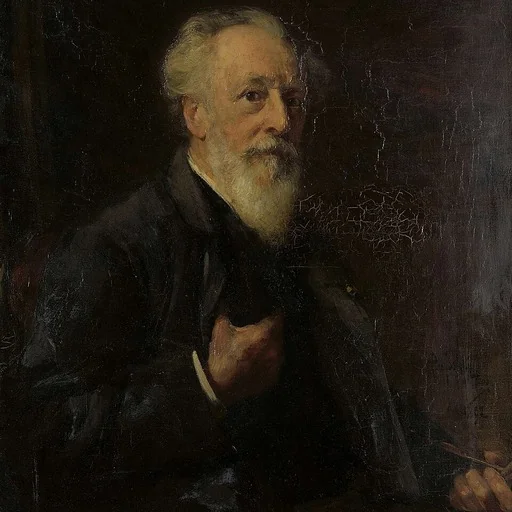
Johannes Anthonie Balthasar Stroebel
Johannes Anthonie Balthasar Stroebel (1821–1905) was an artist, born in The Hague.