Artwork
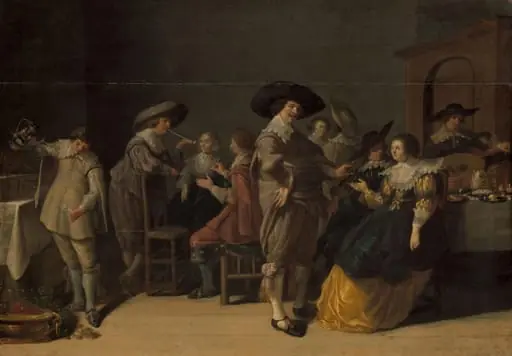
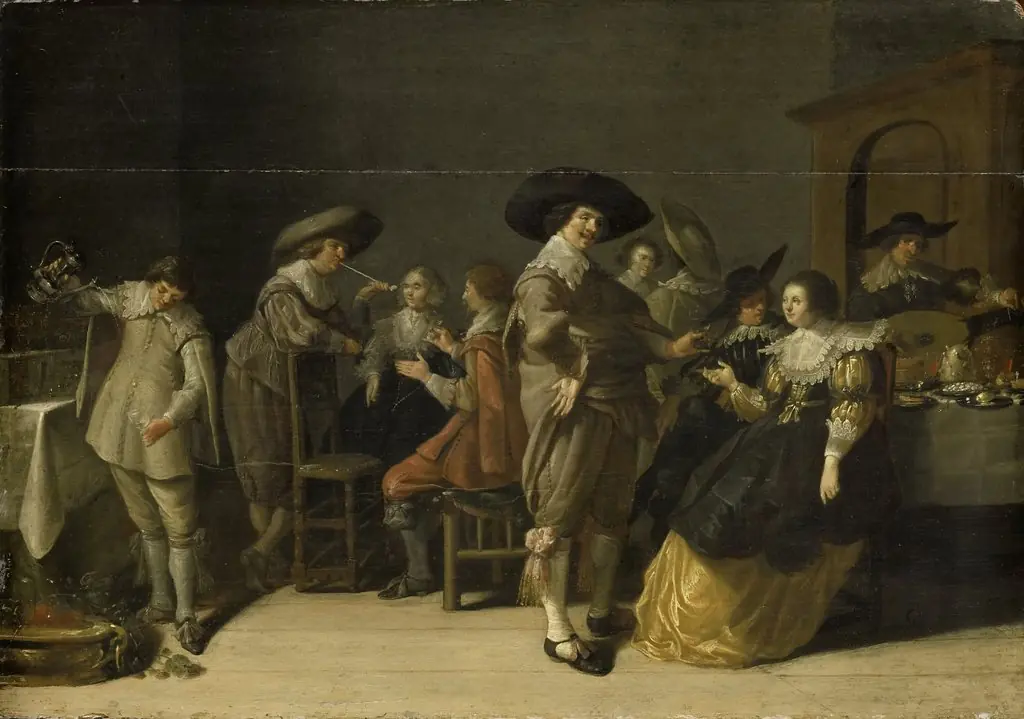
Merry Company
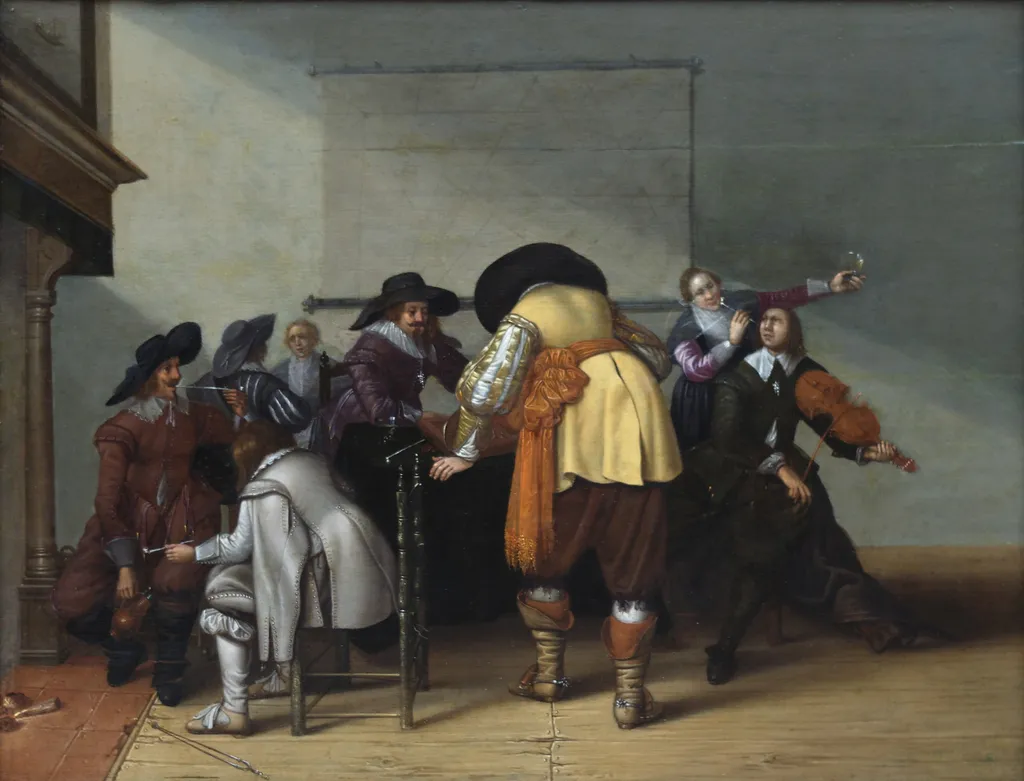
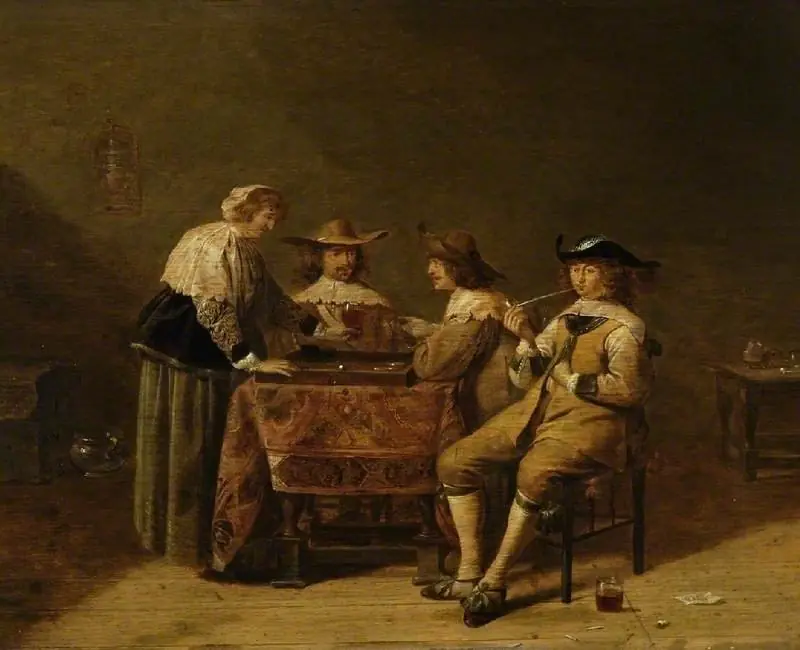
Merry Company is an oil painting by the Dutch Golden Age artist Jan Olis. It dates from 1644 and is held in the collection of the Museum of Fine Arts, Budapest.
About this work
Overview
The work belongs to a broader tradition of Northern European domestic imagery, capturing moments of communal interaction rather than grand narratives.
Painted in 1644 by Jan Olis, *Merry Company* is an oil-on-canvas genre scene depicting a group of individuals engaged in social leisure. Olis, active in the Dutch Republic during its artistic golden age, specialized in intimate portrayals of everyday gatherings. The work belongs to a broader tradition of Northern European domestic imagery, capturing moments of communal interaction rather than grand narratives. It is currently held in the Museum of Fine Arts, Budapest.
Subject & Meaning
The painting portrays a mixed-gender group gathered around a table, some holding drinking vessels, others playing stringed instruments. Their postures suggest relaxed camaraderie, with no overt narrative or moralizing tone. Such scenes were common in 17th-century Dutch art, reflecting values of domestic harmony and civic sociability. The absence of overt symbolism points to an emphasis on the quiet dignity of ordinary social life rather than allegory or instruction.
Technique & Style
Olis employs a restrained palette with warm, muted tones, emphasizing the soft glow of candlelight emanating from the left. The figures are rendered with careful attention to textile textures and facial expressions, while the background remains deliberately plain, focusing attention on the group. Brushwork is precise but unobtrusive, avoiding dramatic chiaroscuro in favor of naturalistic, diffused illumination consistent with Dutch interior painting conventions of the period.
History & Provenance
Jan Olis was registered in the Dordrecht painters’ guild in 1625 and later held civic positions in Heusden. *Merry Company* dates from his mature period, reflecting his established reputation for genre scenes. The painting entered the collection of the Museum of Fine Arts, Budapest, in the 19th century, likely through European art market channels. Its provenance prior to that remains undocumented, though it was likely acquired by a private collector in the Netherlands or Germany.
Context
In mid-17th-century Holland, genre painting flourished as urban middle-class patrons sought art that mirrored their daily lives. Scenes of music, drinking, and conversation became popular alternatives to religious or historical subjects. Olis’s work aligns with artists like Pieter de Hooch and Jan Steen, who similarly explored the nuances of domestic sociability, though without the moral ambiguity often present in their peers’ works.
Legacy
While not widely known today, Olis’s *Merry Company* exemplifies the quiet realism that defined Dutch genre painting. It contributes to the historical record of how ordinary social rituals were visually codified during the Republic’s cultural peak. The painting remains a representative example of regional artistic practice, valued for its sincerity and understated observation rather than innovation or spectacle.
Own this work as a print
Artist & collection
Artist
Jan Olis (1610–1676) was a Dutch Golden Age painter. Olis was born in Gorinchem, Netherlands. According to the RKD in 1632, he became a member of the Dordrecht Guild of St. Luke. In 1637, he got married, and during the…

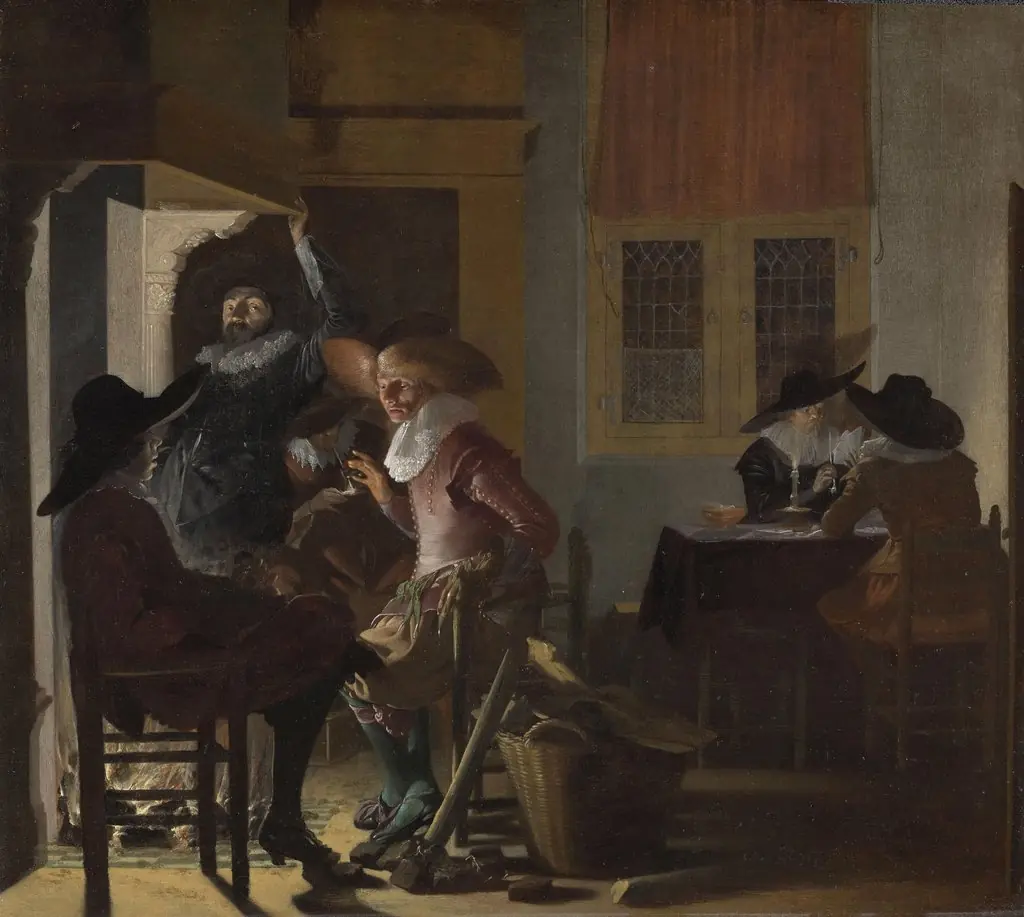 Soldiers beside a Fireplace
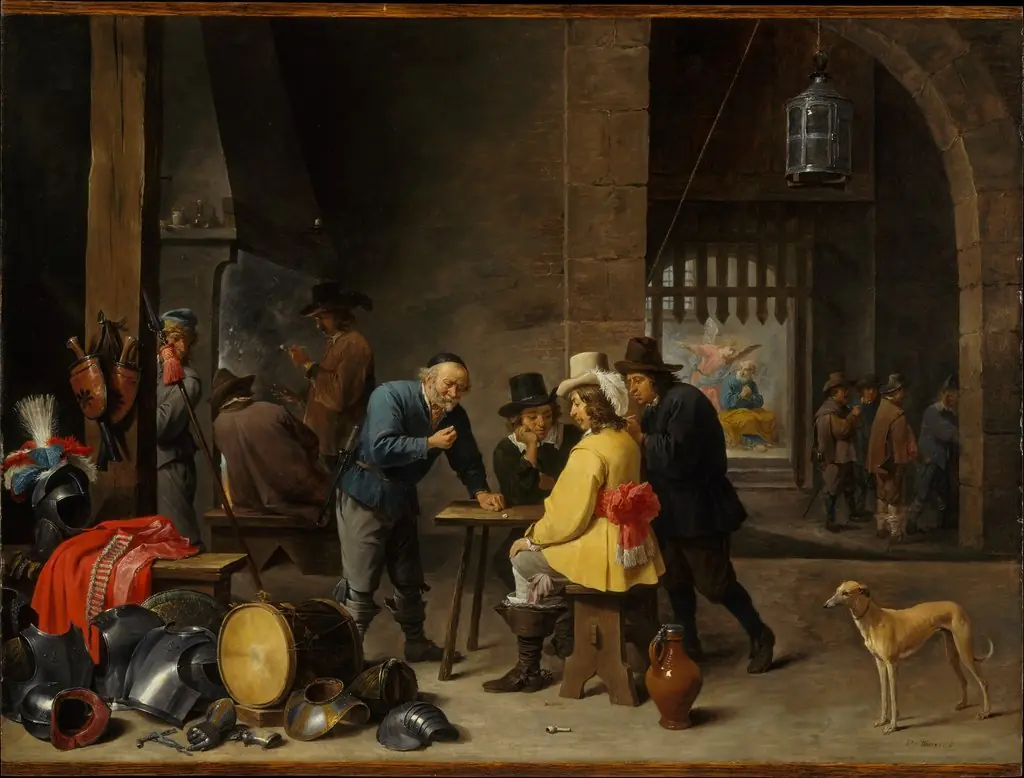 Guardroom with the Deliverance of Saint Peter
 Distinguished Company in a Room
 Peasant Wedding
 Militia Company of District VIII under the Command of Captain Roelof Bicker
 Distinguished company in a room
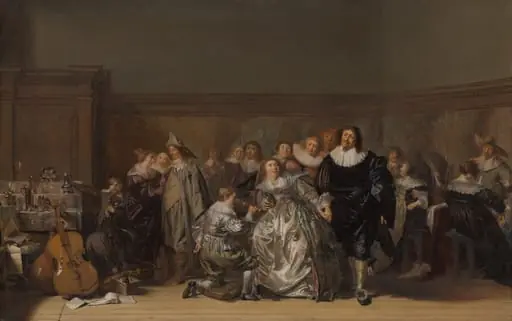 An Elegant Company
 The directors of the Amsterdam civic guard of St. George in 1656
 Untitled
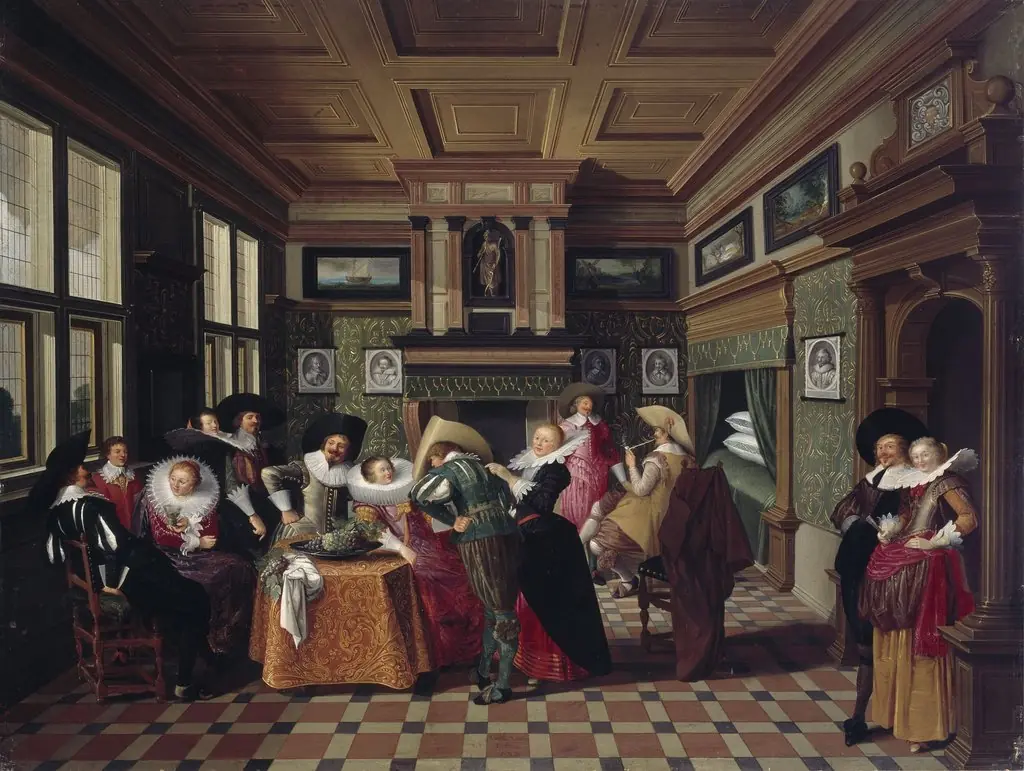 An Interior with Ladies and Cavaliers