Artwork
Wine, Cheese, and Fruit
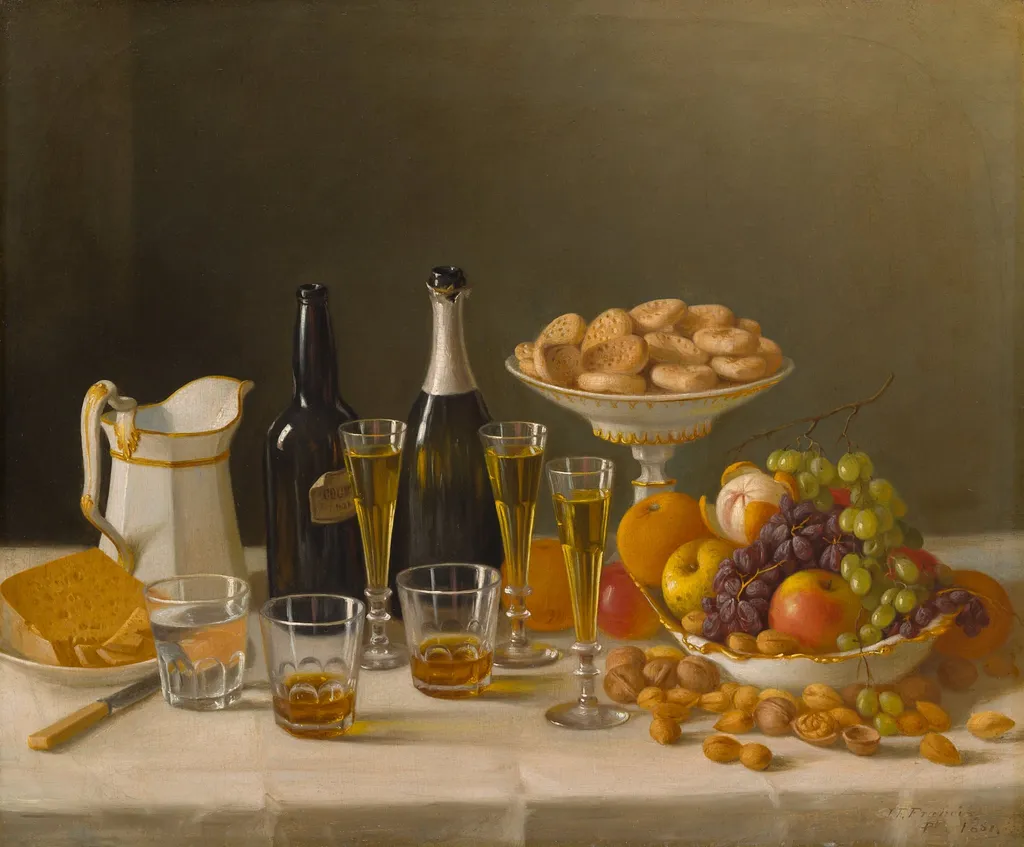
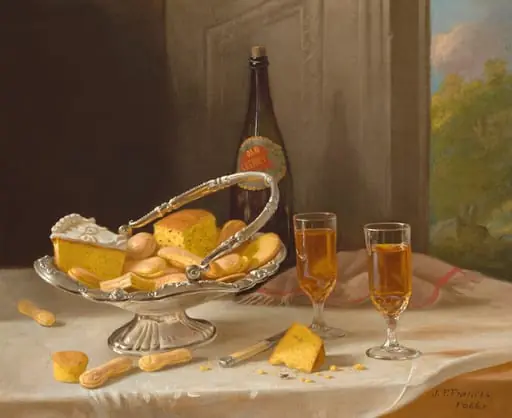
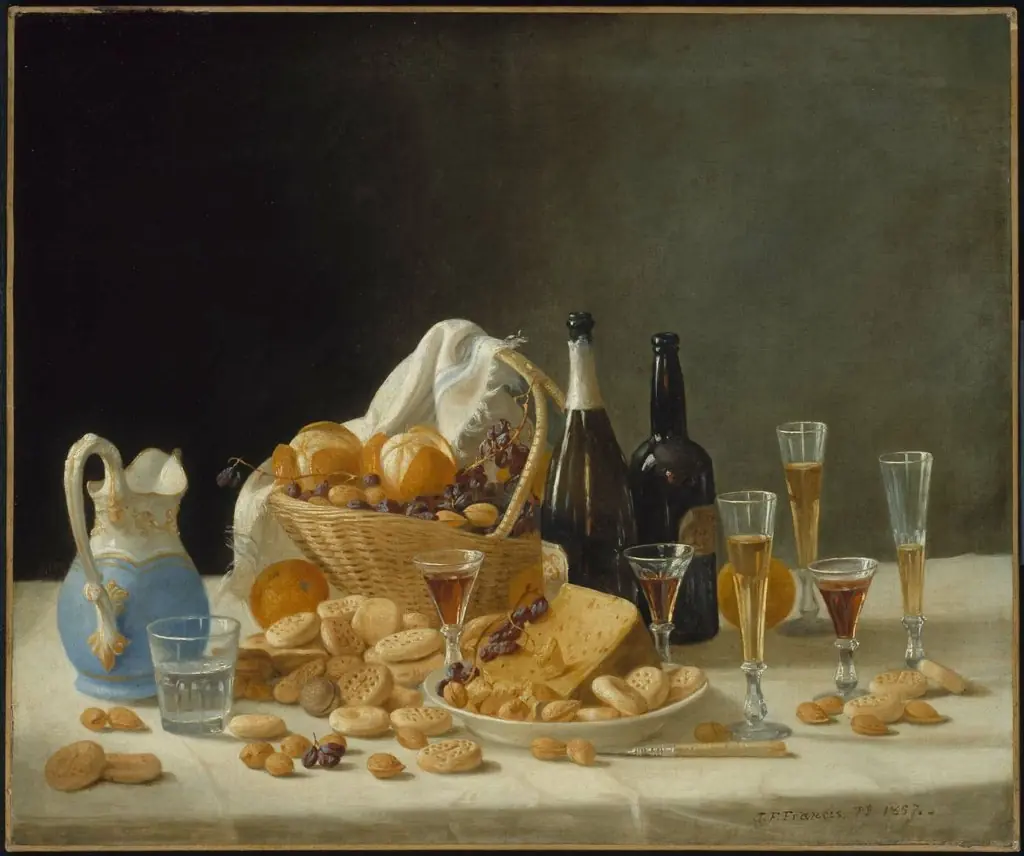
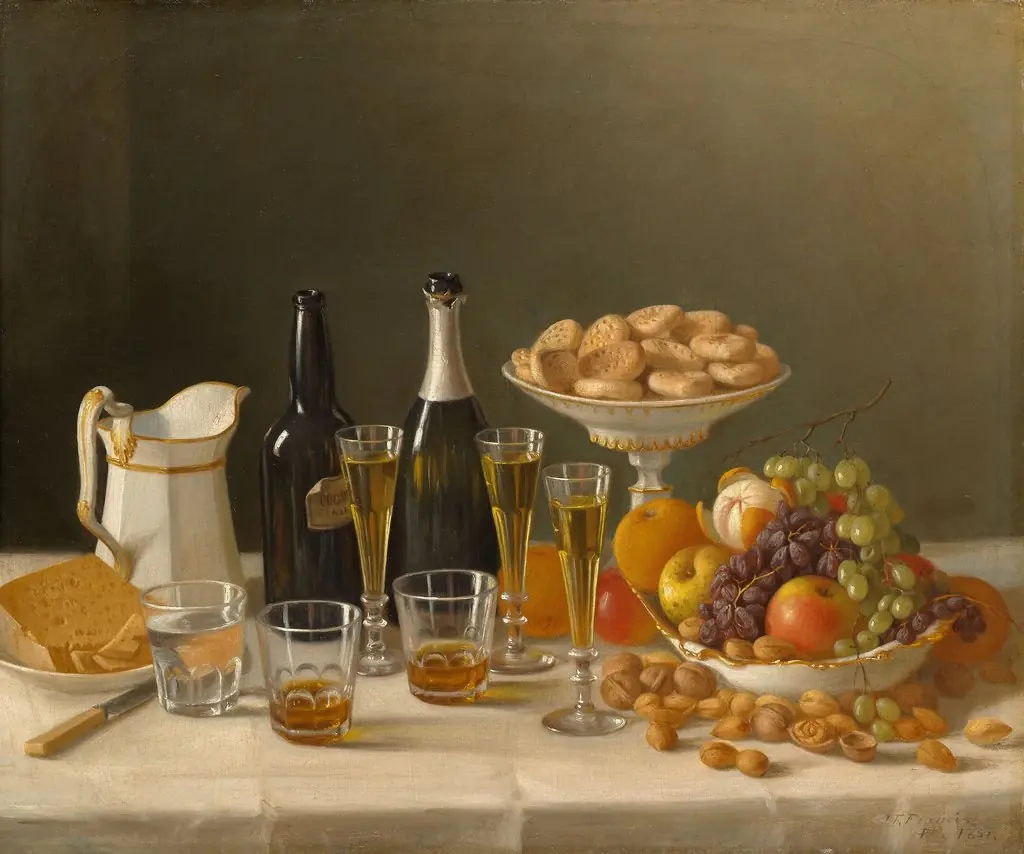
Wine, Cheese, and Fruit is an oil painting by the Impressionist artist John F. Francis. It dates from 1857 and is held in the collection of the Art Institute of Chicago. Painted in oil on canvas, this still life by John Francis depicts a carefully arranged table setting of wine, cheese, fruit, and spirits.
About this work
Overview
Painted in oil on canvas, this still life by John Francis depicts a carefully arranged table setting of wine, cheese, fruit, and spirits.
Painted in oil on canvas, this still life by John Francis depicts a carefully arranged table setting of wine, cheese, fruit, and spirits. Created in the mid-19th century, it reflects a shift in the artist’s practice from portraiture to domestic still life, a transition prompted by the rise of photographic portraiture. The composition balances abundance with restraint, aligning with broader cultural currents of the Victorian era.
Subject & Meaning
The arrangement includes half-filled wine glasses, a wedge of aged cheese, ripe grapes, and a carafe of water—elements that suggest moderation rather than excess. While spirits are present, their partial consumption and the inclusion of water signal an awareness of the temperance movement’s influence. The scene functions not as a display of indulgence, but as a quiet endorsement of self-discipline in private life.
Technique & Style
Francis employs glazing techniques to achieve rich, luminous surfaces, particularly in the wine and fruit, where layers of translucent pigment enhance depth and realism. The textures of cheese rind, glass, and grape skin are rendered with precise observation, reflecting a shift toward detailed, tactile representation typical of mid-century British still life. The composition is orderly, with objects arranged to guide the eye across the table without overt drama.
History & Provenance
John Francis, originally trained as a portraitist, adapted his career as daguerreotypes displaced hand-painted likenesses. This painting emerged from his pivot to still life, a genre increasingly sought after by the Victorian middle class for domestic decoration. It likely originated in a private collection, possibly commissioned for a dining room, where such works conveyed both taste and moral alignment with contemporary social values.
Context
The mid-19th century saw rising middle-class prosperity and a growing interest in home aesthetics, fueling demand for decorative still lifes. Simultaneously, the temperance movement gained traction, influencing visual culture to favor restraint. Francis’s painting mirrors this duality: it celebrates the pleasures of the table while subtly endorsing moderation, reflecting the era’s complex negotiation between indulgence and moral discipline.
Legacy
Francis’s transition from portraiture to still life exemplifies how artists adapted to technological change. His work contributes to a broader corpus of Victorian domestic still lifes that document shifting social norms and aesthetic preferences. Though not widely celebrated in his time, his paintings offer insight into the quiet cultural shifts that redefined artistic livelihood and domestic symbolism in the age of industrialization.
Own this work as a print
Artist & collection