Artwork
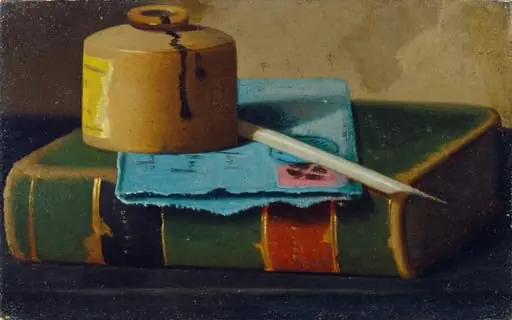
Green Book and Lard Lamp
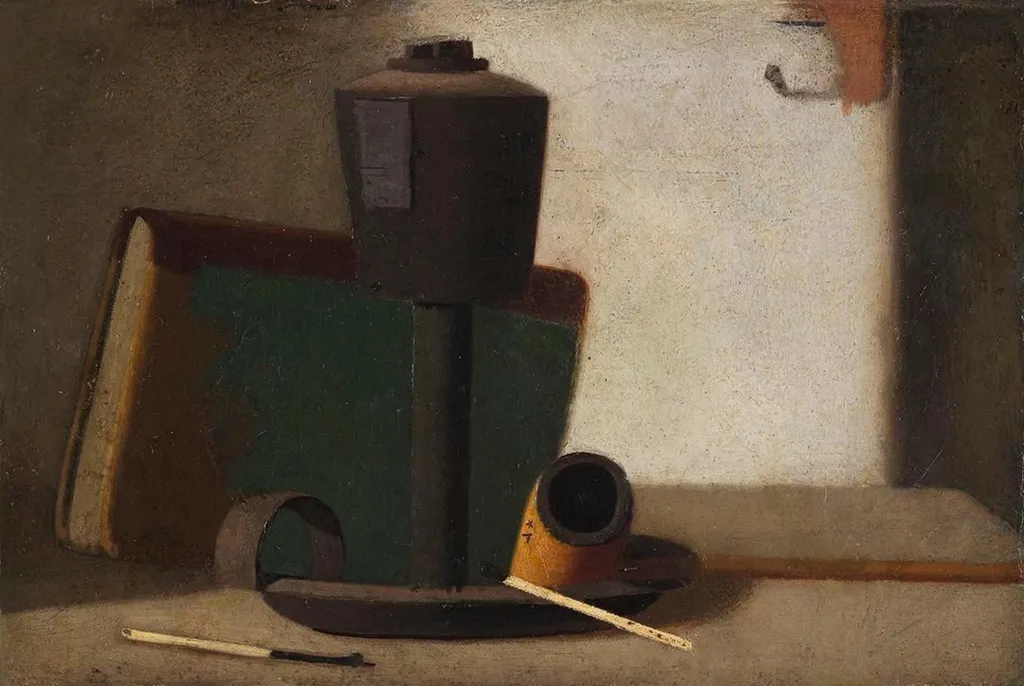
Green Book and Lard Lamp is an unspecified painting by John F. Peto. It dates from 1890 and is held in the collection of the Crystal Bridges Museum of American Art. John F.
About this work
Overview
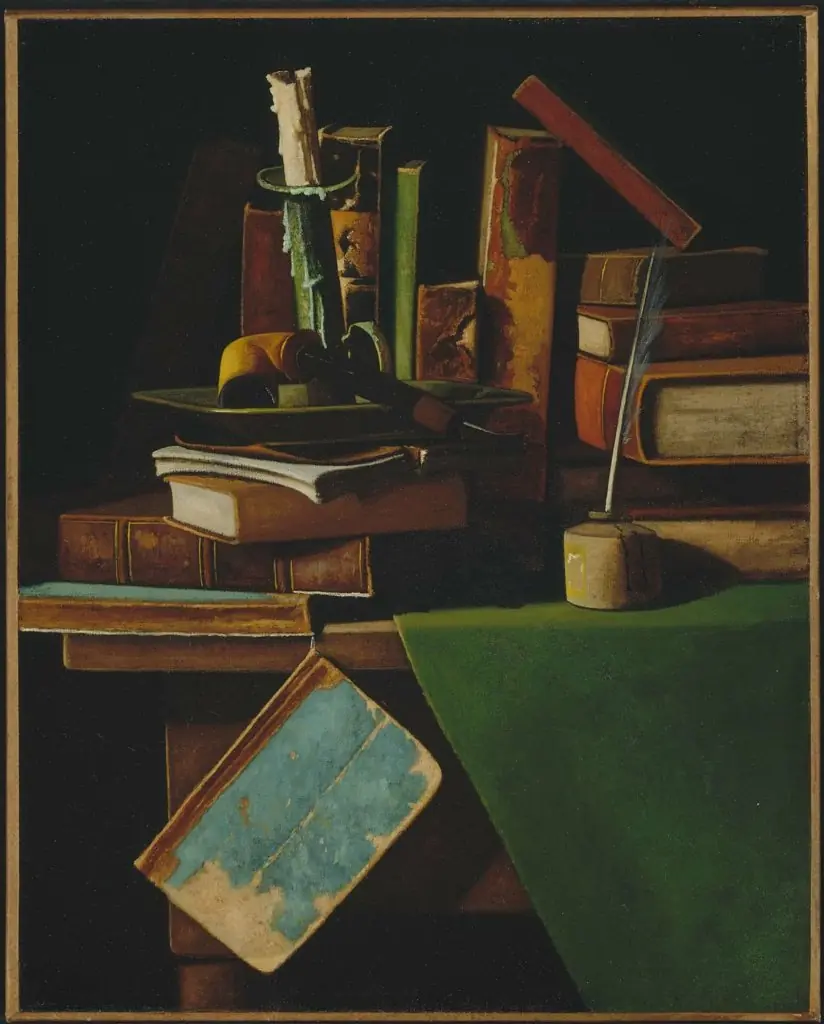
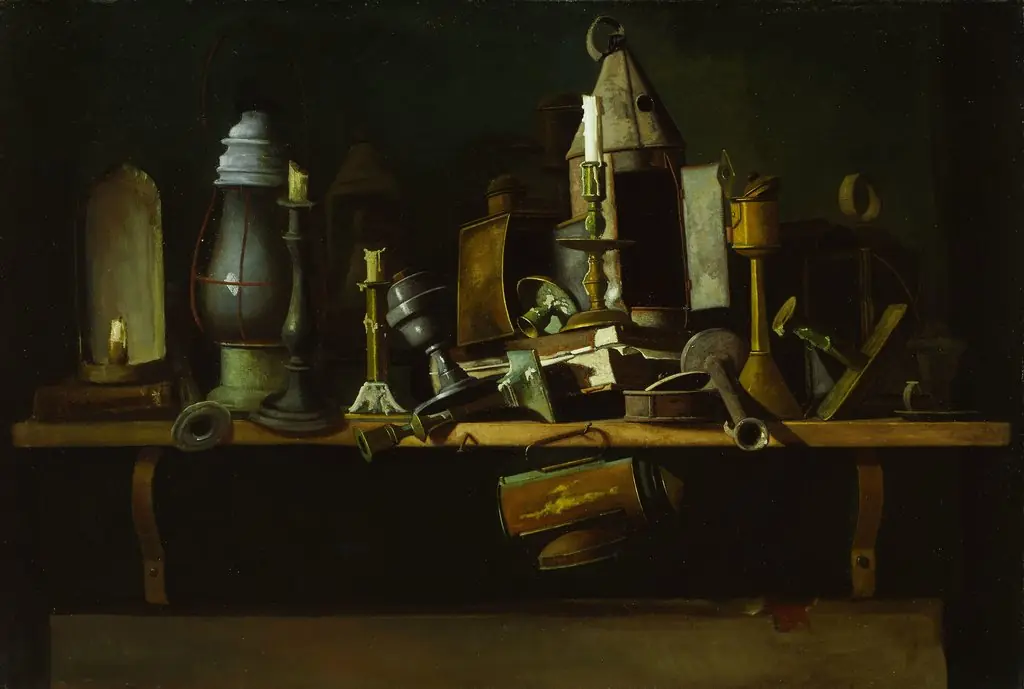
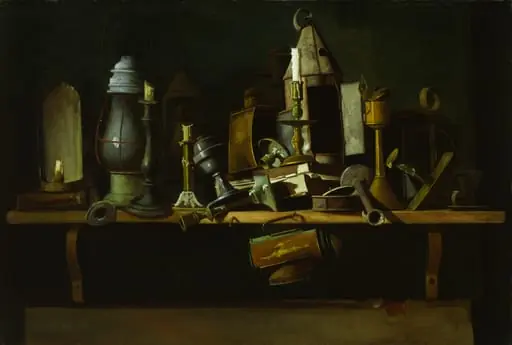
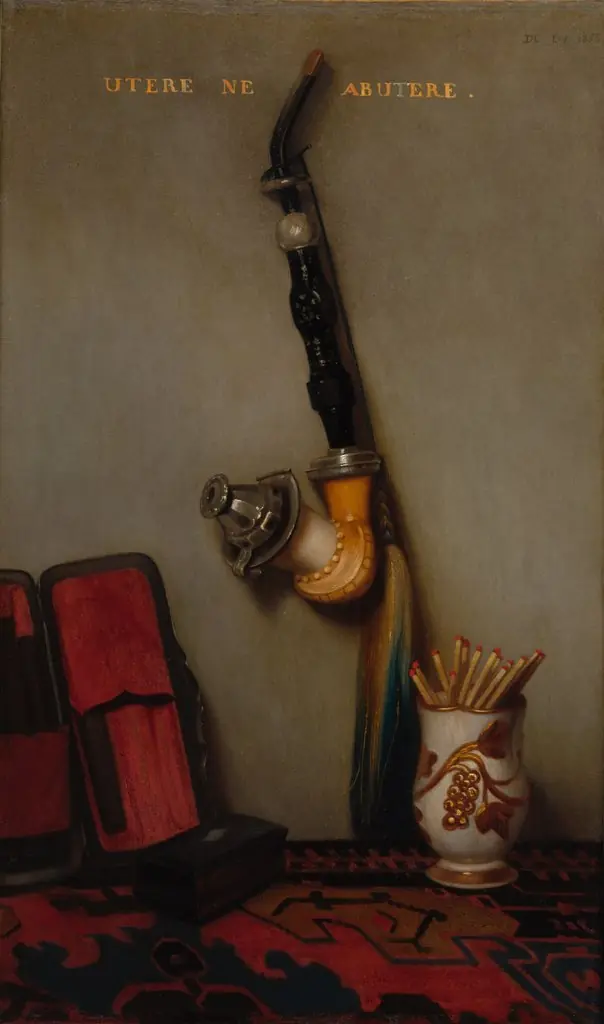
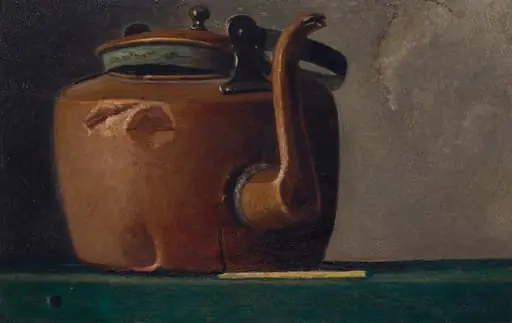
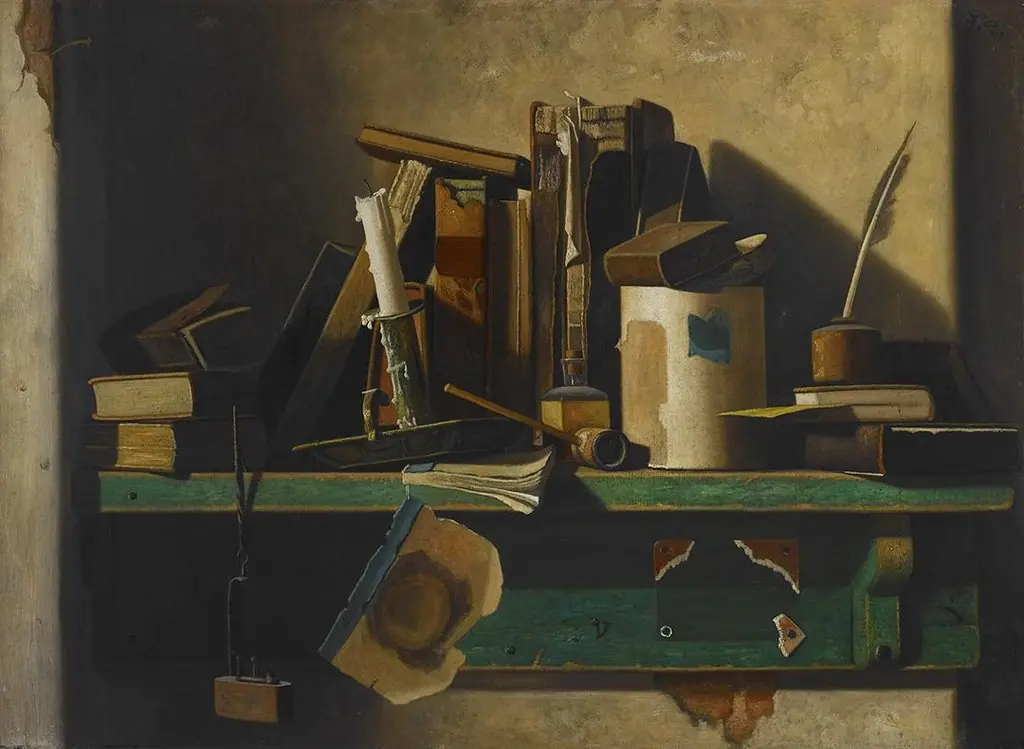
John F. Peto’s *Green Book and Lard Lamp*, executed circa 1890, is a small‑scale trompe‑l'œil still life. The composition places a green‑covered volume, a traditional lard oil lamp, and a smoking pipe with its match and matchbox on a plain surface, all set against an unadorned wall. The objects are rendered with such precision that they appear to project from the canvas.
Subject & Meaning
The work juxtaposes everyday reading material with the utilitarian lamp and a pipe, evoking a quiet domestic scene of late‑19th‑century middle‑class life. By arranging these modest items together, Peto invites the viewer to consider the tactile qualities of paper, metal, and glass, while also hinting at the rituals of leisure and illumination that surrounded private study.
Technique & Style
Peto employs a rigorous chiaroscuro, using a single light source—the lamp—to generate stark highlights and deep shadows that model each object’s volume. The paint surface is polished to a smooth finish, allowing fine brushwork to capture the texture of leather‑bound cloth, the sheen of brass, and the translucency of glass, thereby reinforcing the illusion of three‑dimensionality.
History & Provenance
Created during the height of American trompe‑l'œil activity, the painting remained largely unnoticed in Peto’s lifetime, a period when his work was eclipsed by more commercially successful contemporaries. It entered public awareness only after mid‑20th‑century reassessments of American realism, when collectors and institutions began to acquire his pieces as representative examples of the genre.
Context
Peto worked within a small network of trompe‑l'œil specialists that included William Harnett, sharing an interest in rendering ordinary objects with photographic exactness. The late 1800s saw a fascination with visual deception, reflecting broader cultural preoccupations with industrial progress and the reliability of perception, themes that are embodied in the painting’s meticulous realism.
Artist & collection

Artist
John Frederick Peto (May 21, 1854 – November 23, 1907) was an American trompe-l'œil ("fool the eye") painter who was long forgotten until his paintings were rediscovered along with those of fellow trompe-l'œil artist William Harnett.

Museum
Crystal Bridges Museum of American Art
Continue through works from the same source collection.