Artwork
HSP's Rack Picture
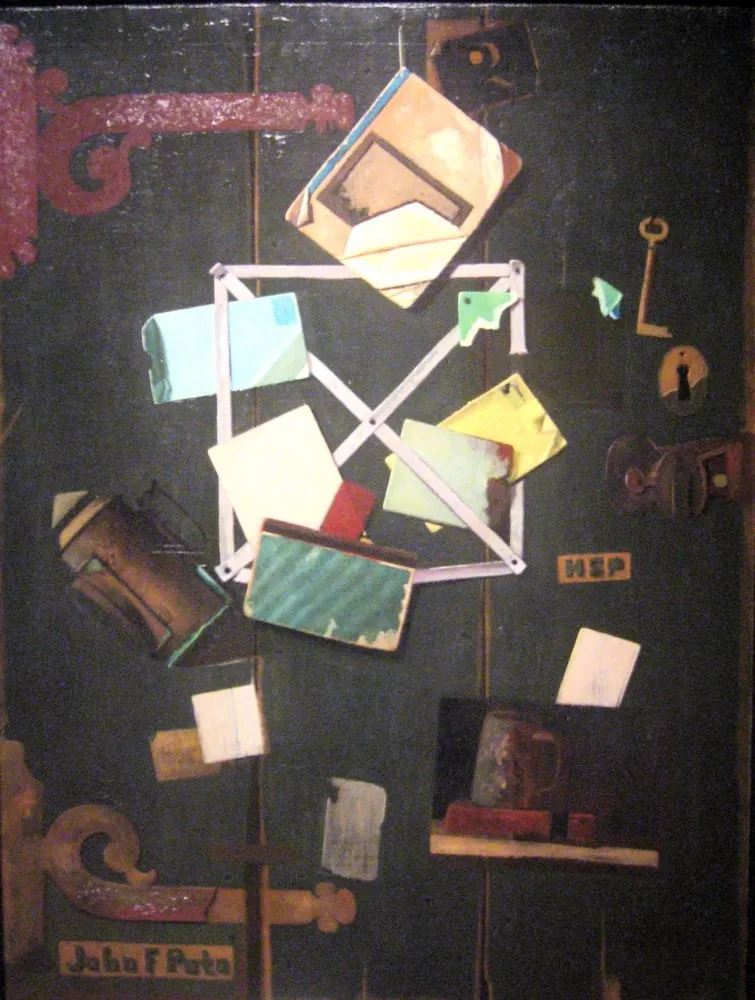
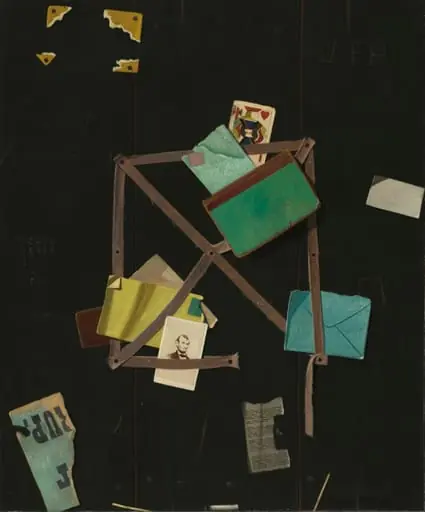
HSP's Rack Picture is an oil painting by the American Impressionist artist John F. Peto. It dates from 1900 and is held in the collection of the Los Angeles County Museum of Art.
About this work
Overview
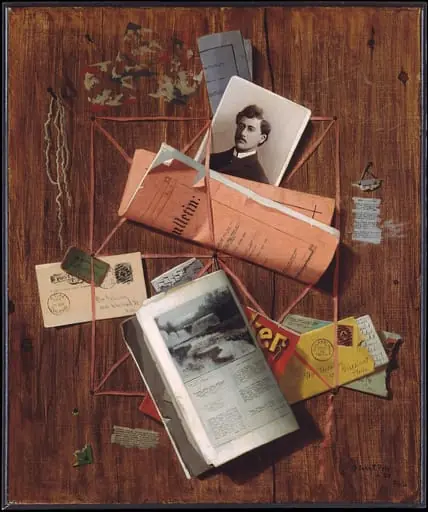
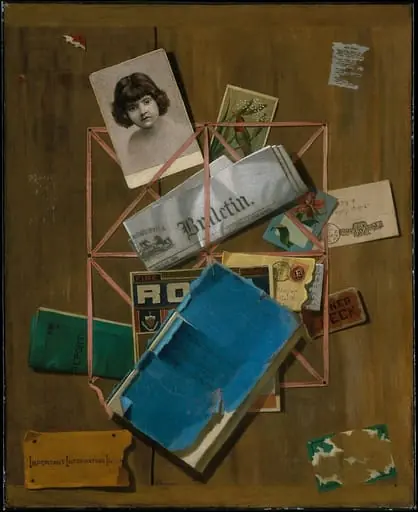
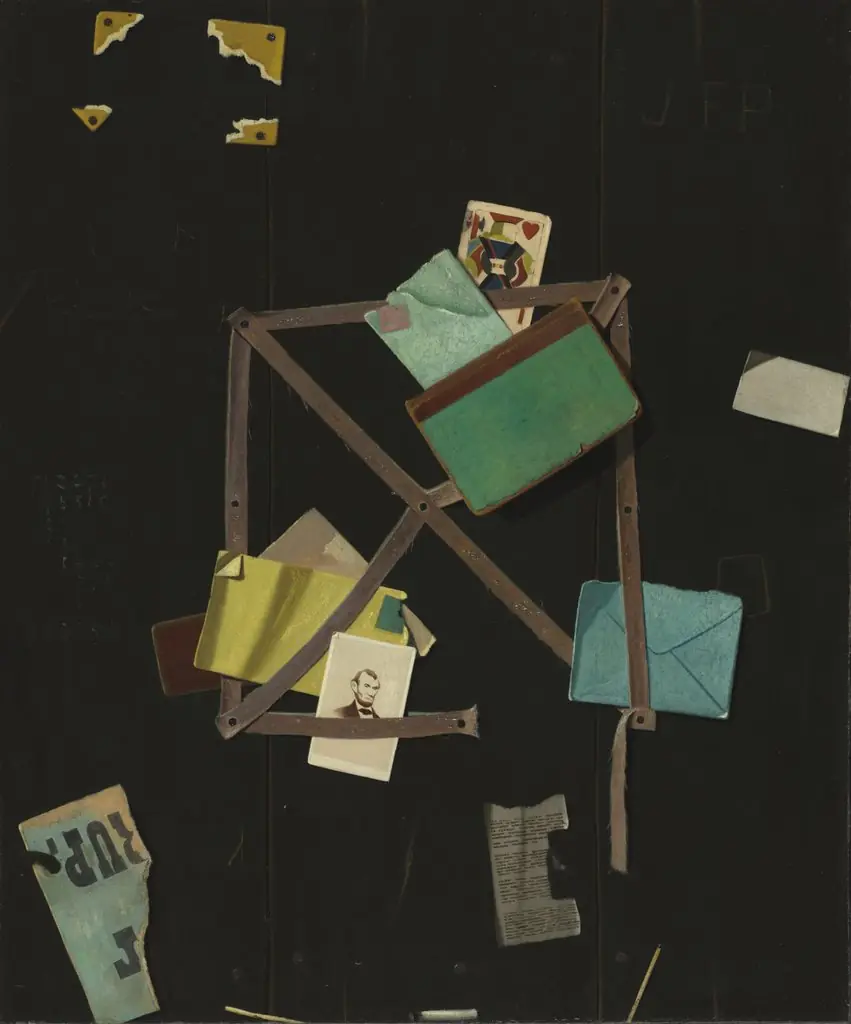
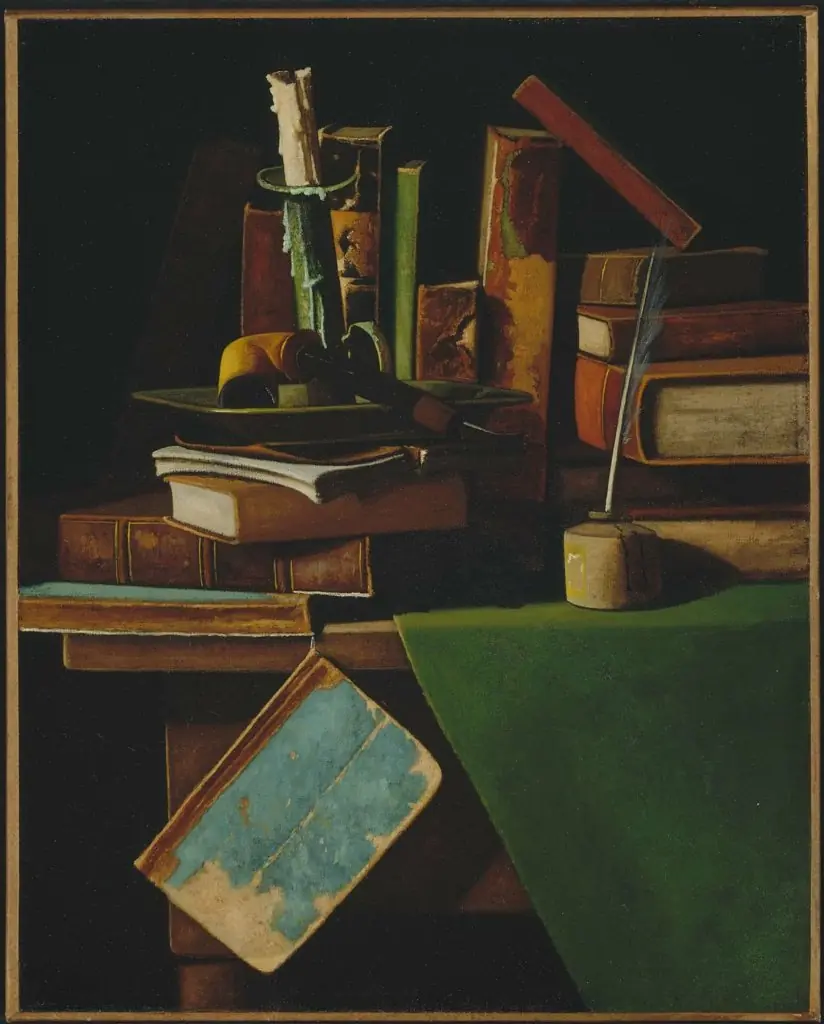
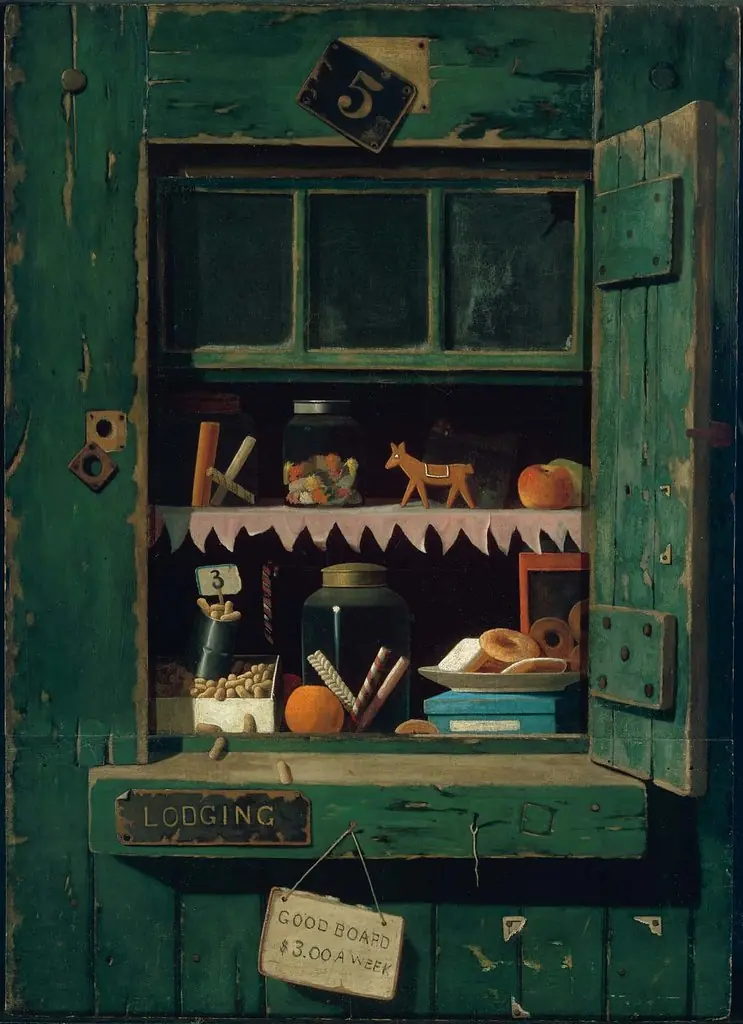
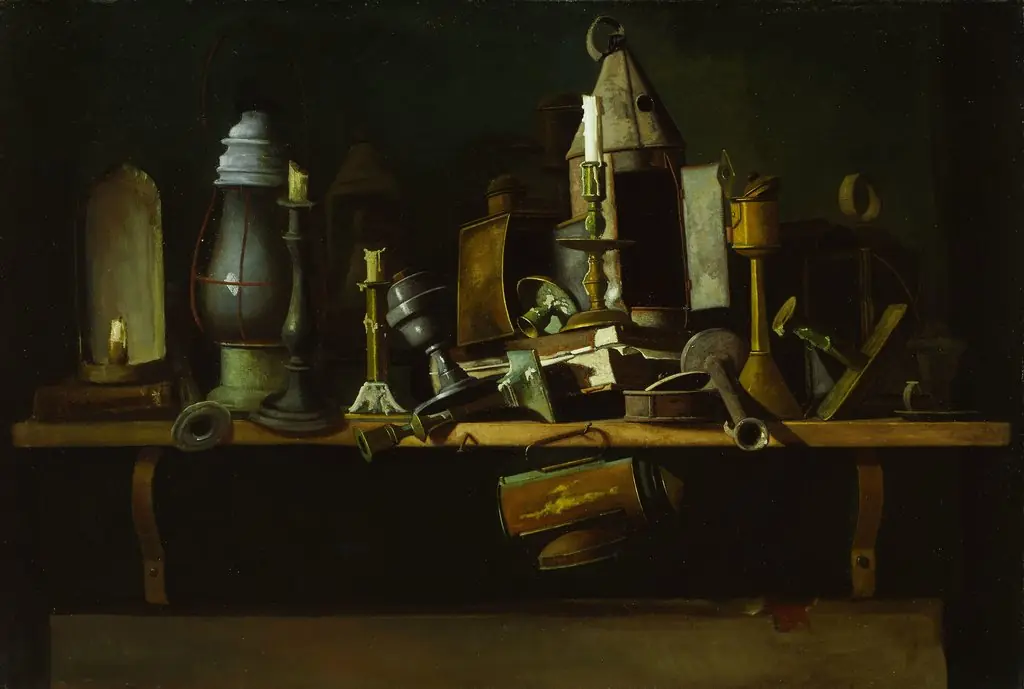
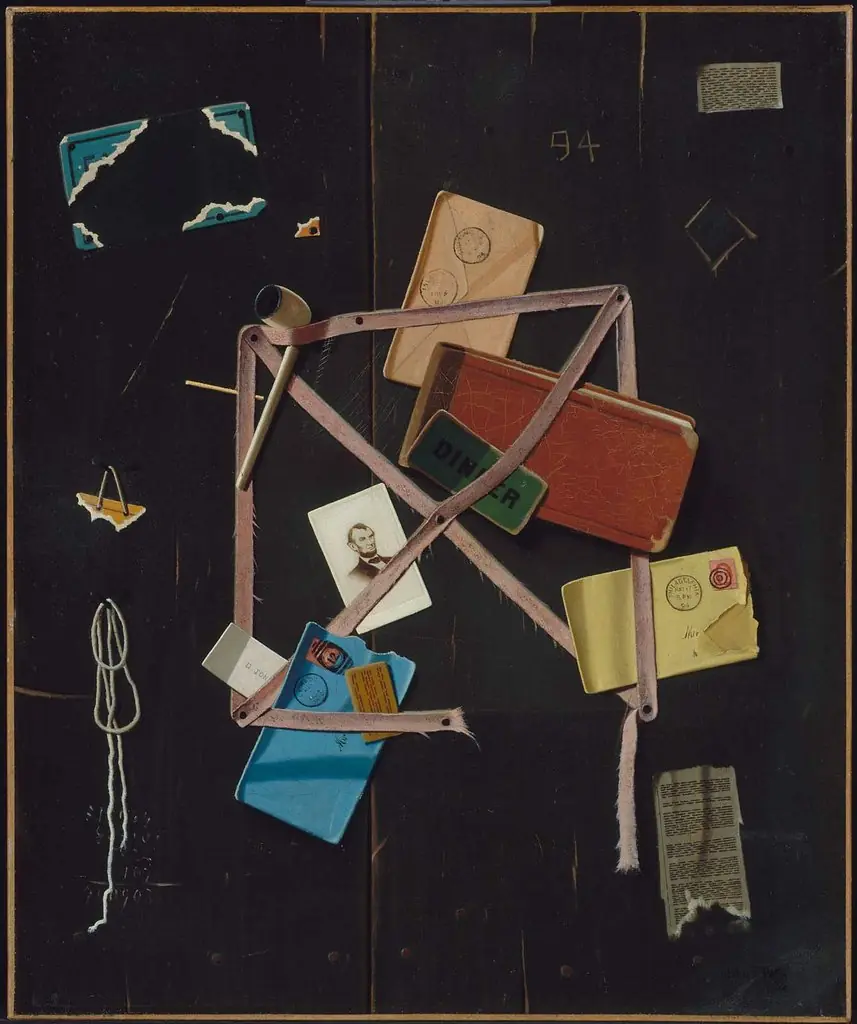
HSP's Rack Picture is a trompe-l'œil painting created by American artist John F. Peto in 1900, executed in oil paint. Characterized by meticulous detail and realistic rendering, the work exemplifies Peto's specialty in deceptive still-life compositions.
Subject & Meaning
The painting depicts a domestic wall scene featuring a white rack on a dark green background, laden with multicolored papers and cards. Additional objects such as a key, lock, and a shelf with a mug contribute to a sense of everyday life, inviting the viewer to engage with the illusion of reality.
Technique & Style
Peto utilized oil paint to achieve a high degree of realism, emphasizing texture and depth. The work showcases the trompe-l'œil technique, where the artist's skill in mimicking reality challenges the viewer's perception.
History & Provenance
Created in 1900 during the American Impressionism period, though Peto's work is distinct within this context due to its trompe-l'œil focus. The painting is currently part of the Los Angeles County Museum of Art's collection.
Context
While active during the American Impressionism movement, Peto's adherence to trompe-l'œil sets his work apart, aligning more closely with a tradition of realistic illusionism than with the impressionist emphasis on light and color.
Legacy
As a representative of American trompe-l'œil, HSP's Rack Picture contributes to the understanding of late 19th and early 20th-century American artistic diversity, beyond the dominant impressionist and modernist narratives.
Artist & collection

Artist
John Frederick Peto (May 21, 1854 – November 23, 1907) was an American trompe-l'œil ("fool the eye") painter who was long forgotten until his paintings were rediscovered along with those of fellow trompe-l'œil artist William Harnett.