Artwork
Sturnur Vulgaris
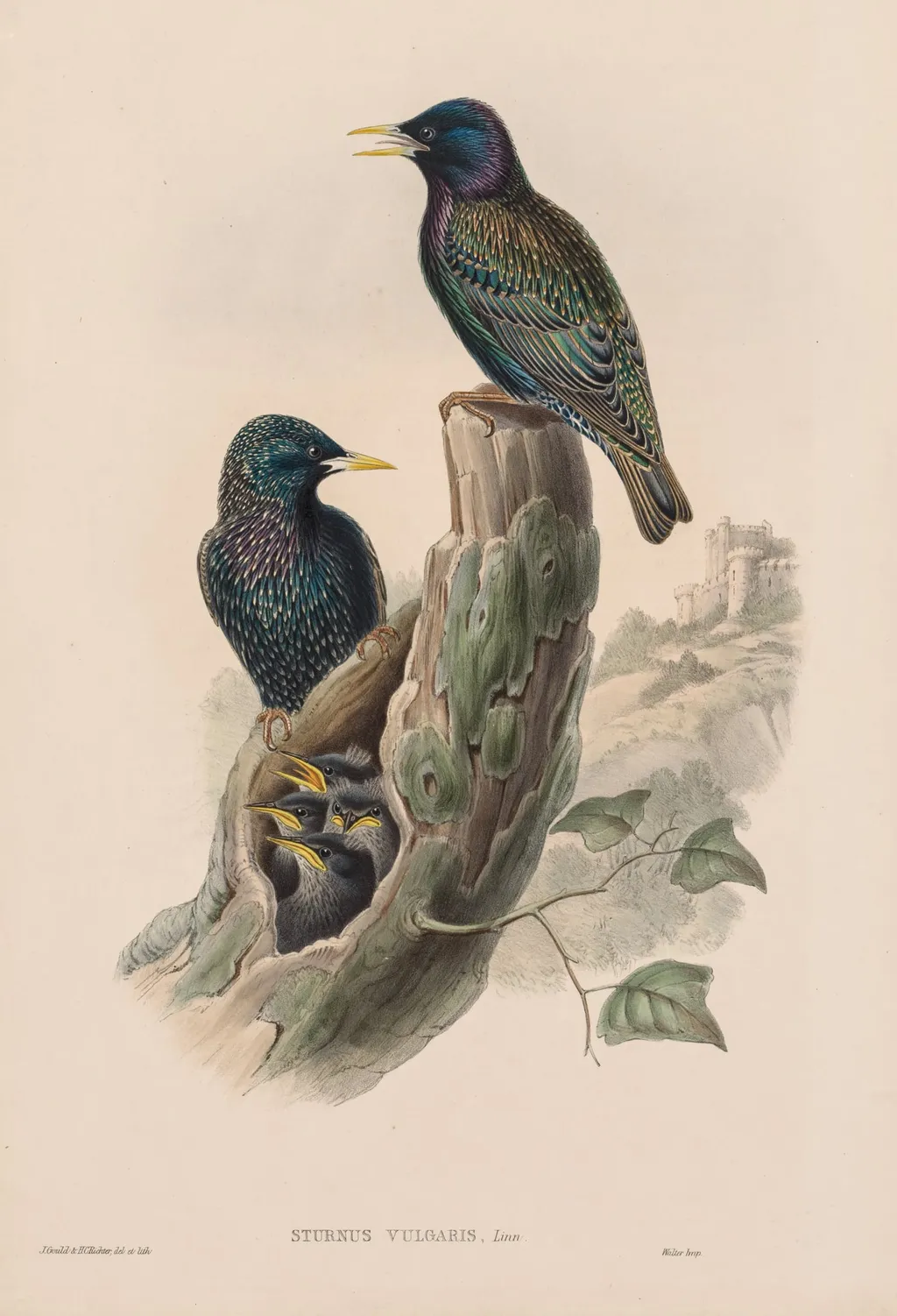
Sturnur Vulgaris is a print by the Impressionist artist John Gould. It dates from 1873 and is held in the collection of the Cleveland Museum of Art.
About this work
Overview
The plate was made using collaborative techniques common in 19th-century natural history publishing, combining expert observation with skilled illustration.
Created in 1873, *Sturnus vulgaris* is a hand-colored lithograph produced as part of John Gould’s broader ornithological publications. It depicts the European starling with scientific precision and artistic detail, reflecting Gould’s commitment to documenting avian species through accurate visual records. The plate was made using collaborative techniques common in 19th-century natural history publishing, combining expert observation with skilled illustration.
Subject & Meaning
The image portrays a parent starling perched on a twisted branch, overseeing three downy chicks below. The composition emphasizes familial structure and natural behavior, aligning with Gould’s aim to illustrate species in their ecological context. The faint outline of a distant castle suggests a rural European setting, subtly anchoring the bird within a familiar landscape without overshadowing the biological focus.
Technique & Style
The plate employs fine line work and layered washes to render the starling’s iridescent plumage, capturing subtle shifts in light across its feathers. Background elements are rendered lightly in pencil, allowing the birds to remain the focal point. The use of pale paper enhances the luminosity of the feathers, while the muted tones of the chicks contrast with the adult’s glossy sheen, demonstrating careful attention to developmental stages.
History & Provenance
This print originated from John Gould’s private publishing efforts, likely produced in London during the 1870s. It entered the collection of The Cleveland Museum of Art through documented acquisition, part of a larger group of ornithological plates assembled for study and public education. Its preservation reflects the institutional value placed on 19th-century scientific illustration as both art and documentation.
Context
Gould’s work coincided with a surge in natural history exploration during the Victorian era. His illustrations were used by scientists, including those connected to Charles Darwin, to support taxonomic research. The depiction of the starling, a widespread and adaptable species, contributed to broader discussions about bird distribution, behavior, and adaptation across Europe and beyond.
Legacy
Though no longer taxonomically current, Gould’s plates remain valued for their historical and aesthetic significance. *Sturnus vulgaris* exemplifies the intersection of science and art in natural history, influencing later generations of wildlife illustrators. Its continued presence in museum collections underscores its role as a primary record of 19th-century ornithological practice.
Artist & collection
Artist
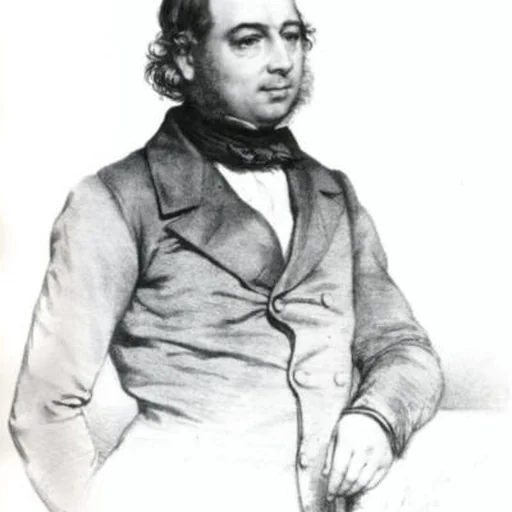
John Gould (; 14 September 1804 – 3 February 1881) was an English ornithologist who published monographs on birds, illustrated by plates produced by his wife, Elizabeth Gould, and several other artists, including Edward…

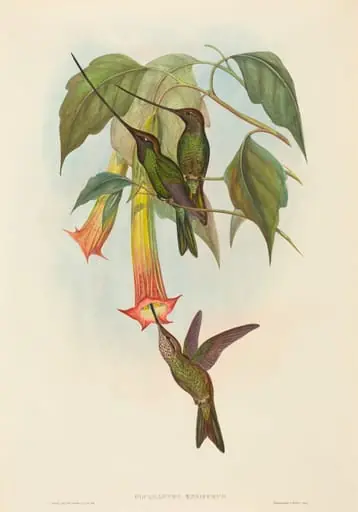 Docimastes ensiferus (Sword-billed Hummingbird)
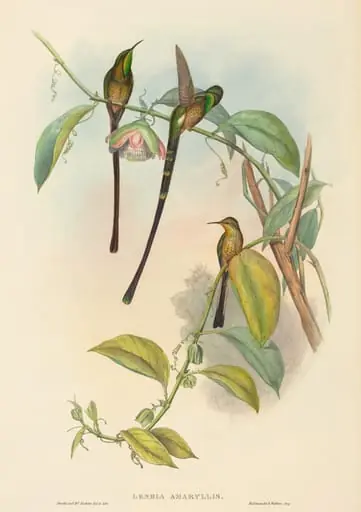 Lesbia Amaryllis
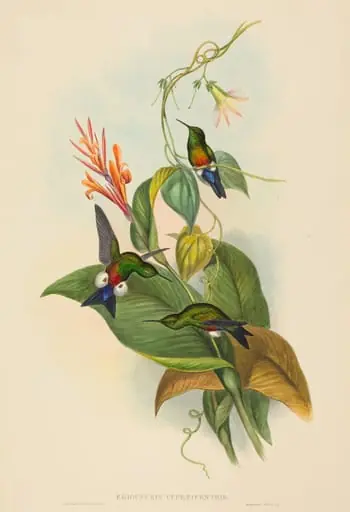 Eriocnemis cupreiventris (Coppery-vented Puff-Leg)
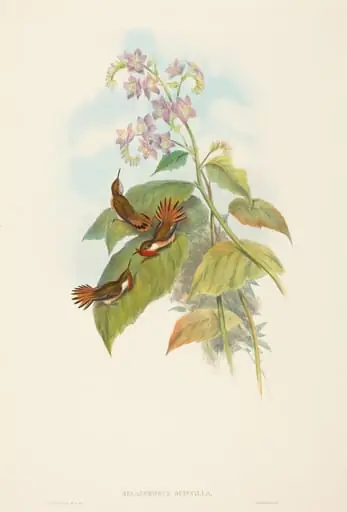 Selashorus scintilla (Scintillant Hummingbird)
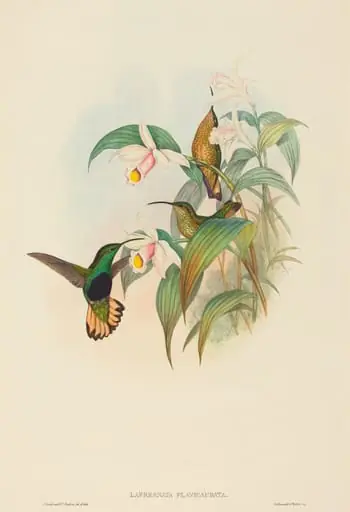 Lafresnaya flavicaudata (Buff-tailed Velvet-breast)
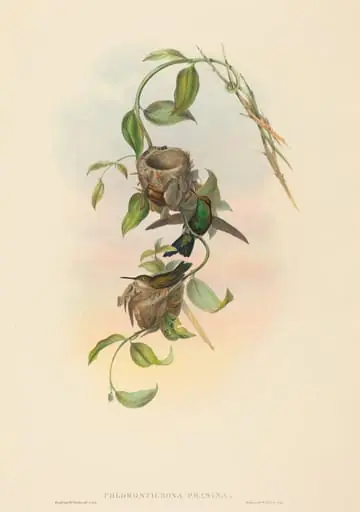 Chlorostilbona prasina (Puncheran's Emerald)
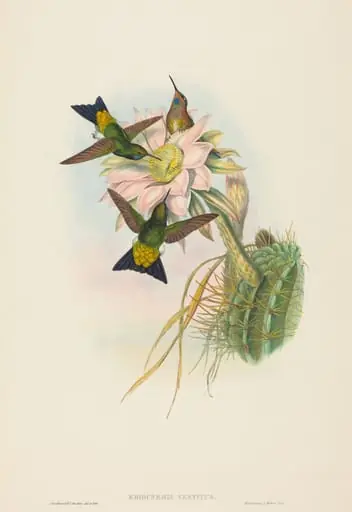 Eriocnemis vestitus (Glowing Puff-Leg)
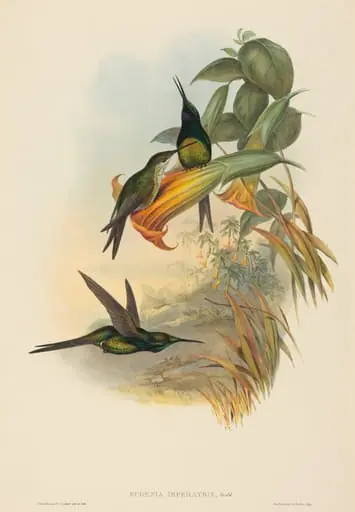 Eugenia imperatrix (Empress Hummingbird)
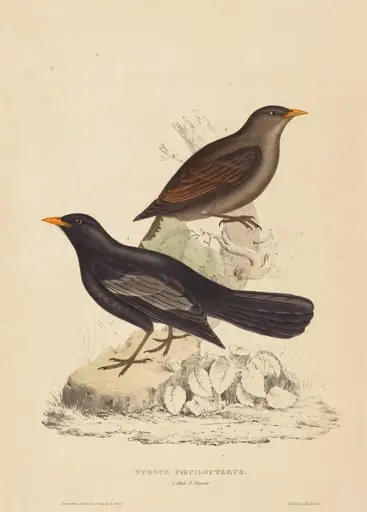 Turdus Poecilopterus (Aztec Thrush)
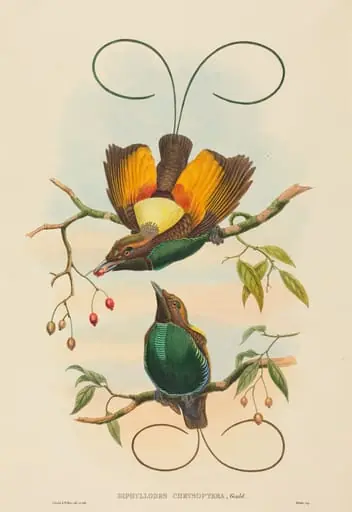 Diphyllodes chrysoptera (Magnificent Bird of Paradise)
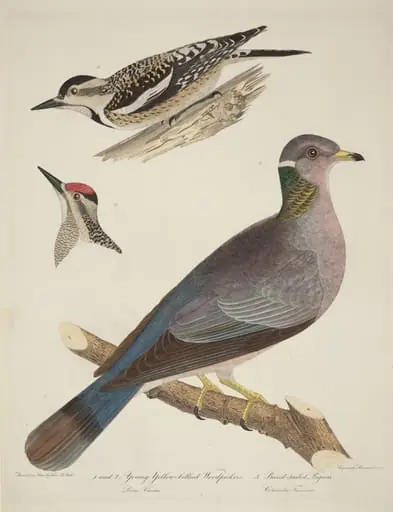 Young Yellow-bellied Woodpeckers and Band-tailed Pigeon
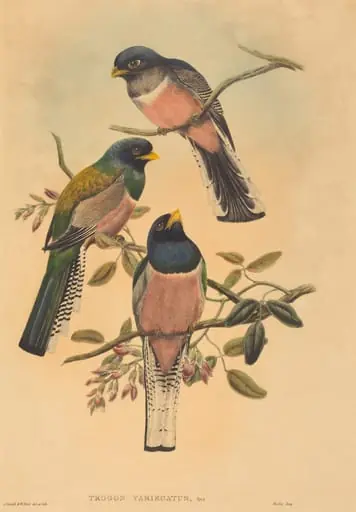 Trogan variegatus
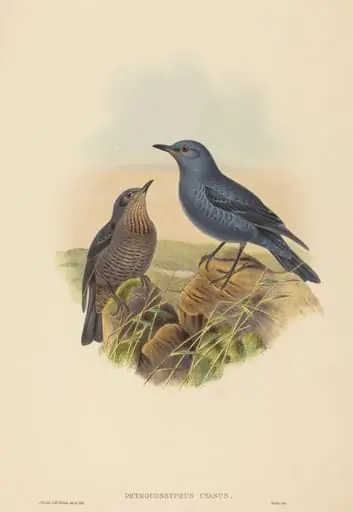 Petrocossyphus cyanus (Blue Rockthrush)
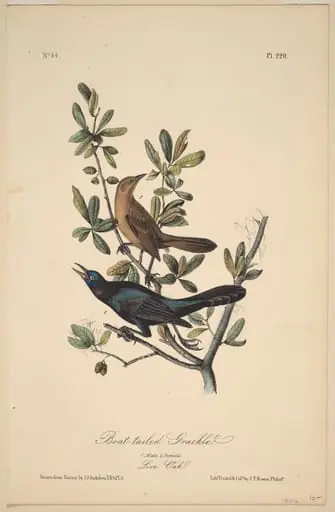 Boat-Tailed Grackle
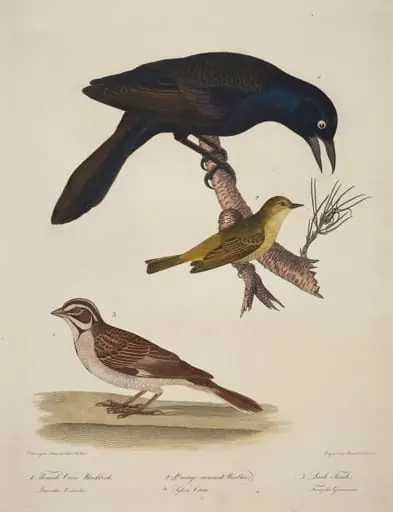 Female Crow Blackbird, Orange-Crowned Warbler, Lark Finch
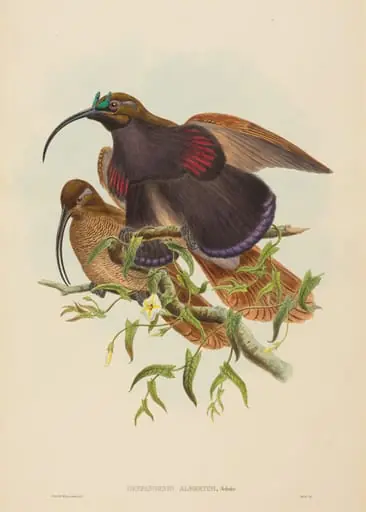 Drepanornis albertisi (Black-billed Sicklebill Bird of Paradise)
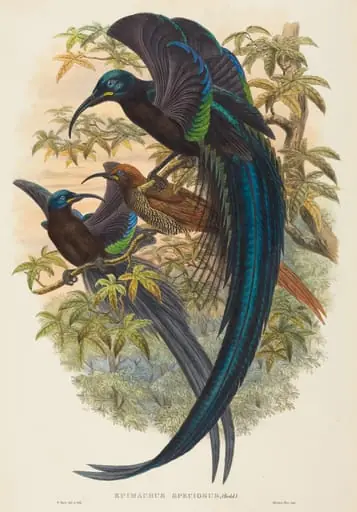 Epimachus speciosus (Sickle-billed Bird of Paradise)
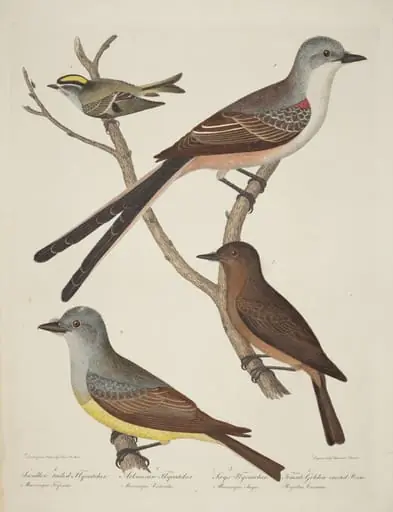 Swallow-tailed Flycatcher, Arkansas Flycatcher, Say's Flycatcher, and Female Golden-crested Wren