Artwork
The Great Statue of Amida Buddha at Kamakura, Known as the Daibutsu, from the Priest's Garden
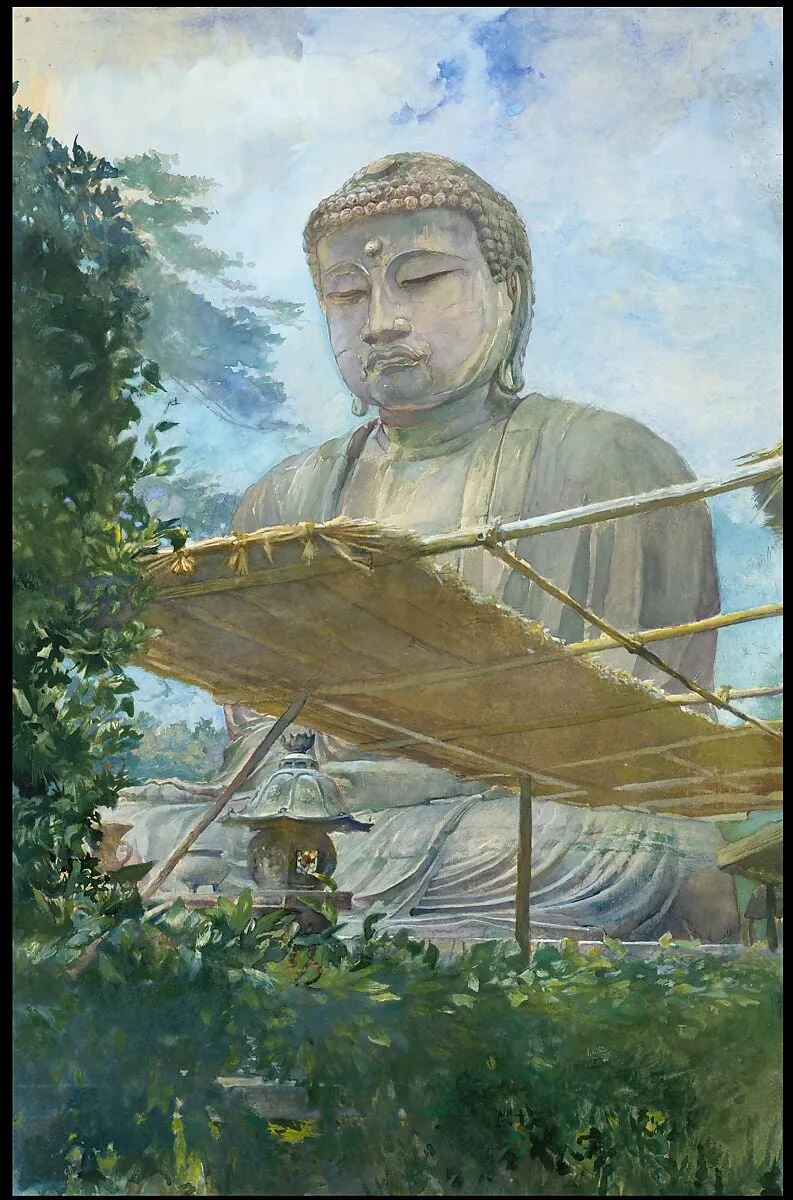
The Great Statue of Amida Buddha at Kamakura, Known as the Daibutsu, from the Priest's Garden is a watercolor work on paper by the American Impressionist artist John La Farge. It dates from 1887 and is held in the collection of the Metropolitan Museum of Art.
About this work
He used thin layers of watercolor, letting the paper show through to soften the light.
You see a quiet garden with a giant bronze Buddha peeking through the trees. The statue’s face is calm, half-hidden by leaves and branches.
La Farge painted this in 1887 after traveling to Japan. He used thin layers of watercolor, letting the paper show through to soften the light. The mix of American watercolor style and Japanese subject was unusual then.
Look up other works in the subject: Buddha.
Overview
John La Farge’s 1887 watercolor and gouache composition portrays the massive bronze Daibutsu of Amida Buddha as seen from a priest’s garden in Kamakura. Executed on off‑white wove paper, the image balances the monumental figure with surrounding foliage, allowing the Buddha’s serene visage to emerge partially concealed by trees. The work exemplifies La Farge’s interest in Asian subjects during his late‑nineteenth‑century travels.
Subject & Meaning
The painting focuses on the iconic Daibutsu, a symbol of Buddhist compassion and enlightenment. By situating the statue within a tranquil garden, La Farge emphasizes the harmony between the monumental religious icon and the natural environment, suggesting a contemplative space where the divine presence is subtly integrated with everyday surroundings.
Technique & Style
La Farge applied thin, translucent washes of watercolor over a gouache underlayer, allowing the bright off‑white paper to illuminate the scene. This layering creates a softened atmospheric effect, characteristic of American Impressionist approaches, while the composition’s compositional balance and attention to detail reflect his study of Japanese visual conventions.
History & Provenance
Created shortly after La Farge’s documented journey to Japan, the work entered the American Wing collection of the museum in the early twentieth century. Its acquisition reflects the period’s growing fascination with East Asian art and the artist’s reputation as a versatile figure in illustration, mural painting, and interior design.
Context
During the 1880s, Western artists increasingly turned to Asian motifs, yet La Farge’s direct rendering of a specific Japanese landmark was relatively rare. The piece illustrates the cross‑cultural exchange that shaped American Impressionism, merging Western watercolor techniques with a distinctly Japanese subject matter.
Legacy
The painting remains a reference point for studies of transpacific artistic influence in the late nineteenth century, highlighting La Farge’s role in introducing Japanese iconography to American audiences. It continues to inform scholarship on the diffusion of Buddhist imagery in Western visual culture.
Artist & collection

Artist
John La Farge (March 31, 1835 – November 14, 1910) was an American artist whose career spanned illustration, murals, interior design, painting, and popular books on his Asian travels and other art-related topics.

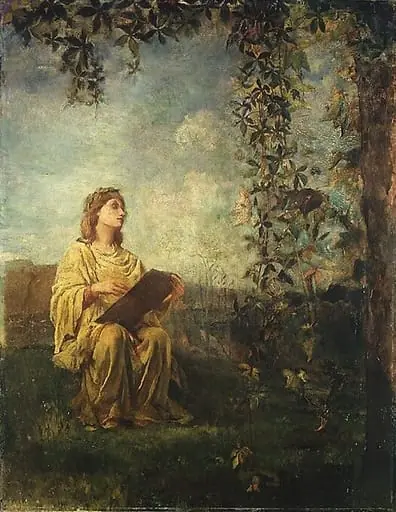 The Muse of Painting
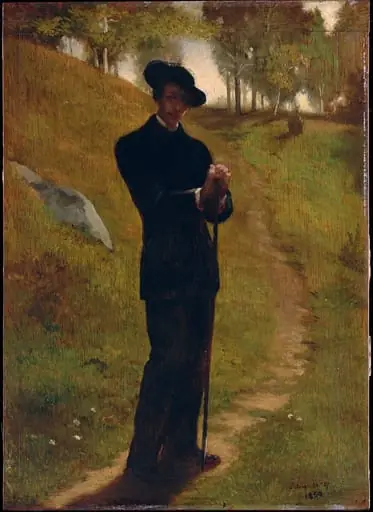 Portrait of the Painter
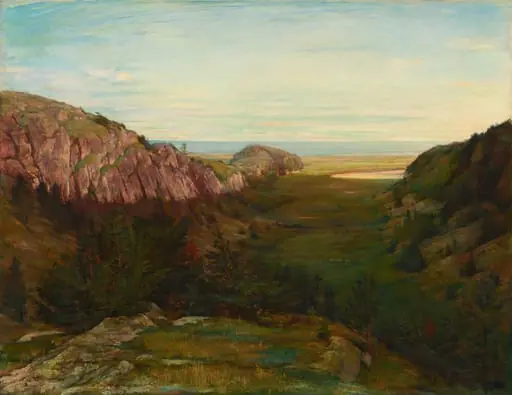 The Last Valley - Paradise Rocks
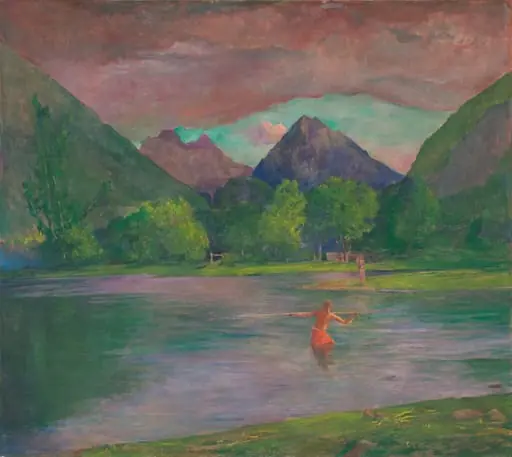 The Entrance to the Tautira River, Tahiti. Fisherman Spearing a Fish
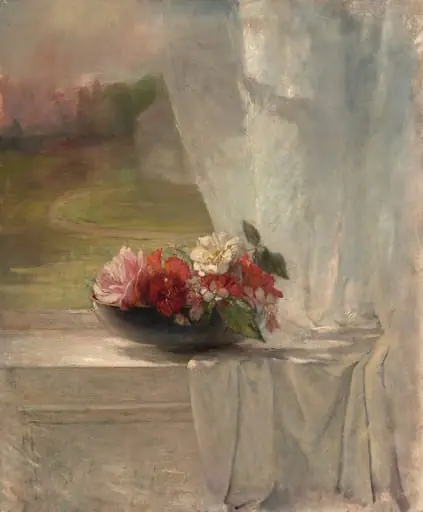 Flowers on a Window Ledge
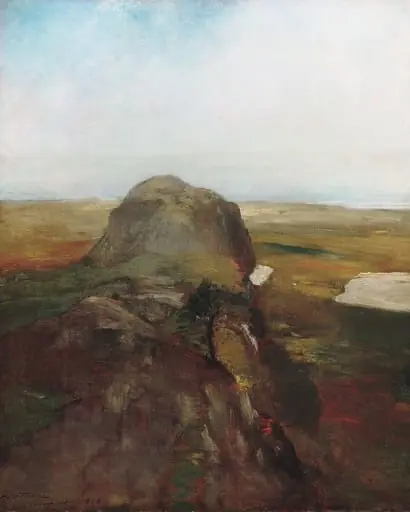 Autumn Study, View over Hanging Rock, Newport, R.I.
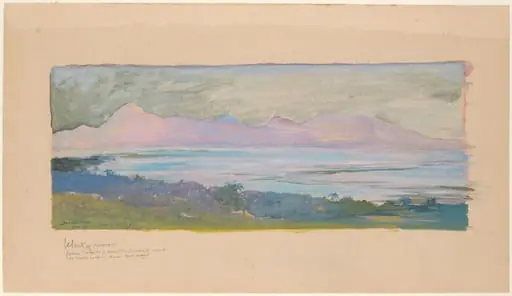 The Island of Moorea Looking across the Strait from Tahiti, January 1891
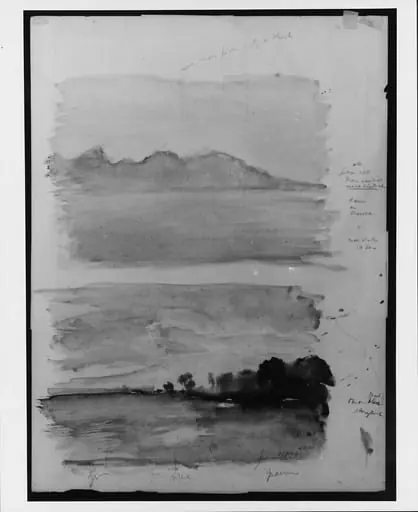 Double Study of Dawn, Moorea Seen across the Water, Tahiti