Artwork
painting, theme, gaku
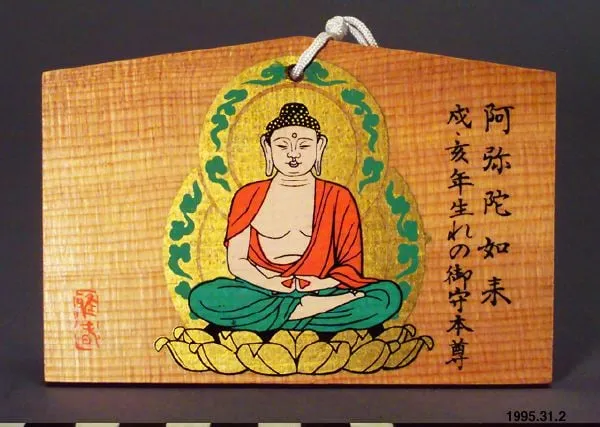
painting, theme, gaku is a paint painting by Unknown. It dates from 1850 and is held in the collection of the ethnographic museum.
About this work
Overview
The work is a painted votive board, known as an ema, bearing a printed image of Sakyamuni, the historical Buddha, set against a lotus background. Such boards were offered at Shinto shrines as devotional objects, often bearing inscriptions and official stamps. This particular example reflects the syncretic practice of incorporating Buddhist iconography into a traditionally Shinto medium.
Subject & Meaning
The central motif depicts Sakyamuni seated on a lotus, a symbol of purity and enlightenment in Buddhist tradition. By presenting this figure on an ema, worshippers sought the Buddha’s blessings while adhering to Shinto ritual customs. The board thus functions as a prayer request, merging Buddhist reverence with the shrine’s communal supplicatory practices.
Technique & Style
The board combines woodblock printing for the Buddha image with painted and stamped elements typical of ema production. The lotus background and accompanying text are rendered in bold pigments, while the stamp provides an official seal. This hybrid technique mirrors the broader Japanese tradition of integrating printed motifs with hand‑applied decoration on devotional objects.
History & Provenance
Ema of this type are documented in collections such as U. A. Casal’s 1950.2 and the Vanadise collection (1887.8). Casal discussed the theme in a 1948 article for Ethnos, noting the evolution from horse‑offering to painted boards. The present piece follows this historical trajectory, illustrating the shift from animal sacrifice to portable, illustrated votive offerings.
Context
This board exemplifies the adaptive, inclusive nature of shrine votive practices.
Originally, horses were offered at Shinto shrines as valuable gifts. When patrons could not afford live animals, they substituted painted representations, eventually expanding to include various motifs—including Buddhist figures, pomegranates for fertility, and even modern appeals such as a cigarette to quit smoking. This board exemplifies the adaptive, inclusive nature of shrine votive practices.
Artist & collection
 Domestic Scene
 Giacomo and Cardinal Marco, investing Andrea, Abbot of San Zeno, with his Benefice
 The Nymph of Fontainebleau
 Portrait of a Woman
 Madonna and Child with Saints in the Enclosed Garden
 Venus and Minerva
 Family Group of Four on Sofa
 Wall painting from Room H of the Villa of P. Fannius Synistor at Boscoreale
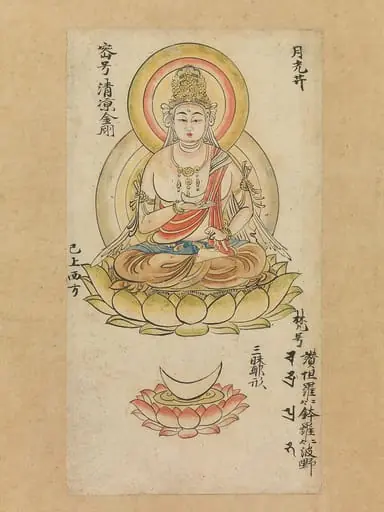 伝託磨為遠筆 月光菩薩像 「金胎仏画帖」断簡|Gakkō Bosatsu, from “Album of Buddhist Deities from the Diamond World and Womb World Mandalas” (“Kontai butsugajō”)
 釈迦如来像|Shaka Nyorai
 Untitled
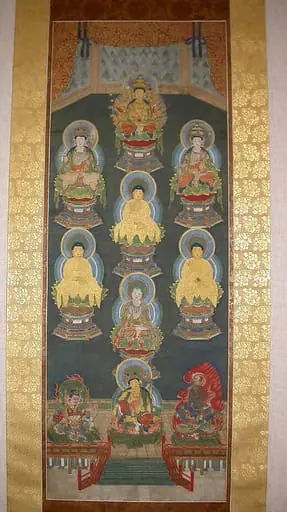 山王本地仏曼荼羅|Mandala of the Sannō Shrine Deities
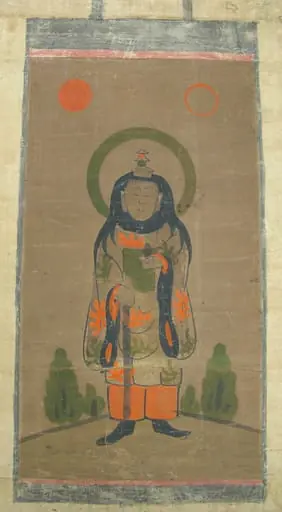 雨宝童子図大津絵|Ōtsu-e of Uhō Dōji
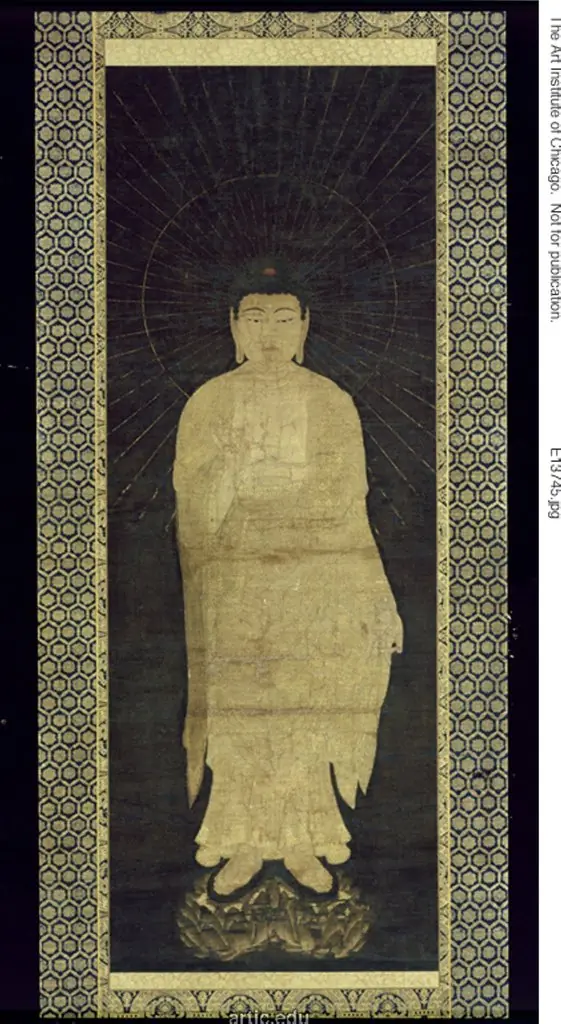 The Buddha Amida, from the triptych Approach of the Amida Trinity
 Ratnasambhava, Akshobhya, Vairochana with attendants, Amitabha, and Amoghasiddhi, Top cover, from a Manuscript of the Perfection of Wisdom in Eight Thousand Lines (Ashtasahasrika Prajnaparamita-sutra)
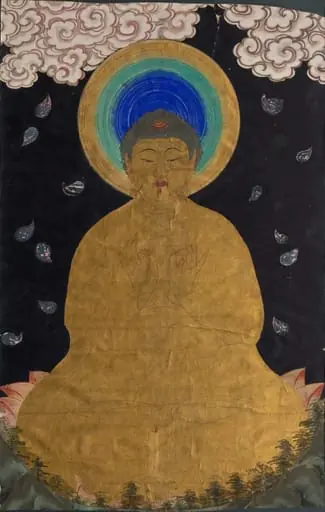 Buddha
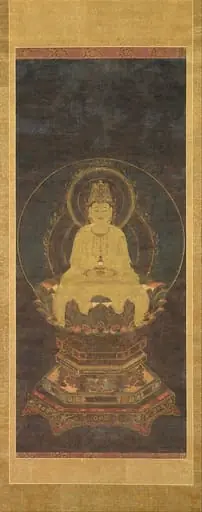 弥勒菩薩像|Miroku Bosatsu
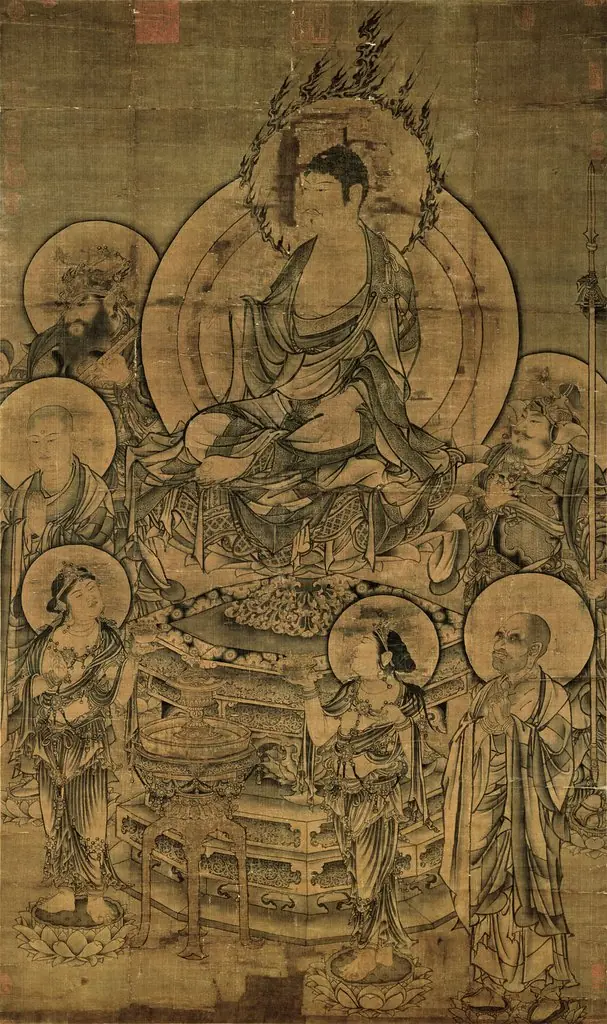 The Buddha Preaching the Law
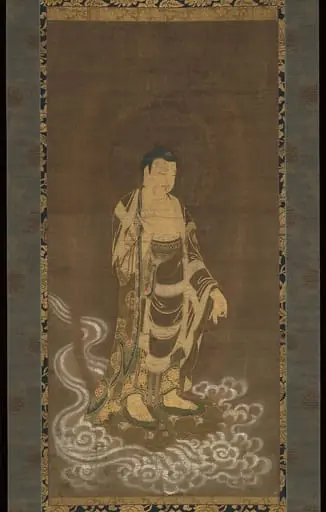 阿弥陀如来像|Welcoming Descent of Amida Buddha
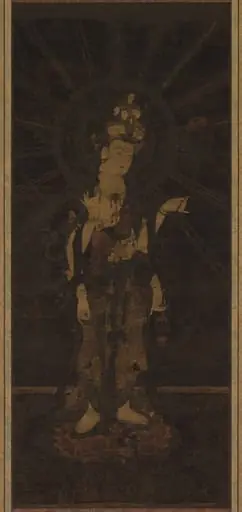 Eleven-Headed Kannon (Jūichimen Kannon)