Artwork
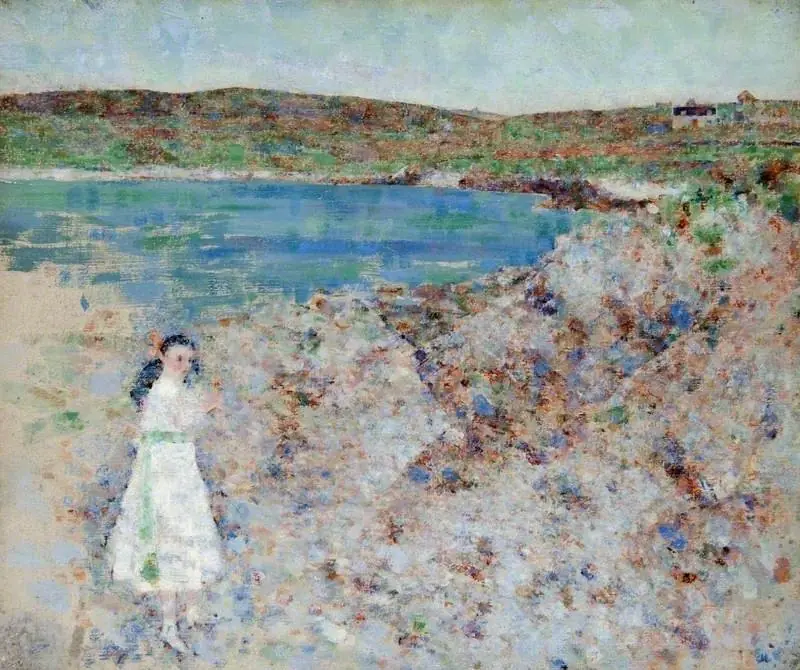
Landscape with Trees and a Girl in White
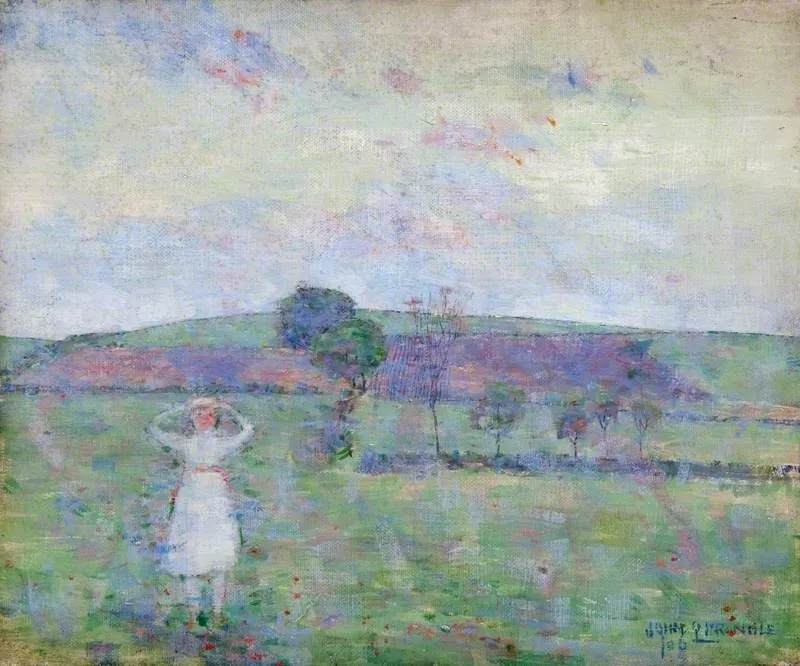
Landscape with Trees and a Girl in White is an oil painting by the Impressionist artist John Quinton Pringle. It dates from 1906 and is held in the collection of the Kelvingrove Art Gallery and Museum.
About this work
Overview
Pringle, associated with the Glasgow Boys and influenced by French naturalism, captures a moment of stillness in the Scottish countryside.
Painted in 1906 by Scottish artist John Quinton Pringle, this oil on canvas work presents a quiet rural scene. Pringle, associated with the Glasgow Boys and influenced by French naturalism, captures a moment of stillness in the Scottish countryside. The painting is part of the permanent collection at Kelvingrove Art Gallery and Museum in Glasgow, where it reflects early 20th-century British landscape traditions.
Subject & Meaning
A solitary girl in a long white dress stands in the foreground, arms raised, as if adjusting her hat or gesturing toward the sky. Her presence introduces a subtle human element into an otherwise undisturbed natural setting. The figure is neither engaged in labor nor overtly emotional, suggesting a moment of pause rather than narrative. The composition invites contemplation of solitude and the quiet rhythm of rural life.
Technique & Style
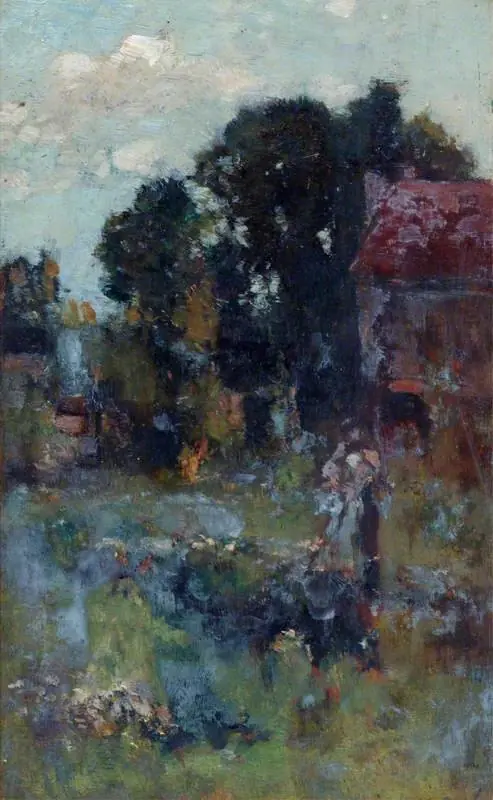
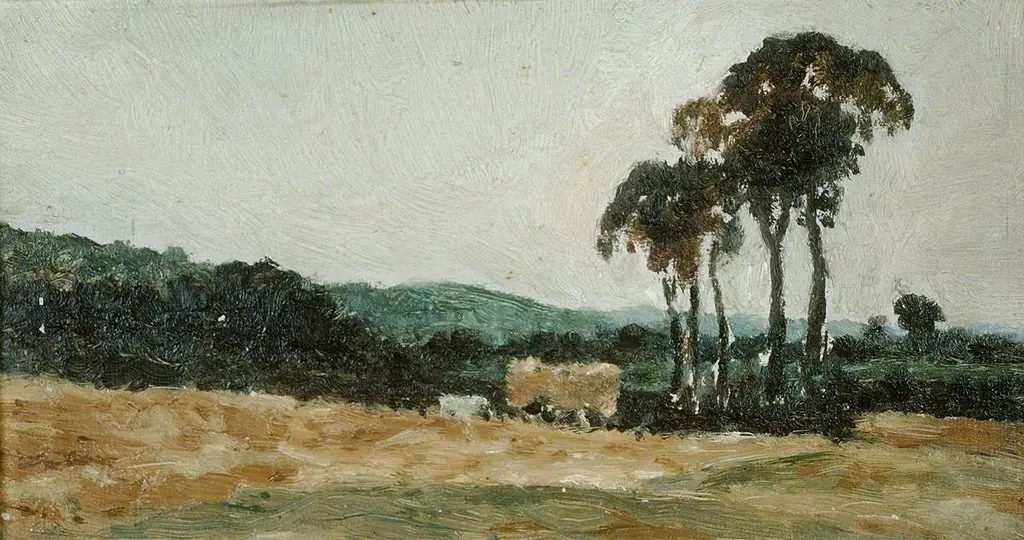
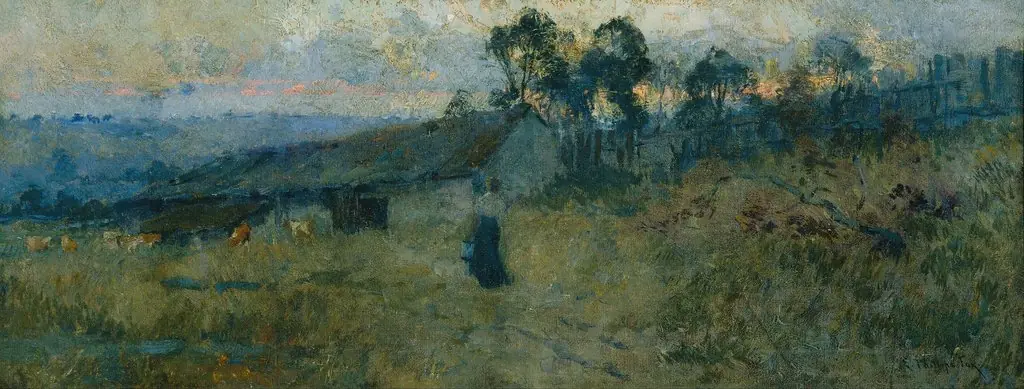
Pringle employs loose, textured brushwork to render foliage and distant hills, aligning with impressionist approaches to light and atmosphere. The white dress of the figure contrasts with the muted greens and browns of the landscape, creating visual focus without sharp definition. Depth is achieved through atmospheric perspective, with cooler tones receding into the background, while the foreground remains softly modeled with visible brushstrokes.
History & Provenance
The painting was completed in 1906 during a period when Pringle was refining his landscape style after early exposure to Jules Bastien-Lepage’s naturalism. It entered the Kelvingrove collection shortly after its creation, likely through direct acquisition or donation. Its continuous presence in the museum’s holdings reflects its recognition as a representative work of Scottish impressionist painting from the era.
Context
Pringle worked alongside the Glasgow Boys, a group of artists who rejected academic conventions in favor of direct observation and plein air painting. This piece reflects broader trends in late 19th- and early 20th-century British art, where rural subjects were rendered with sensitivity to light and mood rather than idealized detail. The painting aligns with a growing interest in everyday rural life as a legitimate subject for fine art.
Legacy
Though not widely exhibited beyond regional collections, the painting remains a quiet example of Pringle’s mature style. It contributes to the understanding of Scottish impressionism as a distinct regional variant, blending French naturalism with local topography. Its enduring presence in Kelvingrove underscores its value as a document of early modern Scottish landscape painting.
Artist & collection
Artist
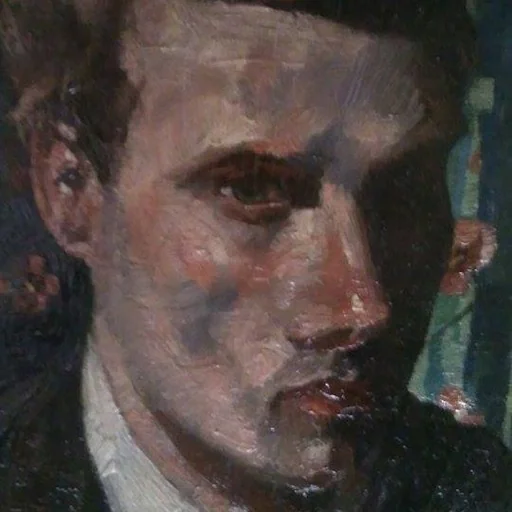
John Quinton Pringle (13 December 1864 – 25 April 1925) was a Scottish painter, influenced by Jules Bastien-Lepage and associated with the Glasgow Boys.