Artwork
Study for "The Tribute Money"
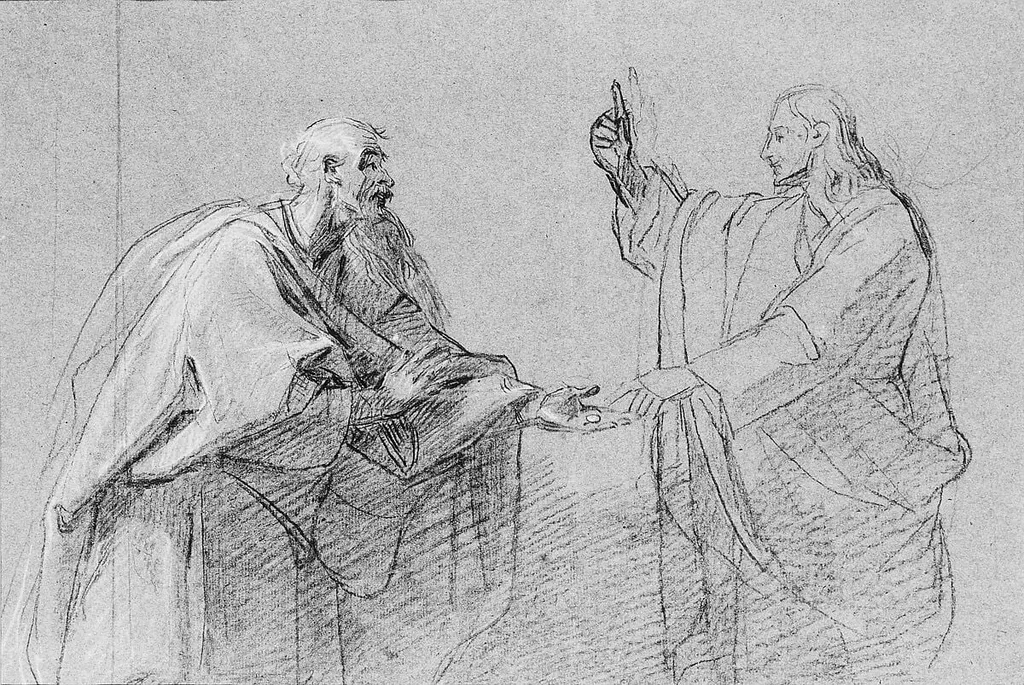
Study for "The Tribute Money" is a chalk drawing by the Romanticist artist John Singleton Copley. It dates from 1782 and is held in the collection of the Metropolitan Museum of Art.
About this work
Overview
John Singleton Copley’s 1782 drawing, a preparatory study for his later work “The Tribute Money,” is executed in black chalk with white‑chalk highlights on blue laid paper. The piece belongs to the American Wing collection and serves as a compositional sketch for a larger religious narrative.
Subject & Meaning
The composition centers on a biblical encounter, featuring Christ and a companion figure engaged in the episode traditionally known as the tribute money. By isolating this moment, Copley explores themes of authority, duty, and the tension between spiritual and civic obligations.
Technique & Style
Copley employs contrasting chalk tones to model forms and suggest depth, while the blue ground provides a cool undertone that enhances the white highlights. The drawing’s gestural lines and tonal modulation reveal his method of resolving figure placement and lighting before committing to oil.
History & Provenance
Born in colonial New England, Copley established a reputation as a portraitist before moving to London in 1774. After his relocation, he turned increasingly toward grand history subjects, of which this study is an early example. The work entered the museum’s American Wing through acquisition in the early 20th century.
Context
Created during Copley’s London period, the study reflects the artist’s adaptation to European academic conventions while retaining his American training. It illustrates his transition from intimate portraiture to ambitious narrative compositions, aligning with contemporary tastes for moralizing biblical scenes in public and private collections.
Artist & collection
Artist
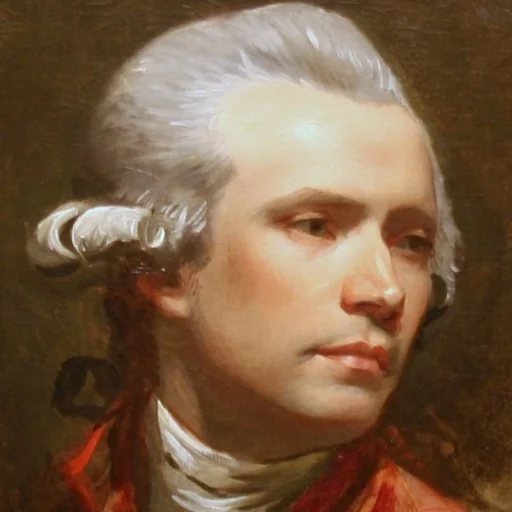
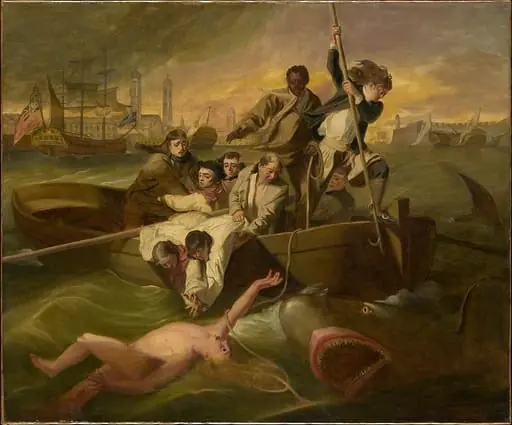
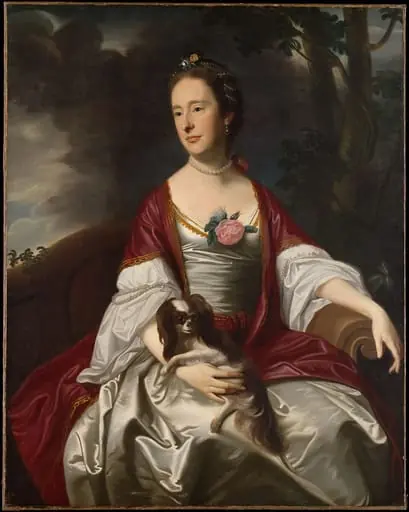
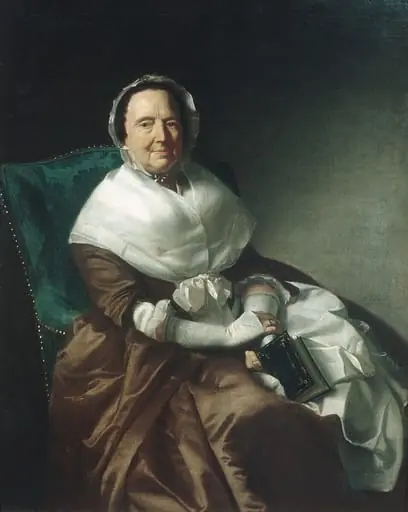
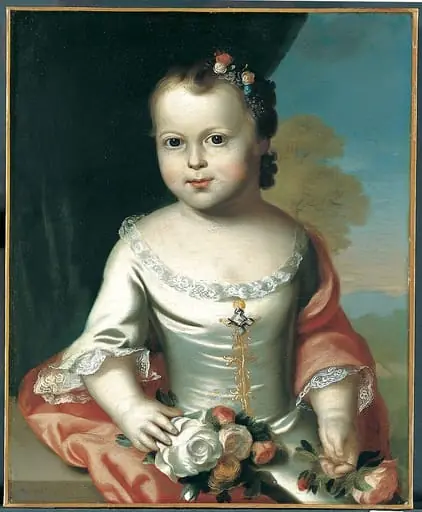
John Singleton Copley (July 3, 1738 – September 9, 1815) was an American-born British painter active in both the Thirteen Colonies and England.

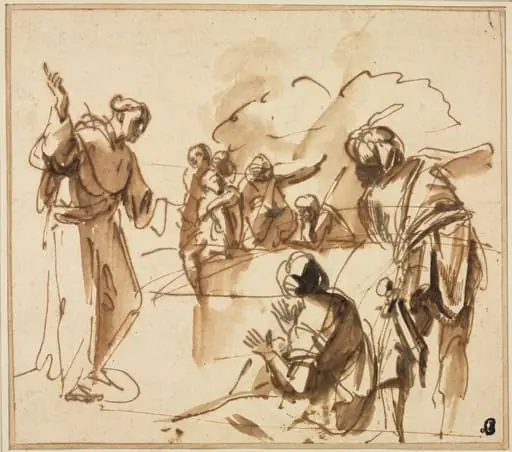 A Monk Preaching
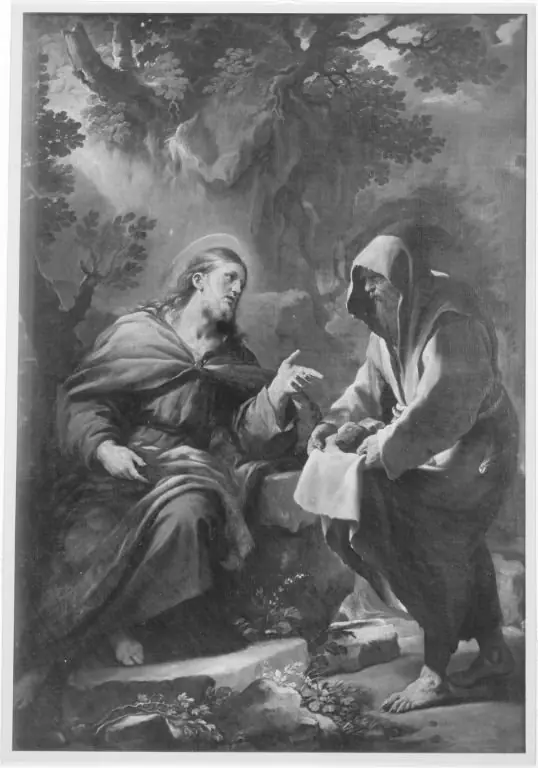 Versuchung Christi in der Wüste
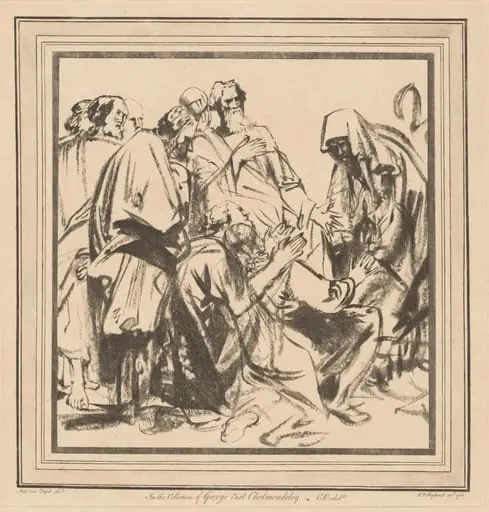 Jacob Persuaded to Send Benjamin with His Brethren into Egypt
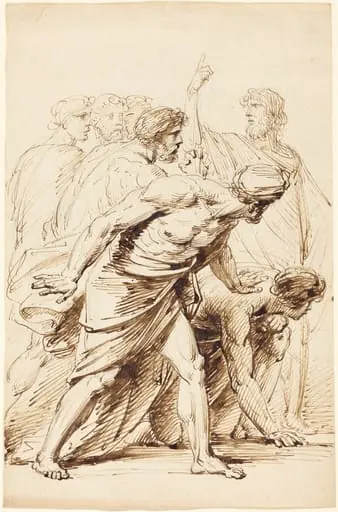 Seven Men in Antique Dress
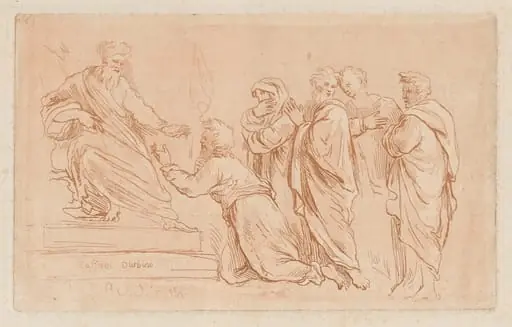 Adonias Imploring the Grace of Solomon or Jeroboam Kneeling before Rehoboam
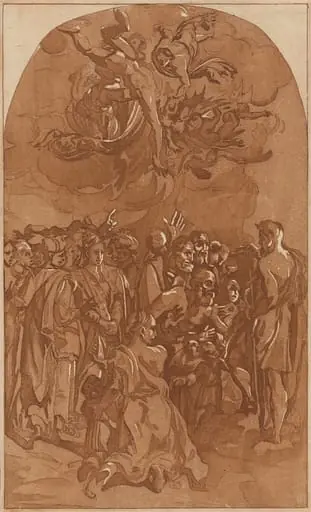 Saint John Preaching
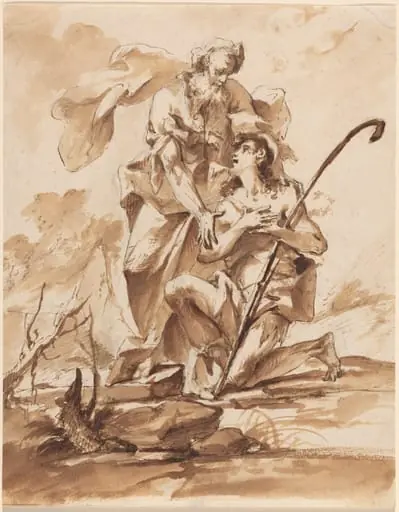 Return of the Prodigal Son
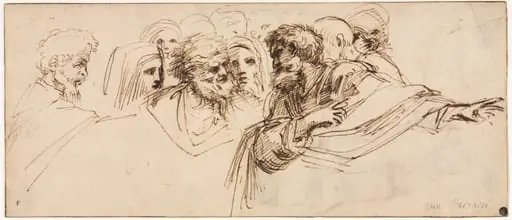 Study of Heads (recto)
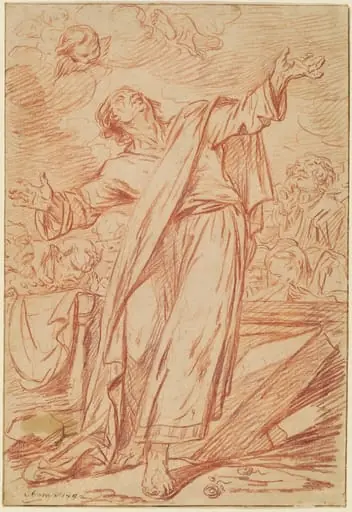 The Assumption of the Virgin