Artwork
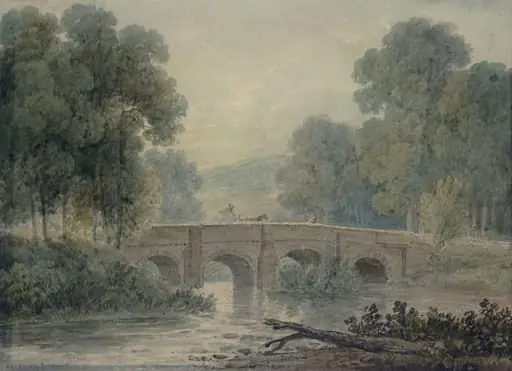
Bridge on the Ouse, near York
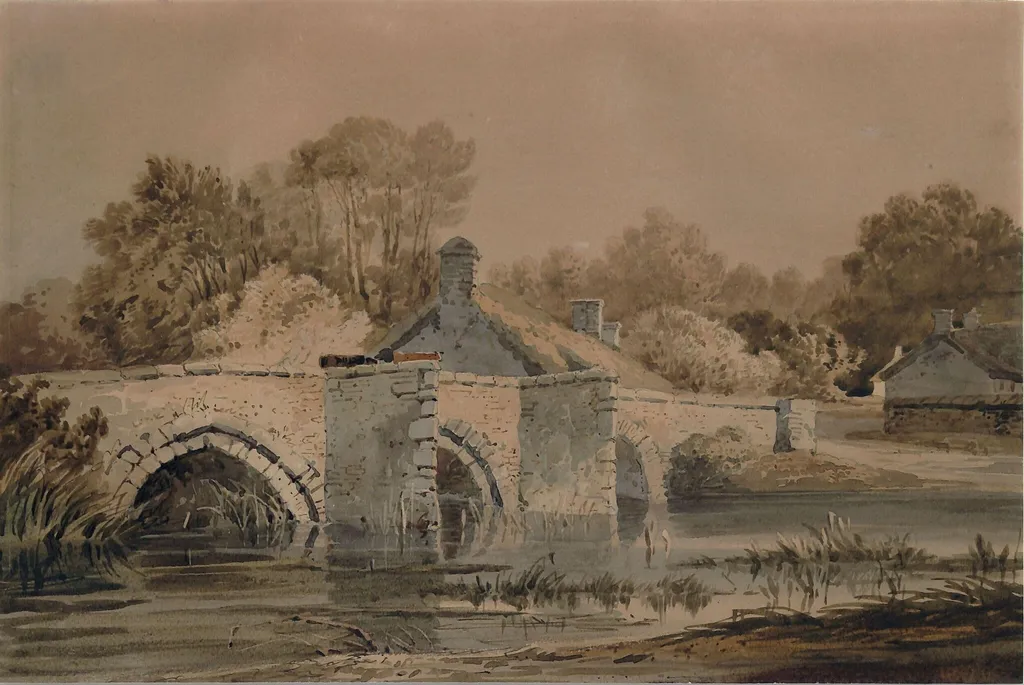
Bridge on the Ouse, near York is a watercolor work on paper by John Skinner Prout. It dates from 1850 and is held in the collection of the Victoria and Albert Museum.
About this work
Overview
Painted in 1850, this watercolour by John Skinner Prout captures a modest stone bridge crossing the River Ouse just outside York. The composition emphasizes stillness and quiet decay, with the bridge’s weathered arches and muted tones suggesting age and solitude. Prout’s technique allows the paper’s texture to remain visible, enhancing the sense of atmospheric calm.
Subject & Meaning
The scene centers on a two-arched stone bridge, its surface marked by moss and erosion, suggesting years of exposure to the elements. Behind it, a cluster of trees and a small structure rise on a gentle slope, framing the bridge without dominating it. The absence of figures or activity reinforces a contemplative mood, evoking the passage of time rather than human presence.
Technique & Style
Prout employed loose, transparent watercolour washes to suggest form without rigid definition. The paper’s natural texture shows through in areas of sky and water, while subtle gradations of gray and brown convey the bridge’s stone and the surrounding foliage. Deliberate brushwork avoids detail, favoring tone and light to evoke mood over precision.
History & Provenance
Created during Prout’s active period as a topographical artist, the work reflects his interest in documenting rural English landscapes.
Created during Prout’s active period as a topographical artist, the work reflects his interest in documenting rural English landscapes. It likely originated from sketches made during his travels in Yorkshire. The painting’s survival in private or institutional collections underscores its role as a record of 19th-century regional scenery, though its exact provenance remains unrecorded in public sources.
Context
In mid-19th-century Britain, watercolour was widely used for topographical studies and amateur landscape recording. Prout, trained as an architect, contributed to this tradition by combining observational accuracy with poetic restraint. His works, including this one, reflect a broader cultural interest in preserving the visual character of England’s lesser-known rural sites.
Legacy
Though not widely exhibited today, Prout’s watercolours like this one remain valuable as documentary records of England’s vernacular architecture and natural settings. His restrained style influenced later artists seeking to capture quiet, unidealized landscapes, positioning him as a quiet but consistent voice in the watercolour tradition of his era.
Artist & collection

Artist
John Skinner Prout (19 December 1805 – 29 August 1876) was a British painter, writer, lithographer and art teacher who worked in Australia in the 1840s.

 Woody landscape
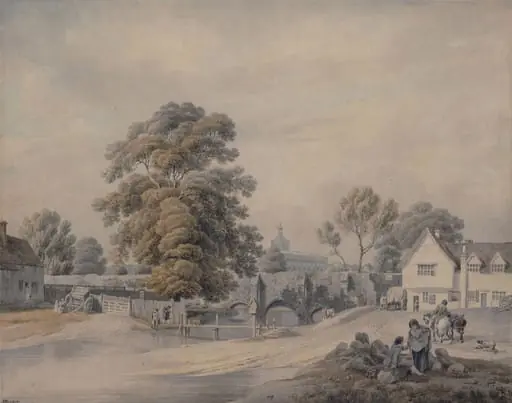 Abbot's Bridge, Bury St. Edmunds
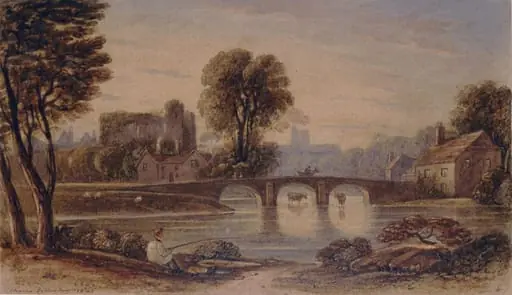 Landscape with bridge
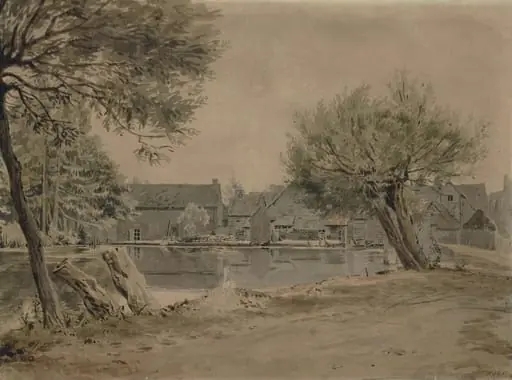 Mill at Mapledurham (?) on the Thames
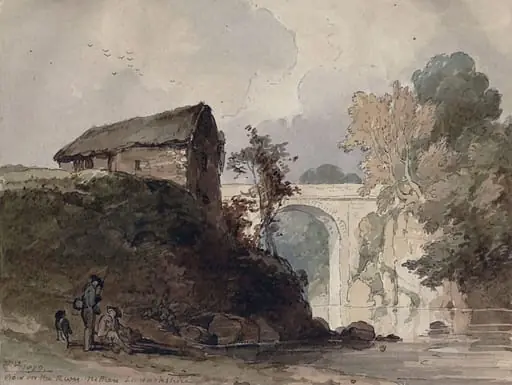 View on the River Nethan, Lanarkshire
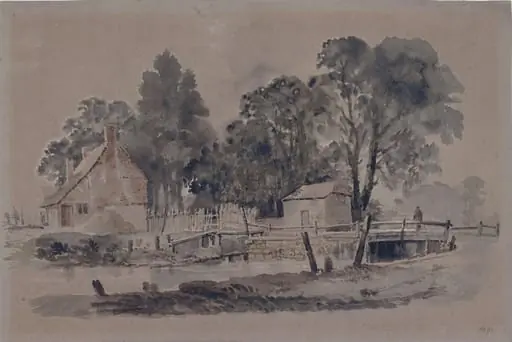 Stream with bridge and cottages
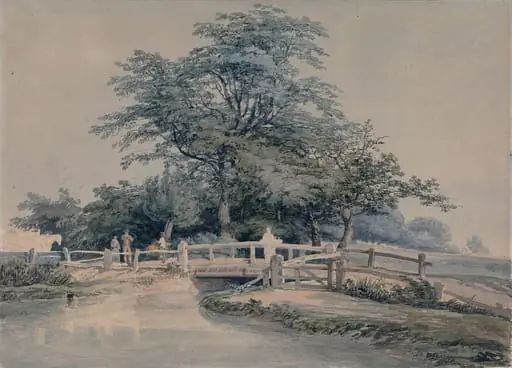 Landscape with trees, figures, bridge and stream
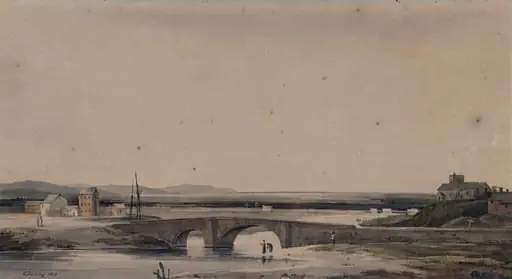 Rhuddlan Bridge, Flintshire
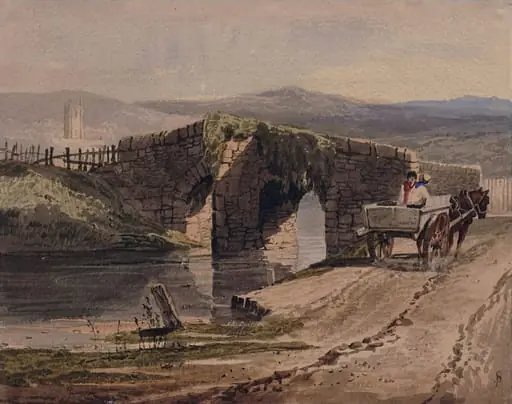 Okehampton
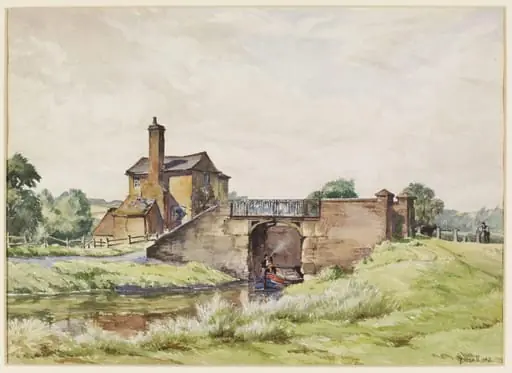 "Wolverley Court Bridge," over the Stafford and Worcester Canal, Wolverley