Artwork
Jedburgh Abbey
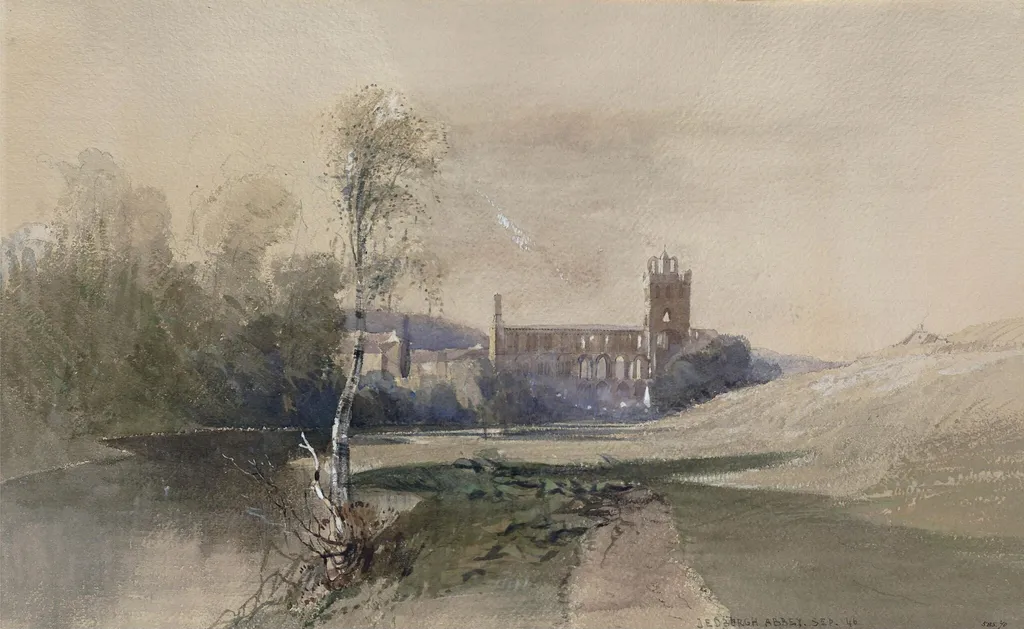
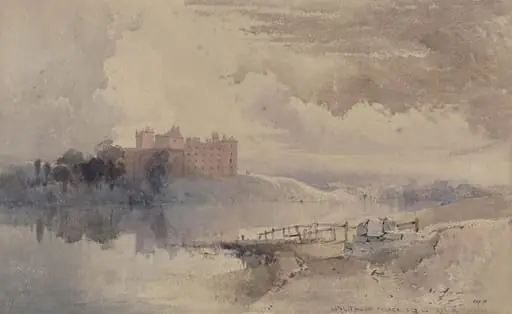
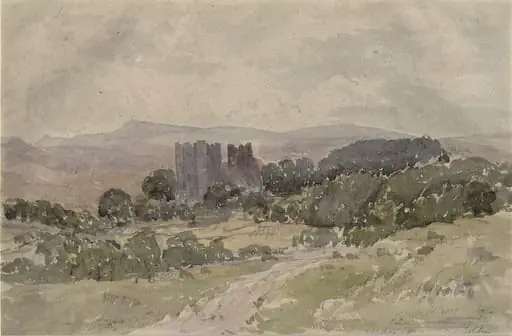
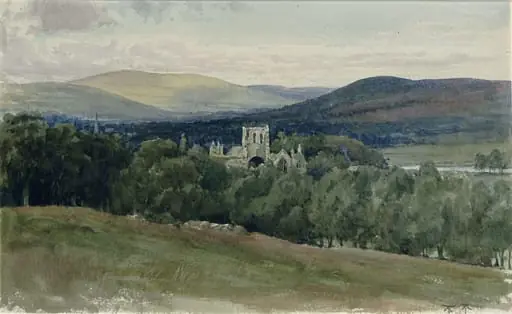
Jedburgh Abbey is a watercolor work on paper by the British Romanticist artist Harry John Johnson. It dates from 1846 and is held in the collection of the Victoria and Albert Museum.
About this work
Overview
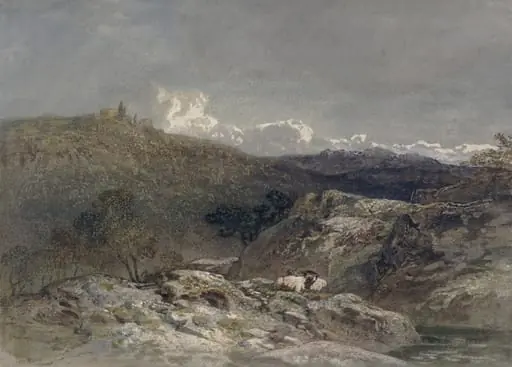
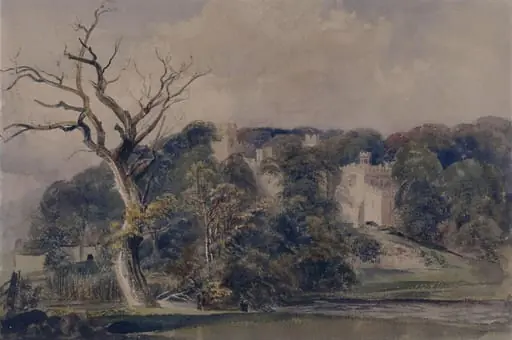
Harry John Johnson’s 1846 watercolour presents a tranquil view of Jedburgh Abbey, situated in the Scottish Borders. The composition captures the historic stone structure perched on a hill, its arches and tower silhouetted against a pale sky, while a still river reflects the subdued palette of the scene.
Subject & Meaning
The work foregrounds a leaf‑less tree on a quiet riverbank, leading the eye toward the abbey’s imposing architecture. The serene setting, devoid of human activity, emphasizes the timelessness of the ruin and its integration with the surrounding landscape.
Technique & Style
Johnson employs light washes and delicate brushwork, creating a dreamy, loosely rendered atmosphere. The gentle strokes suggest a sketch‑like quality, allowing forms to emerge softly rather than through precise detailing, characteristic of mid‑19th‑century Romantic landscape approaches.
History & Provenance
Signed by the artist, the watercolour dates to 1846, a period when British artists frequently documented historic sites. Its provenance traces back to Johnson’s own studio, though further ownership records remain undocumented.
Context
Jedburgh Abbey, a former medieval monastery, was a popular subject for Romantic artists attracted to ruins and the sublime qualities of the Scottish countryside. Johnson’s depiction aligns with this tradition, focusing on mood and natural setting rather than architectural exactness.
Artist & collection
Artist
Henry John Johnson, usually known as Harry (10 April 1826 — 31 December 1884) was an English landscape and water colour painter.