Artwork
Lycian Figure
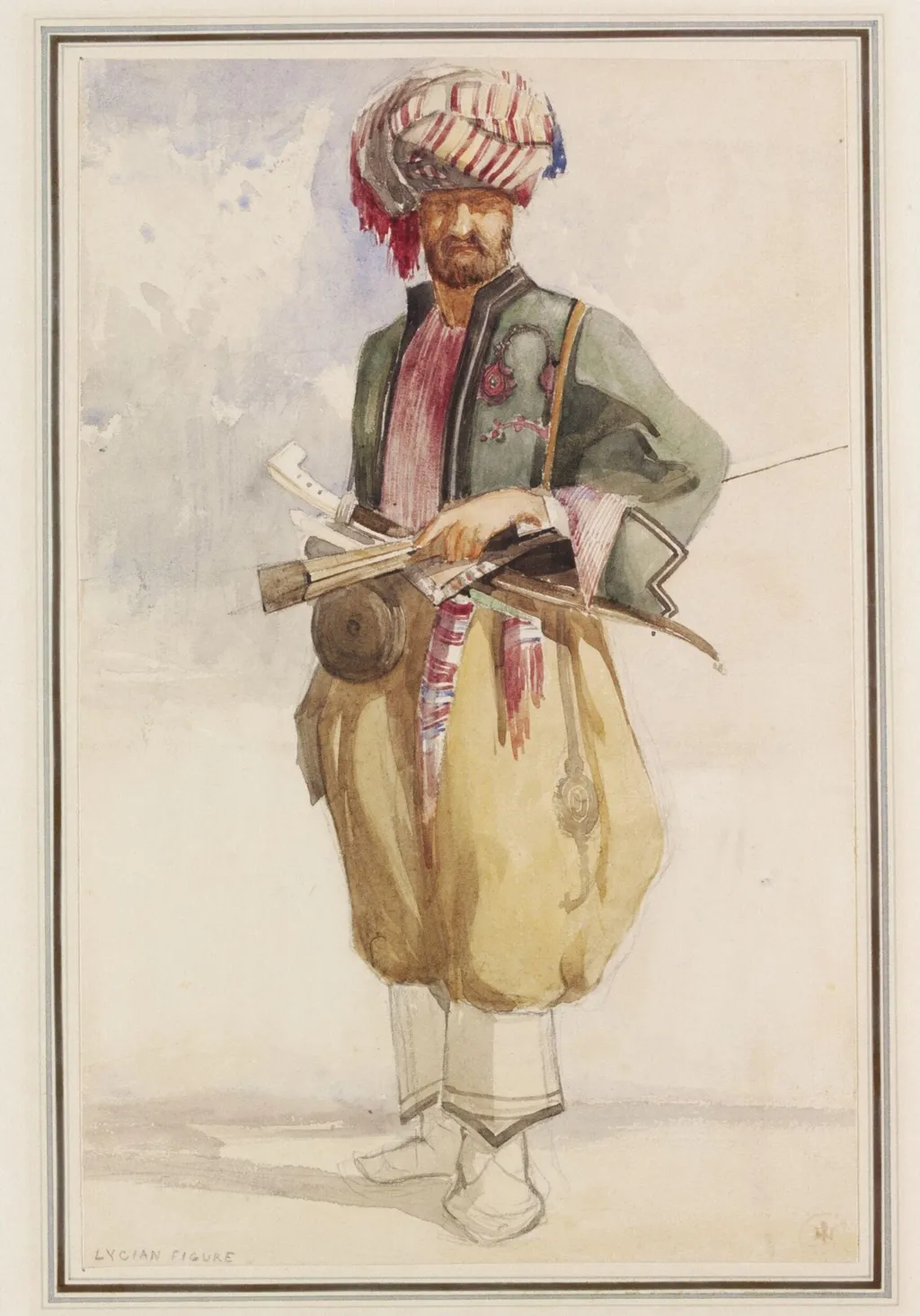
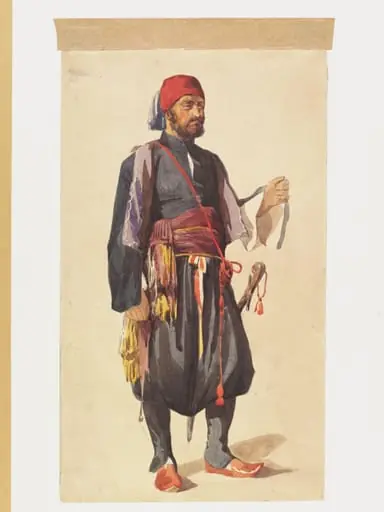
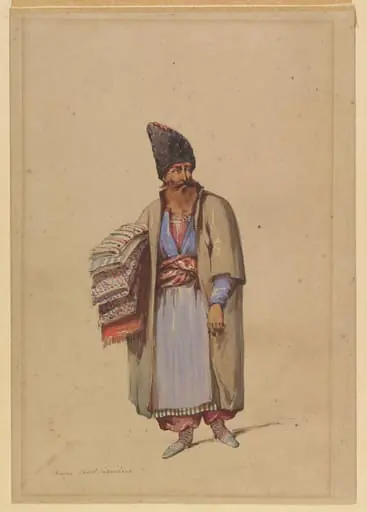
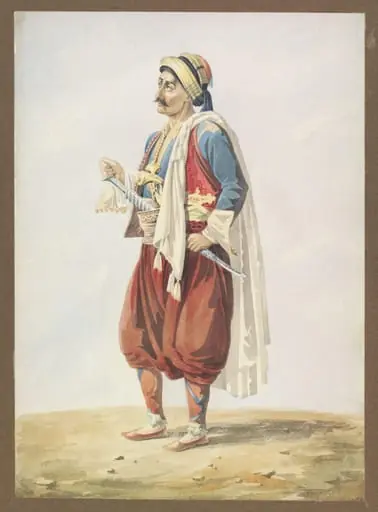
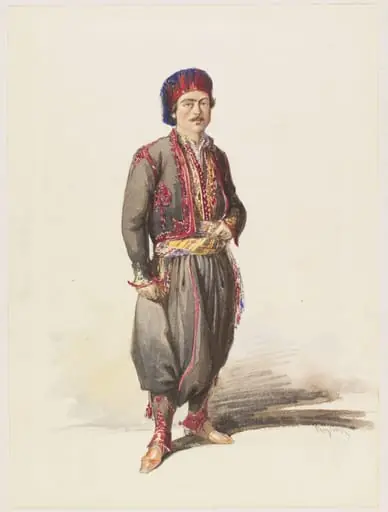
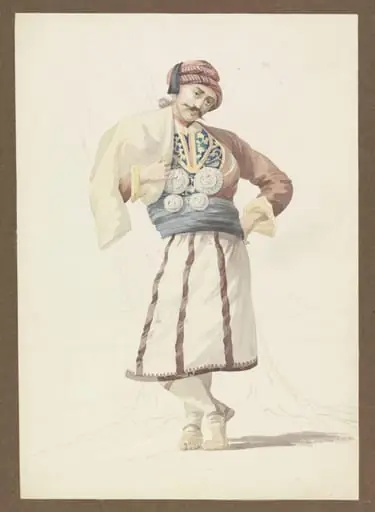
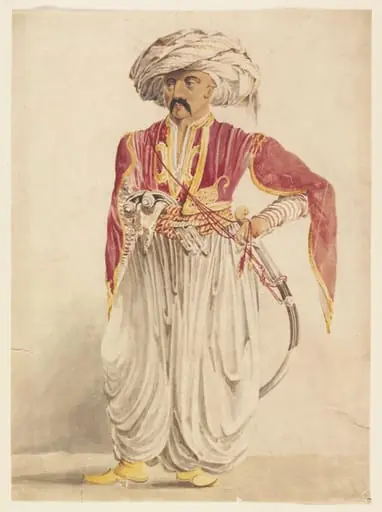
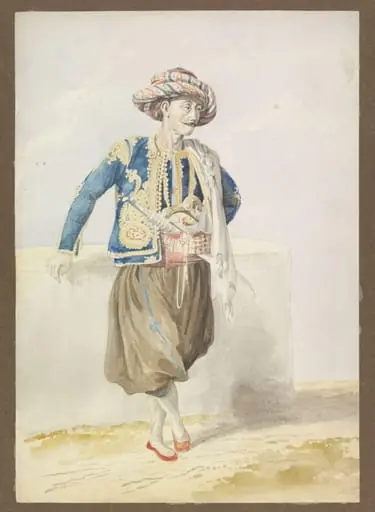
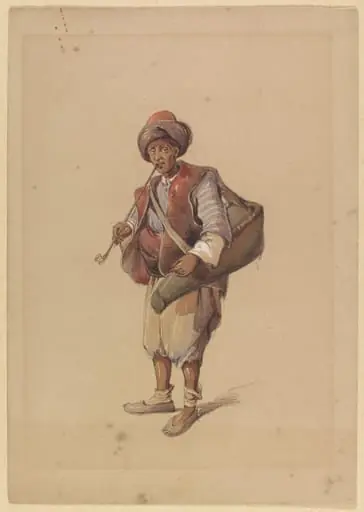
Lycian Figure is a watercolor work on paper by the British Romanticist artist Harry John Johnson. It dates from 1844 and is held in the collection of the Victoria and Albert Museum.
About this work
Overview
Harry John Johnson’s 1844 watercolour presents a solitary figure dressed in vivid, period costume. The subject is rendered against a muted wash, emphasizing the attire—a striped cap, green jacket, red‑and‑white scarf—and the accoutrements of a rolled document and a rifle. The composition captures a momentary impression of a traveler or soldier, rendered with swift, fluid brushwork.
Subject & Meaning
The figure’s clothing and gear suggest a person on a journey or in a military role, possibly evoking the ancient Lycian culture referenced in contemporary Orientalist art. The inclusion of a map‑like roll and weapon hints at exploration or conflict, while the bright garments contrast with the subdued background, drawing attention to the individual’s identity within an exoticized setting.
Technique & Style
Johnson employs loose, rapid strokes characteristic of on‑site sketching, allowing the watercolour to retain a spontaneous quality. The limited palette focuses on the bright hues of the costume, while the surrounding wash remains soft, creating depth without detailed rendering. This approach mirrors the sketch‑like studies common among 19th‑century artists documenting foreign subjects.
History & Provenance
It draws visual reference from William Müller’s oil painting *Encampment in the Desert*, which resides in Manchester’s City Art Gallery.
The work entered the collection after being acquired from the Albany Gallery in July 1967 for a price of £20. It draws visual reference from William Müller’s oil painting *Encampment in the Desert*, which resides in Manchester’s City Art Gallery. Müller’s related pieces are held in several British institutions, including the British Museum, the Victoria and Albert Museum, the Tate, and Bristol’s City Art Gallery.
Artist & collection
Artist
Henry John Johnson, usually known as Harry (10 April 1826 — 31 December 1884) was an English landscape and water colour painter.