Artwork
A Fountain
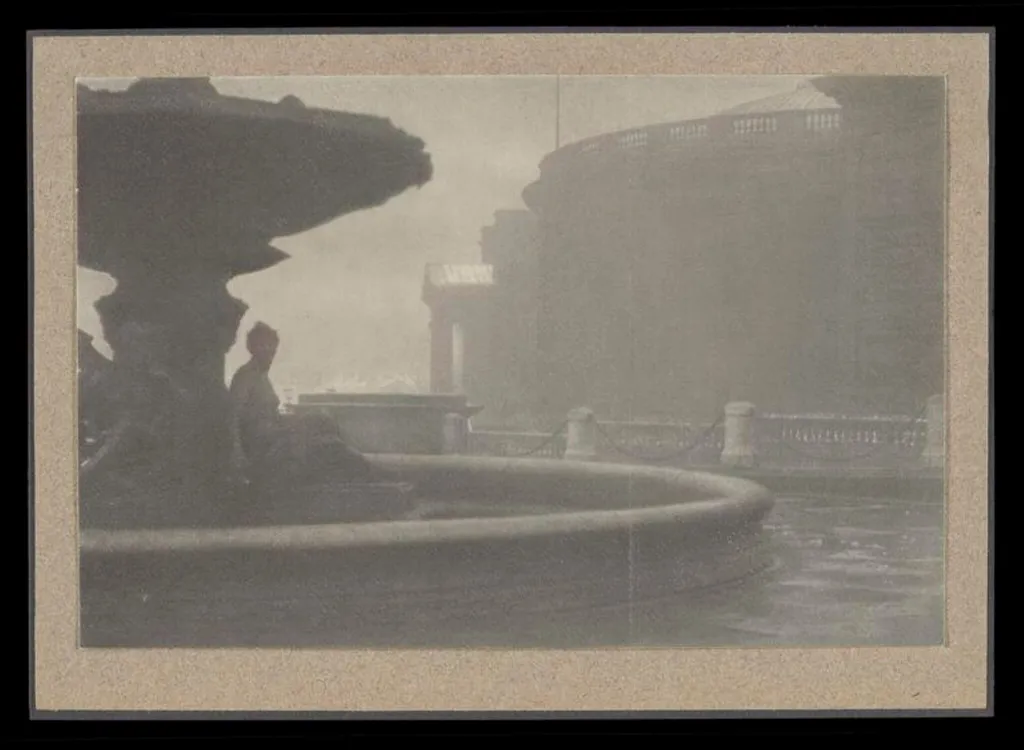
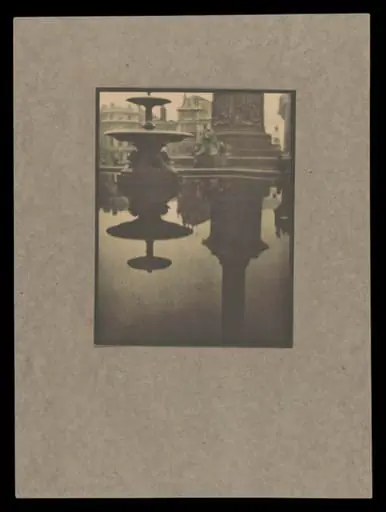
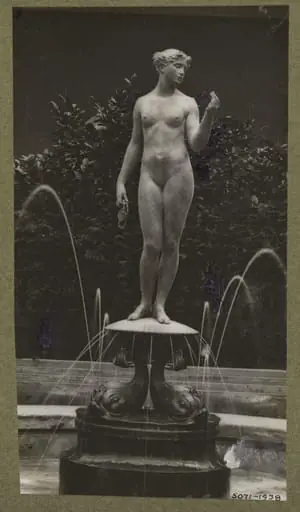
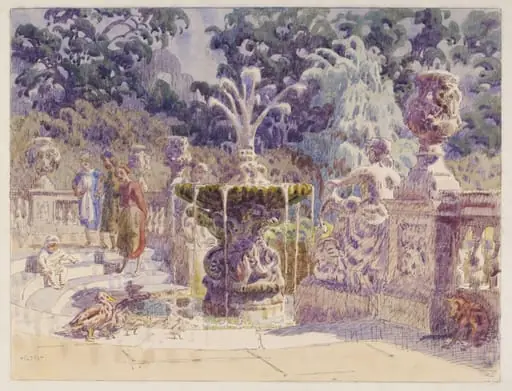
A Fountain is a photographic photography by John Dudley Johnston. It dates from 1950 and is held in the collection of the Victoria and Albert Museum. A sepia-toned photograph captures a public fountain in a quiet urban park, mounted for display.
About this work
Overview
Distant architecture and a few seated figures, their backs turned, suggest everyday use without intrusion, reinforcing the image’s documentary tone.
A sepia-toned photograph captures a public fountain in a quiet urban park, mounted for display. The composition centers on a sculpted female figure emerging from the basin, framed by a stone ledge and soft, diffused light. The still water mirrors the overcast sky, enhancing the scene’s stillness. Distant architecture and a few seated figures, their backs turned, suggest everyday use without intrusion, reinforcing the image’s documentary tone.
Subject & Meaning
The fountain’s central nude figure, carved in stone, serves as both decorative and symbolic element, evoking classical ideals of grace and purity. Its placement within a public space implies civic pride or moral instruction. The absence of movement in the water and the passive presence of bystanders convey tranquility rather than spectacle, suggesting the sculpture’s integration into daily life rather than its dominance over it.
Technique & Style
The photograph employs soft focus and muted tonal gradations to emphasize atmosphere over detail. Shadows are subtle, shapes simplified, and contrast low, creating a serene, almost painterly effect. The mounted format indicates intentional presentation, likely for archival or domestic display. The use of sepia enhances the temporal distance, reinforcing the image’s quiet, contemplative mood.
History & Provenance
Though the exact origin and photographer remain unconfirmed, the work aligns with late 19th- to early 20th-century practices of documenting public monuments. Its mounting and preservation suggest institutional or personal interest in recording civic architecture. Similar images from this period appear in collections such as the Victoria and Albert Museum, where photography was increasingly used to catalog public art.
Context
During the period this photograph was likely made, urban fountains were common features in European and North American cities, often commissioned to commemorate civic values or historical figures. The presence of seated figures and the misty background reflect the growing interest in capturing everyday life within idealized public spaces, blending documentation with aesthetic restraint.
Legacy
This image contributes to a broader visual record of public sculpture in urban environments, illustrating how such works were perceived not as isolated art objects but as embedded elements of daily life. Its subdued tone and compositional restraint reflect a shift in photographic practice toward quiet observation, influencing later documentary traditions that valued atmosphere over drama.
Artist & collection
Artist
John Dudley Johnston carried a camera like others carry notebooks—always at the ready, especially when the light hit a doorway just right.