Artwork
Clifton House, King's Lynn
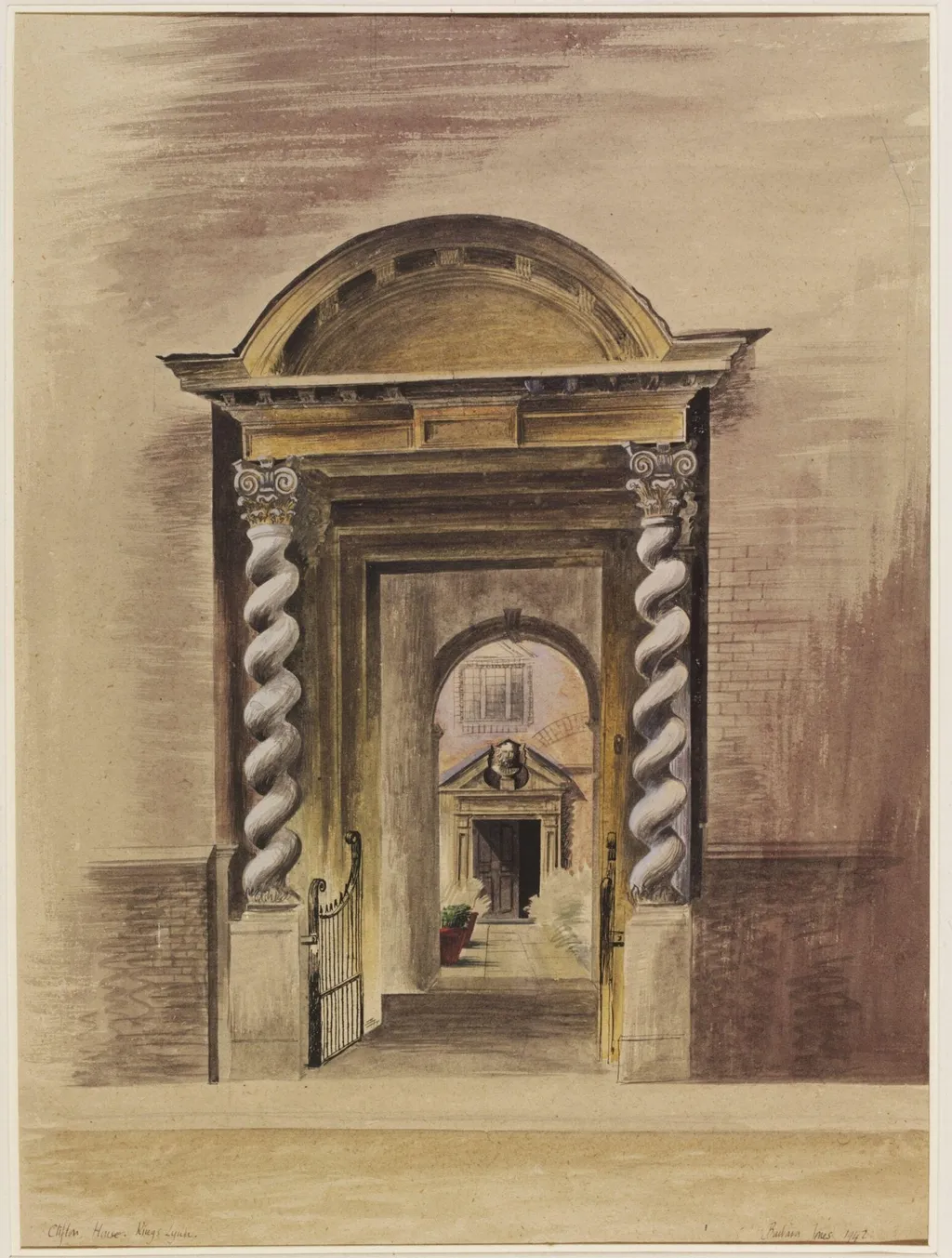
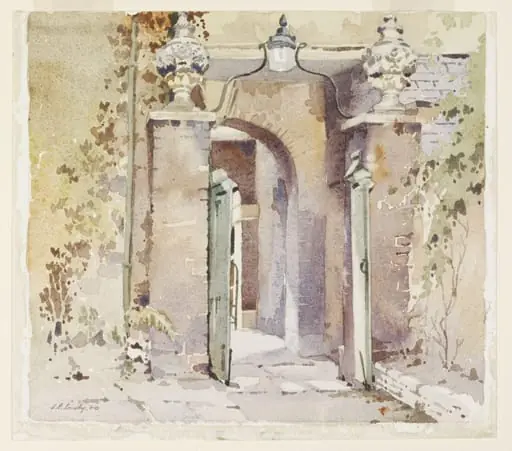
Clifton House, King's Lynn is a watercolor work on paper by the Social Realist artist Barbara Jones. It dates from 1942 and is held in the collection of the Victoria and Albert Museum.
About this work
Overview
The work captures Clifton House in King’s Lynn, a structure deemed at risk from wartime destruction or postwar redevelopment.
Barbara Jones created this watercolour in 1942 as part of the Recording Britain project, a government-backed effort to visually archive the nation’s architectural heritage during World War II. The work captures Clifton House in King’s Lynn, a structure deemed at risk from wartime destruction or postwar redevelopment. Jones’s contribution formed part of a larger collection of over 1,500 drawings and paintings by nearly 100 artists, all aimed at preserving a visual record of England’s changing landscape.
Subject & Meaning
The painting focuses on the entrance to Clifton House, highlighting its ornate brickwork and architectural details. The twisted columns, carved stonework, and recessed courtyard suggest a building of historical significance, possibly from the 17th or 18th century. By emphasizing the threshold between public and private space, Jones draws attention to the quiet dignity of everyday historic structures, many of which were fading from public awareness amid wartime priorities and modernization.
Technique & Style
Jones employed delicate watercolour washes to render the brick surfaces and subtle gradations of light filtering through the inner doorway. The palette is restrained, dominated by earth tones and muted shadows, enhancing the sense of quiet decay. Fine linework defines the carvings on the columns and the texture of the courtyard’s gate, revealing her attention to architectural precision. The composition guides the viewer’s eye inward, creating a sense of depth and stillness.
History & Provenance
The painting was produced during the Recording Britain project, which operated from 1940 to 1943 under the patronage of the Pilgrim Trust. It was acquired by the Victoria and Albert Museum shortly after completion, along with hundreds of other works from the initiative. The project’s archives remain a key resource for historians studying Britain’s pre-war built environment, and Jones’s watercolour continues to be held in the museum’s permanent collection.
Context
During the early 1940s, Britain faced widespread destruction from aerial bombing and rapid urban transformation. The Recording Britain project emerged as a cultural response to these threats, mobilizing artists to document structures considered vulnerable or emblematic of national identity. Jones’s focus on a modest yet historically layered doorway reflects the project’s broader aim: to honor the ordinary, often overlooked, elements of England’s architectural past.
Legacy
Jones’s watercolour remains a quiet testament to the Recording Britain project’s enduring value as a historical archive. It exemplifies how artistic documentation can serve as both preservation and testimony, capturing details that might otherwise vanish. Today, the work contributes to scholarly understanding of early 20th-century British architecture and the role of art in wartime cultural memory.
Artist & collection
Artist
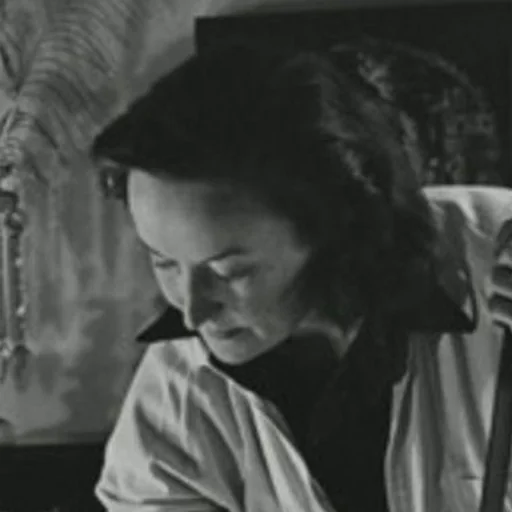
Barbara Mildred Jones (25 December 1912 – 28 August 1978) was an English artist, writer and mural painter. She is known for curating the exhibition Black Eyes and Lemonade (1951) and her book The Unsophisticated Arts (1951).

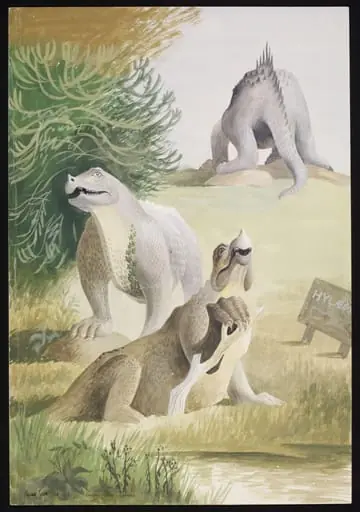 Crystal Palace Gardens, Sydenham, Kent
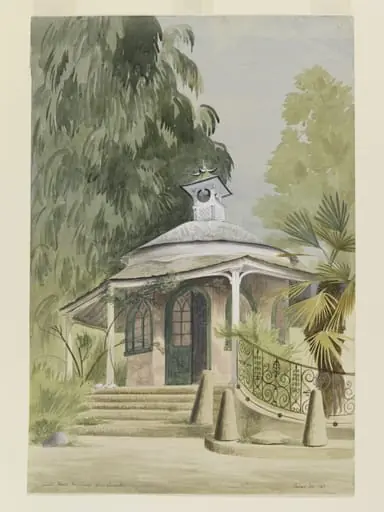 Summer House, Marlborough House, Falmouth
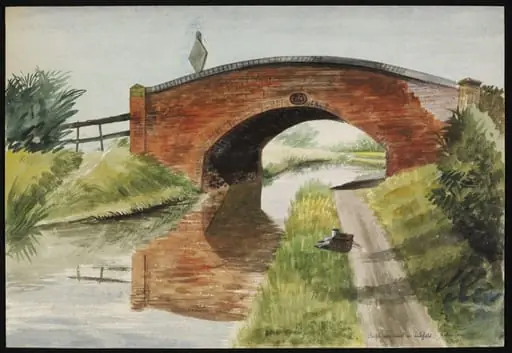 Bridge over Canal, near Litchfield
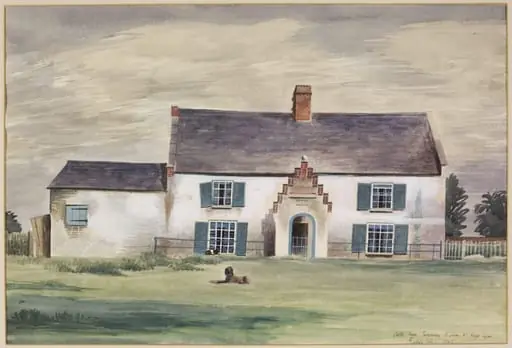 Castle Farm, Terrington St John, near King's Lynn
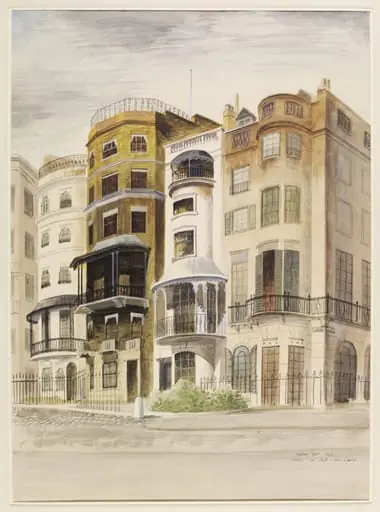 93 to 97 Park Lane, W.1.
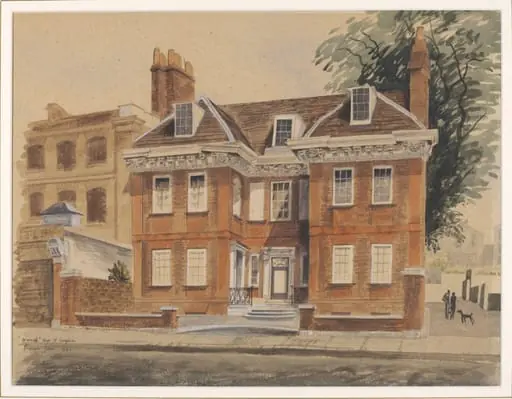 "Wrencote," High Street, Croydon
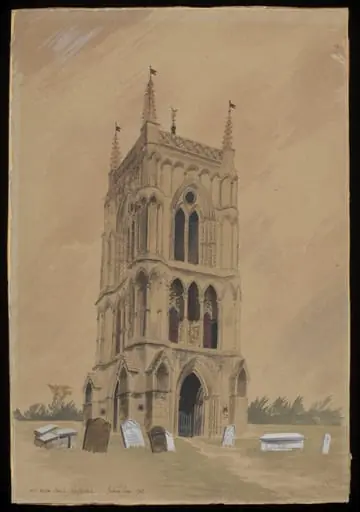 The bell tower, St. Mary's Church, West Walton near Wisbech
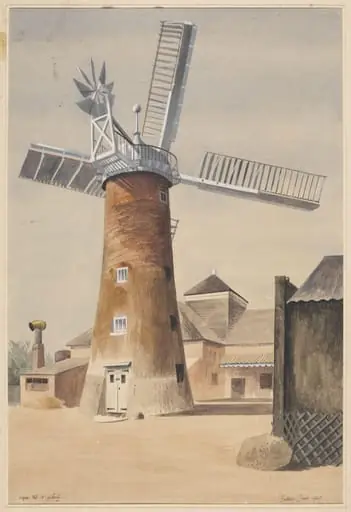 The Mill, Walpole Highway, near Wisbech
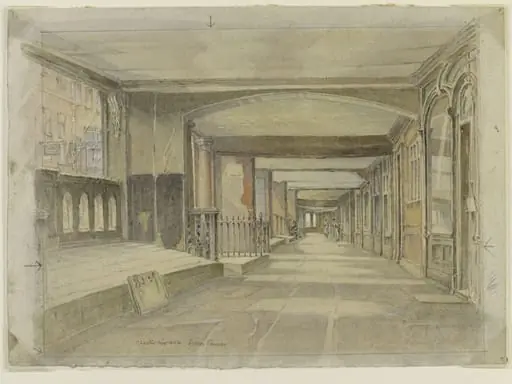 Watergate Street Row, looking East, Chester
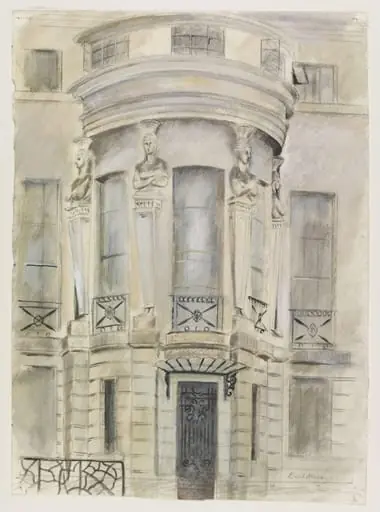 No.1, Cornwall Terrace, Regent's Park
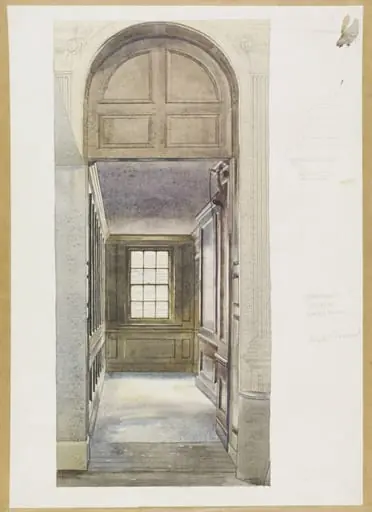 A panelled passage-way, Geffrye's Museum, Shoreditch
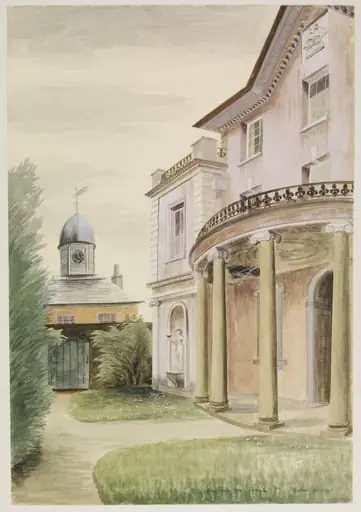 Marlborough House, Falmouth
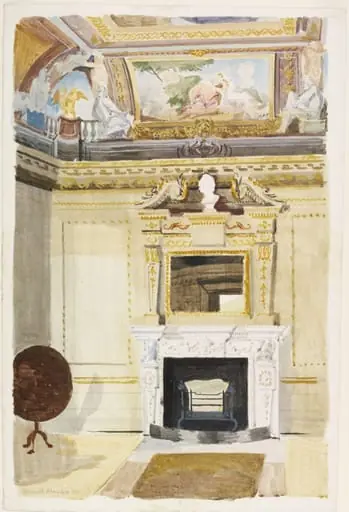 Interior of The Temple, Rievaulx Terrace, Yorkshire
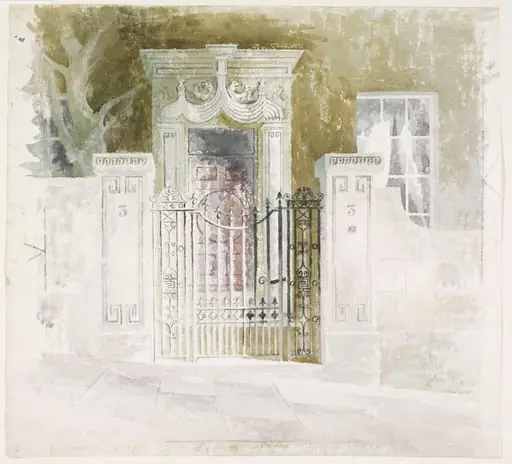 3, Bathwick Hill, Bath
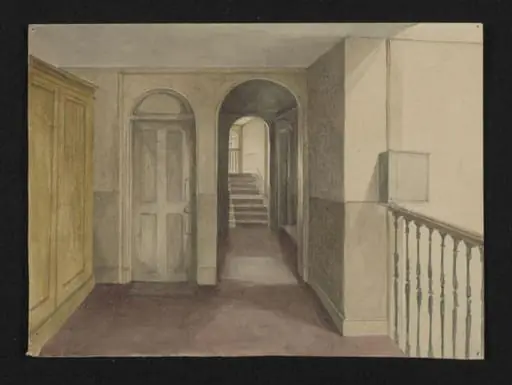 Untitled
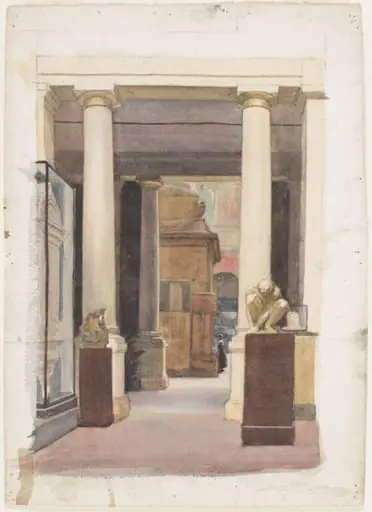 The entrance to the Cast Court containing Trajan's Column at the Victoria and Albert Museum
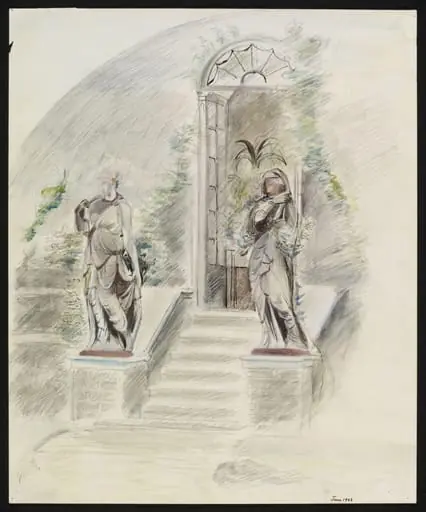 Grove House, Regent's Park
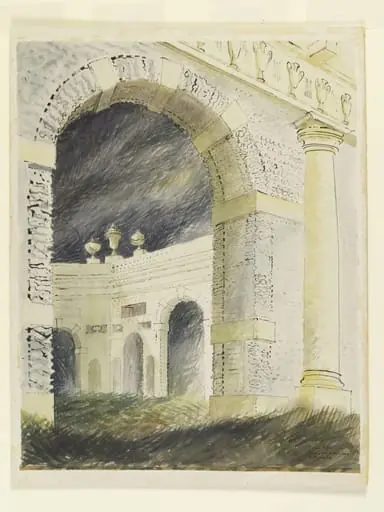 Dashwood Mausoleum, West Wycombe
 A gateway, Exeter
 View across the Bridge of Magnificence