Artwork
Savage's Yard, King's Lynn, Norfolk
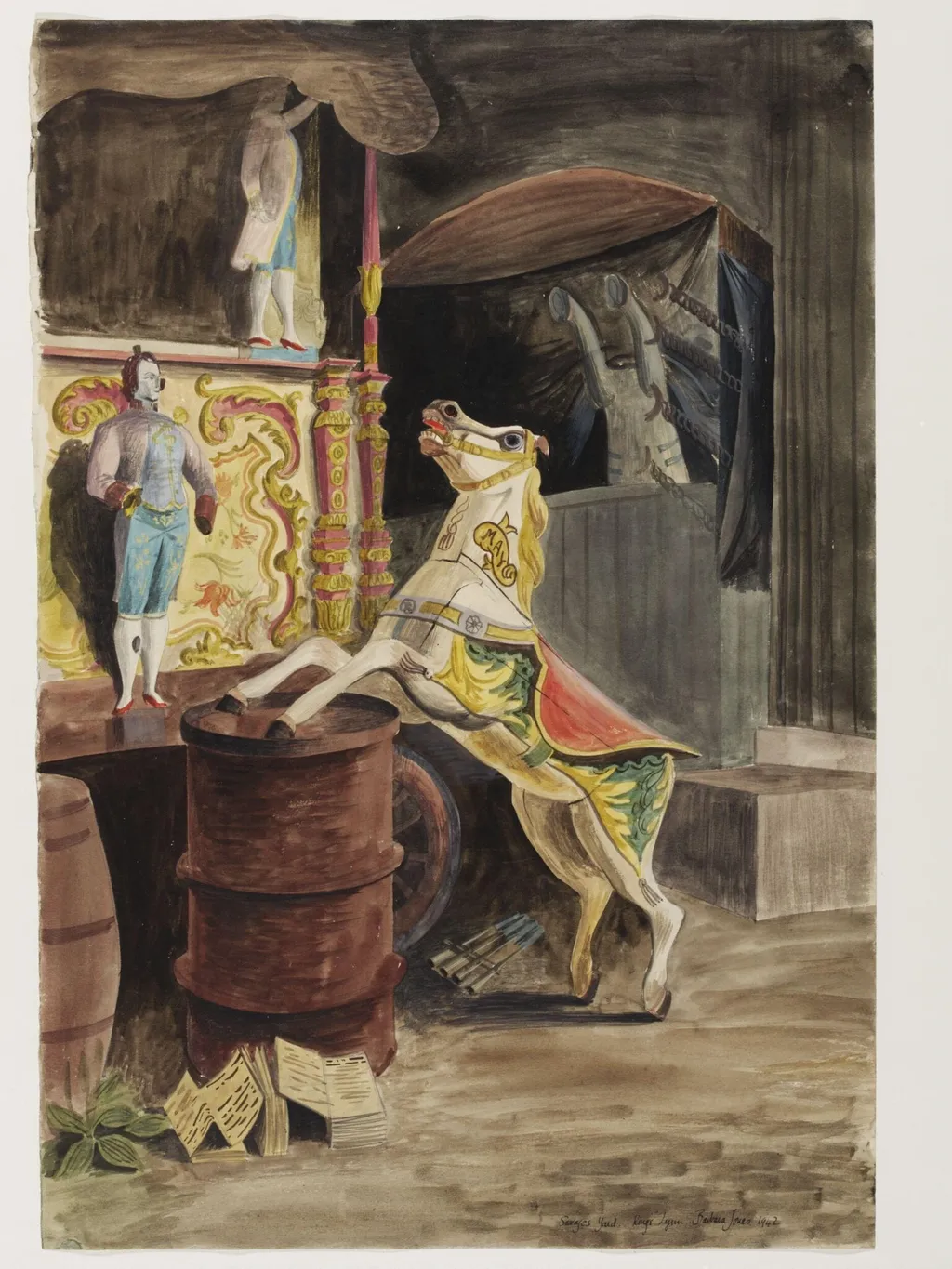
Savage's Yard, King's Lynn, Norfolk is a watercolor work on paper by the British Romanticist artist Barbara Jones. It dates from 1942 and is held in the collection of the Victoria and Albert Museum.
About this work
Barbara Jones painted a quiet watercolor of Savage’s Yard in 1942. This place once built steam-powered merry-go-rounds and fairground organs. By 1942 most of that trade had moved on.
The scene shows a brightly painted merry-go-round horse and two old-fashioned automata on an organ. They would have chimed and drummed when the ride spun.
Look up the Victoria and Albert Museum.
Overview
Barbara Jones created this watercolour in 1942, capturing an abandoned yard in King’s Lynn once central to the production of fairground machinery. Once bustling with the crafting of steam-driven carousels and musical organs, the site had fallen into quiet disuse by the time she painted it, its former industrial energy replaced by stillness and decay.
Subject & Meaning
The painting focuses on a single brightly painted carousel horse and two automata figures dressed in 18th-century attire, perched atop a fairground organ.
The painting focuses on a single brightly painted carousel horse and two automata figures dressed in 18th-century attire, perched atop a fairground organ. These elements once animated the spectacle of travelling fairs, the horse rotating in the inner ring while the figures mechanically struck bells or drums. Their isolation in the empty yard suggests the obsolescence of handcrafted amusement in an era of modern entertainment.
Technique & Style
Jones employed delicate watercolour washes to convey the faded grandeur of the objects and the muted atmosphere of the yard. The transparency of the medium enhances the sense of erosion and abandonment, while precise linework defines the ornate details of the horse and automata, contrasting their former vibrancy with the subdued tones of their surroundings.
History & Provenance
Savage’s Yard was the operational heart of King’s Lynn’s fairground manufacturing industry in the late 1800s, producing intricate steam-powered rides and musical instruments. By the 1940s, mass production and changing tastes had rendered such workshops obsolete. Jones’s painting documents this transition, preserving a vanishing craft through quiet observation rather than nostalgia.
Context
The decline of traditional fairground artisans coincided with the rise of mechanized amusement parks and cinema in early 20th-century Britain. King’s Lynn’s once-thriving trade, rooted in skilled woodcarving and mechanical engineering, could not compete with newer, cheaper alternatives. Jones’s work reflects this cultural shift, framing the yard as a relic of a bygone artisanal economy.
Legacy
The painting is held in the Victoria and Albert Museum’s collection, where it serves as a record of industrial heritage and the quiet end of traditional crafts. Jones’s focus on overlooked objects elevated everyday remnants of popular culture to the status of historical testimony, influencing later interest in vernacular art and industrial archaeology.
Artist & collection
Artist
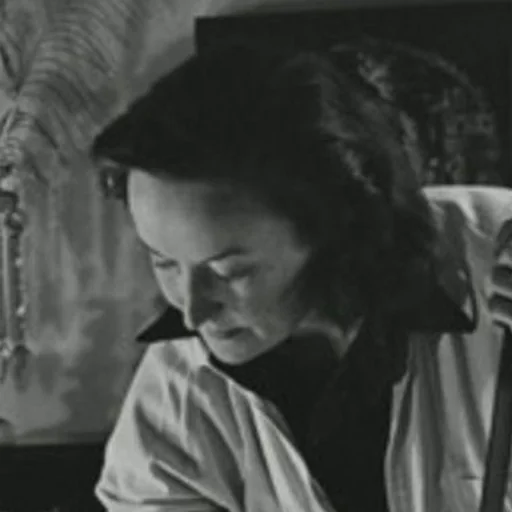
Barbara Mildred Jones (25 December 1912 – 28 August 1978) was an English artist, writer and mural painter. She is known for curating the exhibition Black Eyes and Lemonade (1951) and her book The Unsophisticated Arts (1951).

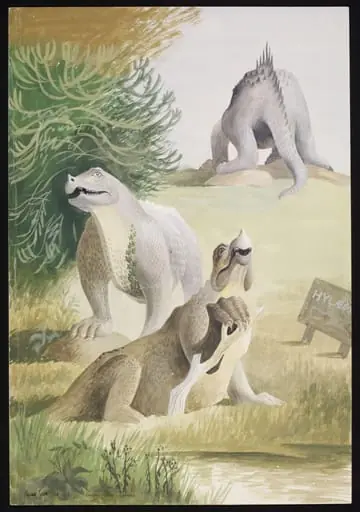 Crystal Palace Gardens, Sydenham, Kent
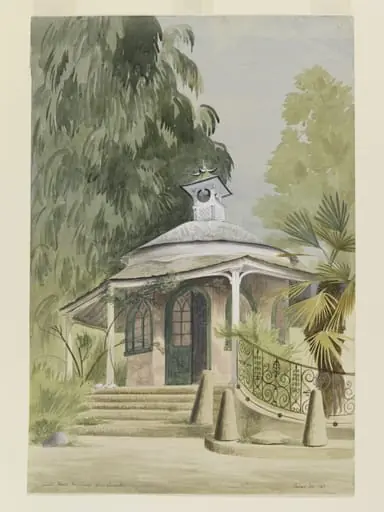 Summer House, Marlborough House, Falmouth
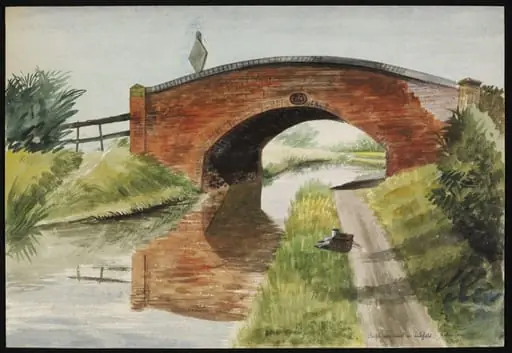 Bridge over Canal, near Litchfield
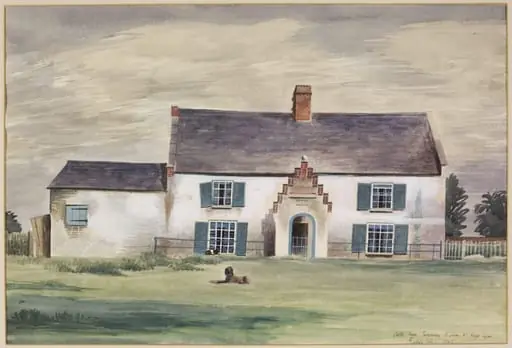 Castle Farm, Terrington St John, near King's Lynn
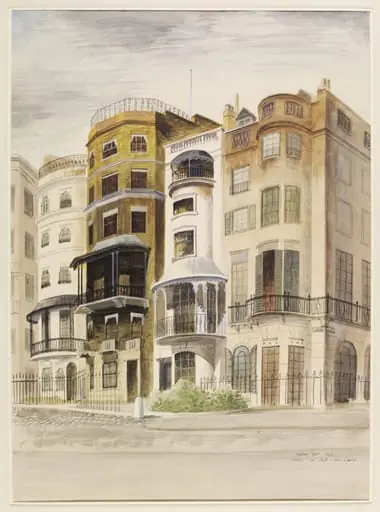 93 to 97 Park Lane, W.1.
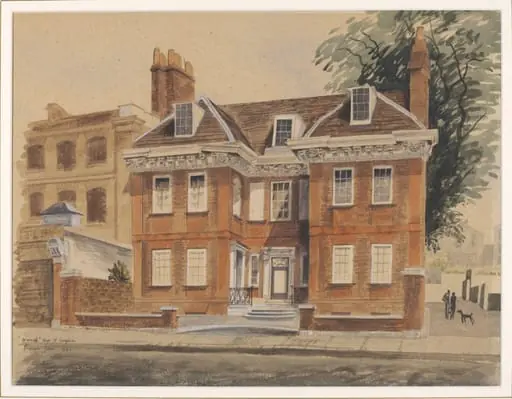 "Wrencote," High Street, Croydon
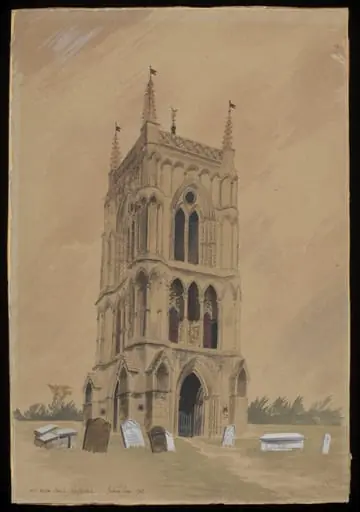 The bell tower, St. Mary's Church, West Walton near Wisbech
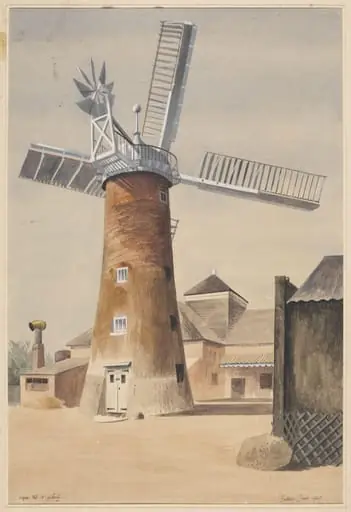 The Mill, Walpole Highway, near Wisbech