Artwork
The "New" Church, of St. Lawrence, Ayot St. Lawrence
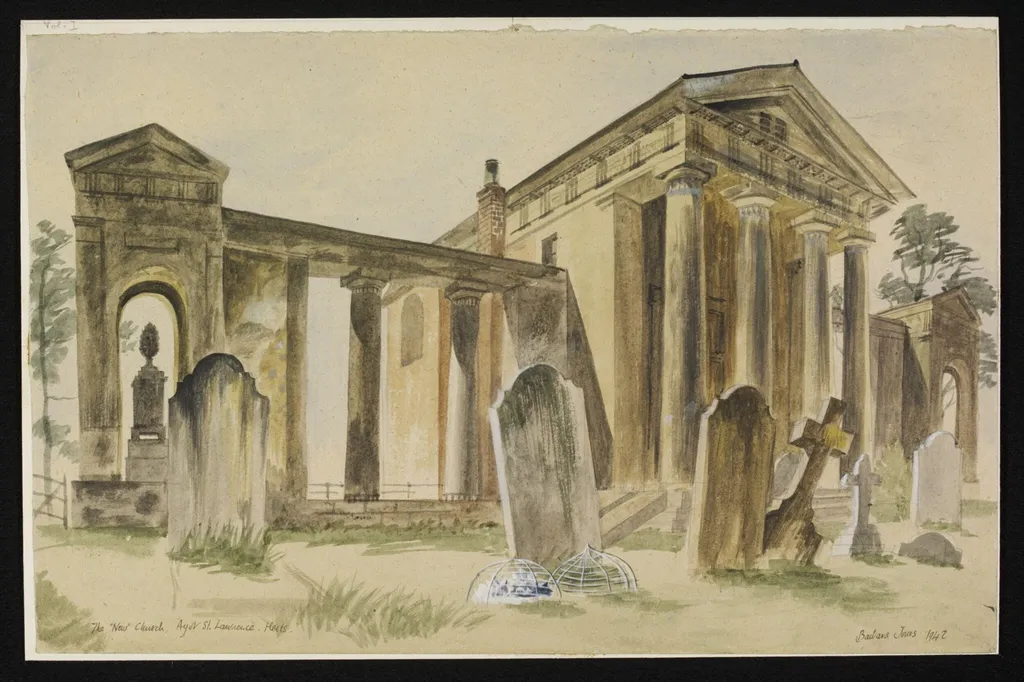
The "New" Church, of St. Lawrence, Ayot St. Lawrence is a watercolor work on paper by Barbara Jones. It dates from 1942 and is held in the collection of the Victoria and Albert Museum.
About this work
The colors are mostly soft greys, browns, and muted greens, with some bright touches on the glass lanterns near the ground.
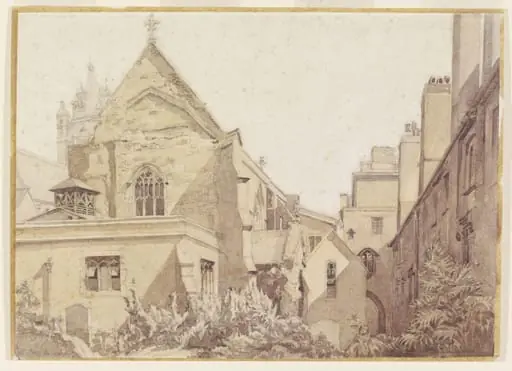
This painting shows a quiet church with tall columns and a simple roof. In front, there are old gravestones and a few trees. The colors are mostly soft greys, browns, and muted greens, with some bright touches on the glass lanterns near the ground.
The artist signed it in the corner with the year 1942. The church looks like it’s been there for a long time, with weathered stones and a peaceful, worn-in feel.
Look up the Victoria and Albert Museum to see more of this artist’s work.
Overview
Painted in 1942, this watercolour by Barbara Jones captures St. Lawrence’s Church in the village of Ayot St. Lawrence. Executed as part of the 'Recording Britain' project, the work reflects a deliberate effort to preserve visual records of rural architecture during wartime. The composition focuses on the church’s Palladian design, rendered with quiet precision and a restrained palette of greys, browns, and muted greens, conveying a sense of enduring stillness.
Subject & Meaning
The painting presents the church not as a monument, but as an integrated element of its surroundings. Tilted gravestones in the foreground suggest the passage of time and the quiet continuity of local life. The low-angle view draws attention to the architectural details of the 18th-century structure, while the surrounding trees and weathered stonework reinforce a sense of quiet resilience, reflecting the project’s aim to document places valued for their historical presence.
Technique & Style
Jones employed delicate watercolour washes to suggest texture and atmosphere, avoiding sharp definition in favor of soft transitions. The muted tones are punctuated by subtle highlights on the glass lanterns near the church’s base, adding a quiet focal point without disrupting the overall serenity. The brushwork is controlled yet expressive, capturing the grain of stone and the irregularity of aged gravestones with observational clarity.
History & Provenance
Created in 1942 under the 'Recording Britain' initiative, the work was commissioned by the Pilgrim Trust and directed by Sir Kenneth Clark. The project enlisted artists to document at-risk landscapes and buildings amid fears of wartime destruction and postwar change. This watercolour entered the Victoria and Albert Museum’s collection as part of the project’s archive, where it remains accessible as a historical record of mid-20th-century British rural architecture.
Context
During the Second World War, 'Recording Britain' sought to safeguard cultural memory through art. Artists like Jones were sent to villages and towns to record structures deemed vulnerable to neglect or conflict. The choice of a modest parish church, rather than a grand cathedral, reflects the project’s emphasis on everyday heritage. Jones’s focus on the church’s integration with its graveyard and landscape underscores a broader cultural interest in continuity amid disruption.
Legacy
The painting endures as part of a significant archive of British topographical art from the early 1940s. It exemplifies how watercolour, often considered a minor medium, was used with seriousness to document architectural and social landscapes. Jones’s work, alongside others in the 'Recording Britain' collection, continues to inform historical and architectural studies, offering a sober, unsentimental view of Britain’s rural fabric during a time of national uncertainty.
Artist & collection
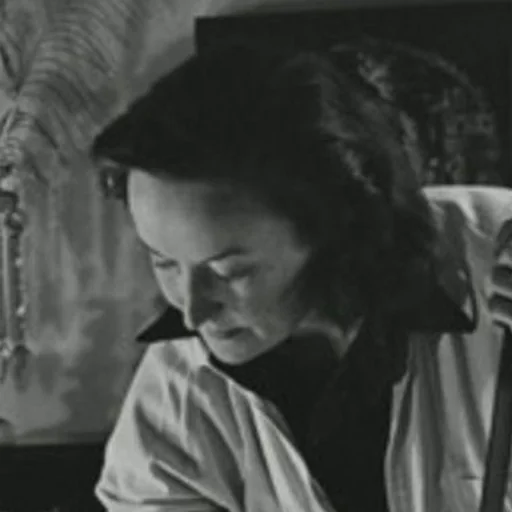
Artist
Barbara Mildred Jones (25 December 1912 – 28 August 1978) was an English artist, writer and mural painter. She is known for curating the exhibition Black Eyes and Lemonade (1951) and her book The Unsophisticated Arts (1951).

 Crystal Palace Gardens, Sydenham, Kent
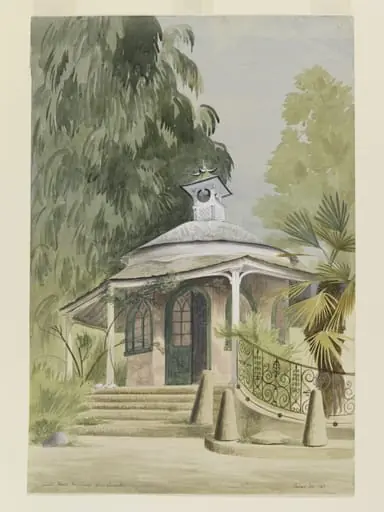 Summer House, Marlborough House, Falmouth
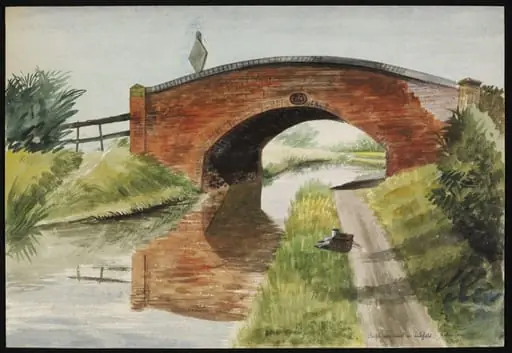 Bridge over Canal, near Litchfield
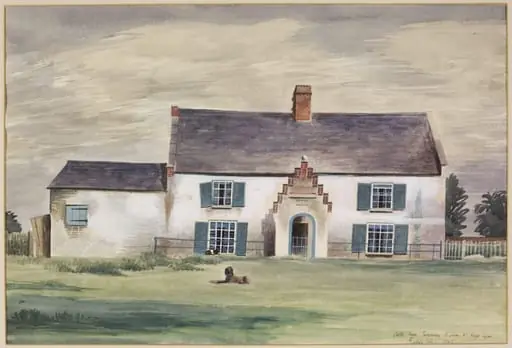 Castle Farm, Terrington St John, near King's Lynn
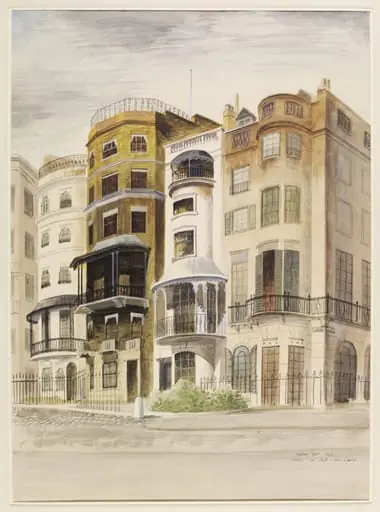 93 to 97 Park Lane, W.1.
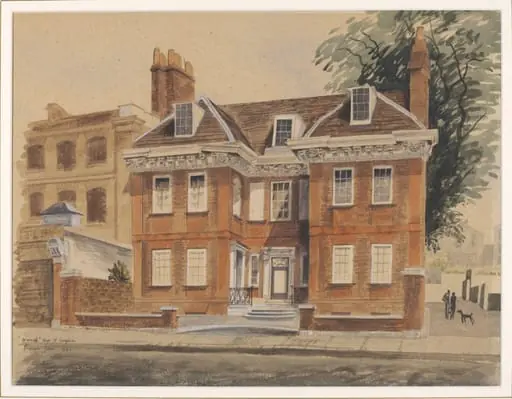 "Wrencote," High Street, Croydon
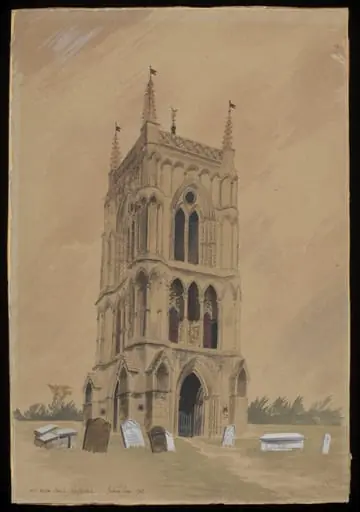 The bell tower, St. Mary's Church, West Walton near Wisbech
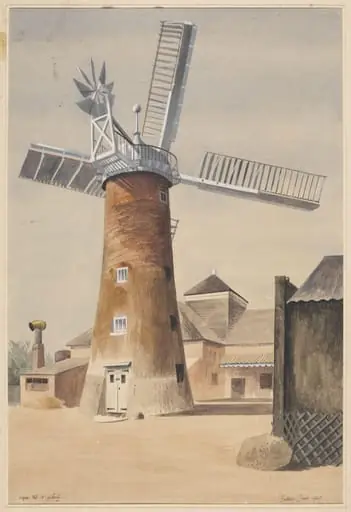 The Mill, Walpole Highway, near Wisbech
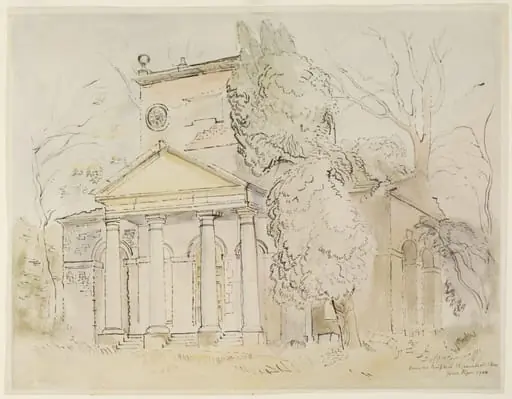 The Ruined Temple of Friendship in the Grounds at Stowe
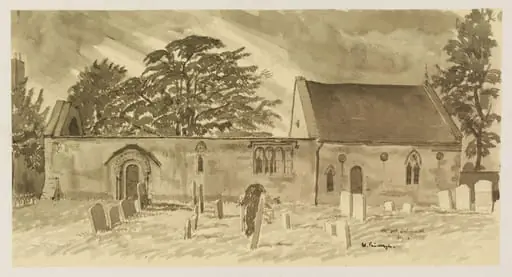 St.George's Church, Hatford
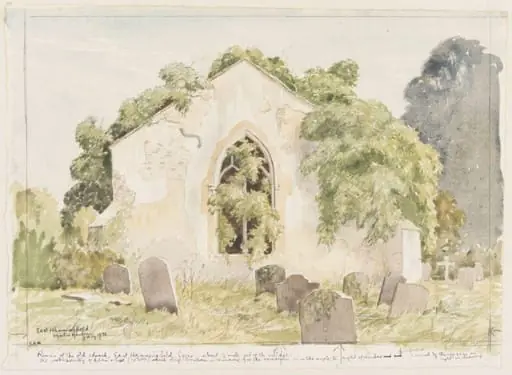 East Hanningfield Church, Essex
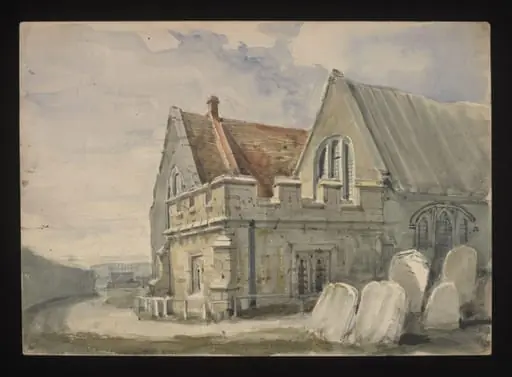 Watercolour drawing by the Grieve family, showing St Peter's Church in Kent
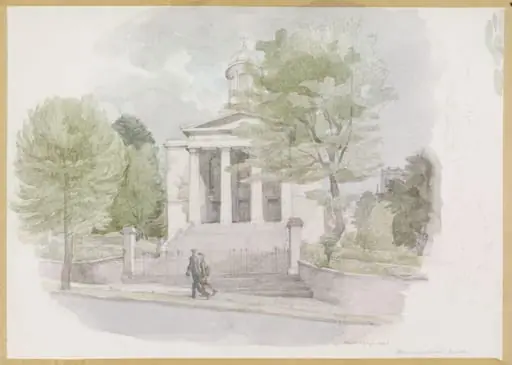 St. George's Church, Bristol
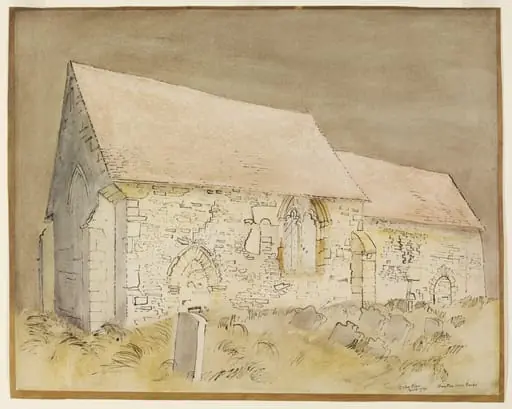 St.Peter's Church, Stanton Low
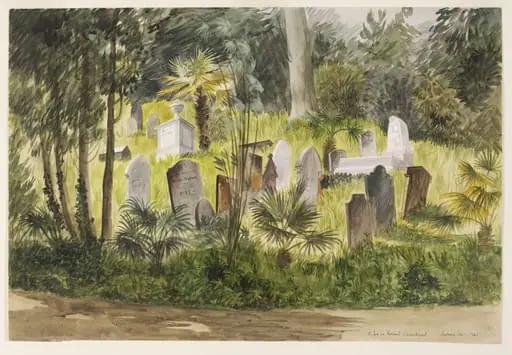 St. Just in Roseland; Churchyard
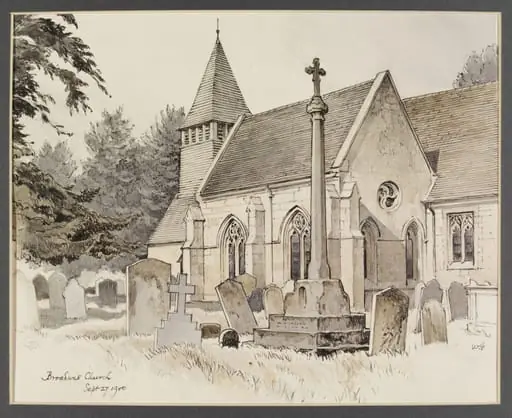 Broadwas Church
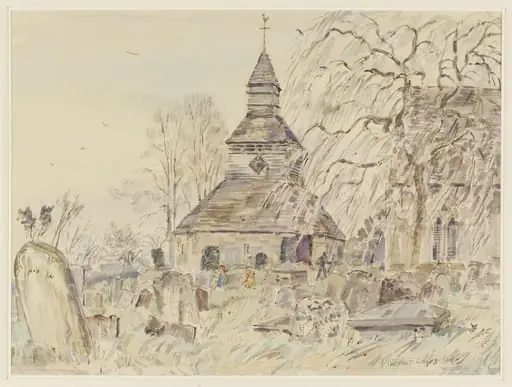 The Detached Belfrey, Pembridge
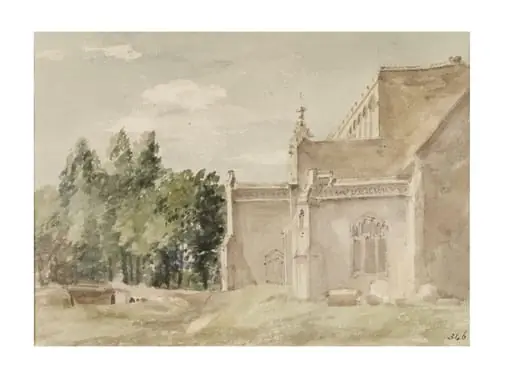 East Bergholt Church: view from the east
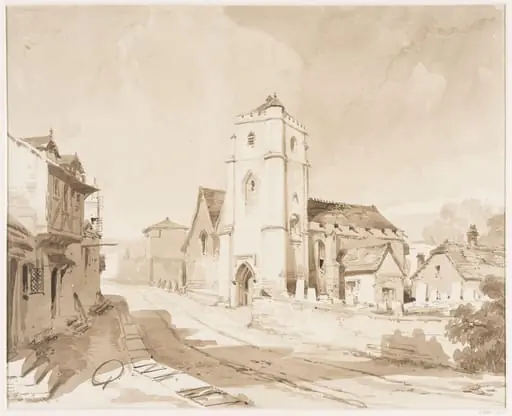 Untitled
 St. Mary-the-Less, Cambridge