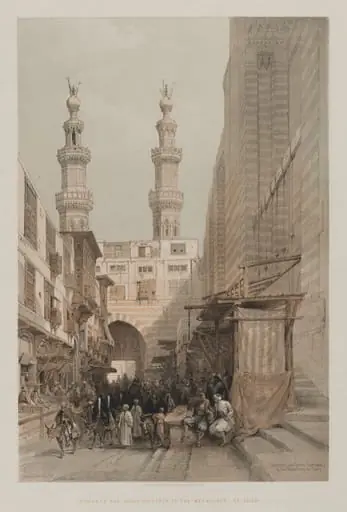
Artwork
Minaret of the Mosque of Ali al-Amri
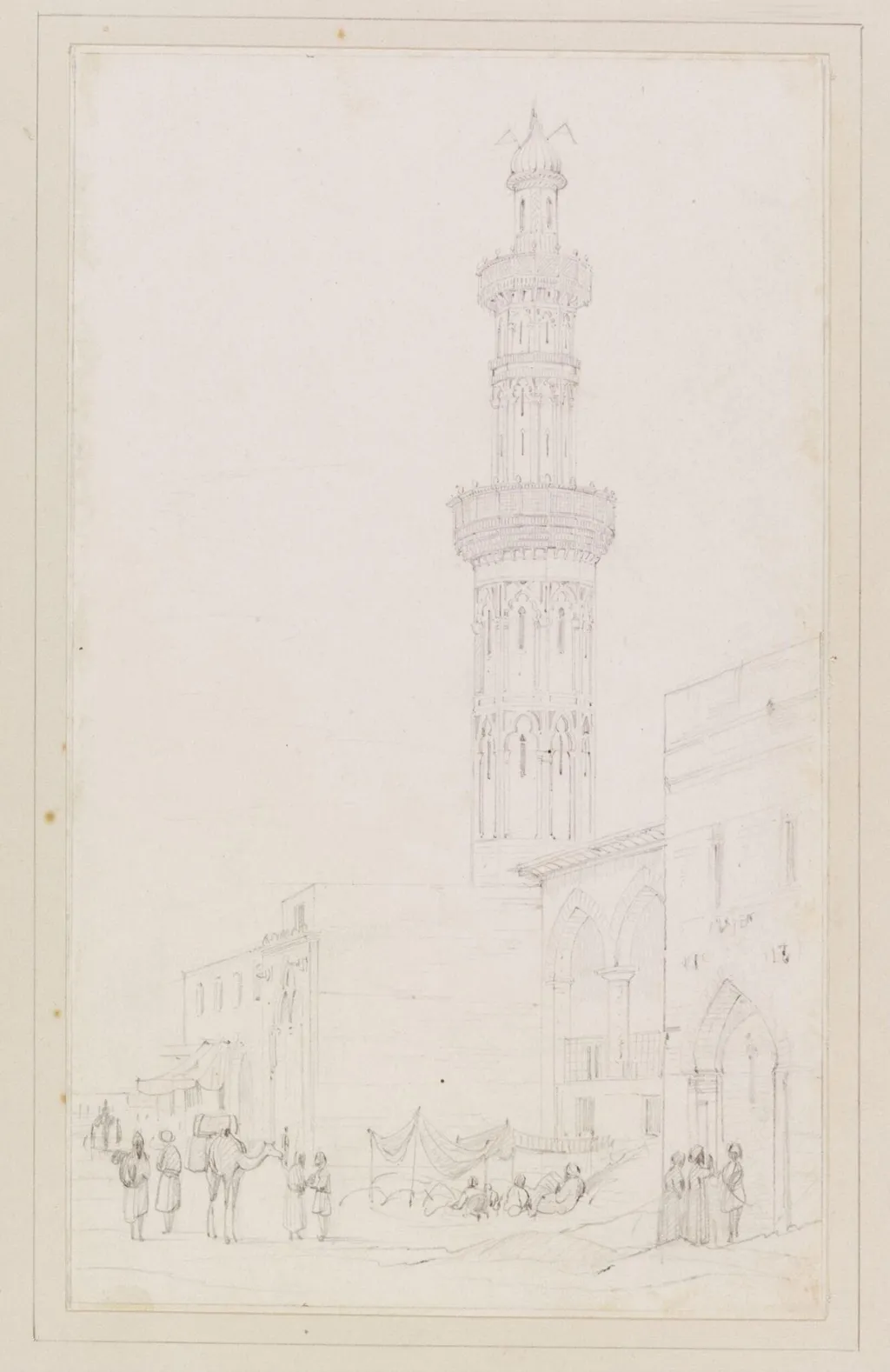
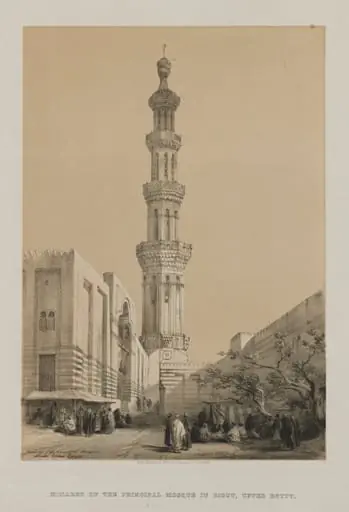
Minaret of the Mosque of Ali al-Amri is a drawing by the Romanticist artist Owen Jones. It dates from 1832 and is held in the collection of the Victoria and Albert Museum.
About this work
Overview
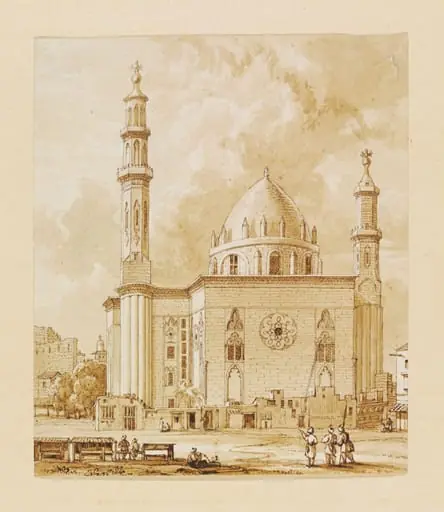
This drawing depicts the minaret of the Mosque of Ali al-Amri, a structure characteristic of Islamic architecture. Created in 1832, it is a representative work from Owen Jones's documentation of Egyptian sites.
Subject & Meaning
The drawing shows a tall minaret surrounded by smaller buildings, people, and a camel, capturing a moment in the life of the locale. The minaret's design and the surrounding scene reflect the architectural and cultural context of the region.
Technique & Style
Executed in light pencil lines, the drawing emphasizes the structural details of the minaret and its surroundings. The artist's focus on arches, domes, and the play of light on surfaces showcases an interest in the architectural elements and their representation.
History & Provenance
The drawing is part of Owen Jones's *Views On The Nile From Cairo To The Second Cataract*, a collection of works documenting Egyptian architecture. It is one of eleven works from the Searight Collection, with related studies held in major museums such as the Victoria and Albert Museum and the British Museum.
Artist & collection
Artist
English architect and designer Owen Jones spent the 1830s in Egypt and later sketched its temples in crisp watercolours.

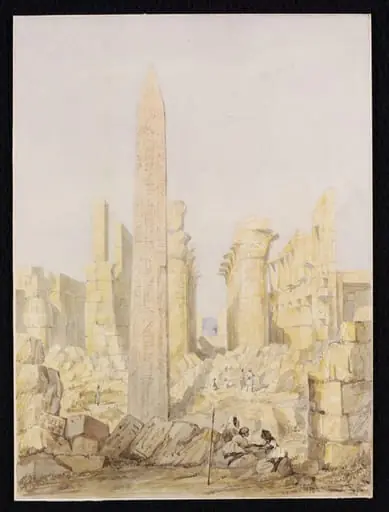 Great Temple. Karnac. Thebes
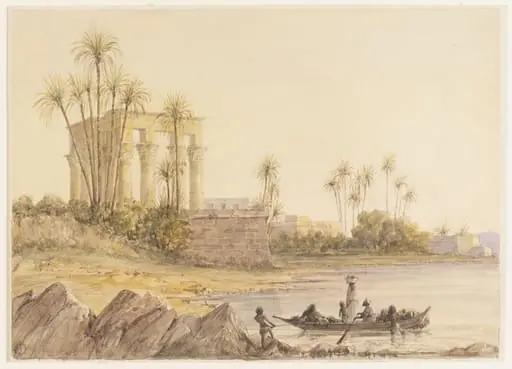 Landing Place. Philoe
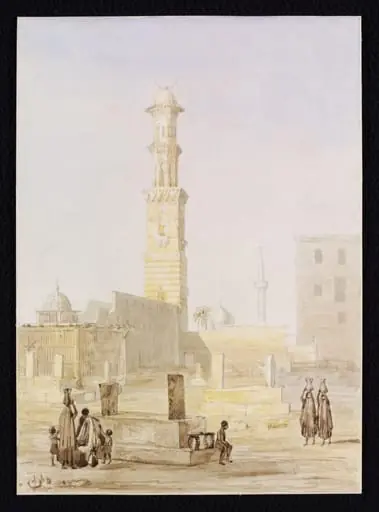 Tombs near Cairo
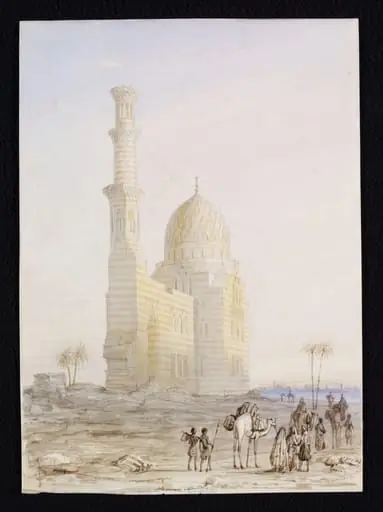 Tomb near Cairo
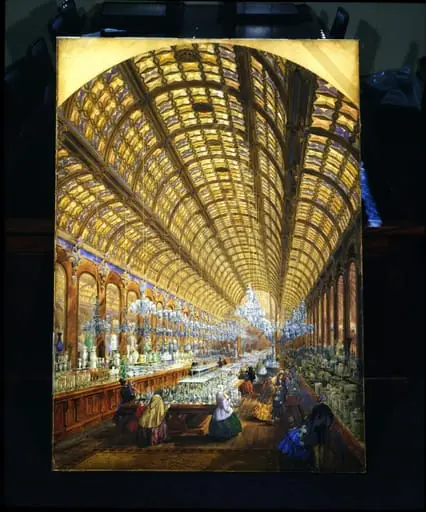 Osler's Gallery, Oxford Street, London
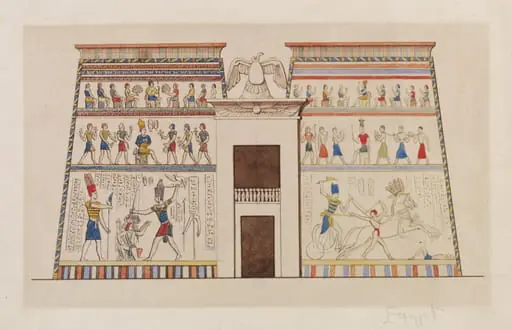 Architectural drawing of an entrance pylon to an Egyptian temple
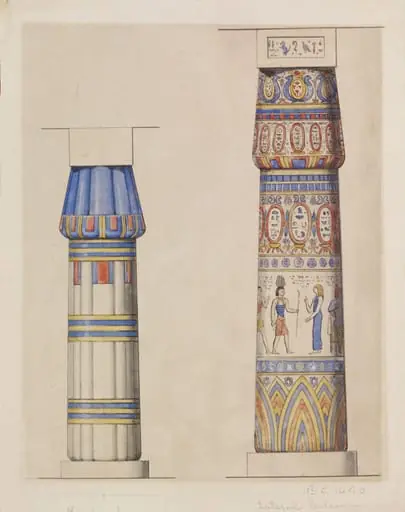 Temple of Luqsor B.C.1490 Lateral Column Temple of Karnak B.C.1490
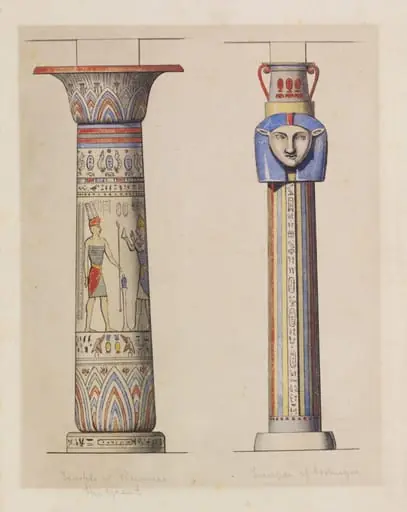 Temple of Ramses the Great B.C.1420. Temple of Sedingar B.C.1490