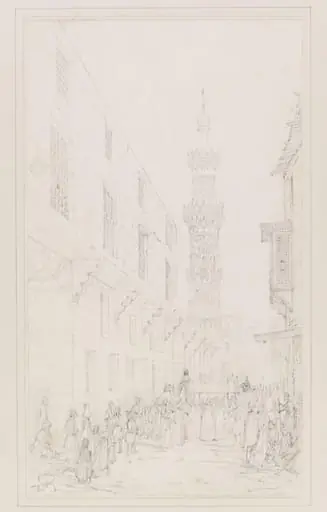
Artwork
Tomb near Cairo
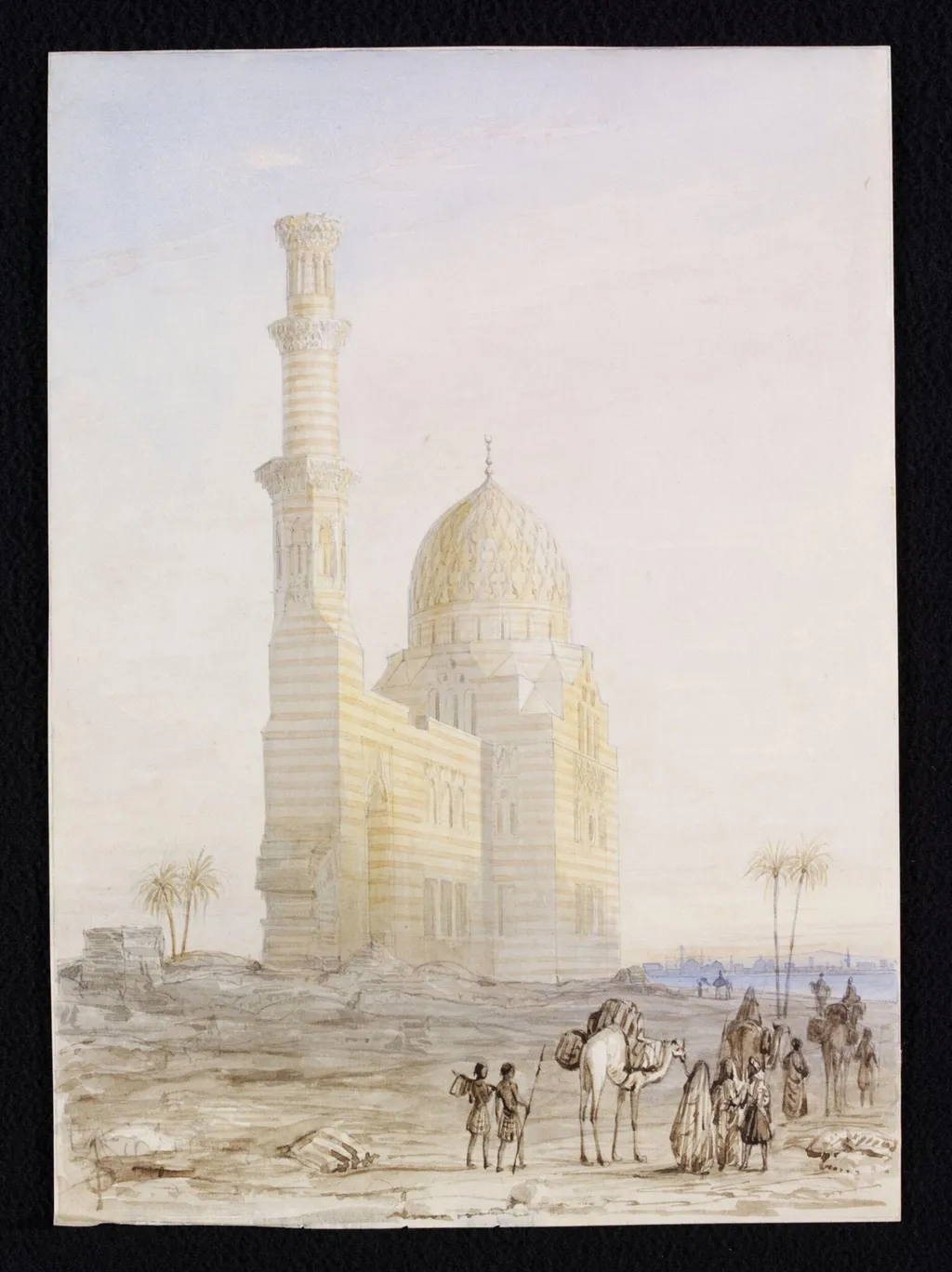
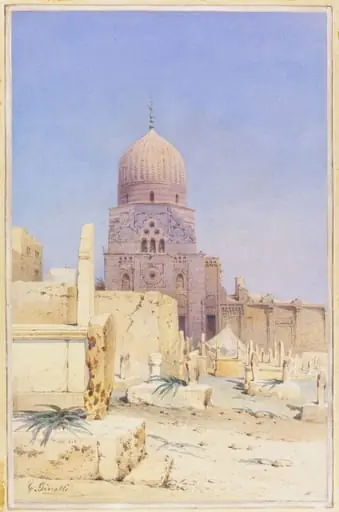
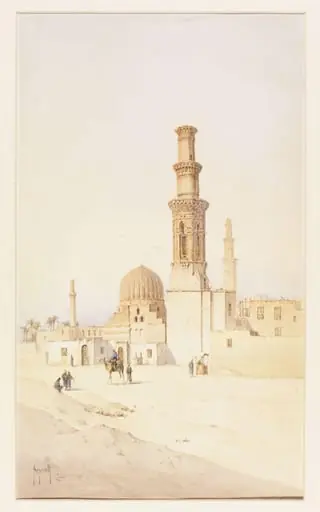
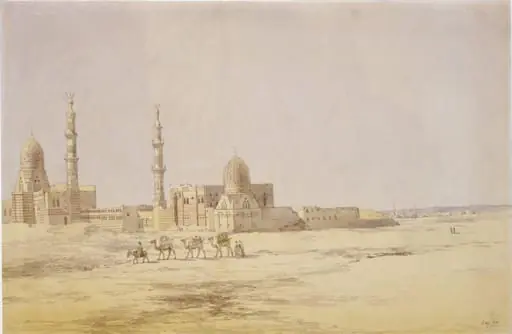
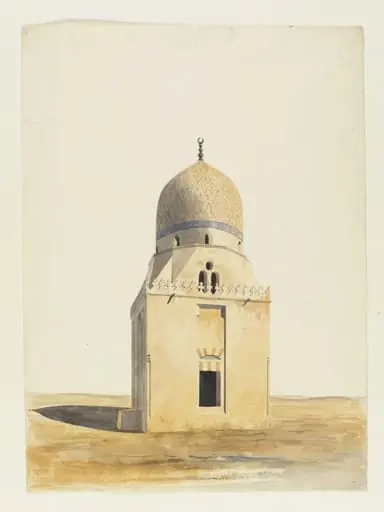
Tomb near Cairo is a watercolor work on paper by the Orientalist artist Owen Jones. It dates from 1832 and is held in the collection of the Victoria and Albert Museum.
About this work
Overview
The work captures a specific funerary structure in al-Abbasiyyah, northeast Cairo, correcting earlier misidentifications of the site as the tomb of Melek Adel.
This watercolour is one of eleven studies created by Owen Jones during his 1843 journey along the Nile. It was later published as plate 14 in his illustrated volume *Views on the Nile from Cairo to the Second Cataract*. The work captures a specific funerary structure in al-Abbasiyyah, northeast Cairo, correcting earlier misidentifications of the site as the tomb of Melek Adel. The reverse bears a pencil sketch of figures, suggesting preparatory work or personal notes.
Subject & Meaning
The subject is the tomb of Sultan Tuman-bay I, a Mamluk-era ruler buried in the al-Abbasiyyah district. The composition emphasizes architectural grandeur over human presence, with figures and animals rendered small and distant against the monumental structure. This framing suggests reverence for the building’s historical weight, aligning with 19th-century European interest in Islamic monuments as symbols of lost civilizations.
Technique & Style
Jones employed delicate watercolour washes to convey atmospheric haze and soft sunlight, enhancing the warmth of the desert setting. The golden dome and intricate tower carvings are rendered with precision, while the figures and animals are minimized in scale to amplify the tomb’s dominance. The hazy sky and sparse palm trees contribute to a quiet, contemplative mood, reflecting a topographical accuracy tempered by aesthetic restraint.
History & Provenance
The watercolour was produced during Jones’s fieldwork in Egypt, commissioned as part of a systematic visual record for his 1843 publication. It was drawn on-site, likely from direct observation, and later engraved for publication. The sketch on the reverse indicates the artist’s working process. The piece remained within the context of Jones’s scholarly project and was not widely circulated as an independent artwork until later archival interest emerged.
Context
Jones’s journey occurred during a period of heightened European fascination with Islamic architecture, fueled by colonial expansion and antiquarian scholarship. His work contributed to a growing body of documentation that sought to preserve and classify non-Western monuments. Unlike romanticized depictions of the East, Jones prioritized measured observation, aligning his approach with emerging standards in architectural surveying and ethnographic recording.
Legacy
Jones’s watercolours, including this one, influenced later architectural studies and design practices, particularly in the revival of Islamic ornamentation in 19th-century Europe. His precise documentation provided a reference for scholars and designers seeking authentic forms. Though not widely exhibited as fine art, these studies remain important records of Cairo’s architectural heritage at a time of rapid urban change.
Artist & collection
Artist
English architect and designer Owen Jones spent the 1830s in Egypt and later sketched its temples in crisp watercolours.

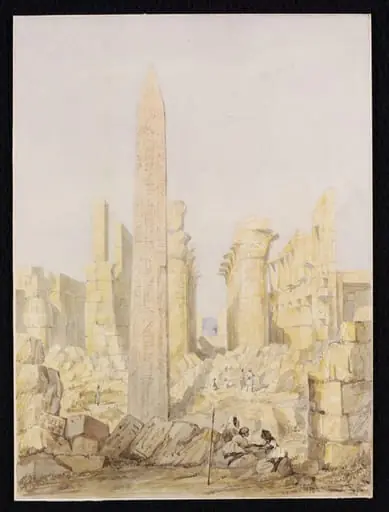 Great Temple. Karnac. Thebes
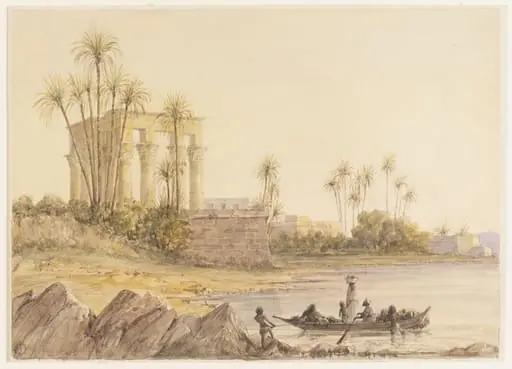 Landing Place. Philoe
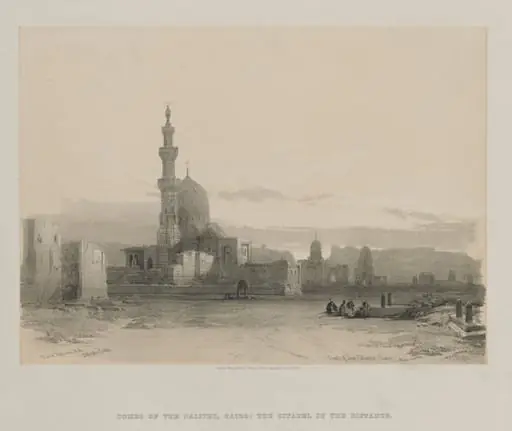
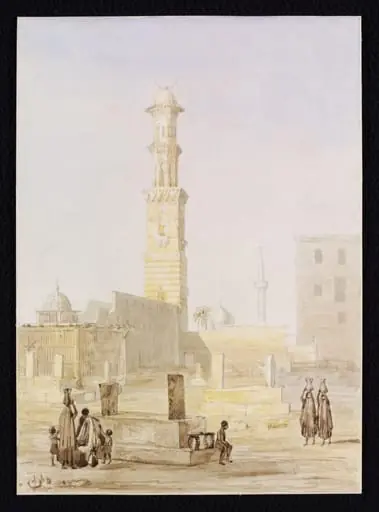 Tombs near Cairo
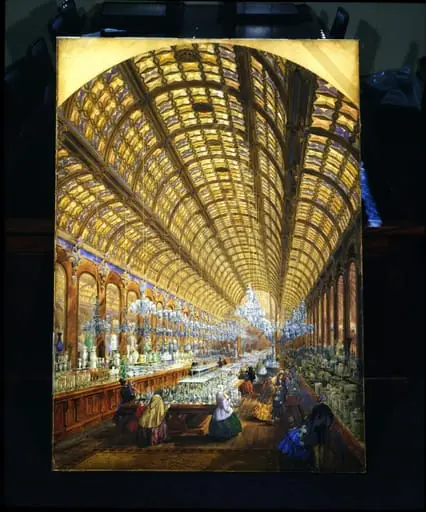 Osler's Gallery, Oxford Street, London
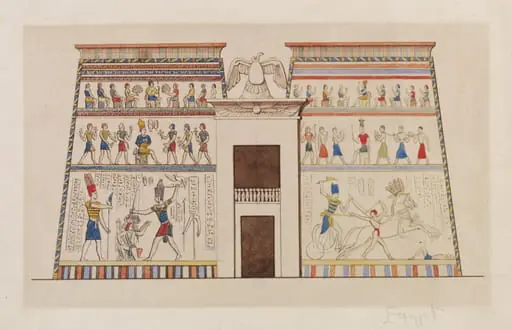 Architectural drawing of an entrance pylon to an Egyptian temple
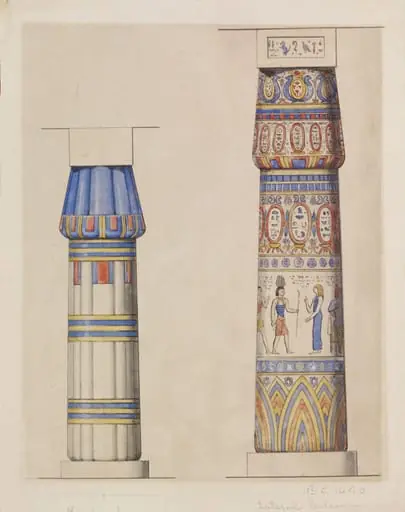 Temple of Luqsor B.C.1490 Lateral Column Temple of Karnak B.C.1490
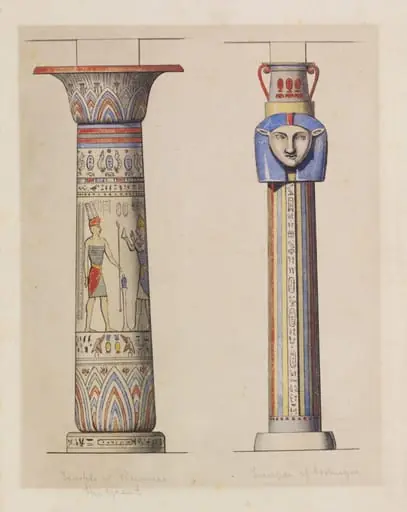 Temple of Ramses the Great B.C.1420. Temple of Sedingar B.C.1490
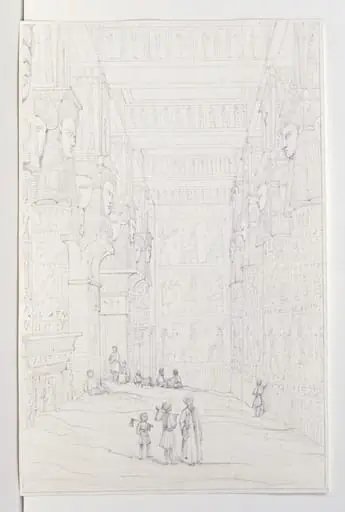 Denderah. Interior of Great Temple