Artwork
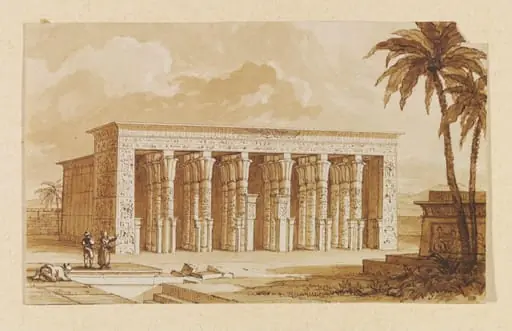
Architectural drawing of an entrance pylon to an Egyptian temple
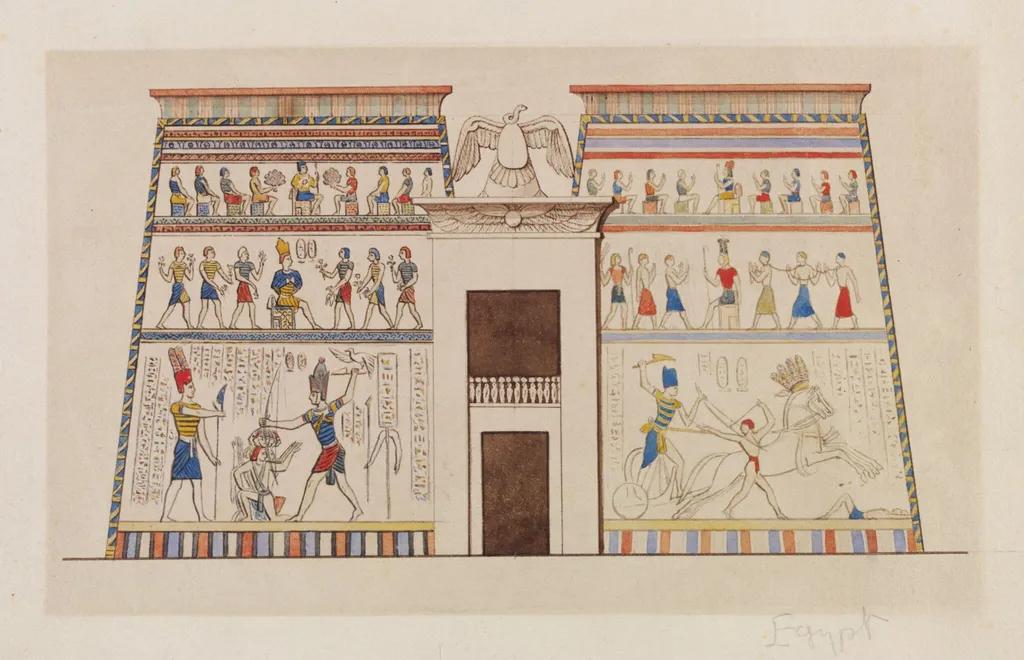
Architectural drawing of an entrance pylon to an Egyptian temple is a watercolor work on paper by the Impressionist artist Owen Jones. It dates from 1853 and is held in the collection of the Victoria and Albert Museum.
About this work
Overview
This watercolour drawing, created by Owen Jones in 1853, depicts an entrance pylon for an Egyptian temple, characterized by vibrant colors and intricate details.
Subject & Meaning
The pylon's design combines traditional Egyptian elements with the artist's personal stylistic interpretations. Scenes include a winged sun above, flanked by two distinct groups: one of men in blue and red attire, and another depicting a lion battle. Walls feature symbolic motifs and striped patterns.
Technique & Style
Executed in watercolour, the drawing exhibits a flat, yet busy, visual quality. Jones's adaptation of Egyptian architectural elements is infused with his own aesthetic approach, resulting in a distinctive blend of authenticity and creative liberty.
History & Provenance
Created in 1853, the drawing may be associated with the Egyptian Court at the Crystal Palace in Sydenham during the same period, suggesting a possible connection to Jones's work on that project.
Context
The piece reflects 19th-century European fascination with Egyptian antiquities, as well as Jones's role in popularizing Egyptian motifs in British design during this time.
Legacy
Now part of the Victoria and Albert Museum's collection, the drawing remains accessible for study and appreciation, offering insights into Jones's work and the era's design influences.
Artist & collection
Artist
English architect and designer Owen Jones spent the 1830s in Egypt and later sketched its temples in crisp watercolours.

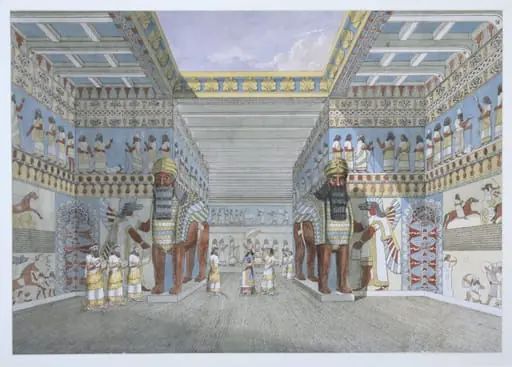 A Hall In An Assyrian Temple Or Palace, Restored From Actual Remains, And From Fragments Discovered In The Ruins
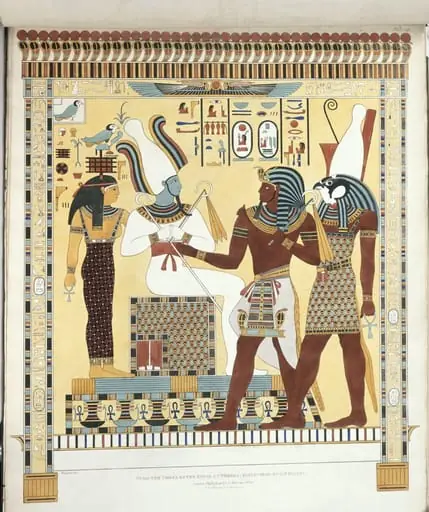 Plates Illustrative Of The Researches And Operations Of G. Belzoni In Egypt And Nubia
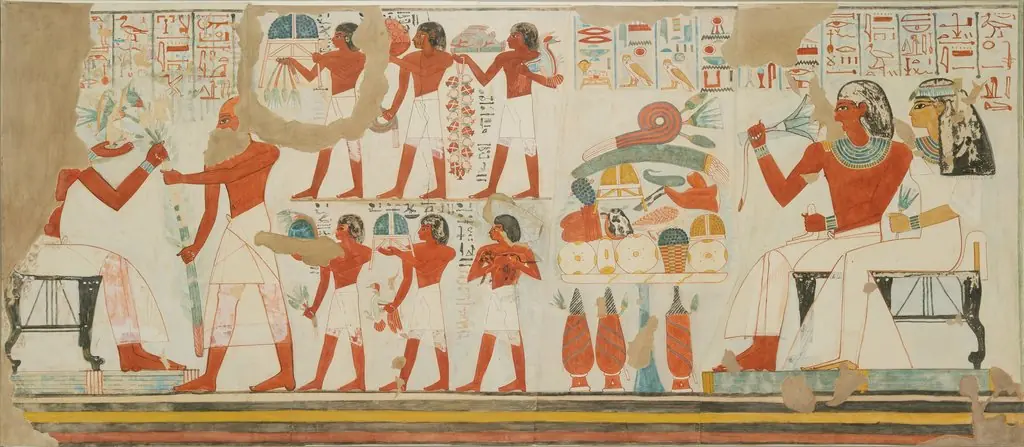 Offerings Made to the Deceased and his Wife, Tomb of Djehutyemheb
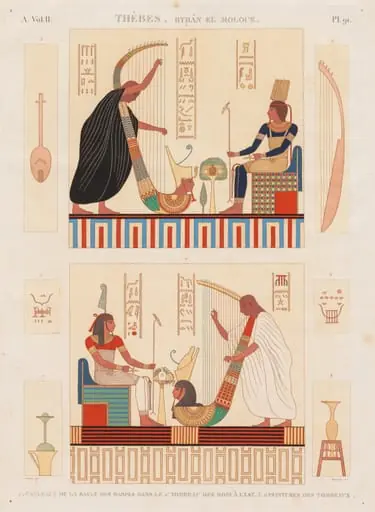 Description of Egypt: Thebes Byban el Molouk, Vol. II, Pl. 91
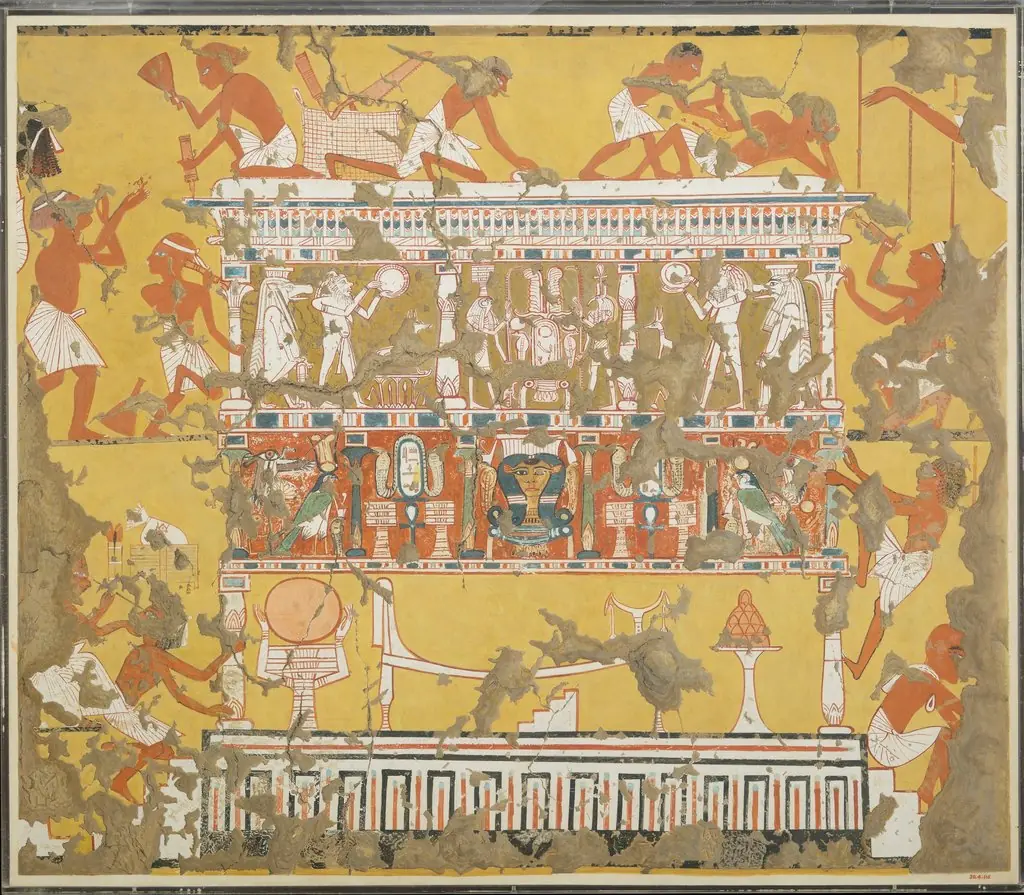 Building a Catafalque, Tomb of Ipuy
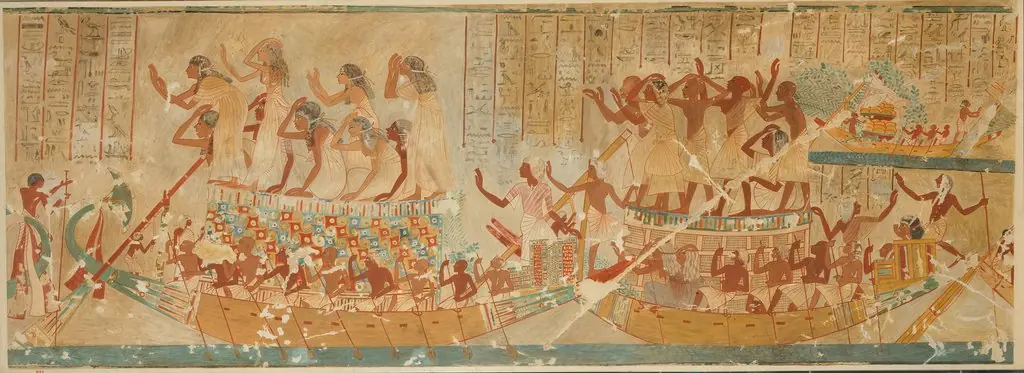 Boats with Mourners and Provisions, Tomb of Neferhotep
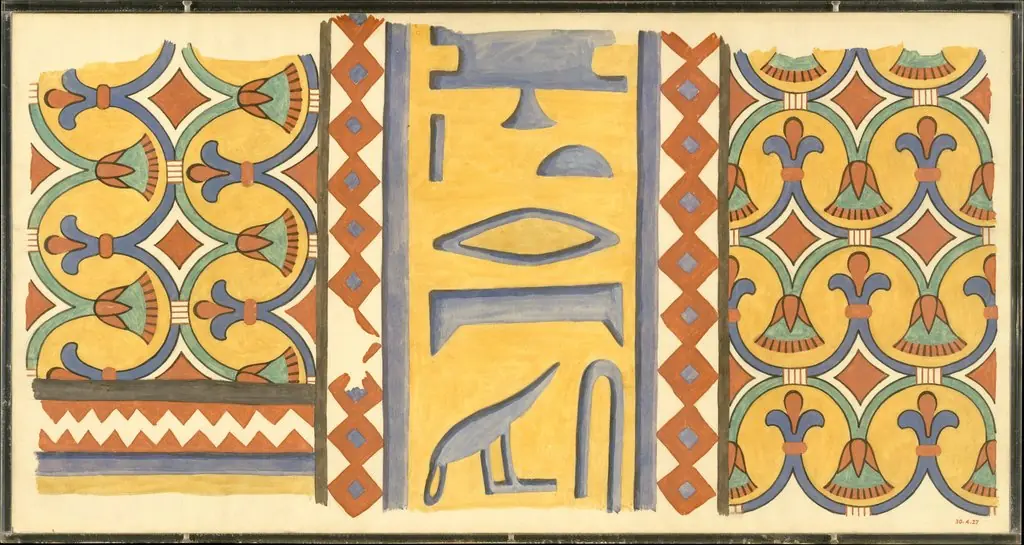 Ceiling Fragment
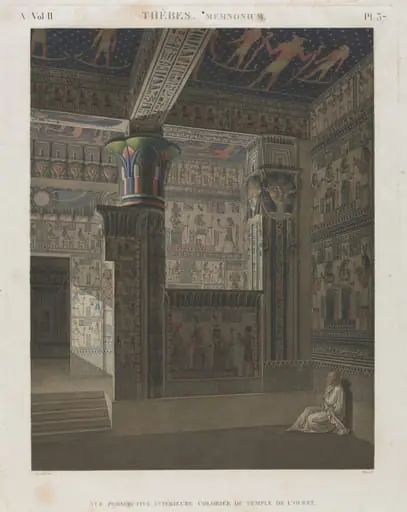 Description of Egypt: Thebes. Memnonium, Vol. II, Pl. 37
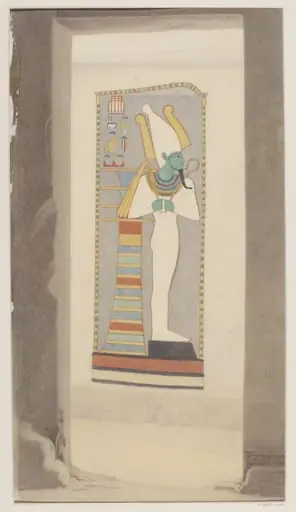 Osiris carrying a flail and crook
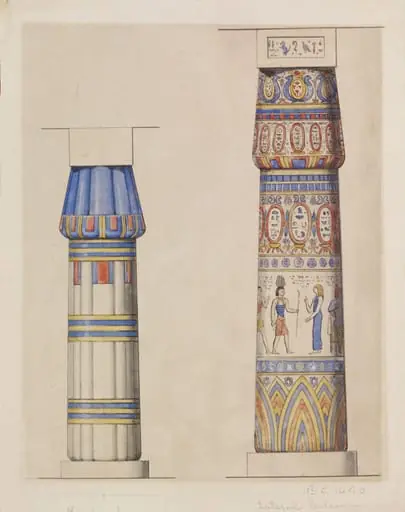
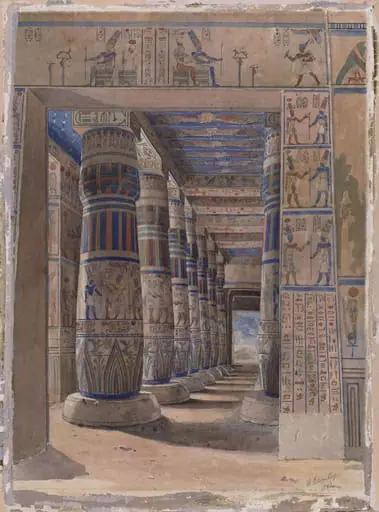 Interior of Crystal Palace, Egyptian Court, columns from the Temple of Karnak
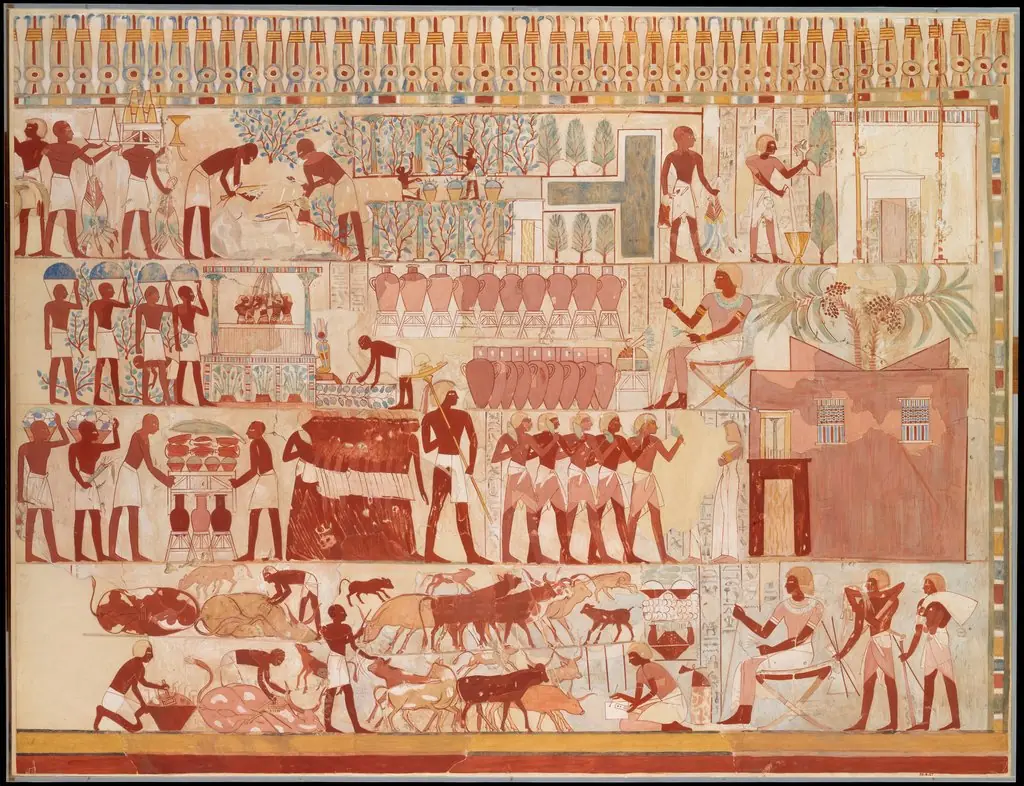 Nebamun Supervising Estate Activities, Tomb of Nebamun
 Perspective view of the Temple of Antaeopolis