Artwork
A Village near Brezins
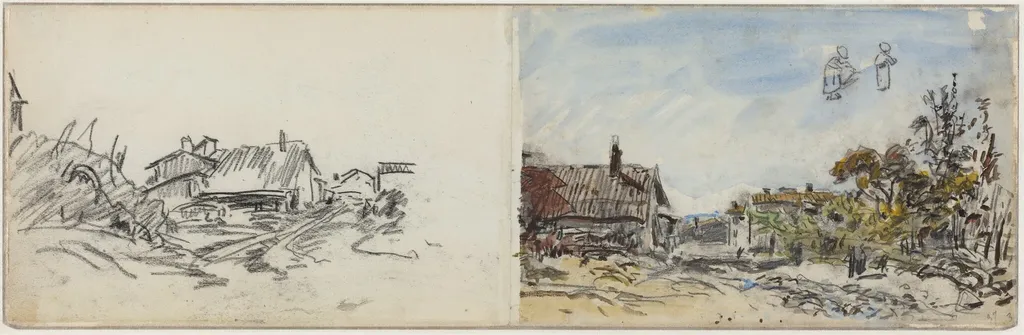
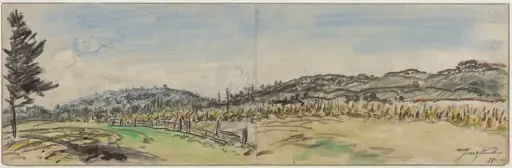
A Village near Brezins is a chalk drawing by the Impressionist artist Johan Barthold Jongkind. It dates from 1884 and is held in the collection of the National Gallery of Art.
About this work
Overview
Johan Barthold Jongkind’s drawing, titled A Village near Brezins, dates to around 1884. Executed on two joined sheets of wove paper, the work combines black chalk outlines with delicate watercolor washes. It presents a brief, observational study of a modest settlement, rendered in a loose, sketch‑like manner that captures a fleeting impression rather than a detailed record.
Subject & Meaning
The composition is divided into two adjacent views of the same village. On the left, a cluster of simple dwellings clings to a gentle slope, rendered in swift, gestural lines. The right side introduces muted brown rooftops, a smudge of foliage, and two diminutive figures moving along a path, suggesting everyday life within a quiet rural setting.
Technique & Style
Jongkind employed thin, translucent watercolor washes over the chalk drawing, allowing the underlying lines to remain visible while softening edges.
Jongkind employed thin, translucent watercolor washes over the chalk drawing, allowing the underlying lines to remain visible while softening edges. The limited palette and hazy tonal transitions create a sense of atmospheric distance, emphasizing the immediacy of a momentary glance rather than a finished, polished image. The sketchy execution reflects the artist’s practice of rapid field studies.
History & Provenance
Created circa 1884, the work belongs to the later period of Jongkind’s career, when he frequently produced small, on‑site studies for larger compositions. The drawing is catalogued as a drawing rather than a finished painting, and it has been retained within the artist’s estate collections before entering public holdings, where it serves as an example of his preparatory methods.
Artist & collection


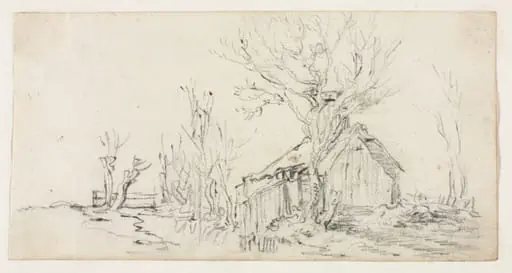 Sketch of Landscape with Cottage
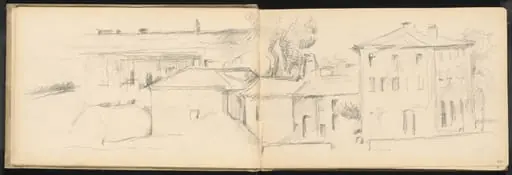 Landscape Near Aix-en-Provence
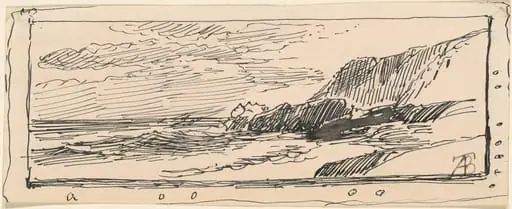 Rocky Coast
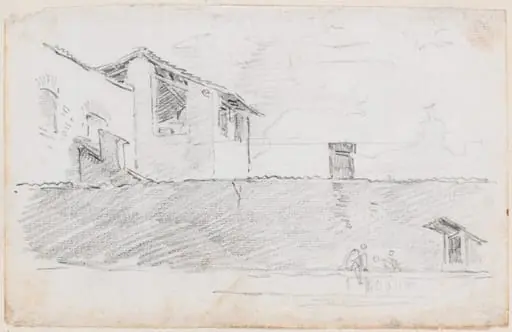 Housetops behind a Wall
 Two sketches on one sheet: a countryman walking, and a group of people beside two donkeys.
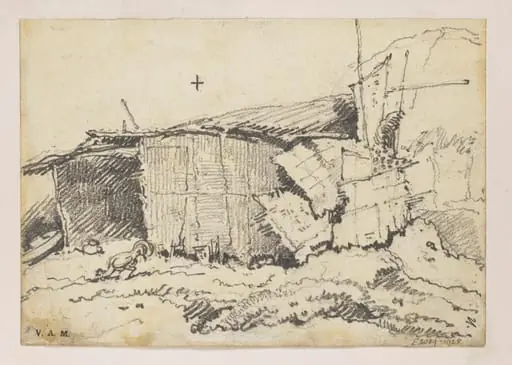 Indian village dwellings
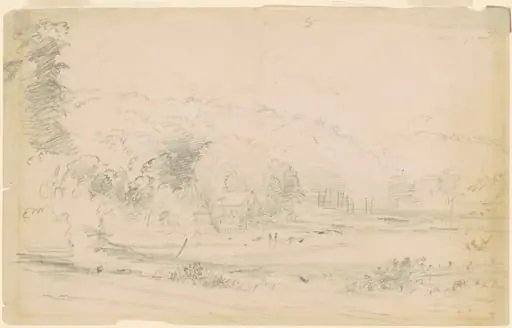 Long Island, New York
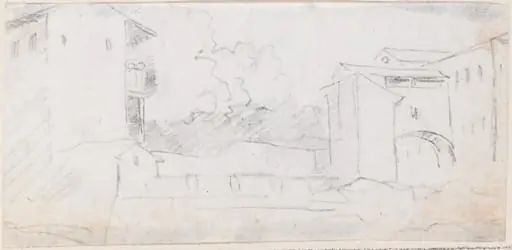 Italian City Scene
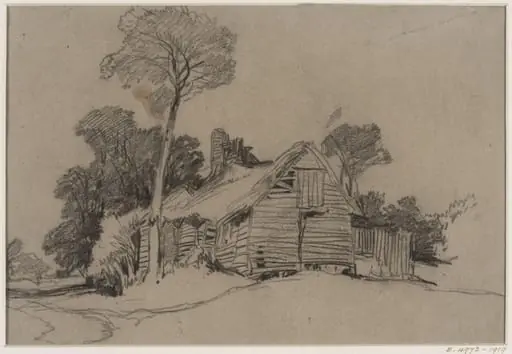 The Ness, Shaldon, Devon
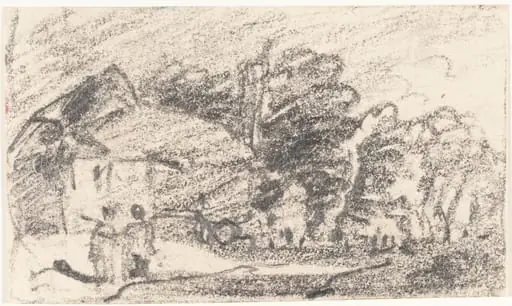 Two Figures on a Country Road
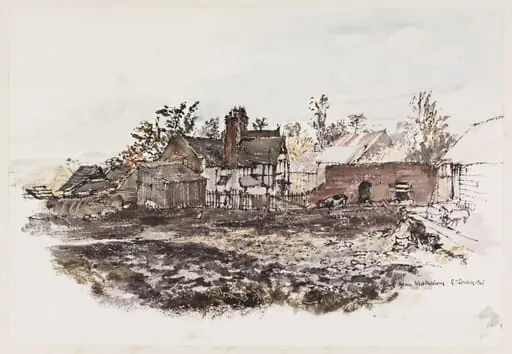 Park Farm, West Malvern