Artwork
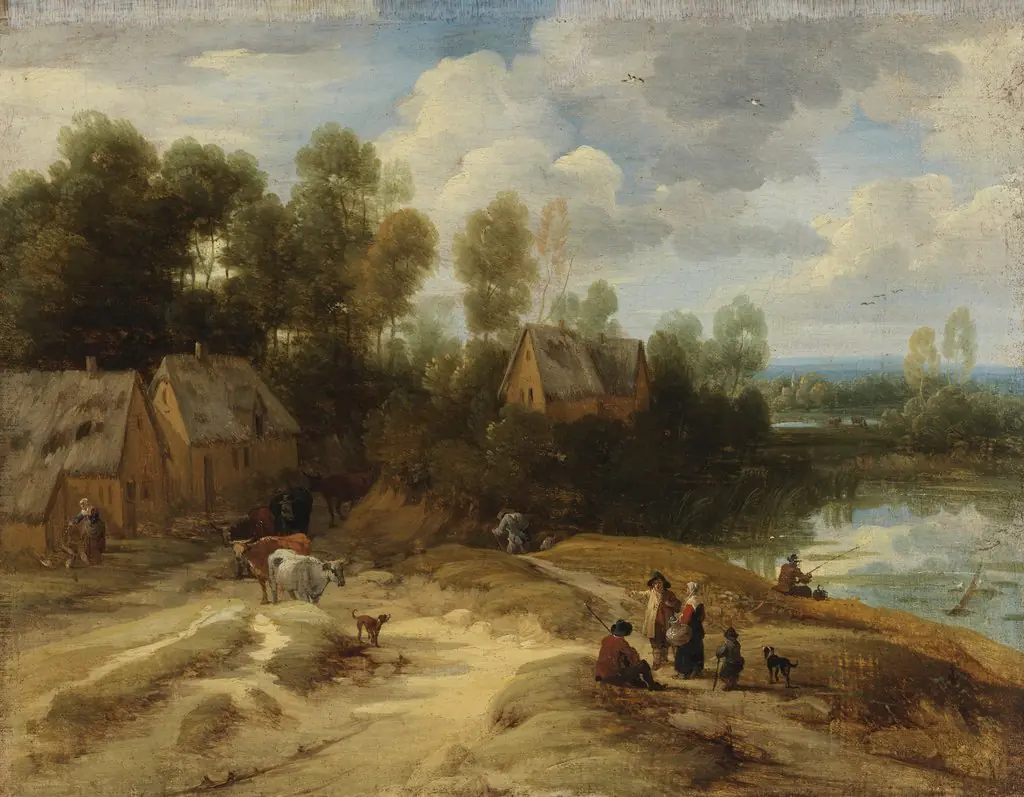
Sandy landscape with travellers and cattle
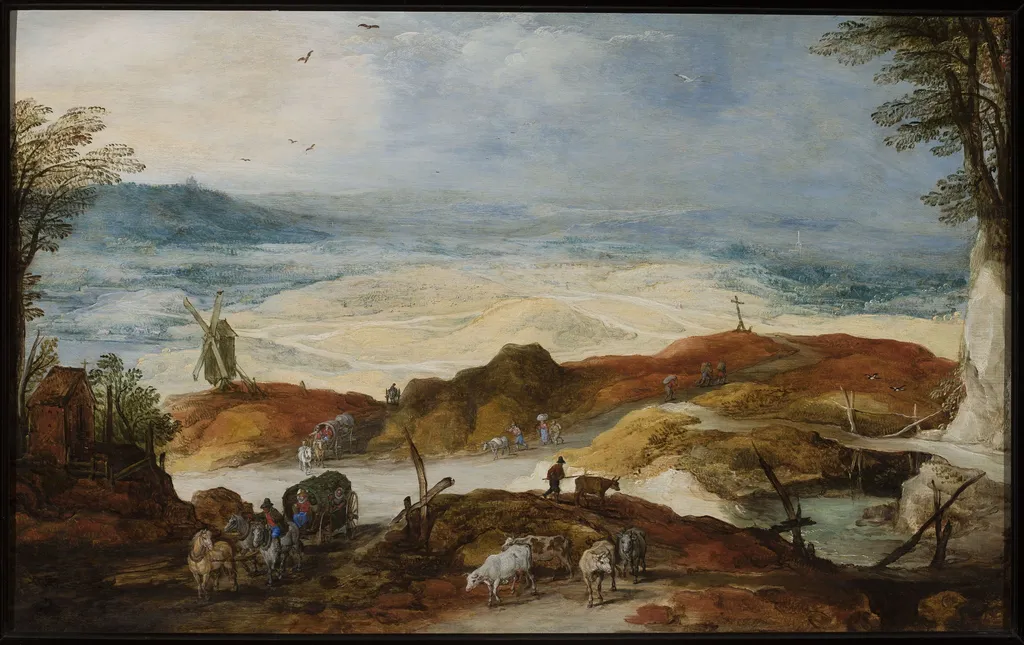
Sandy landscape with travellers and cattle is an oil painting by the Flemish Baroque painting artist Joos de Momper the Younger. It dates from 1612 and is held in the collection of the National Museum in Warsaw. Created in 1612, this oil on canvas presents an expansive, sandy plain punctuated by a handful of trees.
About this work
Overview
Created in 1612, this oil on canvas presents an expansive, sandy plain punctuated by a handful of trees. A small group of travelers moves across the foreground accompanied by cattle, while additional figures appear farther back. The sky is active with birds in flight, and the composition balances warm earth tones with cooler atmospheric hues to suggest distance.
Subject & Meaning
The work illustrates a typical genre scene of itinerant life, emphasizing the relationship between humans, livestock, and the harsh terrain they traverse. The sparse vegetation and open space convey a sense of isolation, while the presence of travelers hints at commerce or pilgrimage, reflecting everyday activities within a rural landscape.
Technique & Style
Executed in oil, the painting employs a layered palette that contrasts the golden sand with muted blues and grays of the sky and distant hills. Brushwork varies from fine detail in the foreground figures to broader strokes in the background, a method that creates atmospheric depth and aligns with the early Baroque shift toward naturalistic landscape representation.
History & Provenance
The piece was painted by Flemish artist Joos de Momper the Younger, active in Antwerp during the turn of the 17th century. Influenced by Pieter Brueghel the Elder, de Momper’s work marks a move away from Mannerist conventions toward more realistic scenery. Today the canvas belongs to the National Museum in Warsaw, where it is part of the European painting collection.
Artist & collection
Artist
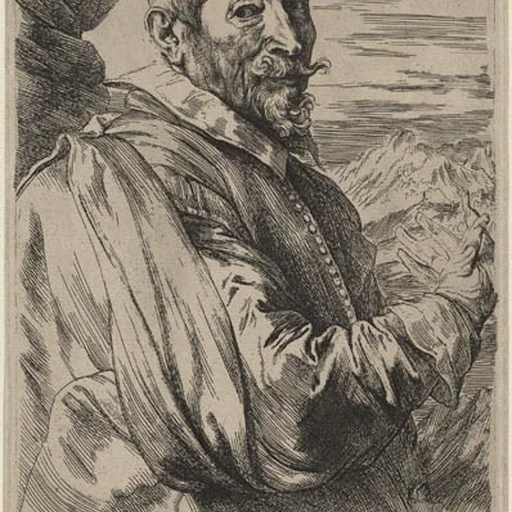
Joos de Momper the Younger or Joost de Momper the Younger (c. 1564 – 5 February 1635) was a Flemish landscape painter active in Antwerp between the late 16th century and the early 17th century. Brueghel's influence is…

 Evening Landscape
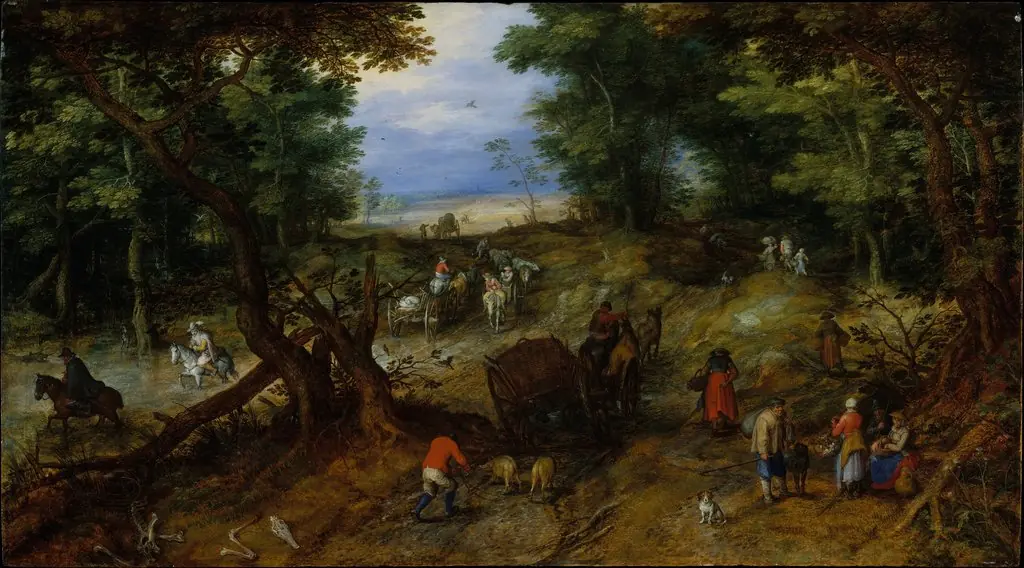 A Woodland Road with Travelers
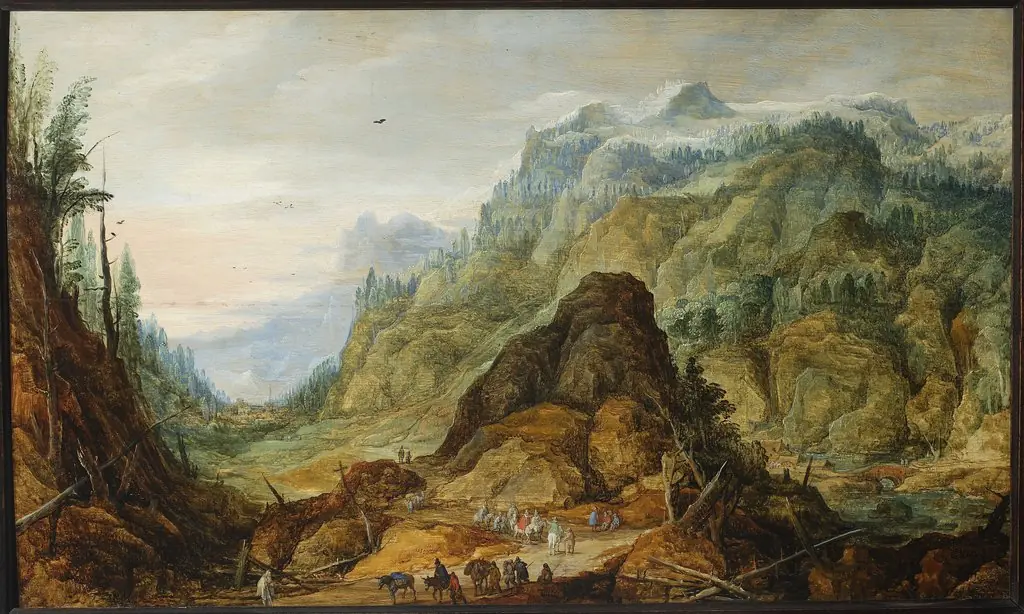 Mountain landscape with a caravan
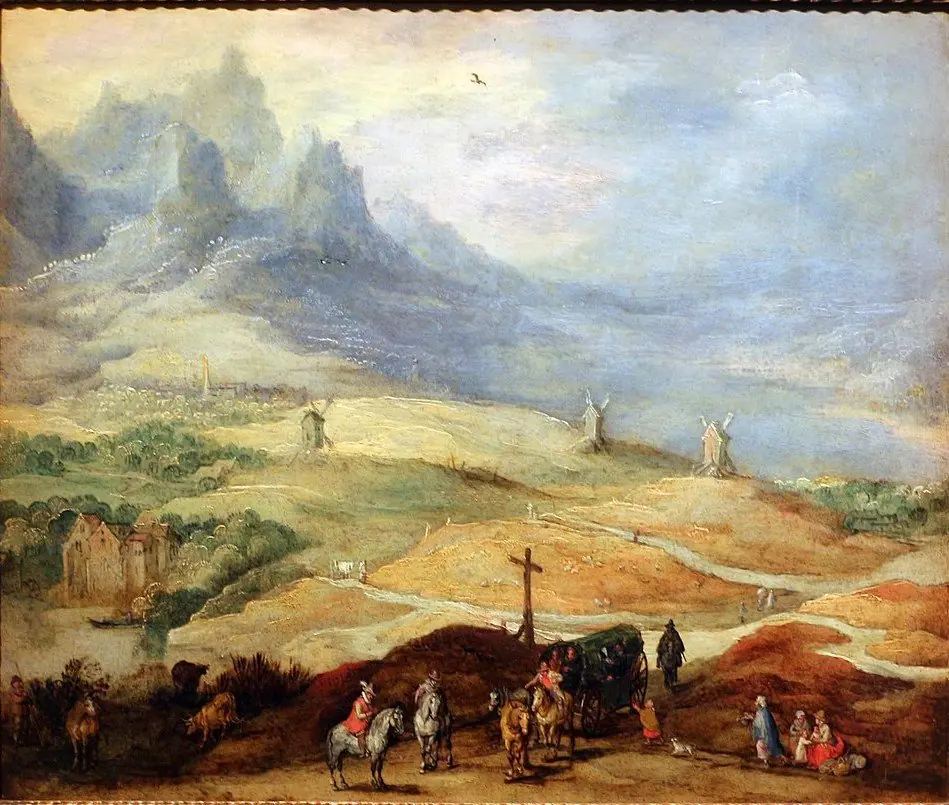 Paisagem com figuras
 Landscape
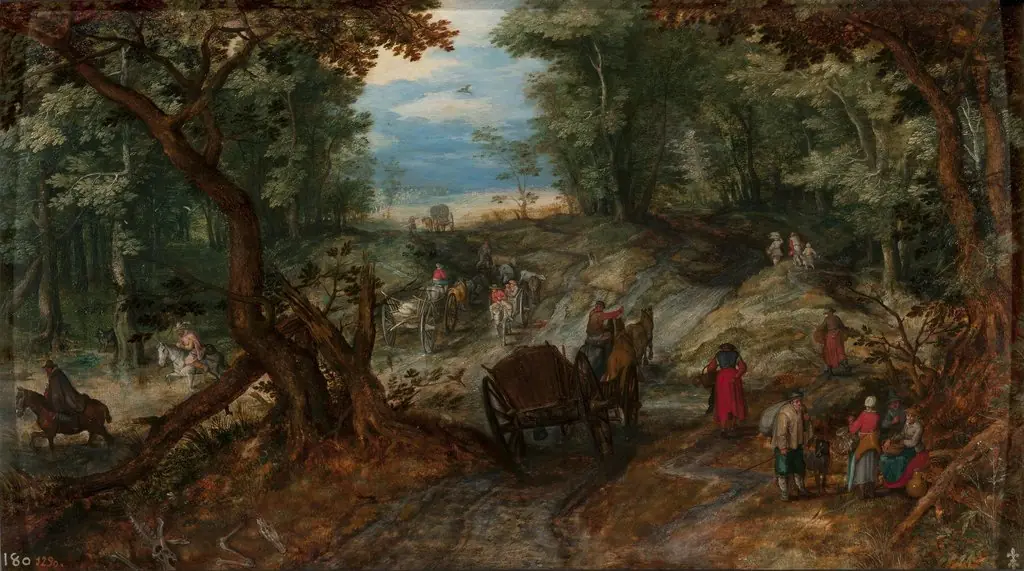 Forestroad next to a fordable pond wiht travelers
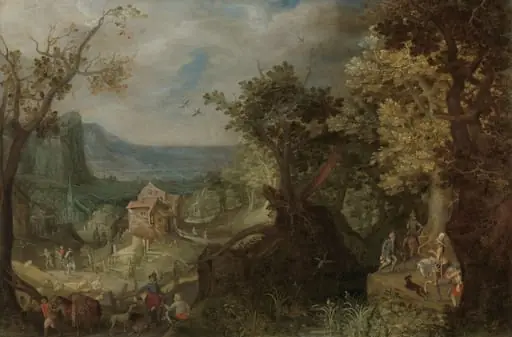 Hunter and Horsemen on a Wooded Road, with a Village in a Valley beyond
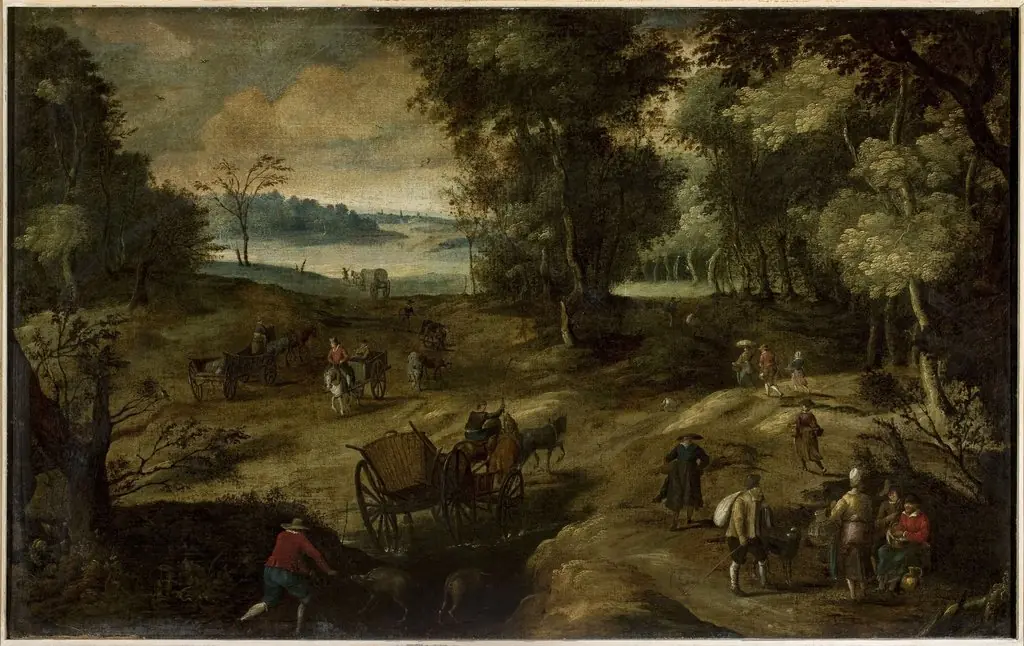 Landscape with peasants
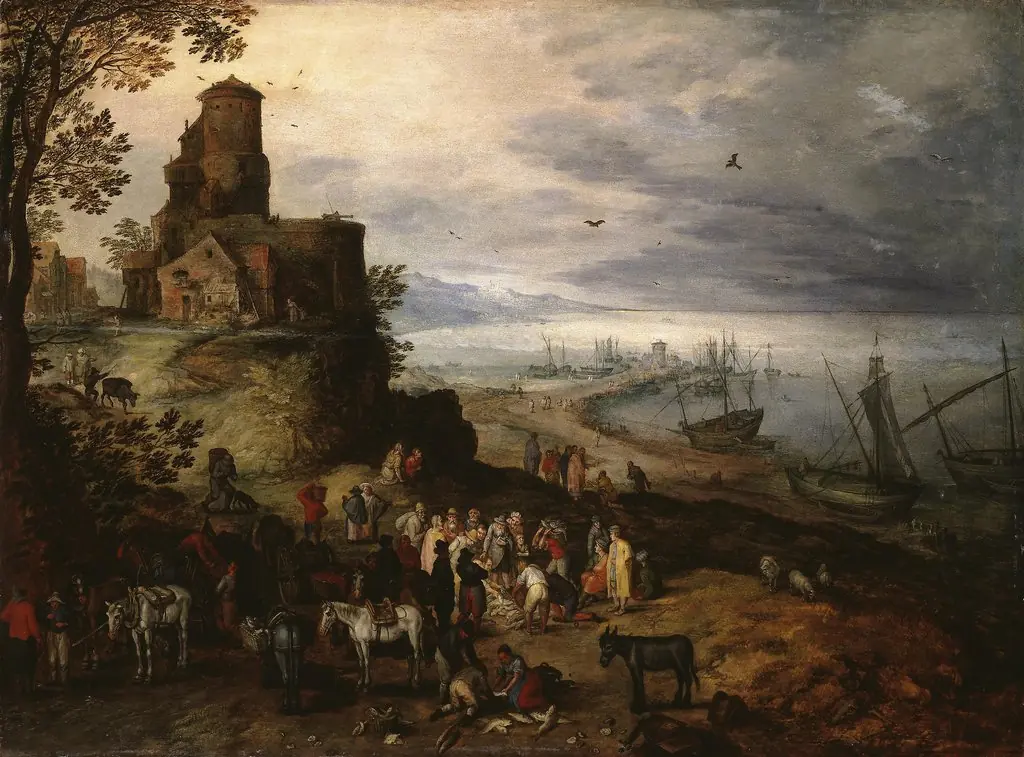 Fish Market (Calling the Apostles Peter and Andrew)
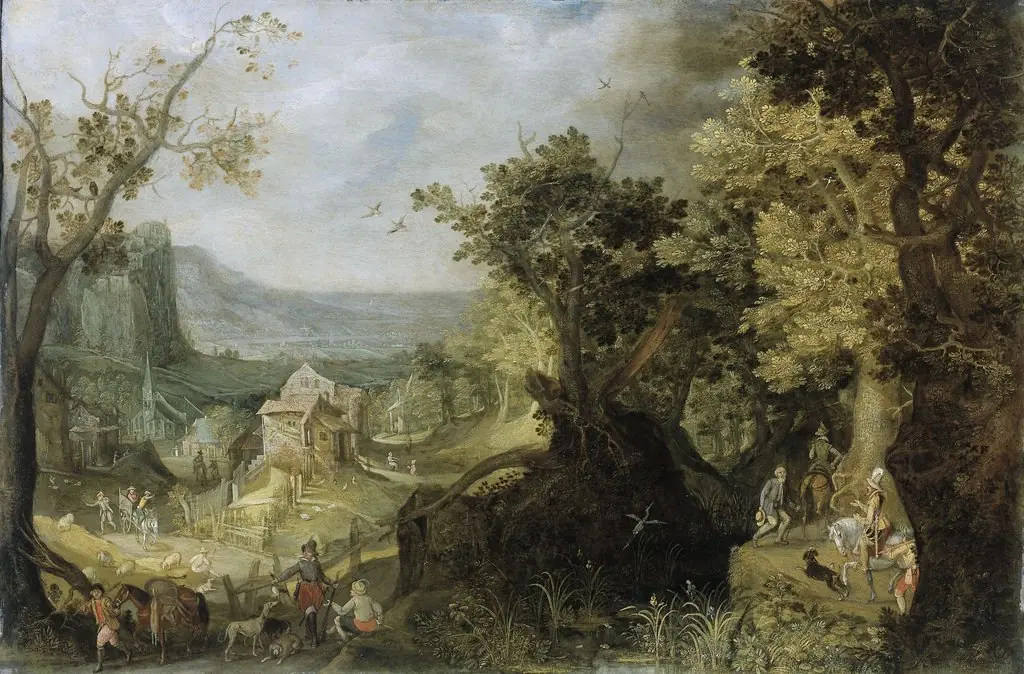 Wooded Landscape
 Landscape with Peasants and Cattle