Artwork
Der müde Wanderer
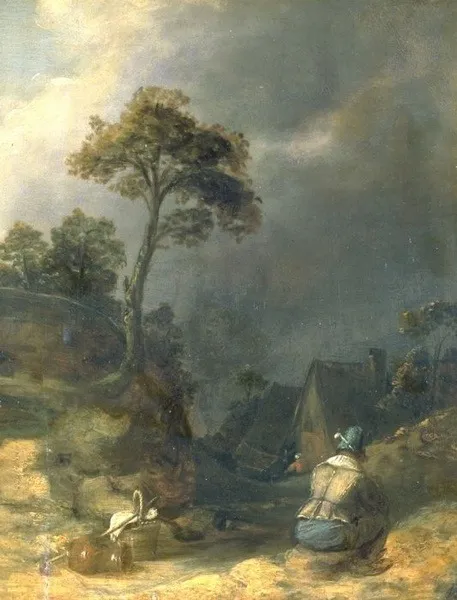
Der müde Wanderer is a paint painting by the Dutch Golden Age artist Joos van Craesbeeck. It dates from 1637 and is held in the collection of the Gemäldegalerie Berlin.
About this work
Overview
Joos van Craesbeeck, a Flemish painter who began his career as a baker, completed *Der müde Wanderer* in 1637. The work belongs to the Dutch Golden Age tradition of landscape painting, yet it reflects the artist’s interest in everyday subjects. The canvas is currently part of the collection of the Gemäldegalerie in Berlin.
Subject & Meaning
The composition centers on a solitary figure seated on the ground, his back turned toward the viewer. Dressed in modest attire, the traveler appears absorbed in a quiet activity, perhaps eating or drinking, set against a subdued backdrop of trees and distant structures. The scene conveys a moment of repose and introspection within an ordinary setting.
Technique & Style
Craesbeeck employs a restrained palette to model space, using muted tones for the sky and foliage that recede behind the figure. Subtle shifts in color and light create atmospheric depth, while the careful rendering of the man’s clothing and posture adds a tactile quality. The overall effect is one of calm stillness rather than dramatic narrative.
History & Provenance
Although Craesbeeck is best known for crowded tavern interiors populated by low‑life characters, this painting marks a departure toward open landscape. Its provenance traces back to the 19th‑century acquisition by the Gemäldegalerie, where it has remained on public display.
Artist & collection
Artist
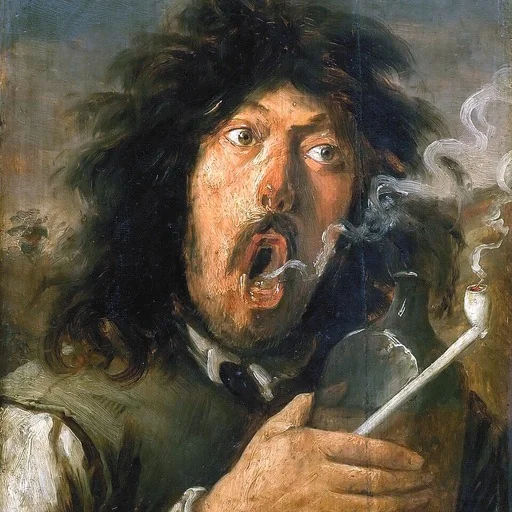
Joos van Craesbeeck (c. 1605/06 – c. 1660) was a Flemish baker and a painter who played an important role in the development of Flemish genre painting in the mid-17th century through his tavern scenes and dissolute…

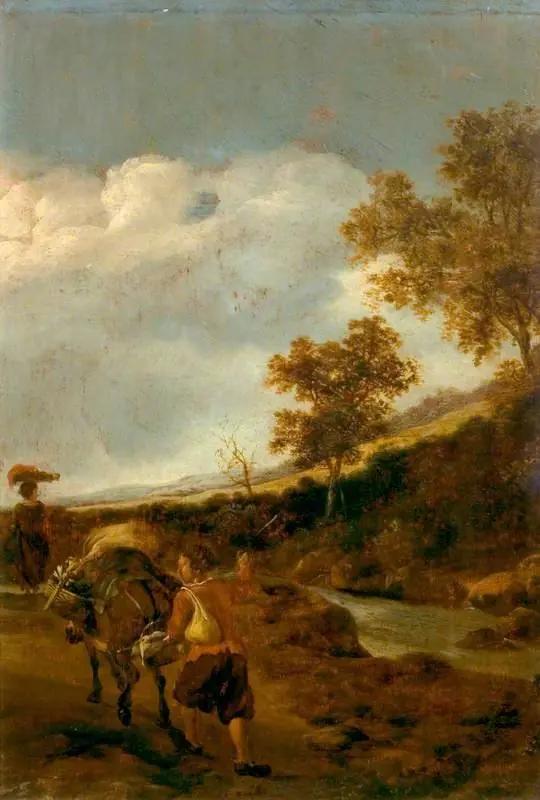 A Peasant Driving a Laden Mule
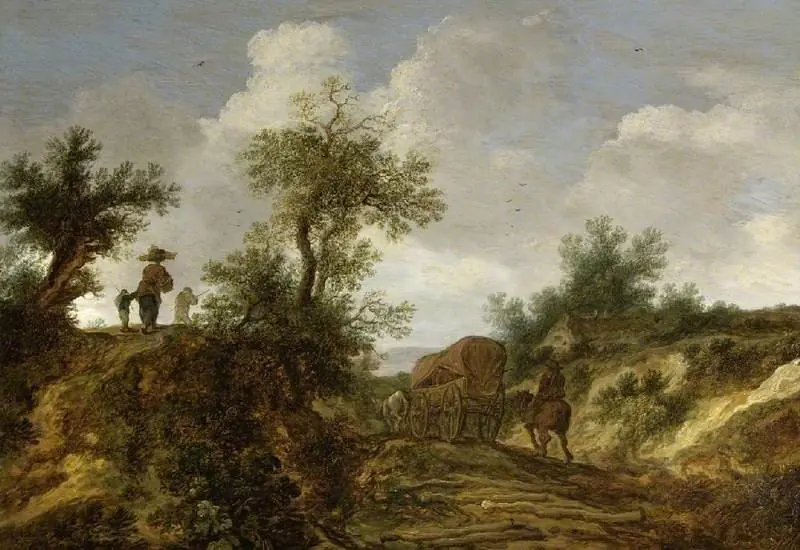 Landscape with figures
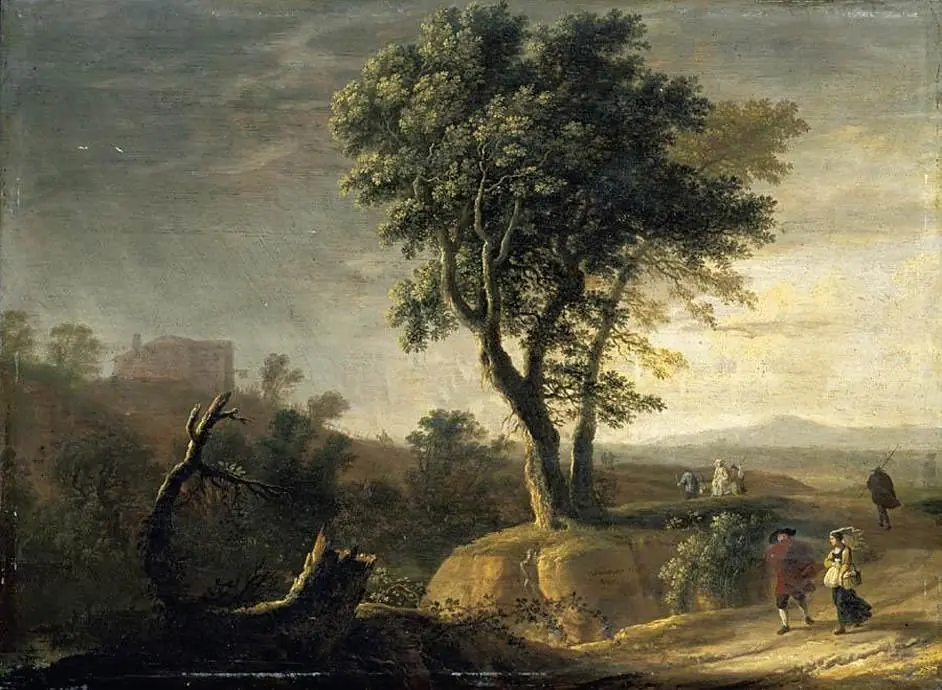 Thunderstorm
 Landschaft
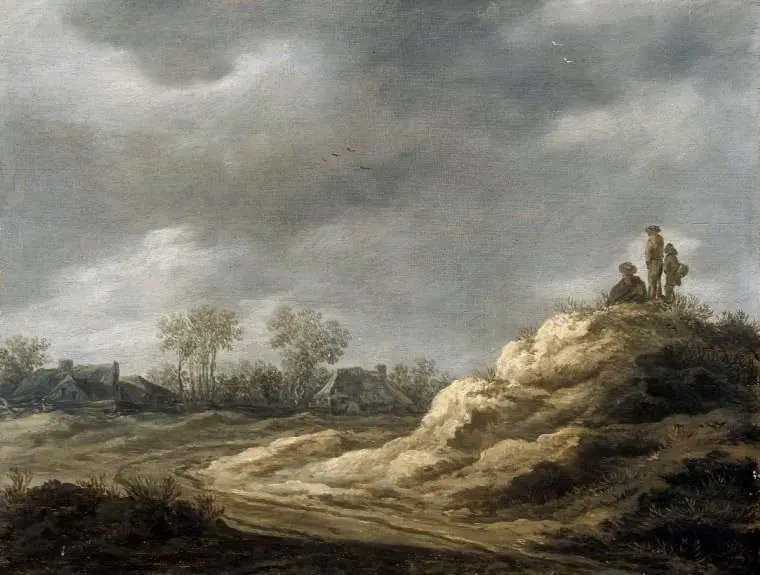 Landscape with figures
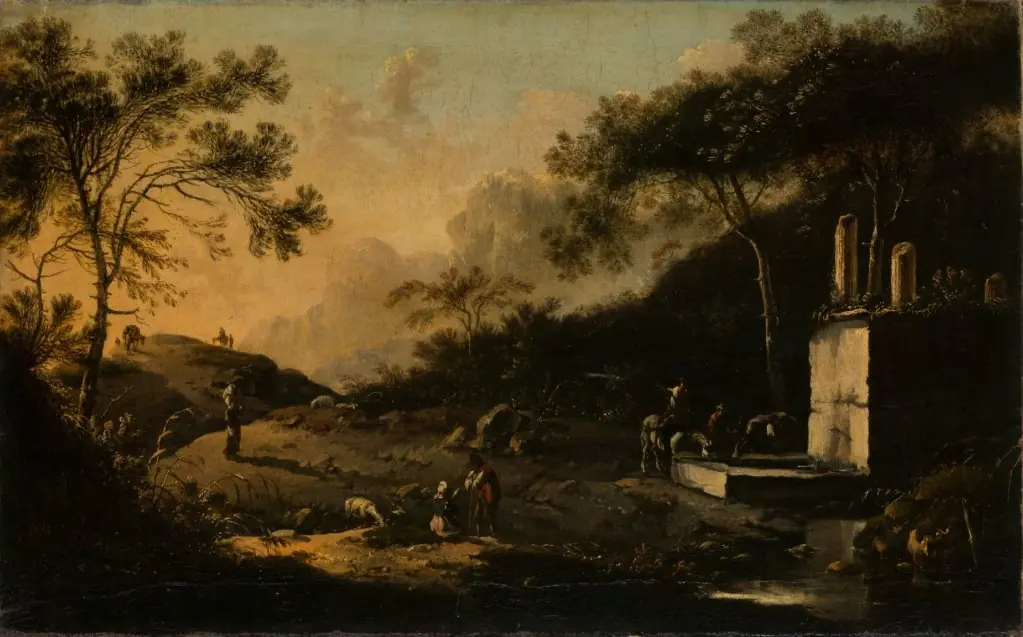 Italian Mountain Landscape with Travelers at a Well
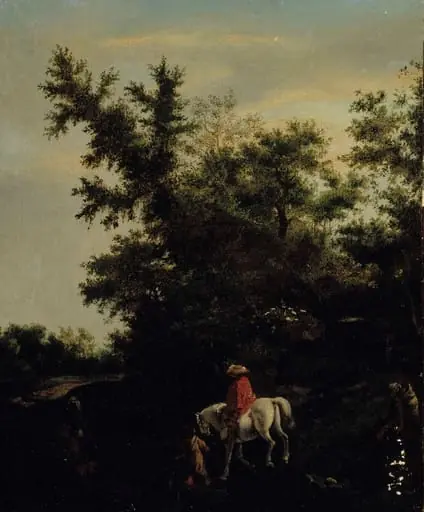 Kulkijoita metsätiellä
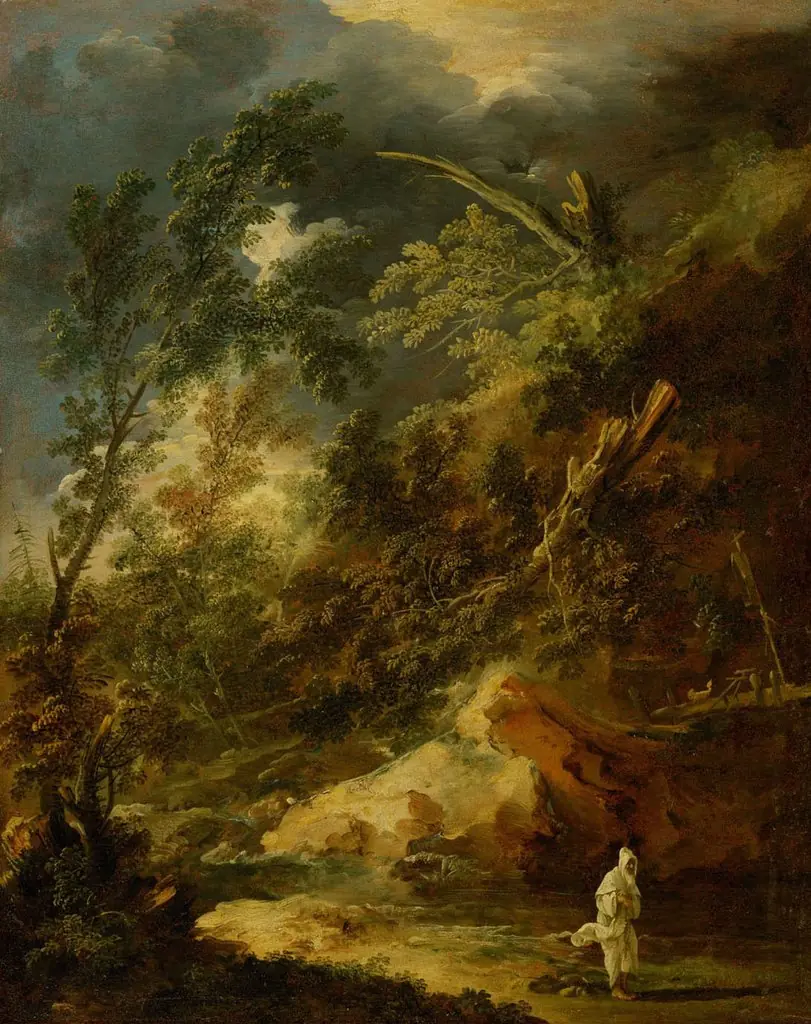 Landschaft mit einem Mönch im Wettersturm
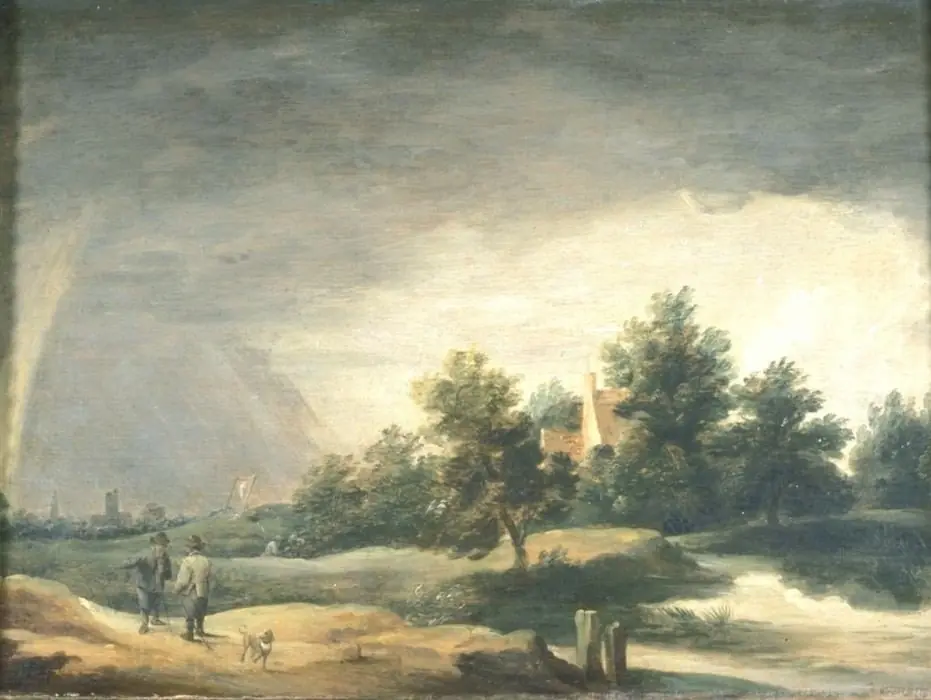 Landscape with Rainbow
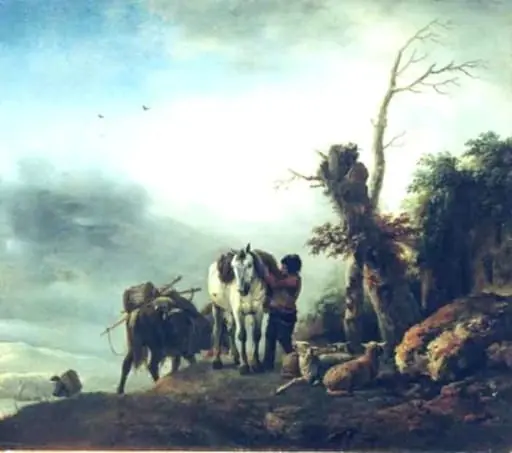 Peisaj cu figuri
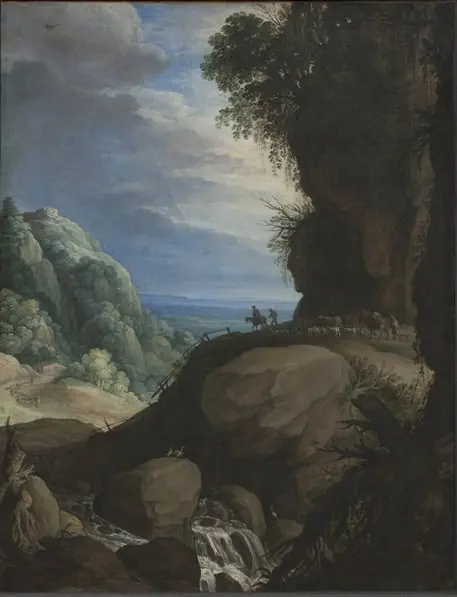 Italian Mountain Landscape with Shepherds
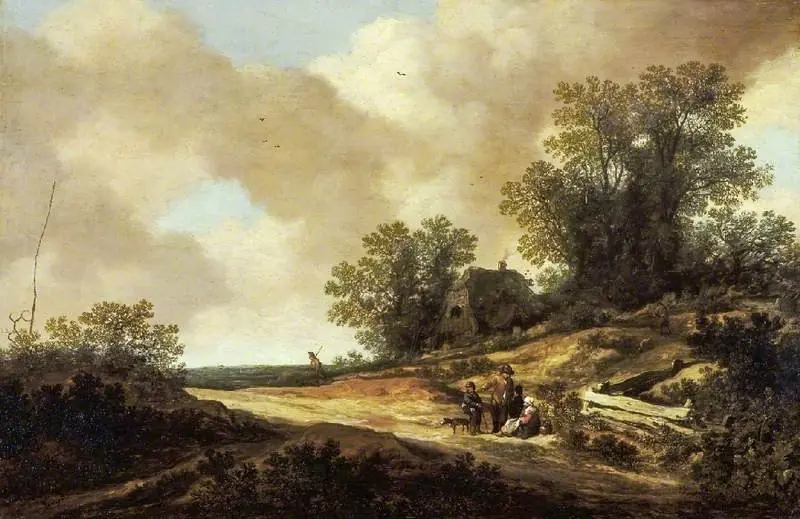 Landscape with figures