Artwork
Untitled
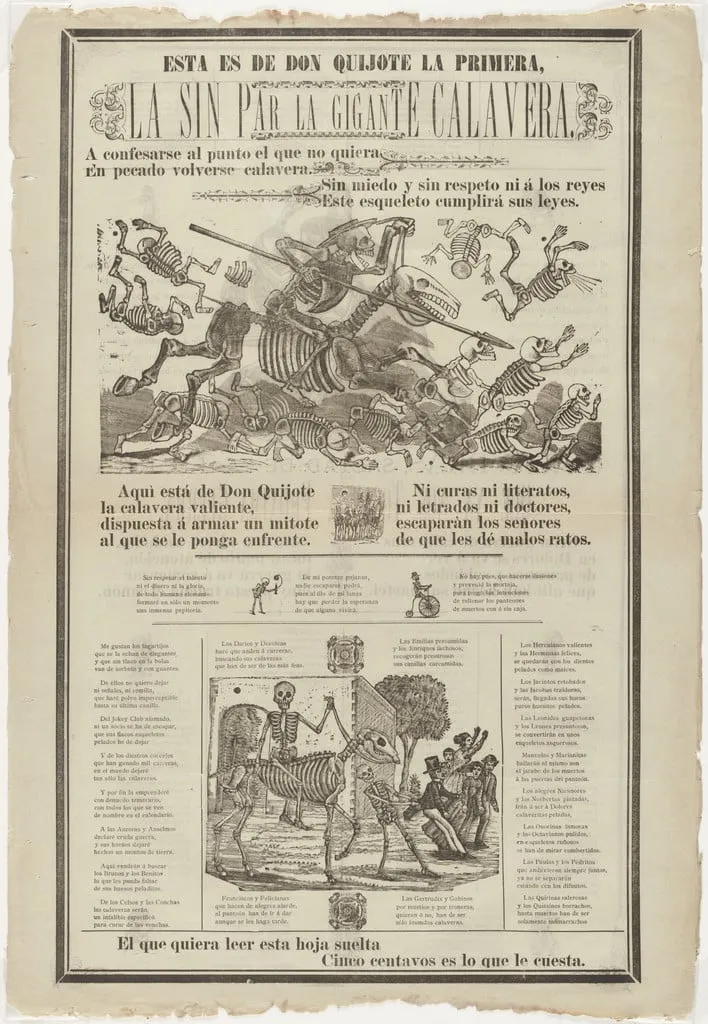
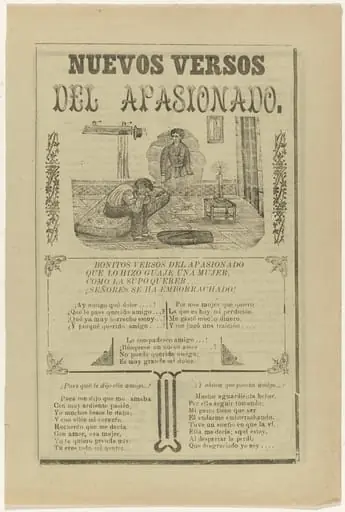
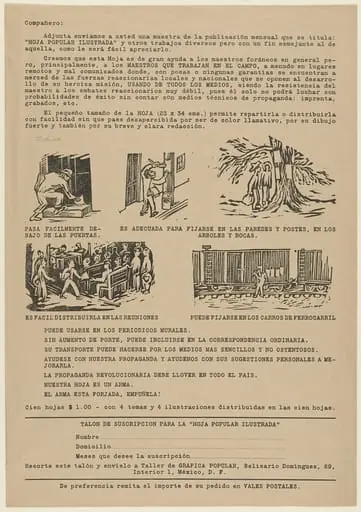
Untitled is an ink print by the Impressionist artist Manuel Manilla José Guadalupe Posada. It dates from 1891 and is held in the collection of the Museum of Modern Art. This broadside print, produced in 1891, combines relief engraving and letterpress to create a satirical poster.
About this work
Overview
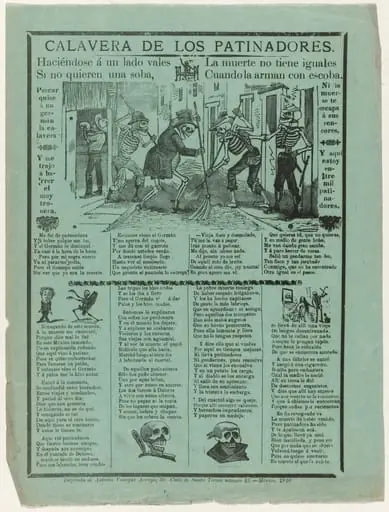
Attributed to José Guadalupe Posada and possibly Manuel Manilla, it features a chaotic scene of skeletal figures engaged in combat on horseback.
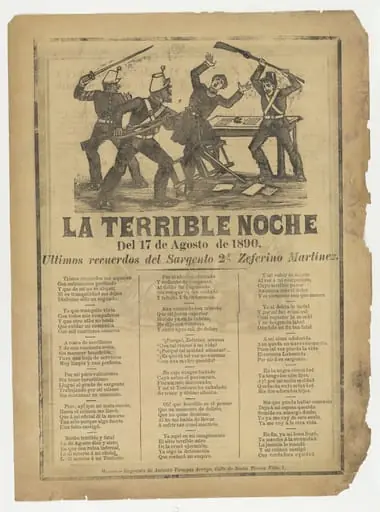
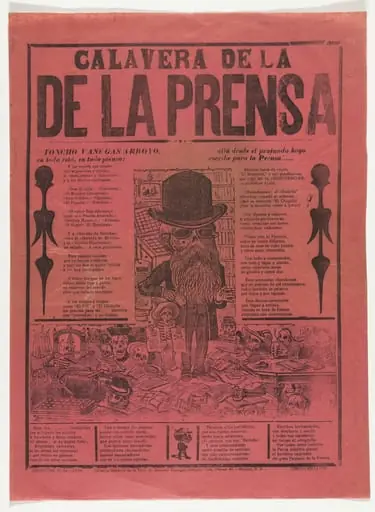
This broadside print, produced in 1891, combines relief engraving and letterpress to create a satirical poster. Attributed to José Guadalupe Posada and possibly Manuel Manilla, it features a chaotic scene of skeletal figures engaged in combat on horseback. The work was designed for mass distribution, typical of popular print culture in late 19th-century Mexico, and reflects the era’s blend of folklore, political commentary, and visual wit.
Subject & Meaning
The image reimagines Don Quixote as a skeleton wearing an oversized helmet bearing his name, engaging in a duel with other spectral riders. This parody transforms Cervantes’ literary figure into a symbol of delusion or futility, possibly critiquing romanticized ideals of honor or authority. The surrounding text, in Spanish, reinforces the satirical tone, blending humor with the inevitability of death—a recurring theme in Posada’s work.
Technique & Style
The composition relies on bold, incised lines and dense cross-hatching to define forms and create contrast. The relief engraving technique allowed for sharp, high-contrast imagery suitable for printing on inexpensive paper. Letterpress text is integrated into the design, framing the central scene with headlines and smaller blocks of narrative, enhancing its poster-like immediacy and readability for a broad, non-elite audience.
History & Provenance
Created during a period of social upheaval in Mexico, the broadside was likely printed for public sale in markets or street stalls. It entered the collection of The Museum of Modern Art in the 20th century, where it was recognized for its role in shaping modern Mexican visual culture. Its survival reflects the growing scholarly interest in vernacular print media from the Porfiriato era.
Context
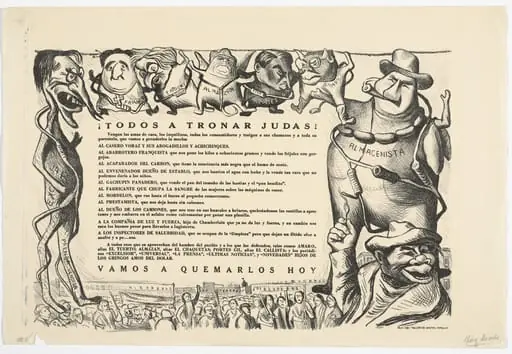
Posada’s work emerged amid a thriving popular press and rising literacy in Mexico. Broadside prints like this one responded to current events, legends, and public sentiment, often using macabre imagery to comment on class, politics, or mortality. The fusion of literary reference with folk motifs made such prints accessible and resonant across social strata, bridging oral tradition and print culture.
Legacy
This print exemplifies how Posada’s imagery influenced later Mexican artists, including Diego Rivera and Frida Kahlo, who drew on his visual language to explore national identity. The skeletal figures and satirical tone became foundational to the iconography of Día de los Muertos and modern political art. Its enduring presence in museum collections underscores its significance in the evolution of print as social critique.
Artist & collection
Artist
Manuel Manilla José Guadalupe Posada
Manuel Manilla José Guadalupe Posada (1852–1913) was a Mexican artist.