Artwork
Untitled
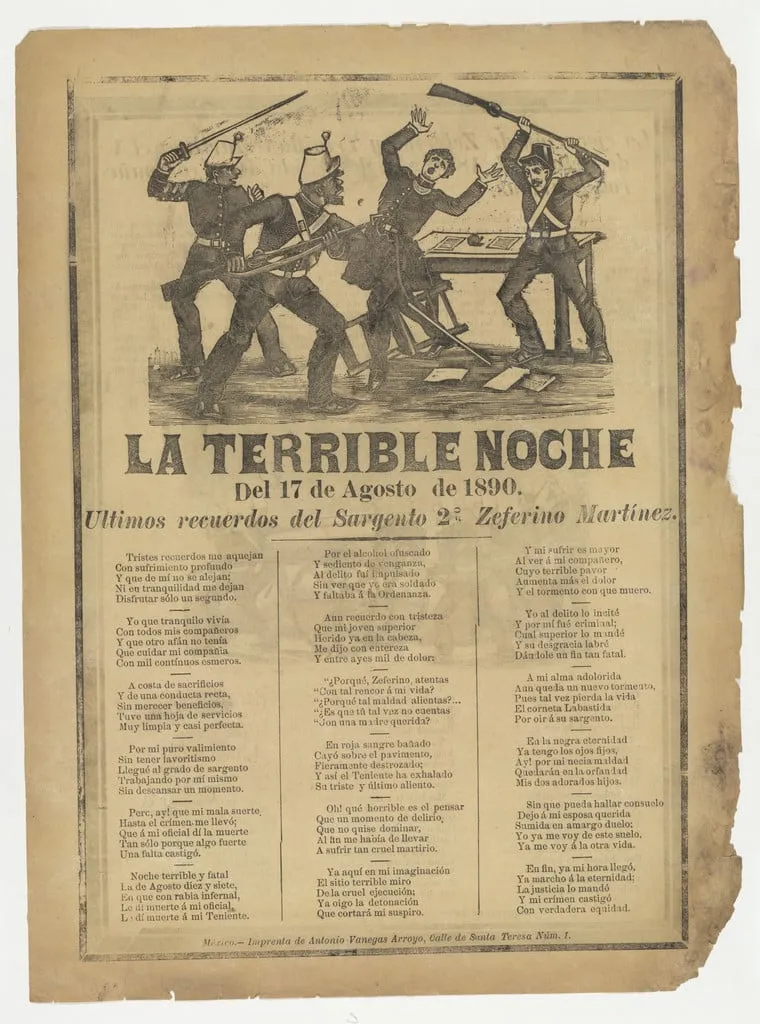
Untitled is a print by the Impressionist artist José Guadalupe Posada. It dates from 1891 and is held in the collection of the Museum of Modern Art.
About this work
Overview
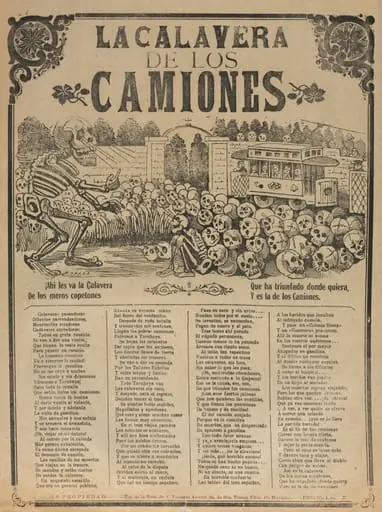
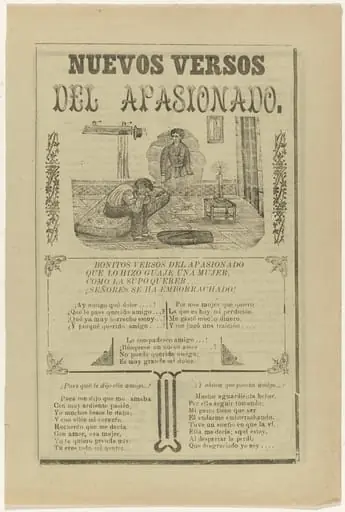
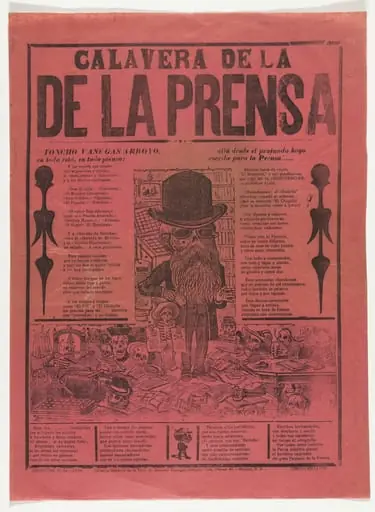
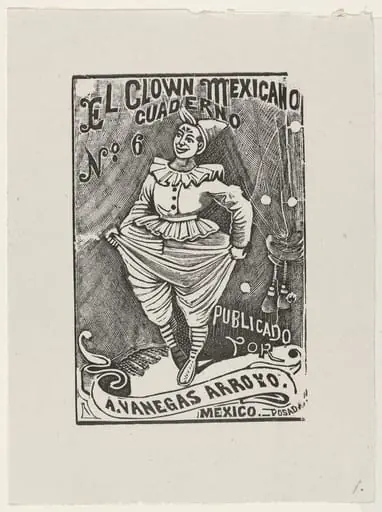
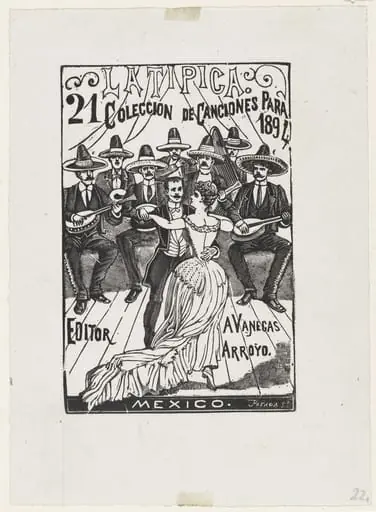
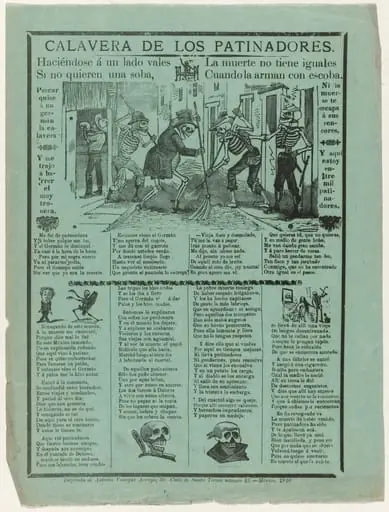
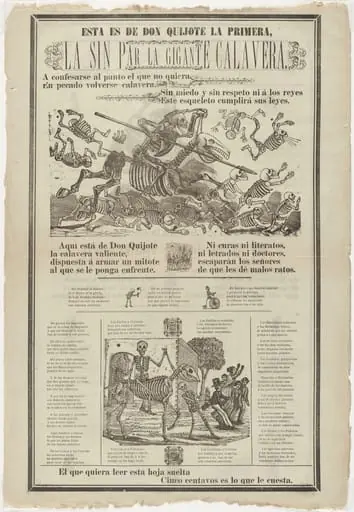
Created in 1891 by José Guadalupe Posada, this double-sided broadside combines relief printing and letterpress techniques. Produced as an affordable, mass-distributed image, it was intended for public consumption rather than gallery display. Sold on city streets, it functioned as ephemeral visual commentary, reflecting the everyday concerns and dark humor of late 19th-century Mexican society.
Subject & Meaning
The image depicts a skeletal woman adorned with an elaborate hat, holding a flickering candle amid what appears to be a turbulent wind. Rather than evoking fear, the figure satirizes social pretension, suggesting that death equalizes all—regardless of wealth or fashion. The candle, fragile against the storm, underscores the fleeting nature of status and material display.
Technique & Style
Posada used relief printing for the bold, graphic skeleton and letterpress for accompanying text, allowing rapid, low-cost reproduction. The stark black-and-white contrast enhances readability and emotional impact. Lines are sharp and economical, prioritizing clarity and immediate recognition over detail, aligning with the print’s function as street-level communication.
History & Provenance
The work was originally one of many single-sheet prints circulated widely in Mexico during the Porfiriato. It entered The Museum of Modern Art’s collection as part of a broader effort to recognize Posada’s role in shaping modern visual culture. Its survival is unusual, as most such prints were discarded after brief public use.
Context
Posada’s prints responded to the political and social tensions of his time, using calaveras—skeleton figures—to critique class inequality and the excesses of the elite. These images were part of a tradition of popular printmaking that blended folklore, satire, and current events, serving as both entertainment and quiet protest.
Legacy
Though created for temporary use, Posada’s broadsides gained renewed attention in the 20th century for their influence on Mexican muralists and modern graphic art. The skeleton motif, stripped of its original context, became a symbol of national identity, later absorbed into Día de los Muertos iconography and global visual language.
Artist & collection