Artwork
Landscape with the Rape of Hylas
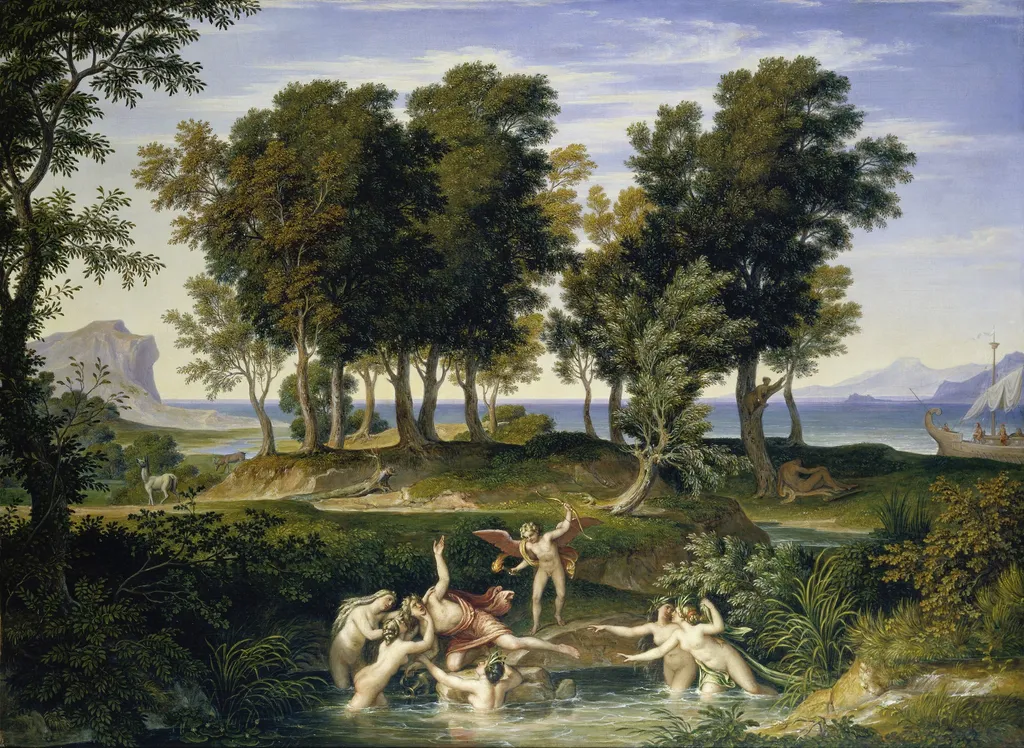
Landscape with the Rape of Hylas is an oil painting by Joseph Anton Koch. It dates from 1832 and is held in the collection of the Städel Museum.
About this work
Overview
Joseph Anton Koch painted *Landscape with the Rape of Hylas* in 1832, blending mythological narrative with detailed natural scenery.
Joseph Anton Koch painted *Landscape with the Rape of Hylas* in 1832, blending mythological narrative with detailed natural scenery. Though trained in Neoclassical traditions, his later work reflects a Romantic sensitivity to atmosphere and emotion. The painting is part of the Städel Museum’s collection in Frankfurt, where it exemplifies Koch’s mature style—combining classical subject matter with immersive, atmospheric landscapes.
Subject & Meaning
The scene illustrates the myth of Hylas, a young companion of Heracles, who is abducted by water nymphs while drawing water from a spring. Koch captures the moment of sudden violence amid tranquil nature, contrasting the calm surroundings with the struggle of the figures. The narrative draws from ancient sources, but Koch emphasizes the emotional weight of the event rather than its heroic context.
Technique & Style
Koch employed layered brushwork and subtle chiaroscuro to model forms within a deep, receding landscape. The figures are rendered with careful attention to anatomy and movement, yet they remain integrated into the environment rather than dominating it. Cool greens and blues dominate the palette, enhancing the sense of spatial depth, while soft atmospheric perspective blurs the distant mountains into the sky.
History & Provenance
The painting was completed late in Koch’s career, after he had settled in Rome and become known for his idealized landscapes. It entered the Städel Museum’s collection in the 19th century, likely through acquisitions focused on German and Austrian artists of the period. Its preservation reflects its recognition as a significant example of early 19th-century narrative landscape painting.
Context
In the 1830s, European artists increasingly turned to mythological themes as a means of exploring human emotion within natural settings. Koch’s work responded to both Neoclassical ideals of form and Romanticism’s fascination with nature’s power. His landscapes, though rooted in classical stories, conveyed a mood of solitude and inevitability that resonated with contemporary sensibilities.
Legacy
Koch’s synthesis of classical subject matter and atmospheric landscape influenced later German Romantic painters. *Landscape with the Rape of Hylas* remains a key example of how myth could be rendered not as grand spectacle, but as an intimate, psychologically charged moment embedded in nature. It continues to be studied for its balance between narrative and environment.
Own this work as a print
Artist & collection
Artist
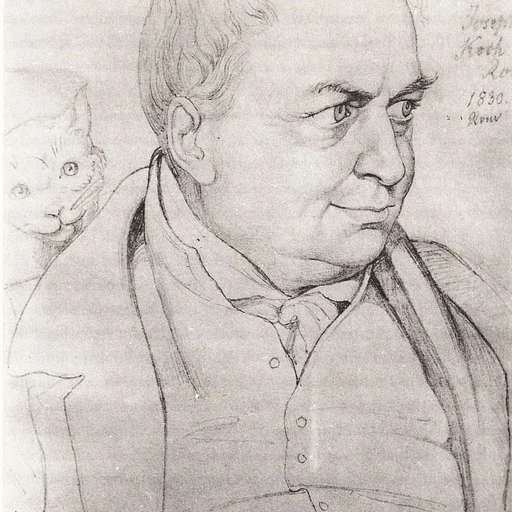
Joseph Anton Koch (27 July 1768 – 12 January 1839) was an Austrian painter of Neoclassicism and later the German Romantic movement; he is perhaps the most significant neoclassical landscape painter.

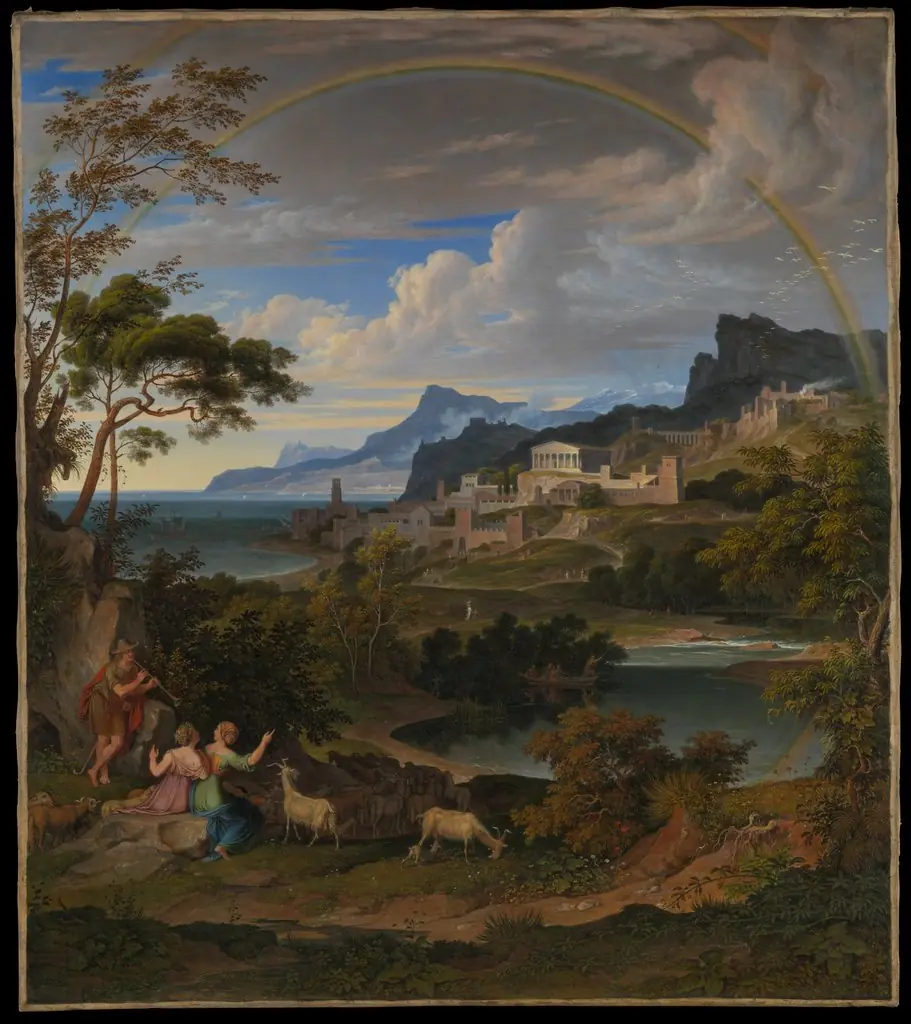 Heroic Landscape with Rainbow
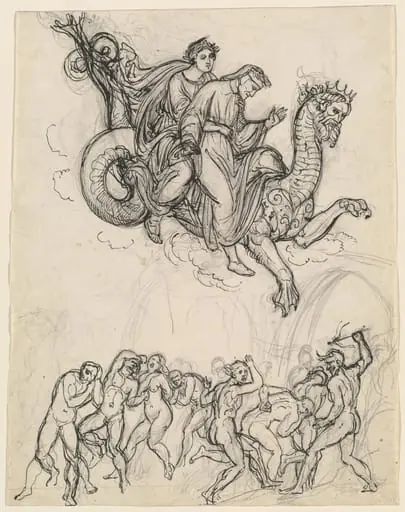 Dante and Virgil Riding on the Back of Geryon
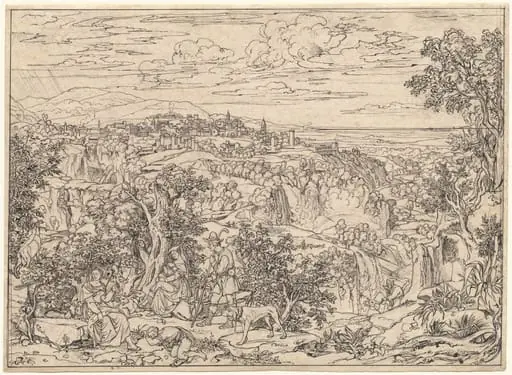 Tivoli and the Waterfalls with Shepherd Families
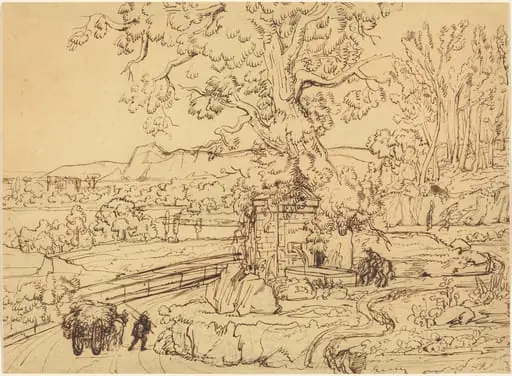 The Roman Campagna with an Ancient Fountain
 Landscape with Noah, Offering a Sacrifice of Gratitude
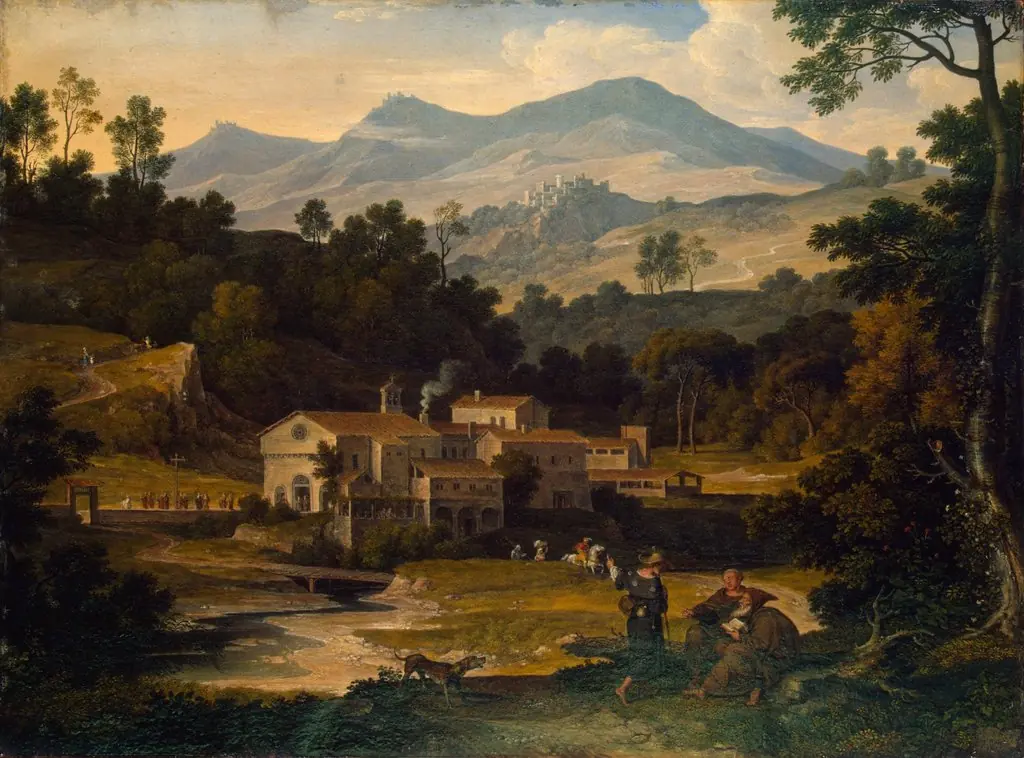 Monastery of San Francesco di Civitella in the Sabine Mountains
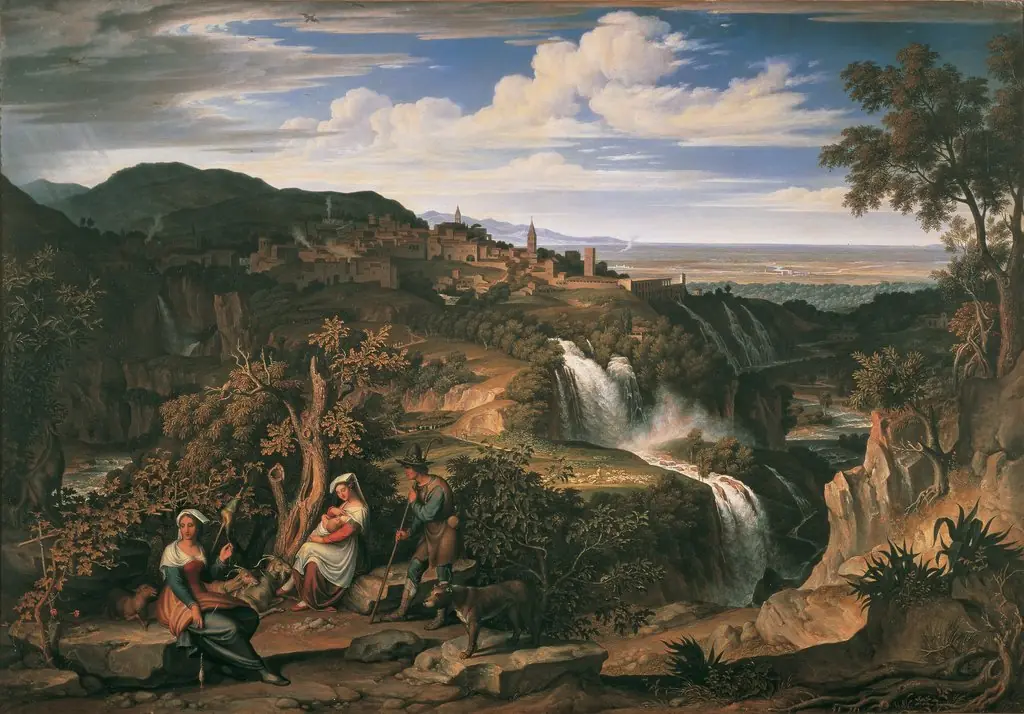 The Waterfalls of Tivoli near Rome
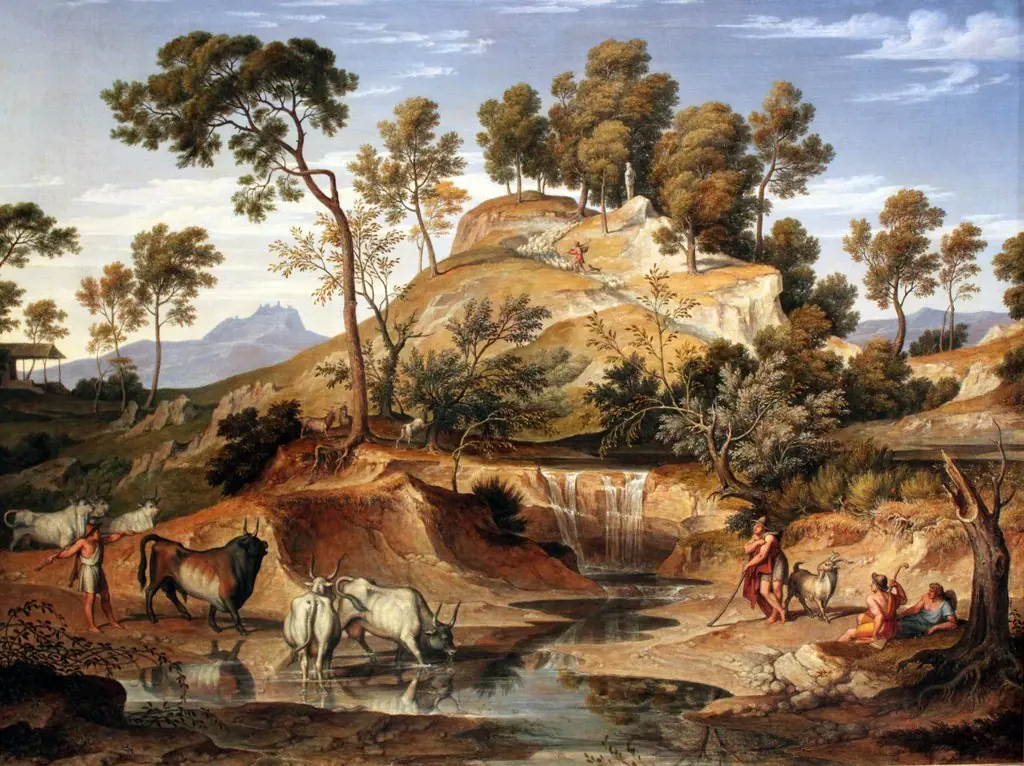 Serpentara Landscape with Herdsmen and cows at a Spring
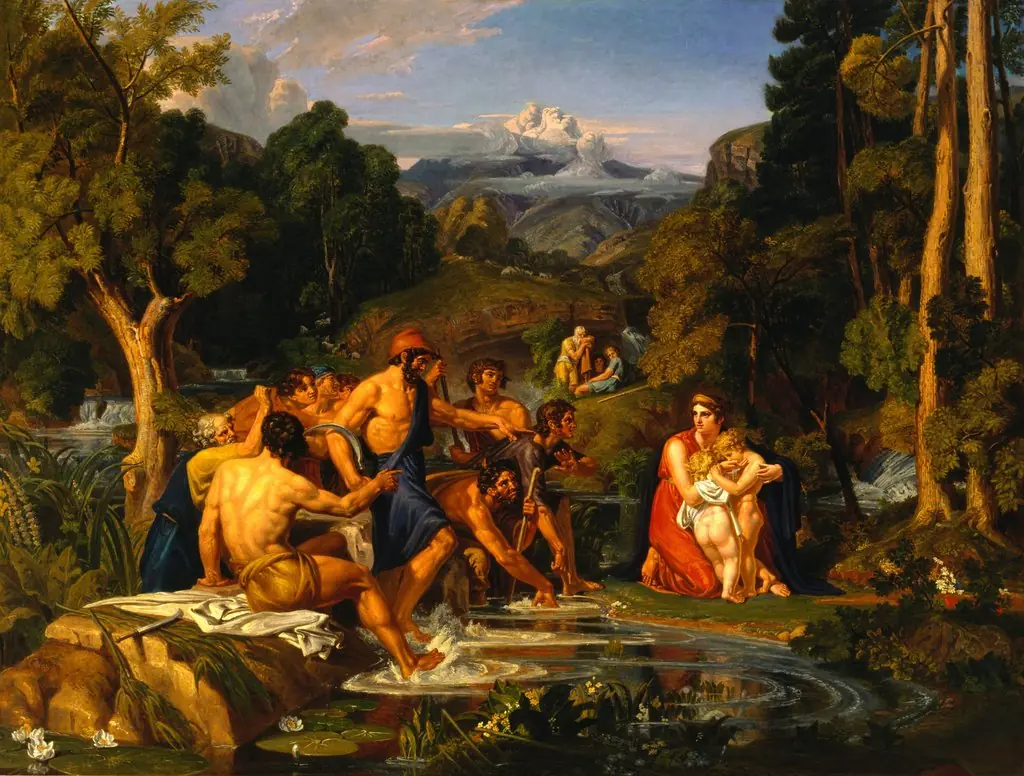 Latona and the Lycian Peasants
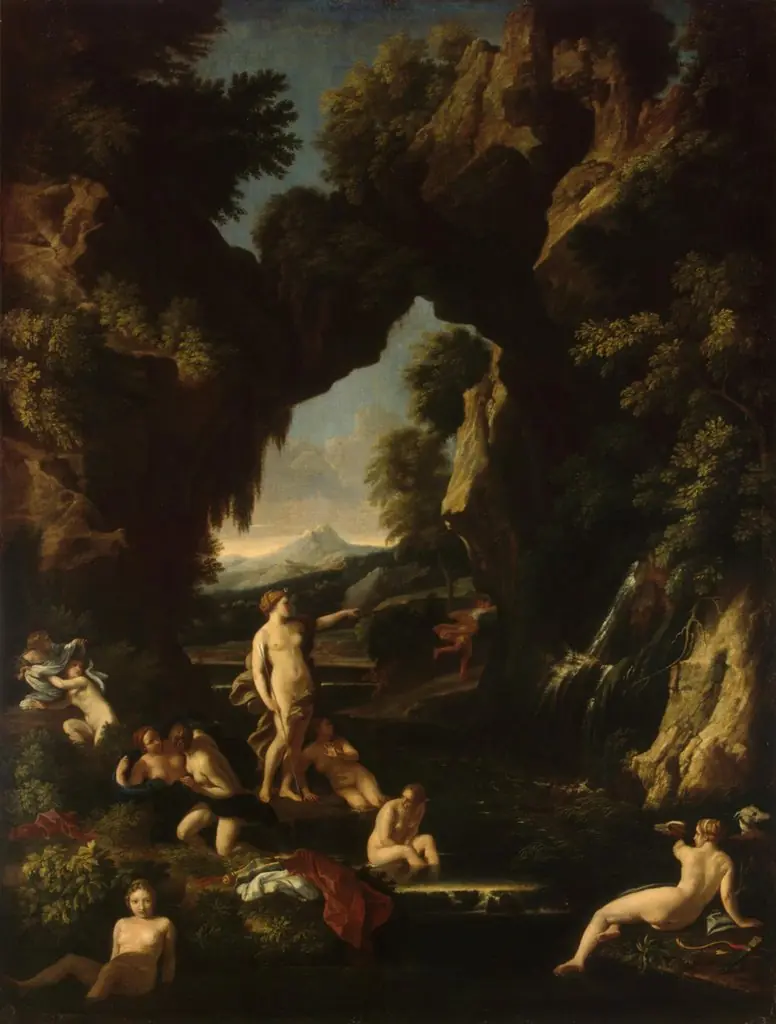 Landscape with Diana and Actaeon
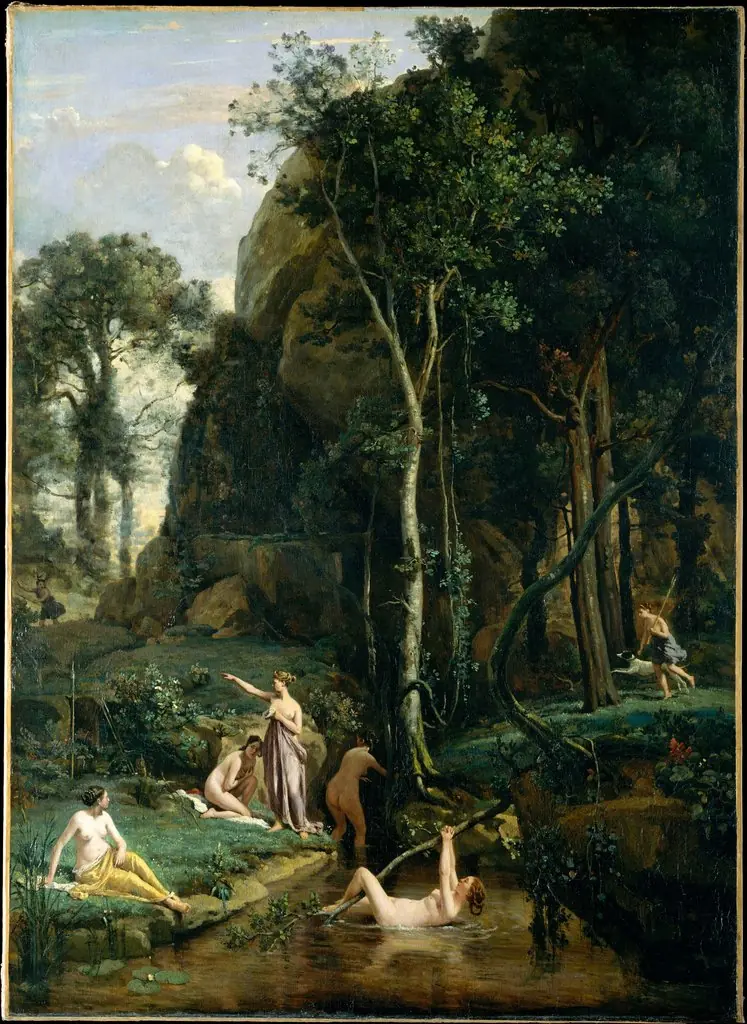 Diana and Actaeon (Diana Surprised in Her Bath)
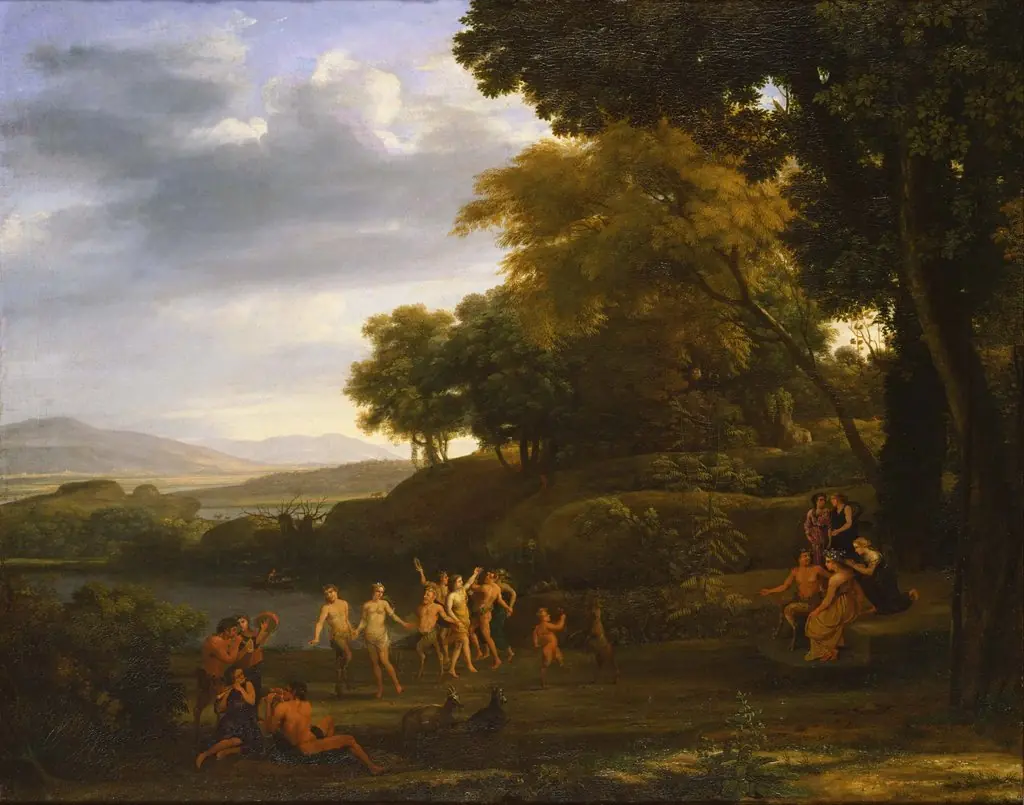 Landscape with Dancing Satyrs and Nymphs
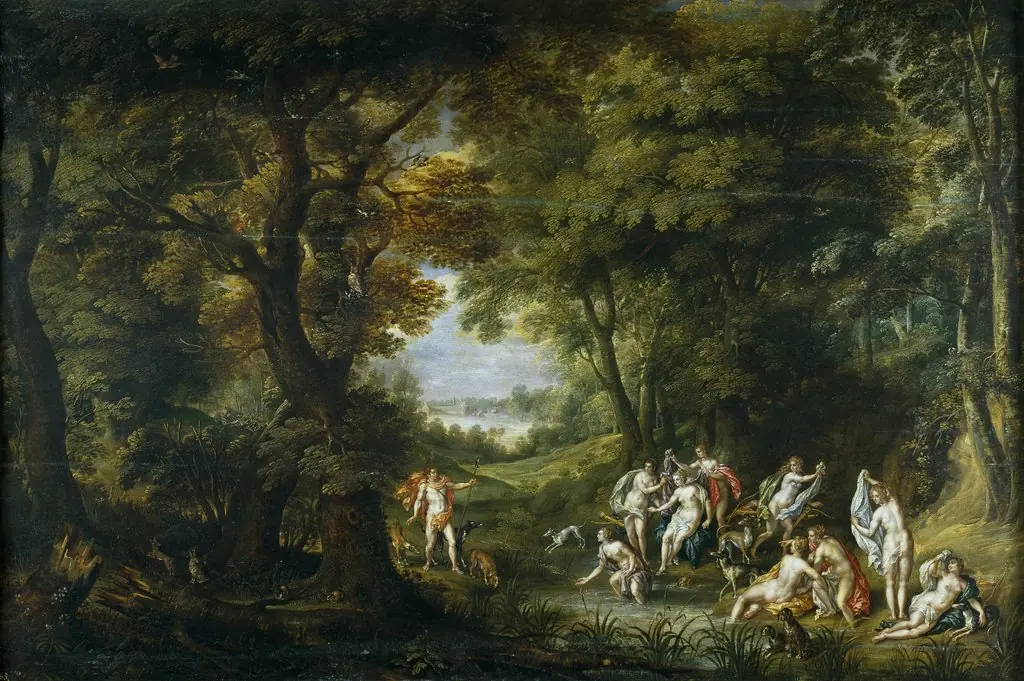 Landscape with Diana and Acteon
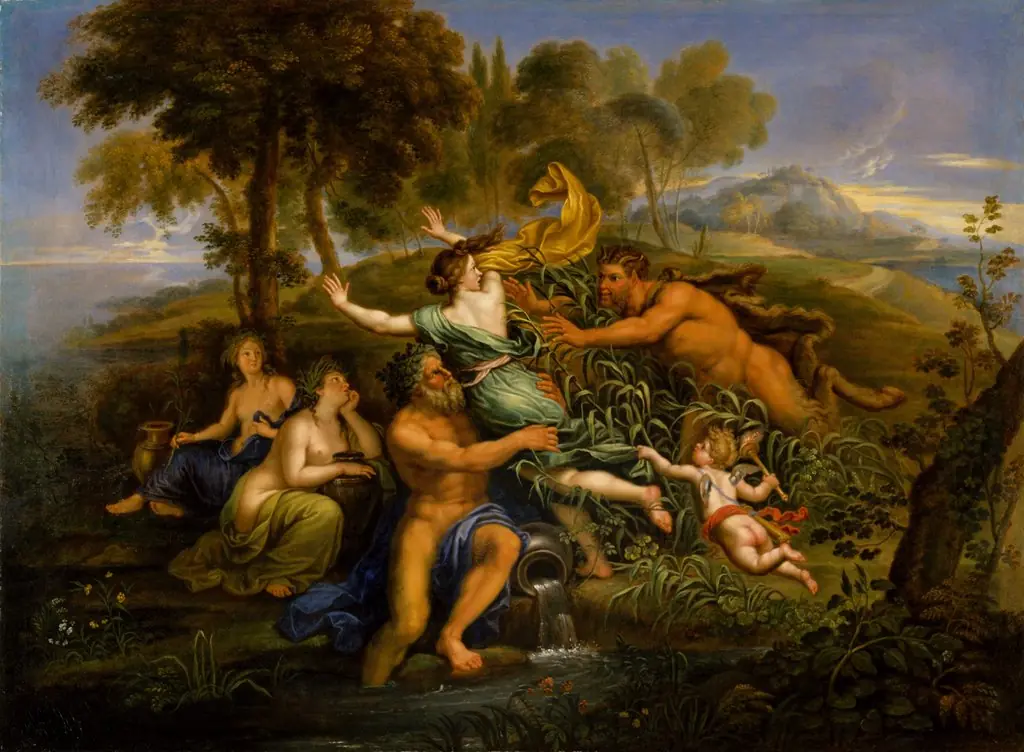 Pan and Syrinx
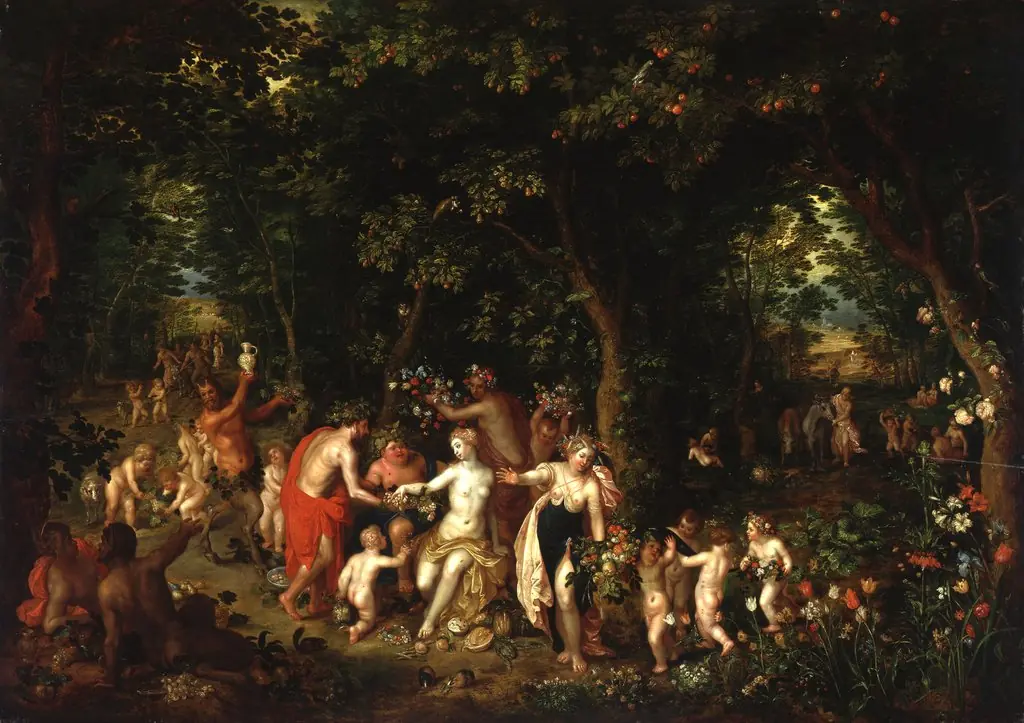 The Feast of Bacchus
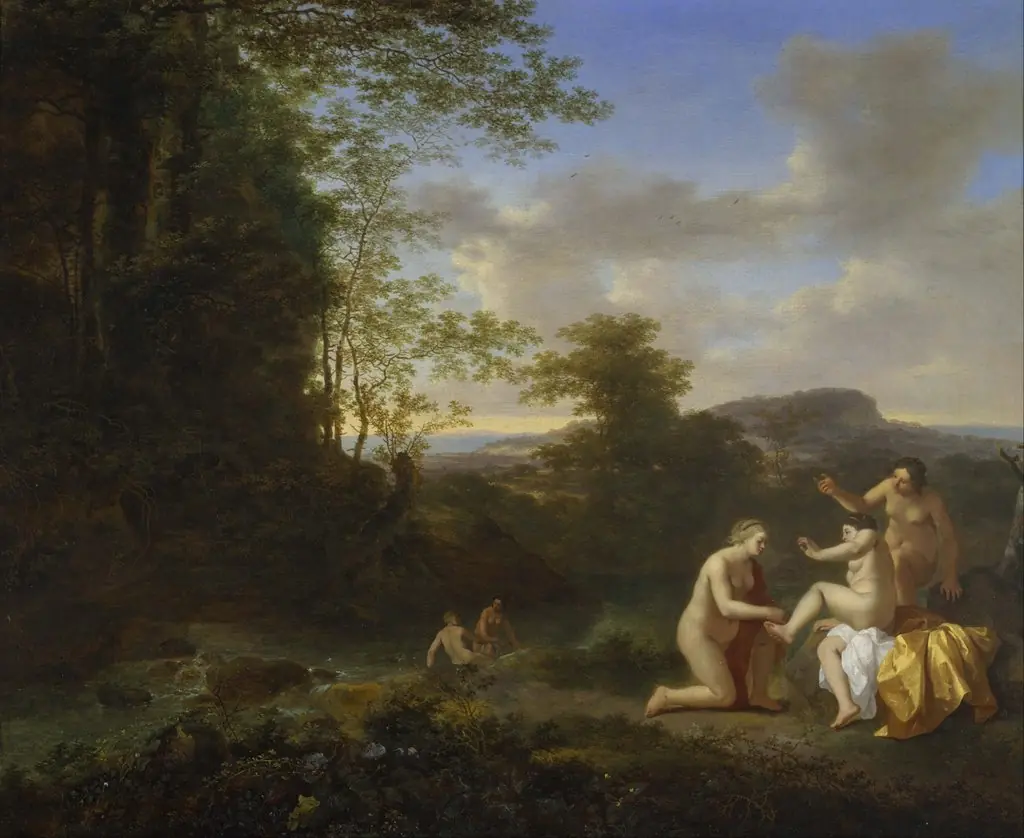 Landscape with Nymphs
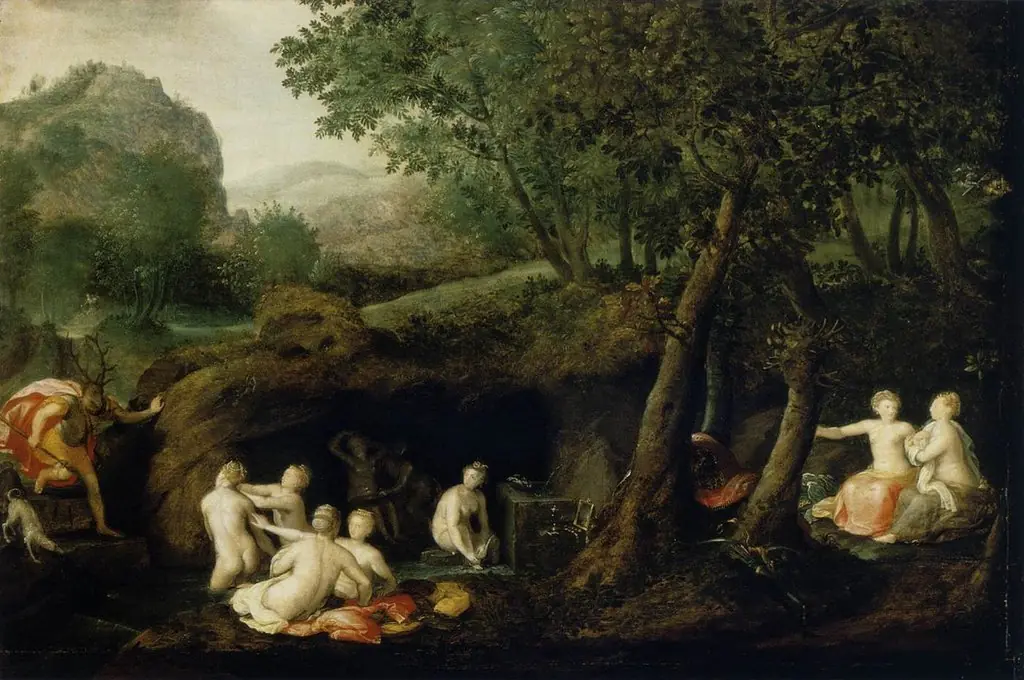 Diana Turns Actaeon into a Stag
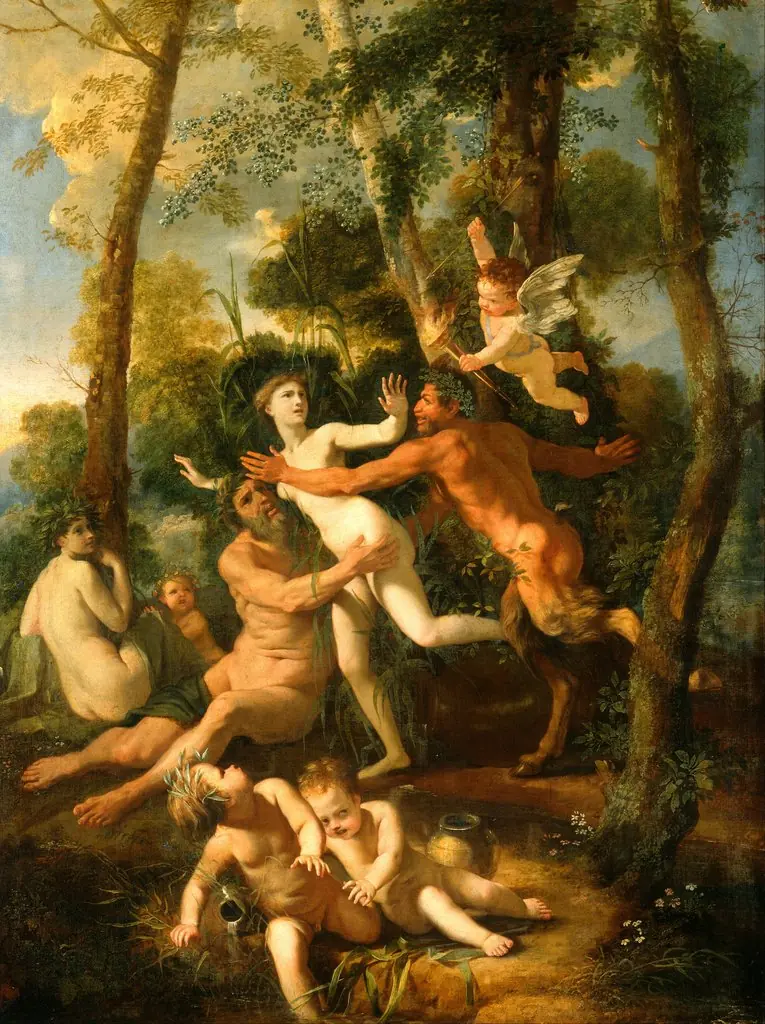 Pan and Syrinx
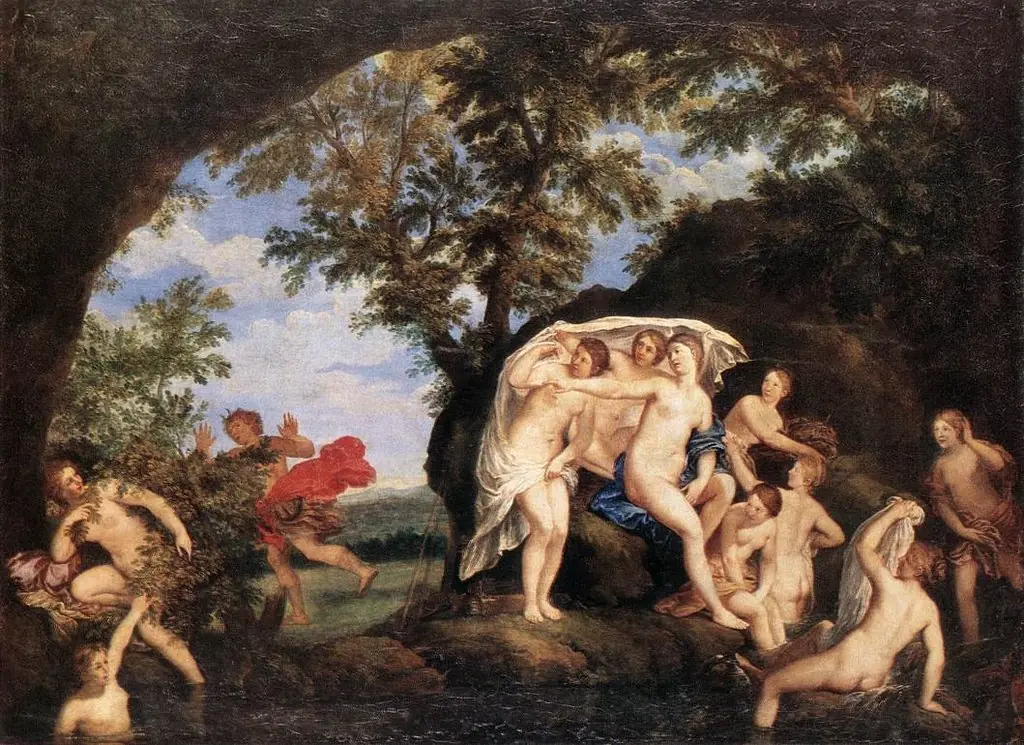 Diana and Actaeon with nine nymphs
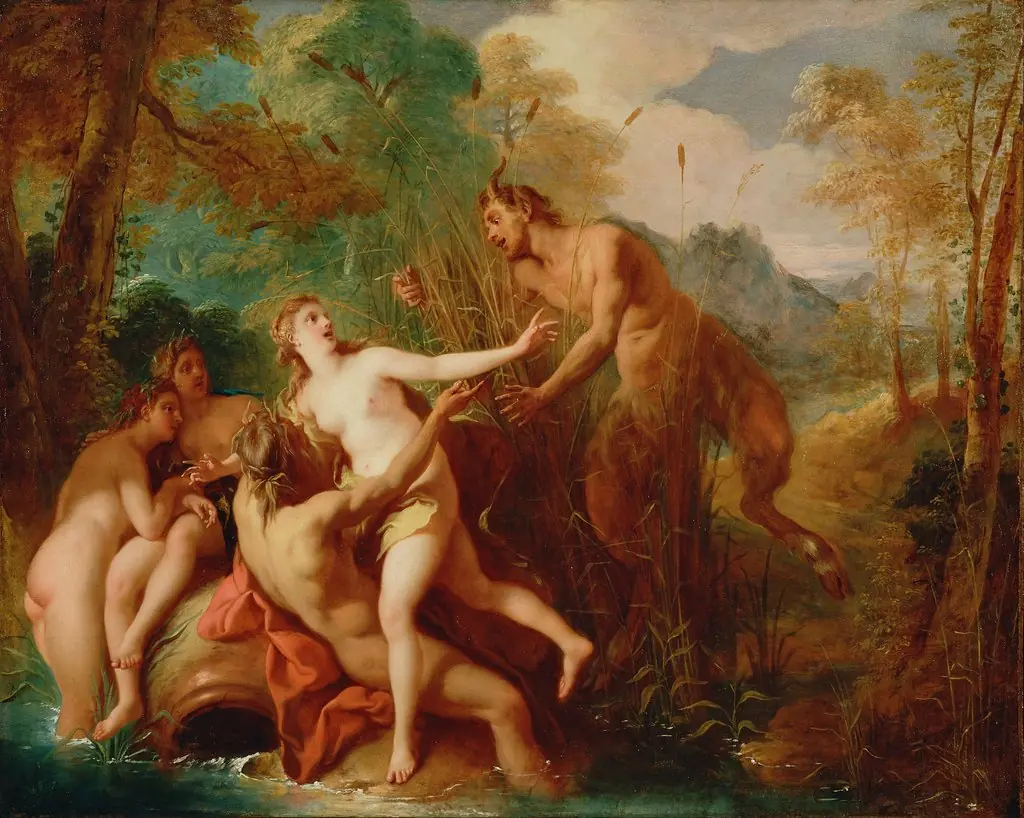 Pan and Syrinx