Artwork
Landscape with Noah, Offering a Sacrifice of Gratitude
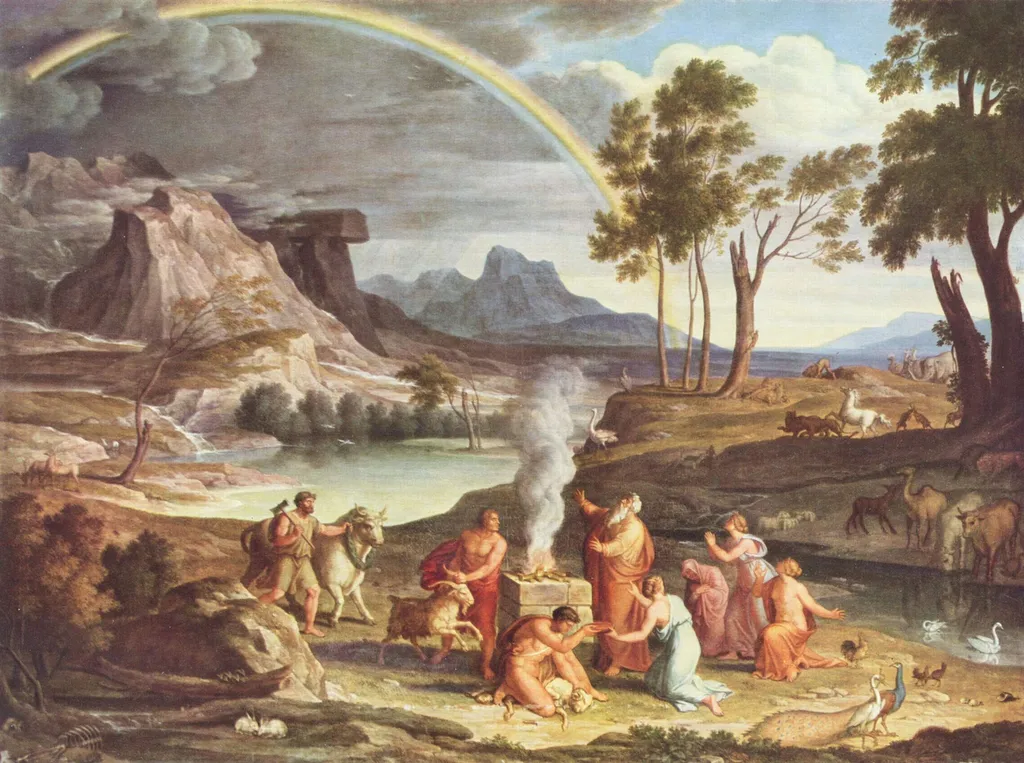
Landscape with Noah, Offering a Sacrifice of Gratitude is an oil painting by the Neoclassicist artist Joseph Anton Koch. It dates from 1803 and is held in the collection of the Städel Museum.
About this work
Overview
Painted in 1803 by Austrian artist Joseph Anton Koch, this oil on canvas work depicts a biblical moment following the Great Flood.
Painted in 1803 by Austrian artist Joseph Anton Koch, this oil on canvas work depicts a biblical moment following the Great Flood. It belongs to the neoclassical landscape tradition, blending naturalistic scenery with symbolic narrative. The painting is part of the Städel Museum’s collection and reflects Koch’s role as a key figure in elevating landscape painting beyond mere backdrop to a vehicle for moral and spiritual reflection.
Subject & Meaning
The scene illustrates Noah and his wife offering a sacrifice of thanksgiving after the floodwaters recede. A goat is held near a small fire, while the woman kneels in reverence. The rainbow arches above, signaling divine covenant. Surrounding animals—deer, goats, birds—suggest renewed life and harmony. The composition conveys quiet gratitude rather than grandeur, emphasizing human humility before nature and divine promise.
Technique & Style
Koch employs muted earth tones—browns, olives, and soft blues—to unify the landscape. Brushwork is precise yet unobtrusive, allowing the natural forms to dominate. Figures are small but carefully placed to guide the viewer’s eye toward the rainbow and the sacrificial act. The balance between detailed foreground elements and atmospheric distance reflects neoclassical ideals of order and harmony within nature.
History & Provenance
Created in 1803, the painting entered the Städel Museum’s collection in the 19th century and has remained there since. Koch, active in Rome during this period, was influenced by classical antiquity and the works of Poussin. This piece emerged from his mature phase, when he fused classical composition with Romantic sensibilities, helping bridge two artistic movements without fully aligning with either.
Context
In early 19th-century Europe, biblical themes in landscape painting were used to explore moral and spiritual ideals amid political upheaval. Koch’s work responded to a growing interest in nature as a site of divine presence, contrasting with Enlightenment rationalism. His approach resonated with contemporaries seeking emotional depth in scenery, laying groundwork for later German Romantic landscape traditions.
Legacy
Koch’s integration of narrative and landscape influenced subsequent generations of German painters. While not widely known today, his work contributed to the legitimization of landscape as a serious genre capable of conveying theological and philosophical ideas. This painting remains a quiet example of how neoclassical discipline could serve contemplative, human-centered storytelling.
Own this work as a print
Artist & collection
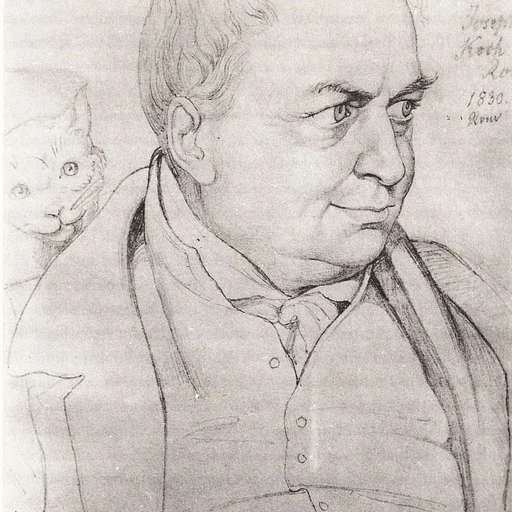
Artist
Joseph Anton Koch (27 July 1768 – 12 January 1839) was an Austrian painter of Neoclassicism and later the German Romantic movement; he is perhaps the most significant neoclassical landscape painter.

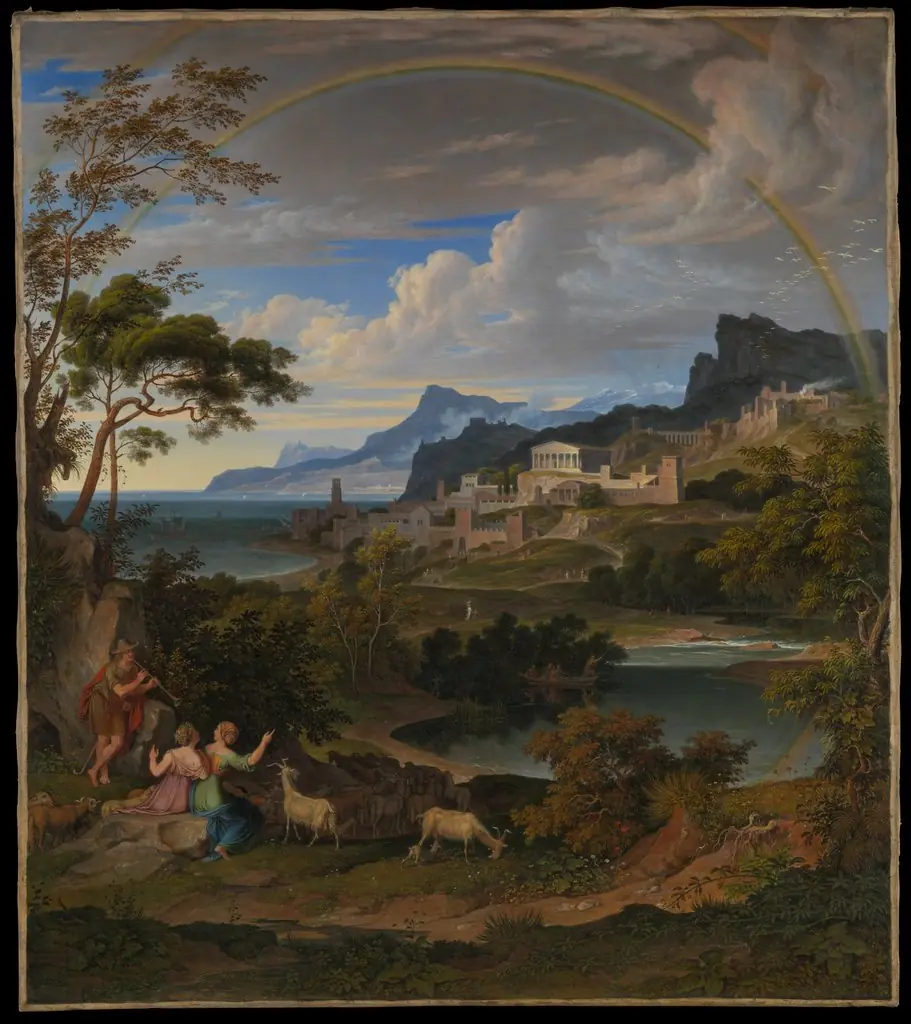 Heroic Landscape with Rainbow
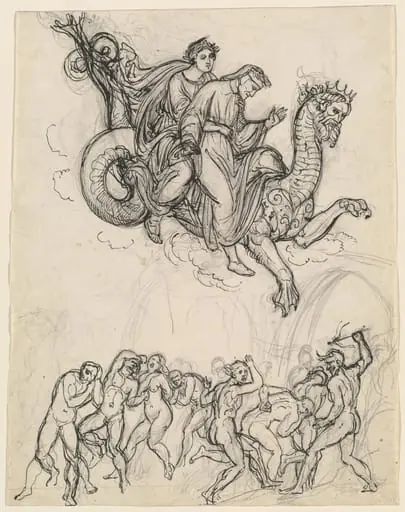 Dante and Virgil Riding on the Back of Geryon
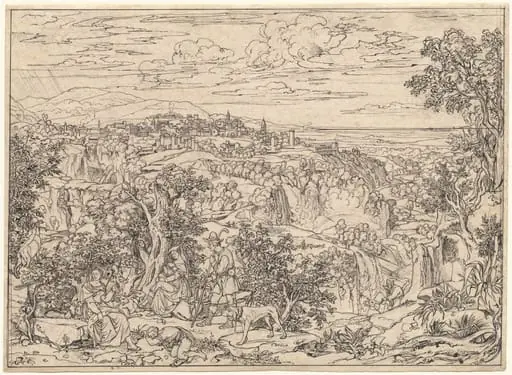 Tivoli and the Waterfalls with Shepherd Families
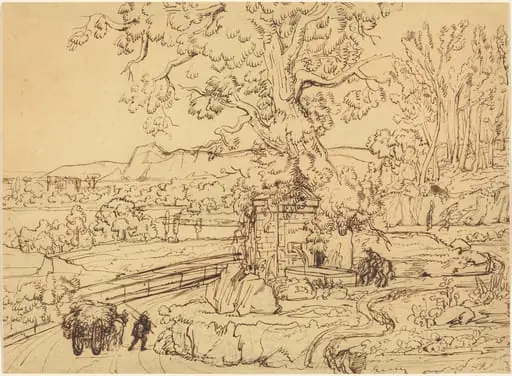 The Roman Campagna with an Ancient Fountain
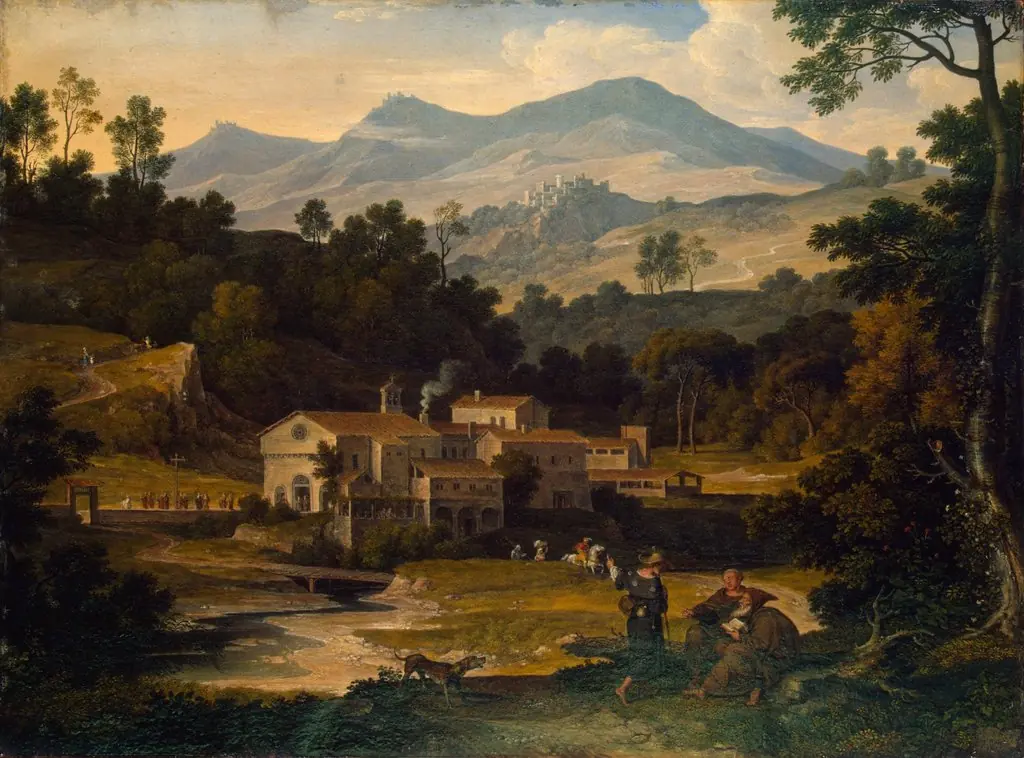 Monastery of San Francesco di Civitella in the Sabine Mountains
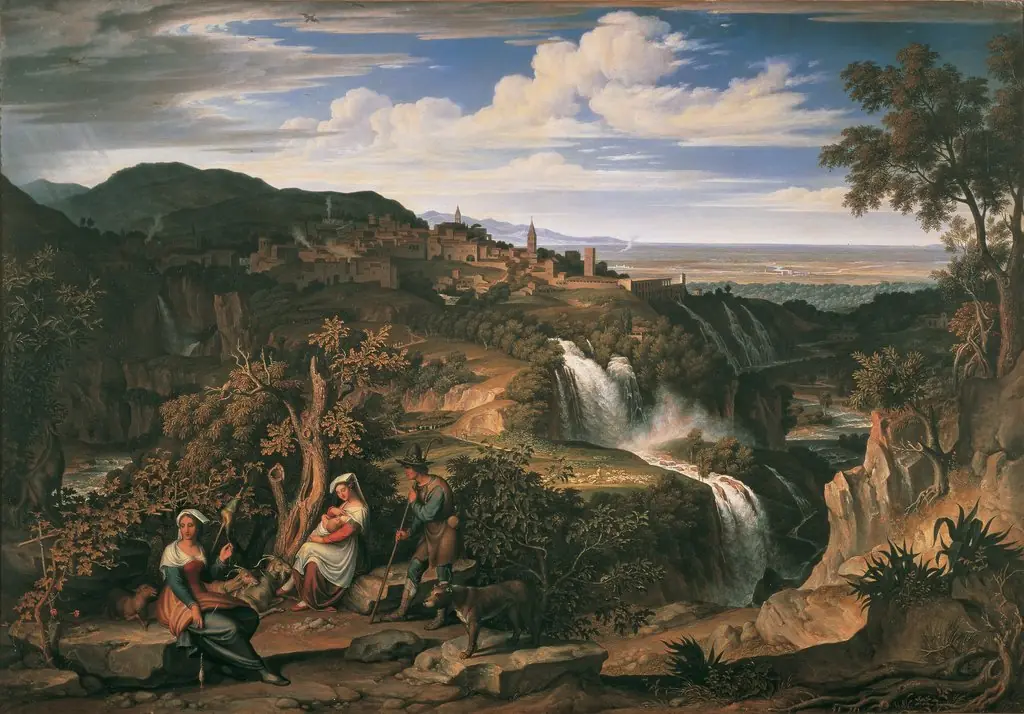 The Waterfalls of Tivoli near Rome
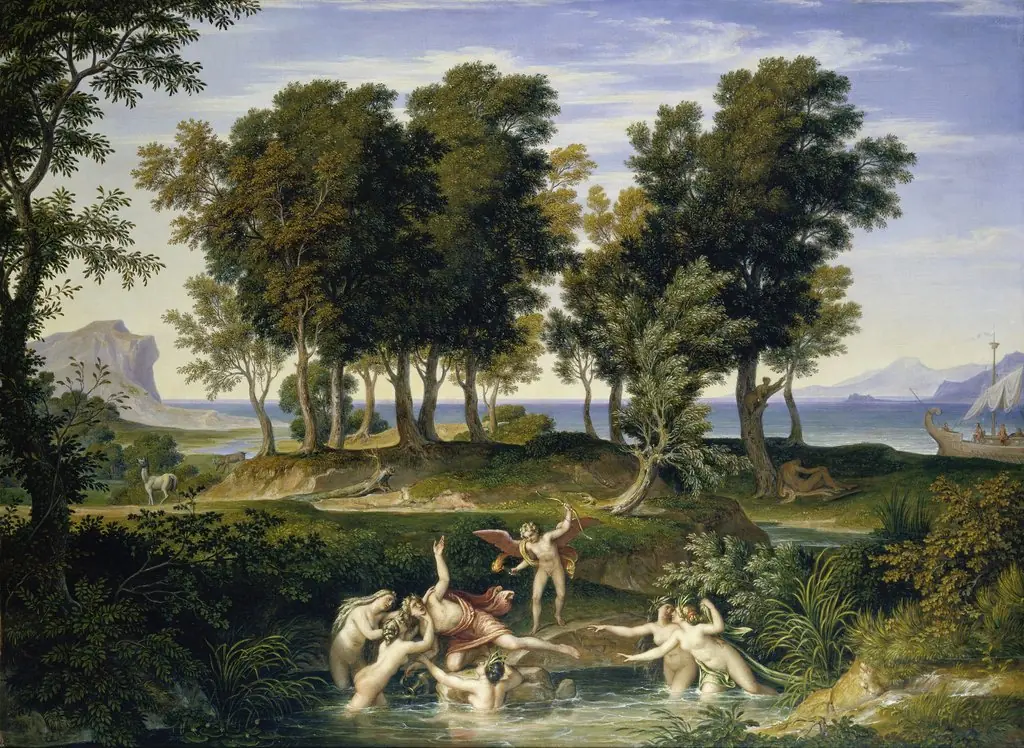 Landscape with the Rape of Hylas
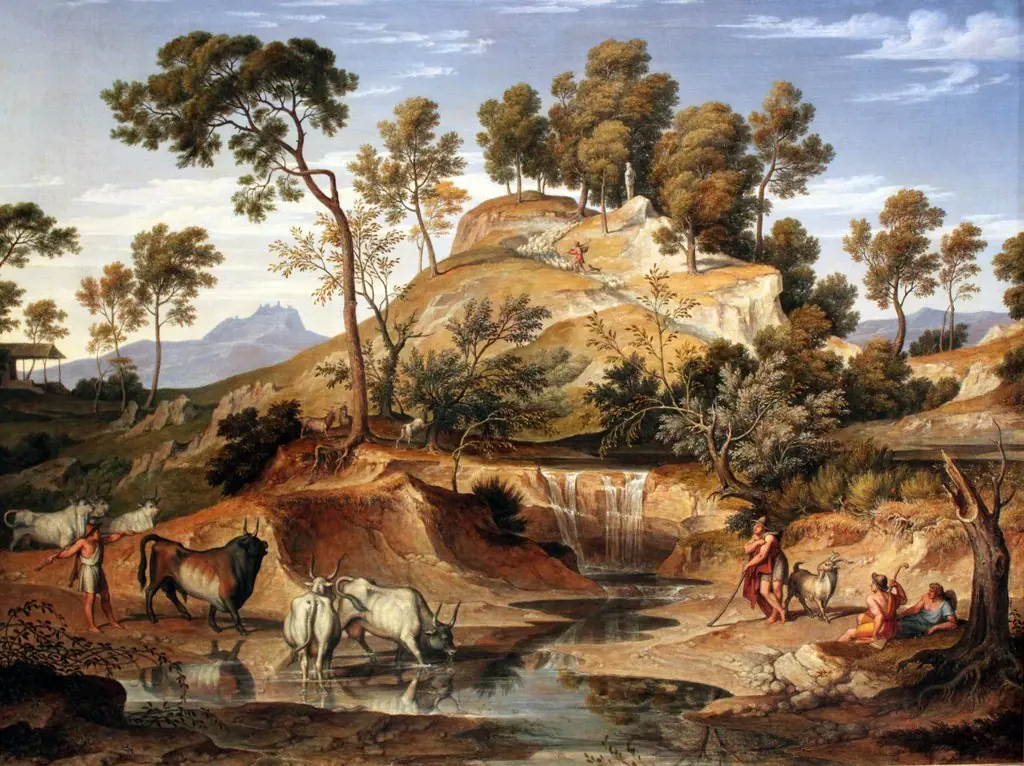 Serpentara Landscape with Herdsmen and cows at a Spring
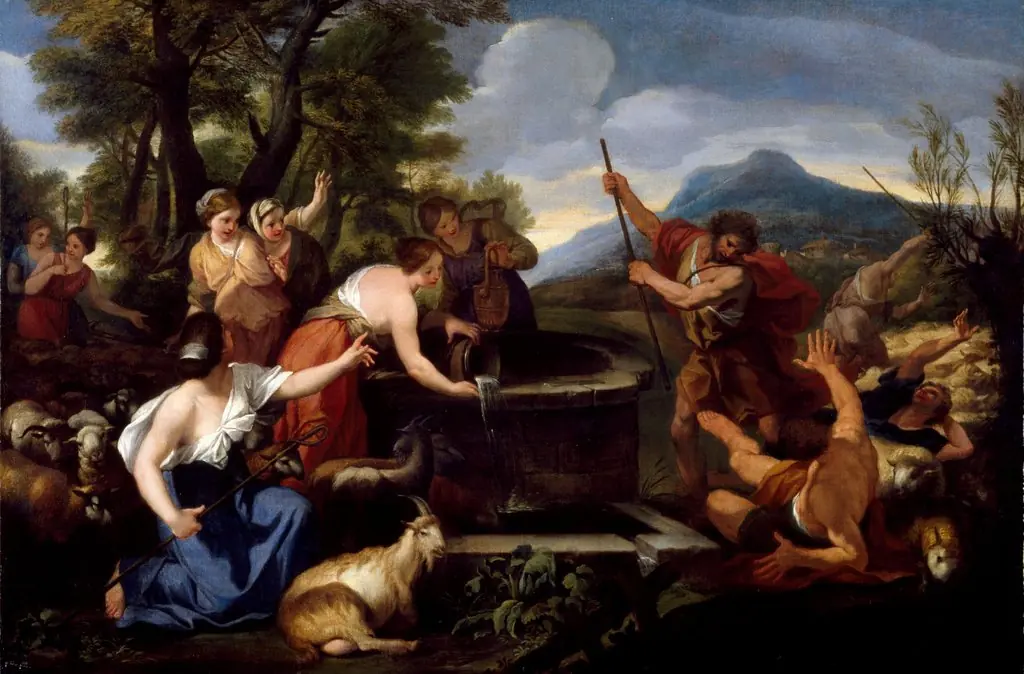 Moses and the Daughters of Jethro
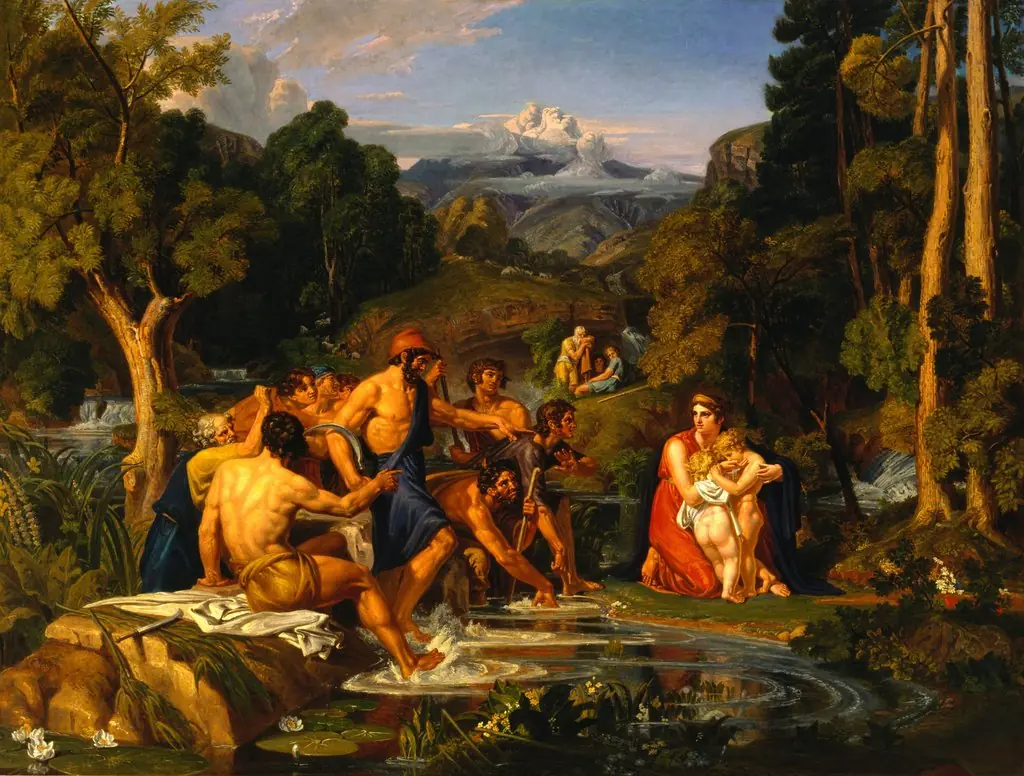 Latona and the Lycian Peasants
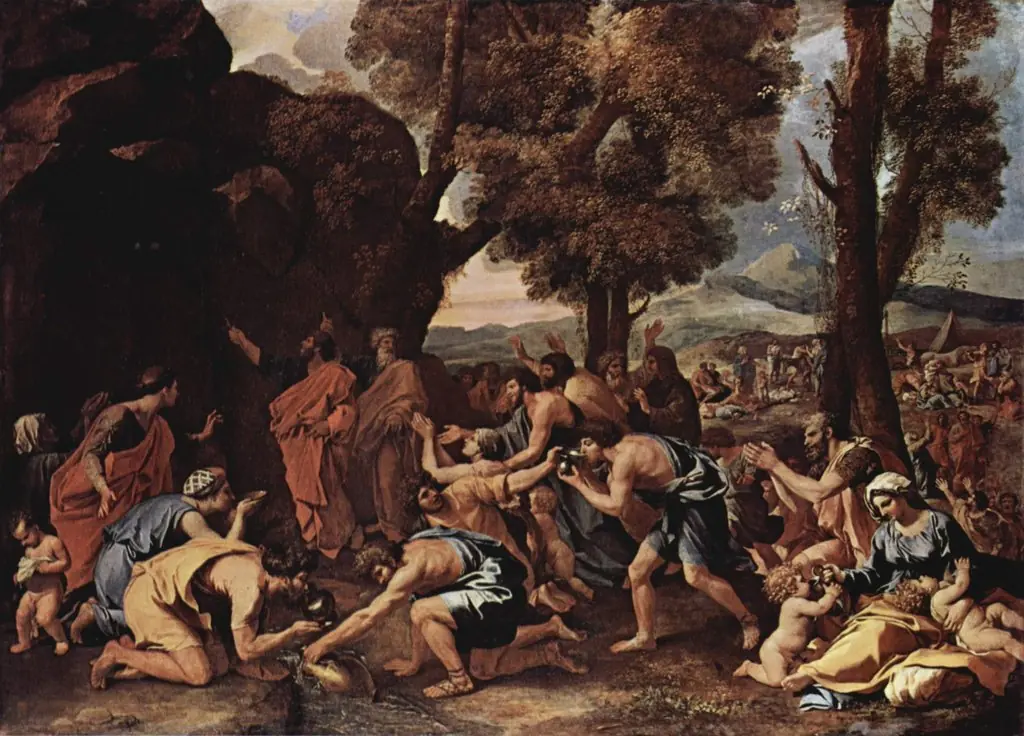 Moses Striking the Rock
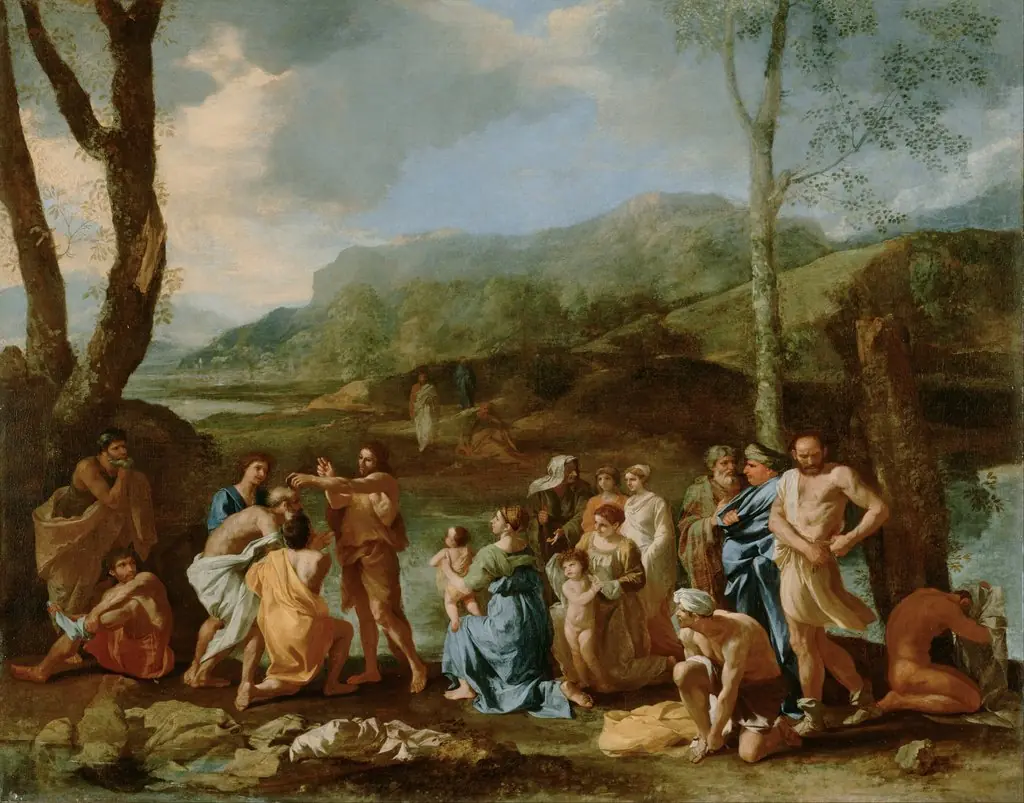 Saint John Baptizing in the River Jordan
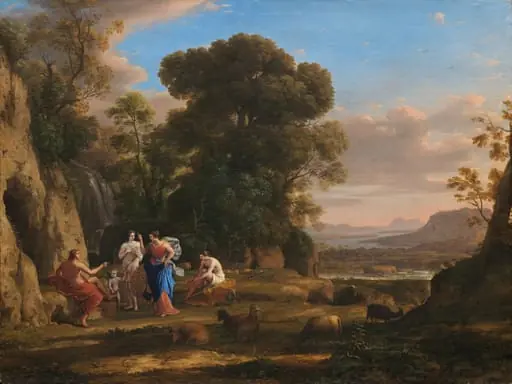 The Judgment of Paris
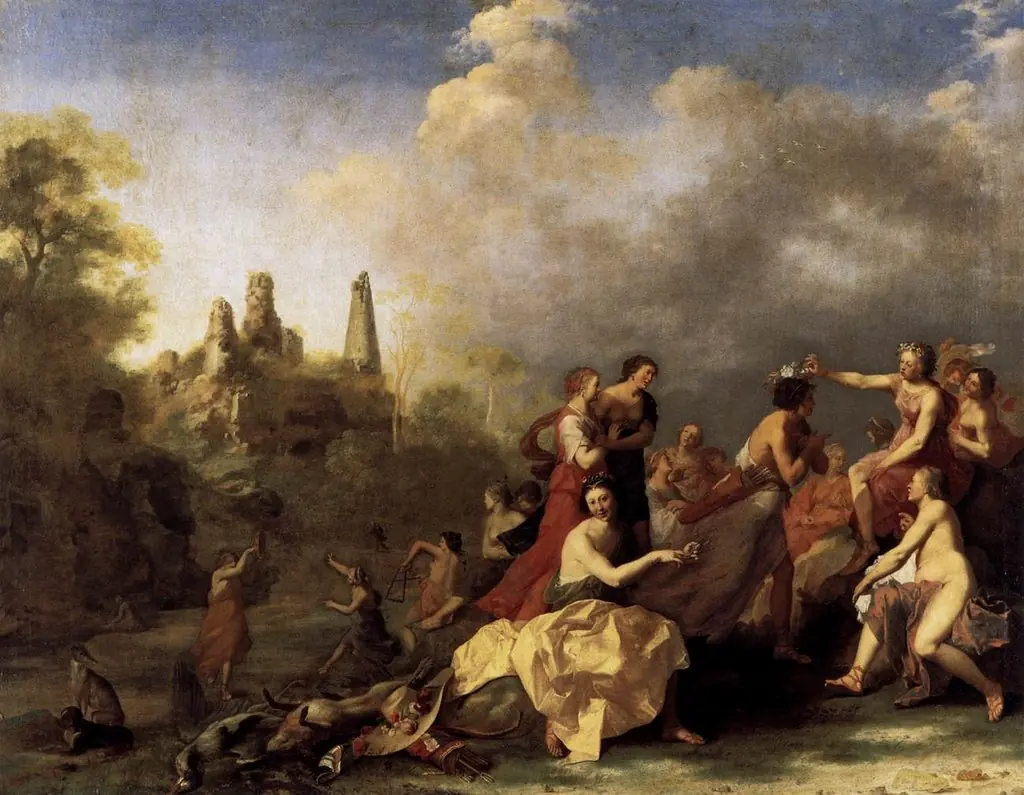 The coronation of Mirtillo after the kissing contest (Guarini, Il Pastor Fido)
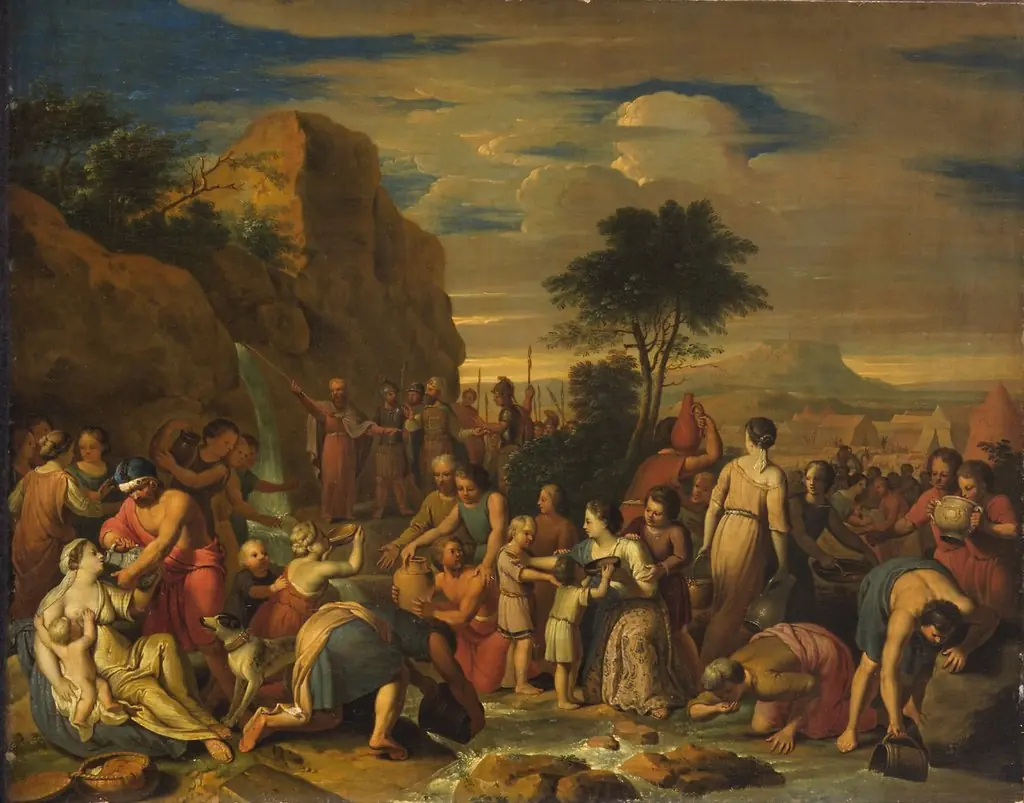 Moses schlägt Wasser aus dem Felsen
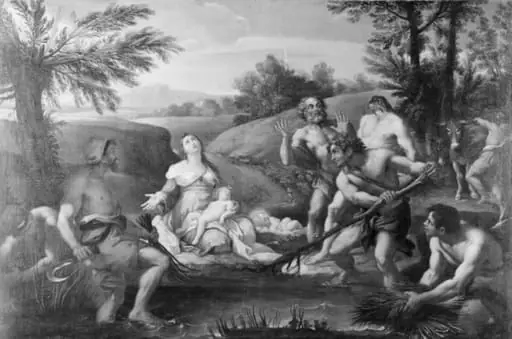 Latona forvandler Licias hyrder til frøer. Motiv fra Ovids "Metamorfoser", VI sang
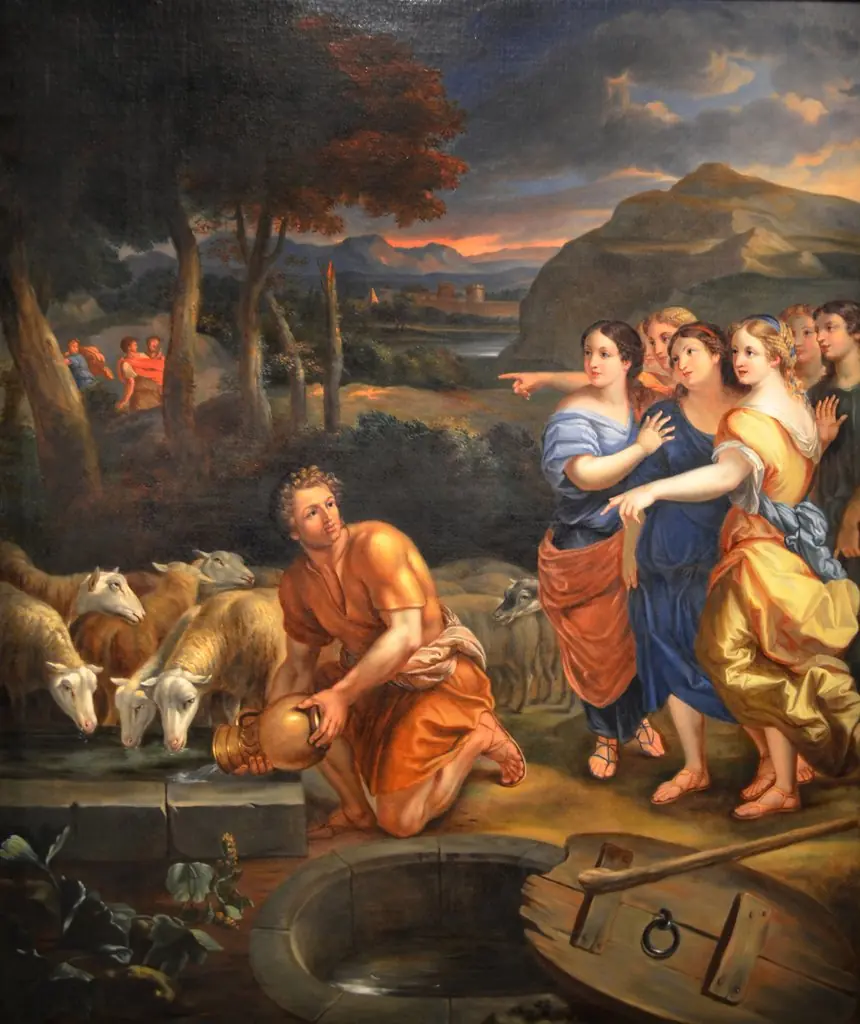 Moses and the Daughters of Jethro
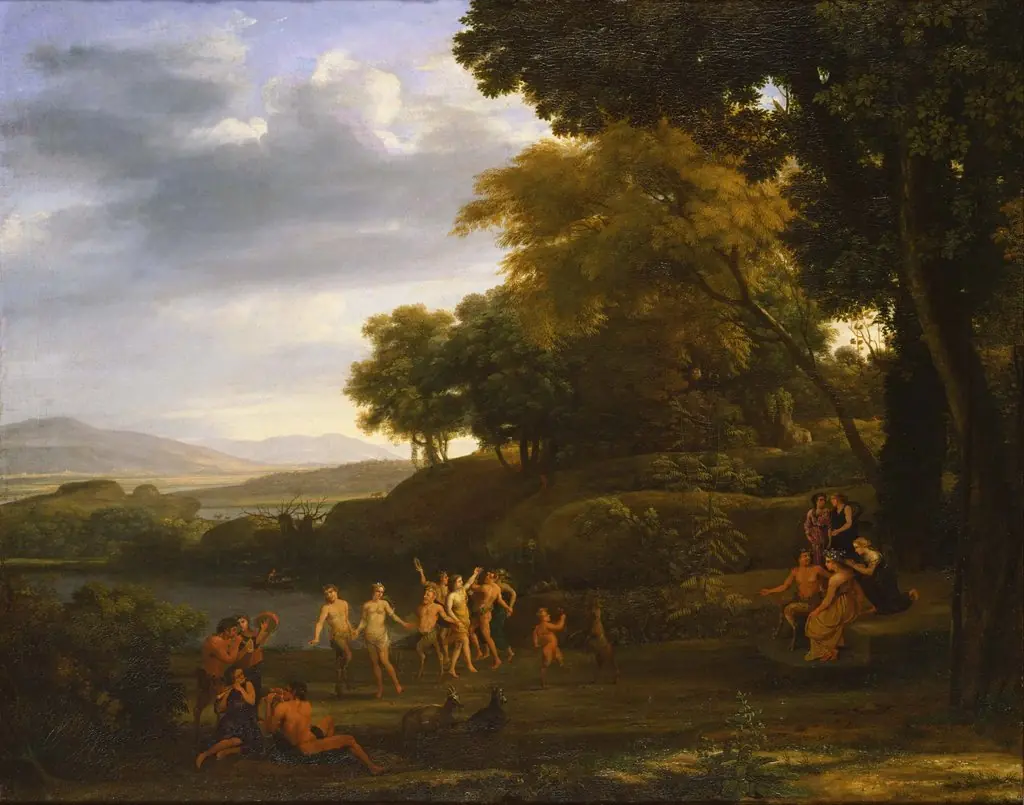 Landscape with Dancing Satyrs and Nymphs
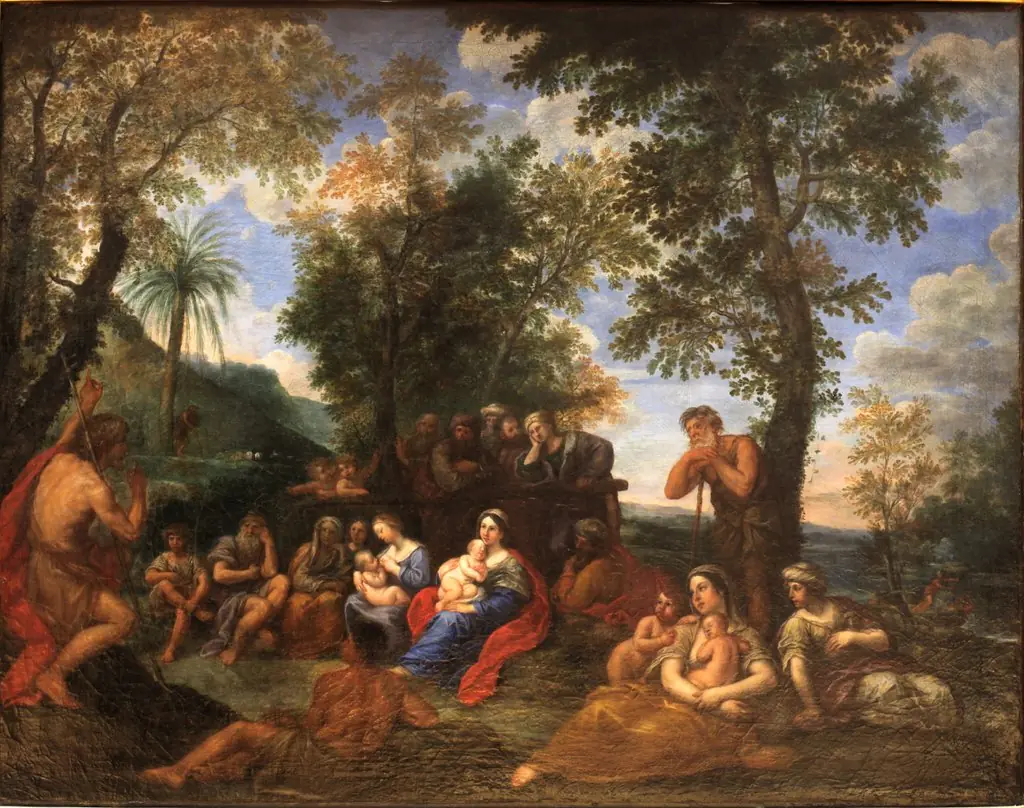 Predication of Saint John the Baptist