Artwork
Untitled
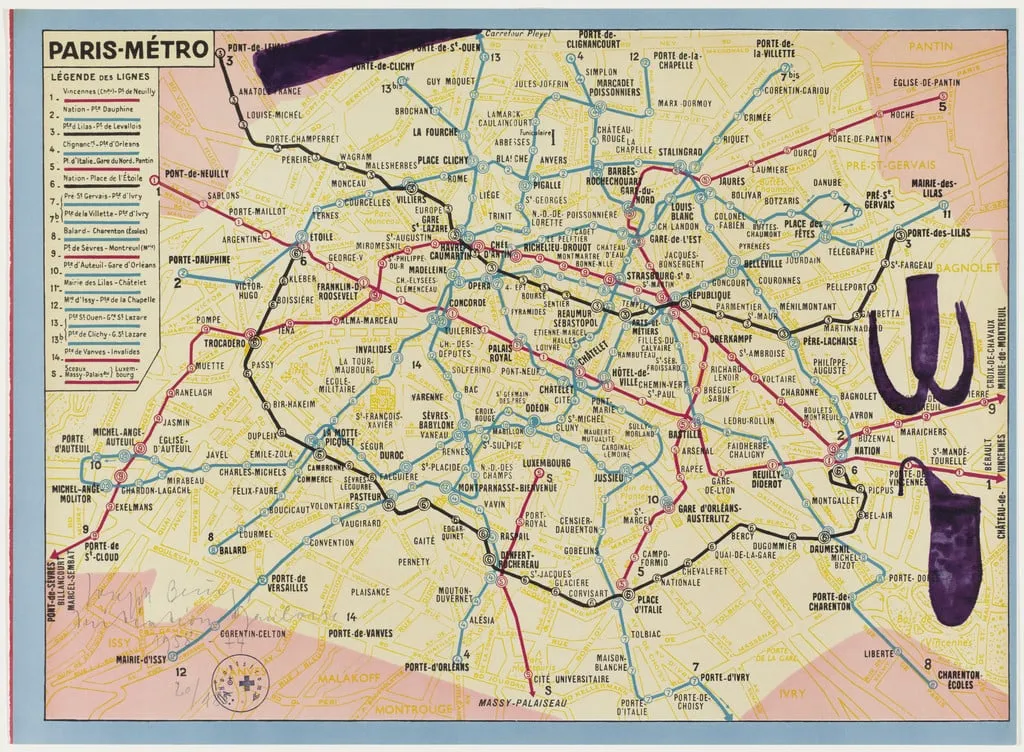
Untitled is an ink print by Joseph Beuys. It dates from 1976 and is held in the collection of the Museum of Modern Art.
About this work
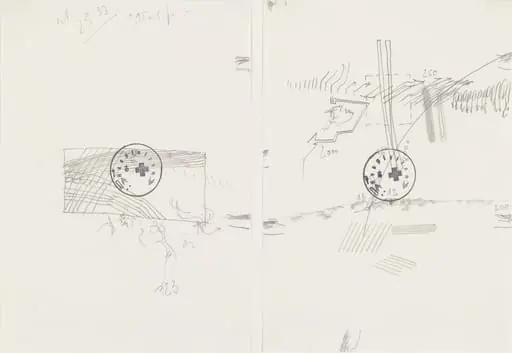
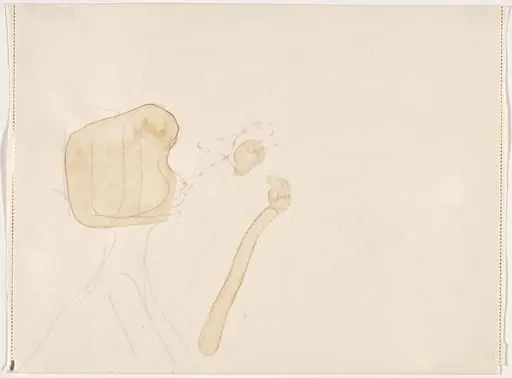
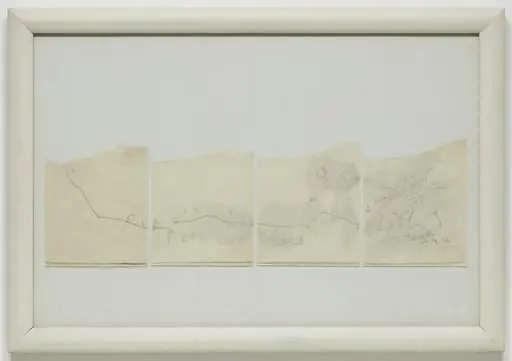
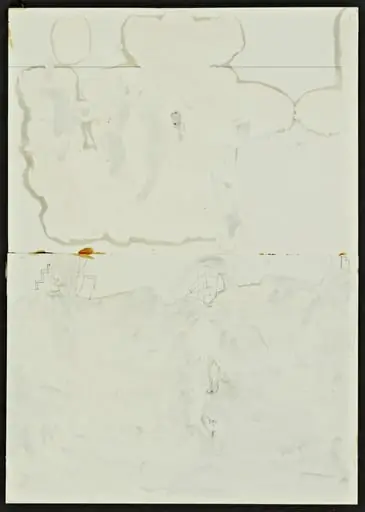
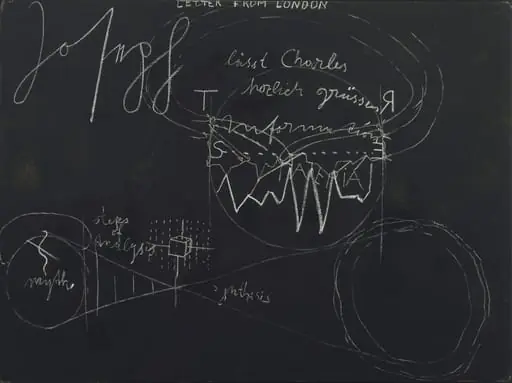
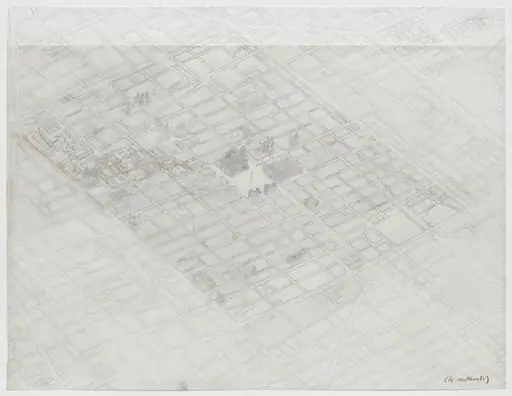
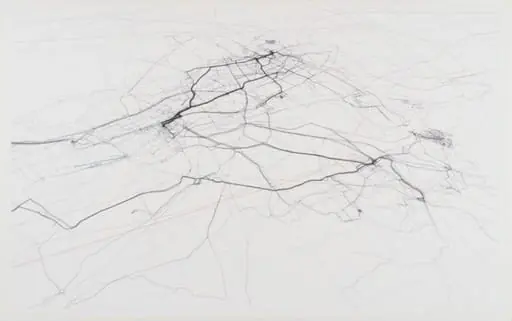
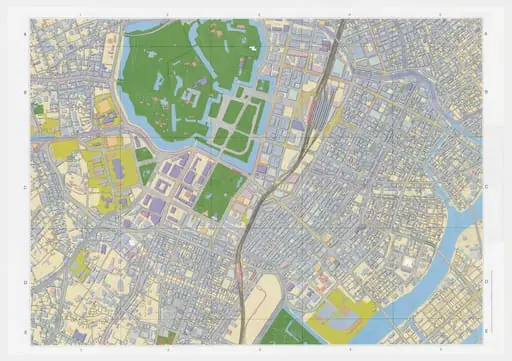
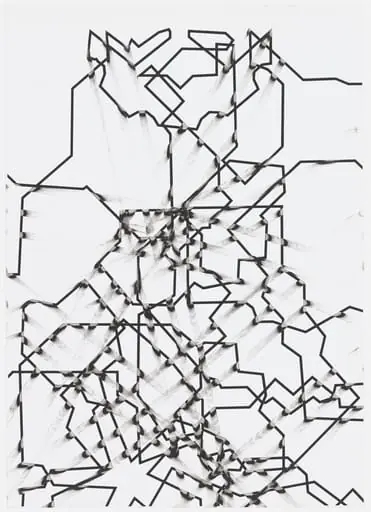
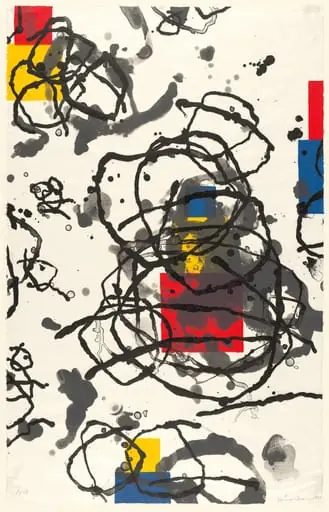
You see a big sheet of paper covered in smudgy gray ink, a few wobbly pencil lines, and red rubber-stamp marks that look like they were pressed on by hand.
You see a big sheet of paper covered in smudgy gray ink, a few wobbly pencil lines, and red rubber-stamp marks that look like they were pressed on by hand.
Beuys made this in 1976 while he was teaching in Düsseldorf. He often used everyday stuff—fat, felt, stamps—to talk about healing and memory after the war. The stamps here spell out “Initiation Gauloise,” a phrase tied to a Celtic ritual, but he never explained what it meant.
If you like the way simple marks can feel alive, look up the technique of lithography.
Overview
Created in 1976, this lithograph by Joseph Beuys combines ink impressions with hand-applied rubber stamps on a large sheet of paper. The work emerged during his tenure as a professor in Düsseldorf and reflects his interest in materiality as a carrier of meaning. Its unpolished surface and irregular markings reject traditional aesthetic refinement, aligning with his broader conceptual approach to art as a vehicle for social and psychological inquiry.
Subject & Meaning
The rubber stamps bear the phrase 'Initiation Gauloise,' referencing a vaguely evoked Celtic ritual, though Beuys never clarified its significance. The ambiguity invites interpretation without prescription, consistent with his belief in art as an open-ended process. The smudged gray tones and sparse pencil lines suggest erosion, memory, or the passage of time—themes tied to postwar German identity and the search for renewal through symbolic acts.
Technique & Style
Beuys employed lithography, a printmaking method that transfers images from a stone surface, but introduced irregularities by overlaying hand-stamped elements. The stamps, likely made from everyday objects, leave uneven, tactile impressions that disrupt the uniformity of the lithographic field. This fusion of industrial technique with improvised, bodily intervention underscores his interest in the artist’s physical presence within the work.
History & Provenance
The work was produced in 1976 during Beuys’s time teaching at the Düsseldorf Art Academy. It entered the collection of The Museum of Modern Art in New York, where it remains part of its permanent holdings. Its preservation reflects institutional recognition of Beuys’s role in expanding the boundaries of printmaking and conceptual art, though its origins remain rooted in his personal pedagogical and philosophical practice.
Context
Emerging from postwar Germany, Beuys’s work responded to collective trauma and the need for societal healing. His use of humble materials—felt, fat, stamps—was not merely aesthetic but symbolic, evoking rituals of repair and transformation. The stamped phrase, though unexplained, aligns with his broader engagement with myth, anthropology, and the idea of art as a communal, almost shamanic act.
Legacy
This work exemplifies Beuys’s influence on post-1960s art by blurring lines between print, performance, and ritual. It contributed to the legitimization of non-traditional materials and processes in fine art, inspiring later generations to prioritize concept and material symbolism over technical polish. Its presence in MoMA’s collection affirms its role in redefining what a print can be.
Artist & collection
Artist
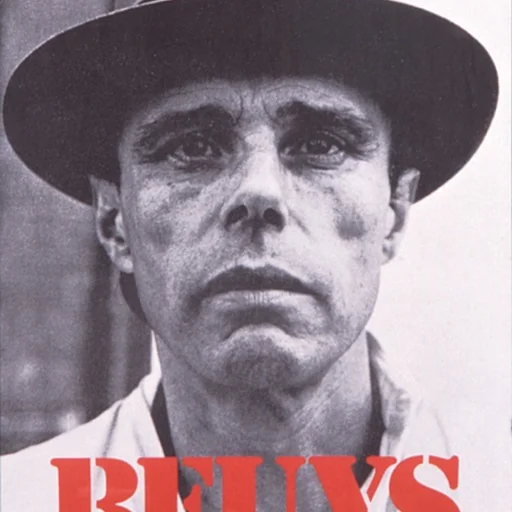
Joseph Heinrich Beuys ( BOYSS; German: ; 12 May 1921 – 23 January 1986) was a German artist, teacher, performance artist, and art theorist whose work reflected concepts of humanism and sociology.