Artwork
Nurnbergische Hesperides: Aranzo de fior doppio
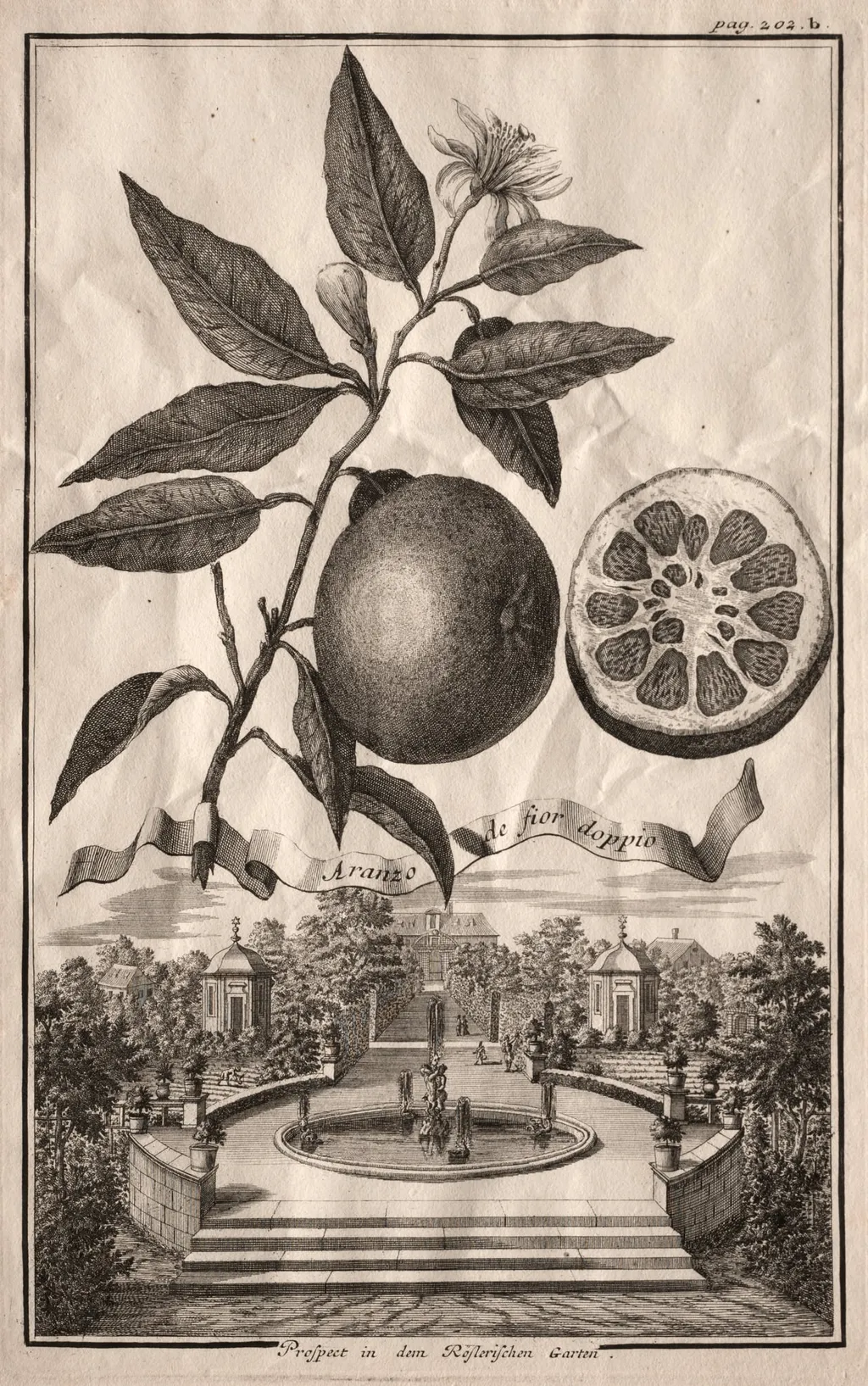
Nurnbergische Hesperides: Aranzo de fior doppio is a print by the Baroque artist Joseph de Montalegre. It dates from 1714 and is held in the collection of the Cleveland Museum of Art.
About this work
Overview
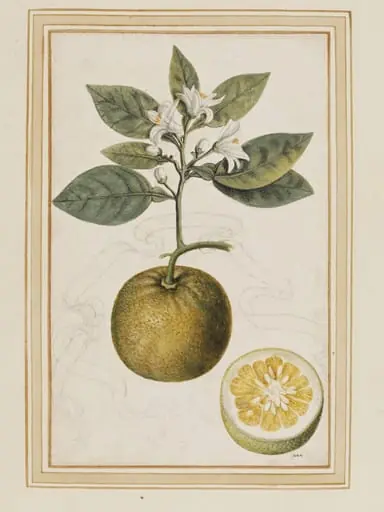
Created in 1714 by the Flemish engraver Joseph de Montalegre, this copperplate print—titled Nurnbergische Hesperides: Aranzo de fior doppio—is part of the Cleveland Museum of Art’s collection. The image juxtaposes a detailed study of a large, round citrus fruit with a cut‑away view of its interior, set above a stylised garden featuring a fountain, pathways and modest buildings.
Subject & Meaning
The central motif is a fruit resembling a grapefruit or pomelo, labeled “Aranzo de fior doppio,” a name that hints at an exotic or hybrid variety.
The central motif is a fruit resembling a grapefruit or pomelo, labeled “Aranzo de fior doppio,” a name that hints at an exotic or hybrid variety. By presenting both the whole and the sliced interior, the print emphasizes the fruit’s abundance and the sensory pleasure of its flesh, while the orderly garden scene below suggests cultivated leisure and the harmonious relationship between nature and human design.
Technique & Style
Montalegre employed fine line engraving to render the delicate textures of the fruit’s rind, leaves and blossom, contrasting them with the cross‑hatching used for the interior’s juicy segments. The garden is depicted with a restrained, almost schematic precision typical of early‑18th‑century decorative prints, balancing realistic detail with a decorative, ornamental quality.
History & Provenance
The work was produced in the early Baroque period and later entered the Cleveland Museum of Art, where it is catalogued as part of the museum’s European prints and drawings. Its provenance before acquisition by the museum is not extensively documented, but the piece reflects the period’s interest in botanical illustration and garden design.
Context
During the early 1700s, prints that combined botanical studies with idealised garden vistas were popular among collectors interested in horticulture and the aesthetics of the Baroque garden. The composition’s orderly layout and emphasis on cultivated nature align with contemporary tastes for symmetry, order, and the display of exotic produce within controlled landscapes.
Artist & collection
Artist
Joseph de Montalegre (1672–1729) was a Hungarian artist, born in Prague.

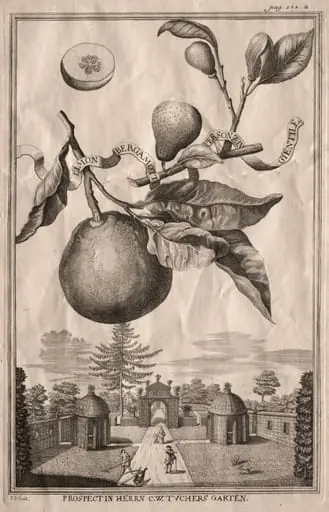 Nurnbergische Hesperides: Limon bergamotto personzin gientile
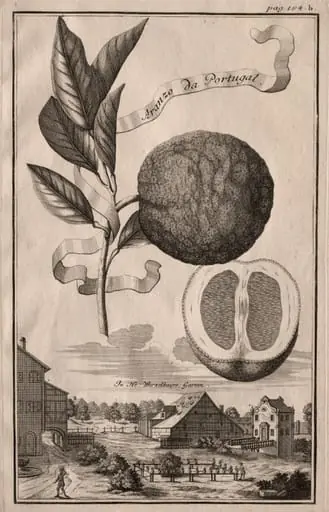 Nurnbergische Hesperides: Aranzo da Portugal
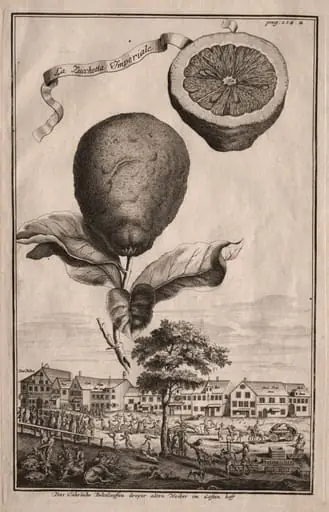 Nurnbergische Hesperides: La Luchetta Imoperiale
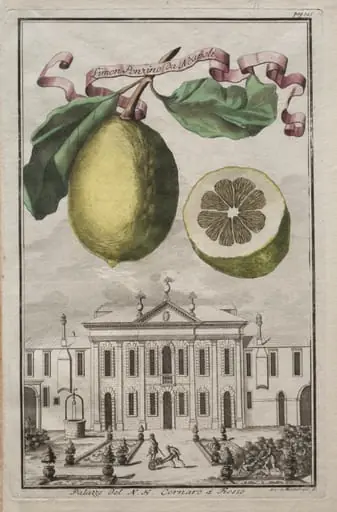 Nurnbergische Hesperides: No. 125 - Limon Ponzino da Neapoli. Palazzo del N. H. Cornaro à Fiesso
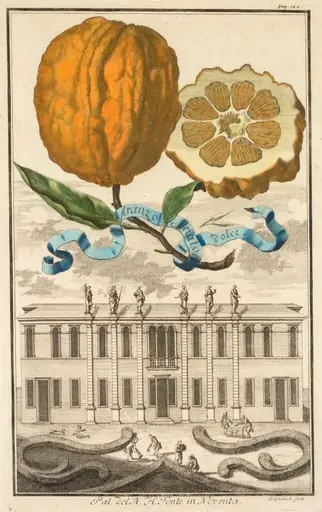 Nurnbergische Hesperides: No. 185 - Aranzo Striato dolce. Palazzo del N. H. Fonte in Noventa