Artwork
Architecture of the Middle Ages: St. Andre, Antwerp
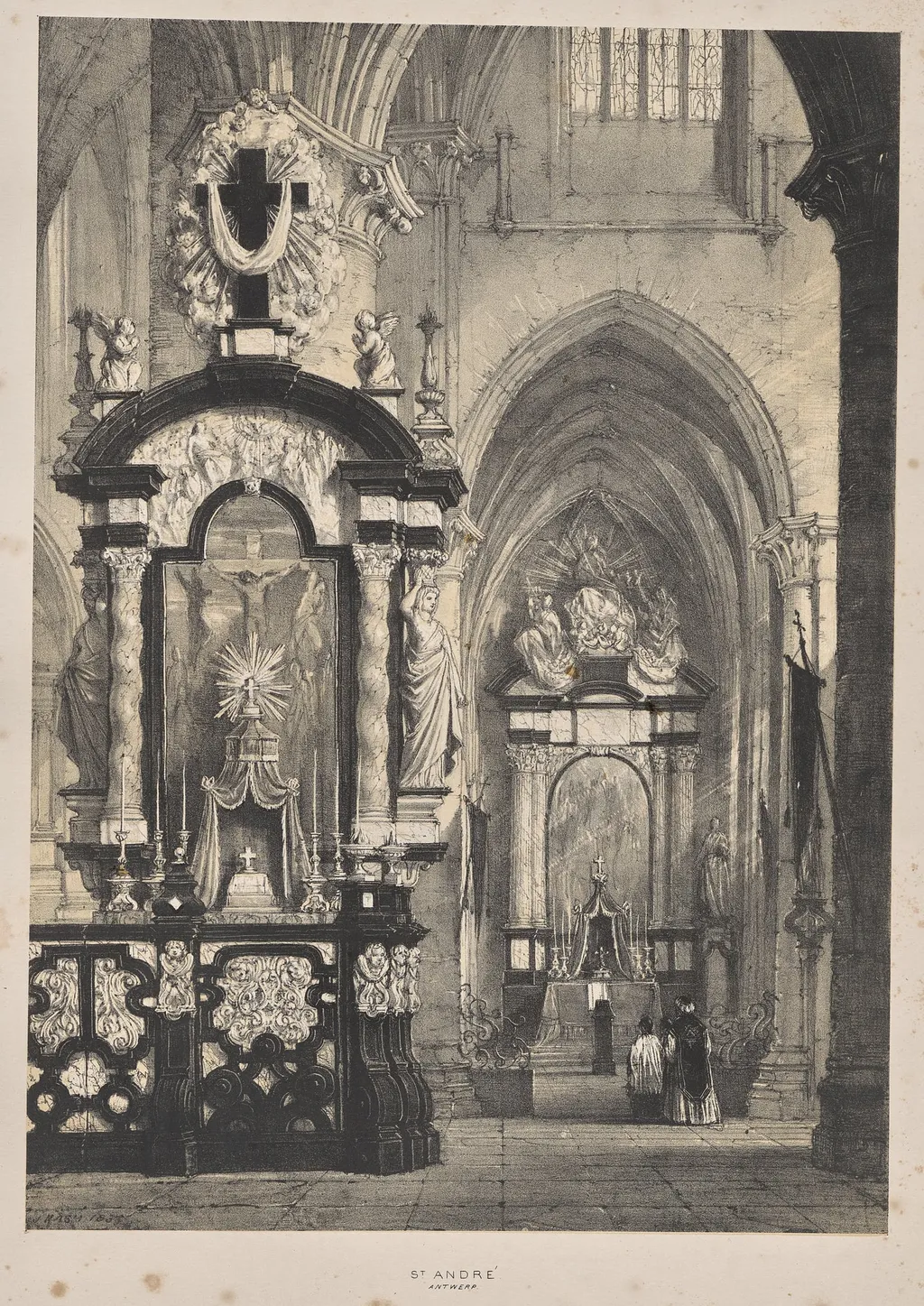
Architecture of the Middle Ages: St. Andre, Antwerp is a print by the Romanticist artist Joseph Nash. It dates from 1838 and is held in the collection of the Cleveland Museum of Art.
About this work
Overview
Executed as a watercolor and lithograph, it is part of Nash’s broader project to document historic European architecture.
Created in 1838 by British artist Joseph Nash, this print depicts the medieval church of St. Andre in Antwerp. Executed as a watercolor and lithograph, it is part of Nash’s broader project to document historic European architecture. The work reflects his dedication to precise architectural representation rather than imaginative reinterpretation, capturing the structure with careful attention to form and detail.
Subject & Meaning
The subject is St. Andre, a Gothic church in Antwerp, rendered not as a romanticized ruin but as a documented structure. Nash’s focus on its stonework, arches, and vertical proportions emphasizes the building’s historical presence. The image serves as a record of medieval ecclesiastical architecture at a time when such buildings were often neglected or altered, preserving their appearance for future study.
Technique & Style
Nash employed watercolor and lithography to achieve fine linear clarity and tonal depth. His technique prioritized accuracy over expressive brushwork, using controlled lines to define architectural elements like buttresses, windows, and spires. The composition is frontal and symmetrical, minimizing human figures to keep focus on the building’s form and texture, reflecting a topographical approach to art.
History & Provenance
The print was produced during Nash’s extensive survey of medieval buildings, later compiled into his four-volume series *Mansions of England in the Olden Time*. Though focused on English structures, this work extends his practice to continental sites. It entered the Cleveland Museum of Art’s collection as part of its broader holdings in 19th-century architectural documentation.
Context
In the 1830s, a growing interest in medieval heritage emerged across Europe, fueled by Romanticism and early preservation movements. Nash’s work aligned with this trend, offering detailed visual records before industrialization altered historic landscapes. His prints were used by architects and historians, contributing to a scholarly revival of interest in Gothic design.
Legacy
Nash’s prints, including this one, remain valuable as historical references for architectural historians. While not widely exhibited today, they continue to inform studies of medieval structures that have since changed or been lost. His method of precise, unembellished recording set a standard for architectural illustration in the 19th century.
Artist & collection
Artist
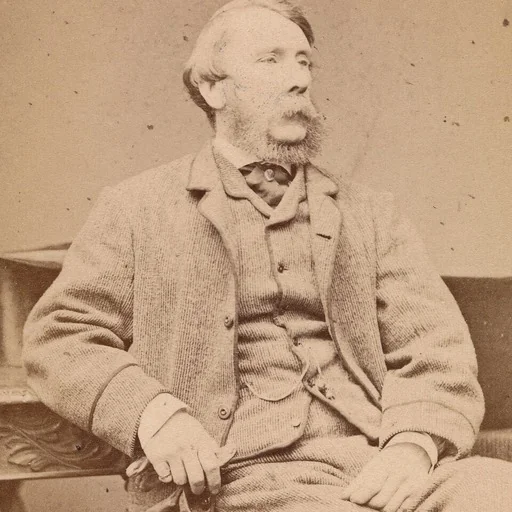
Joseph Nash (17 December 1809 – 19 December 1878) was an English watercolour painter and lithographer, specialising in historical buildings. His major work was the 4-volume Mansions of England in the Olden Time, published from 1839–49.

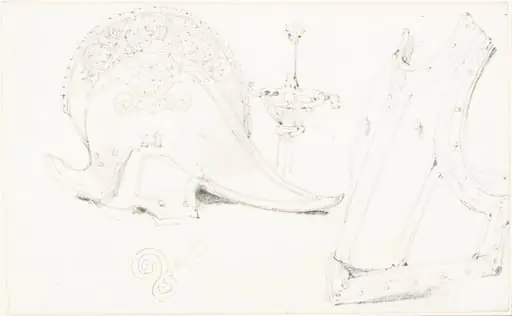 Study of a Helmet, Breastplate, and Rapier
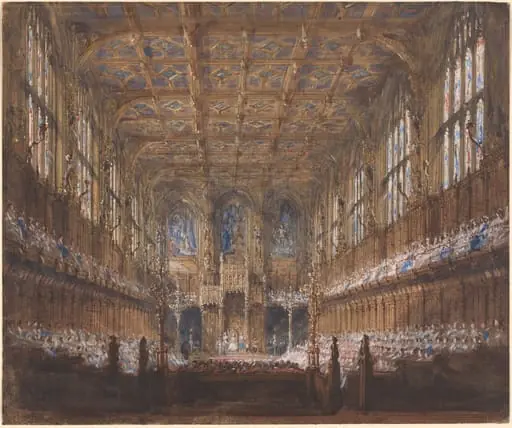 The State Opening of Parliament in the Rebuilt House of Lords
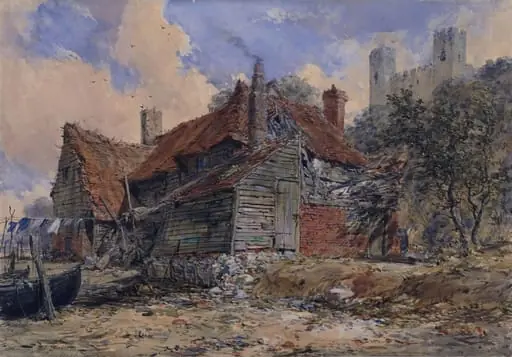 Rochester
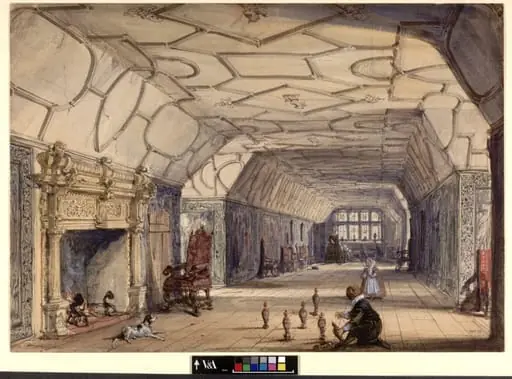 The gallery at Knole House, near Sevenoaks
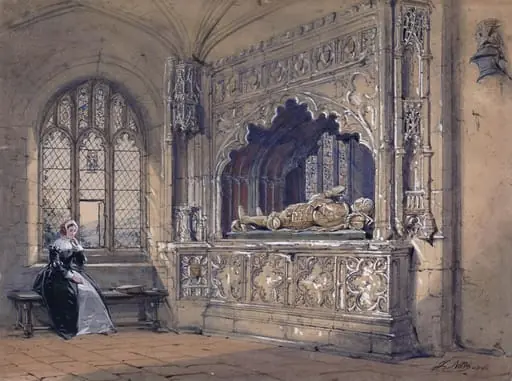 The supposed tomb of Thomas Fiennes, in Herstmonceux Church, Sussex, looking south-east from the North Chapel
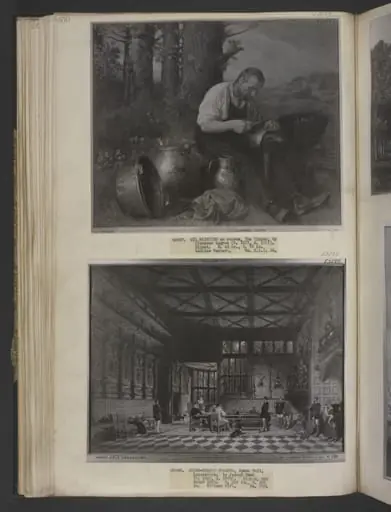 Speke Hall, Lancashire
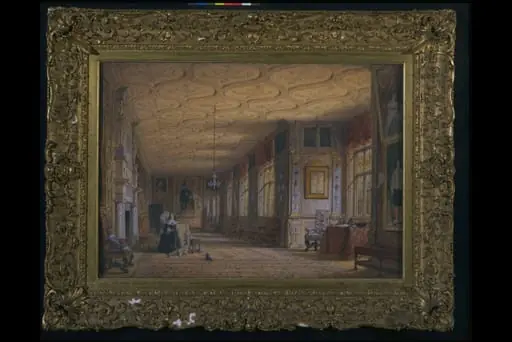 The Cartoon Gallery at Knole
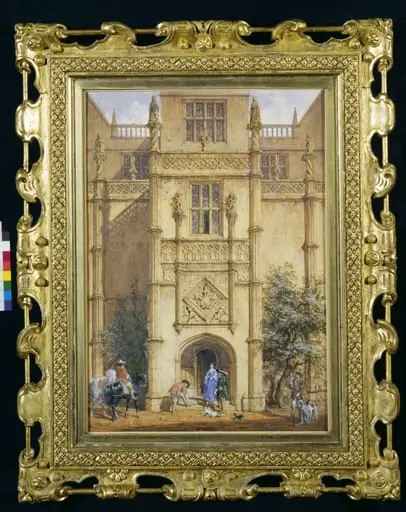 The Porch at Montacute House, Somerset
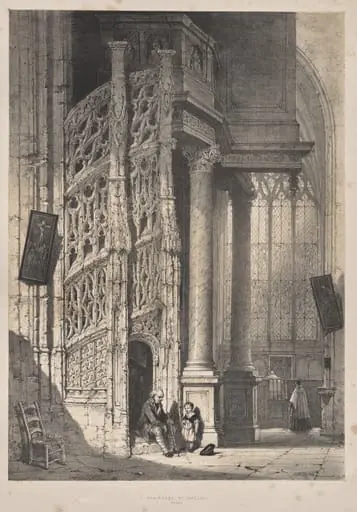 Architecture of the Middle Ages: Staircase, St. Maclou, Rouen
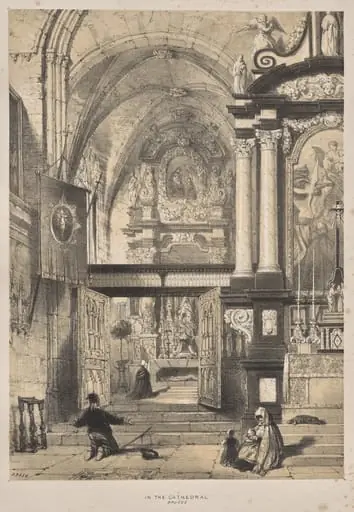 Architecture of the Middle Ages: In the Cathedral, Bruges
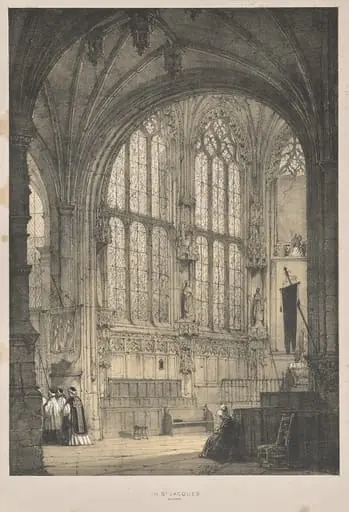 Architecture of the Middle Ages: In St. Jacques, Dieppe, East End, Interior
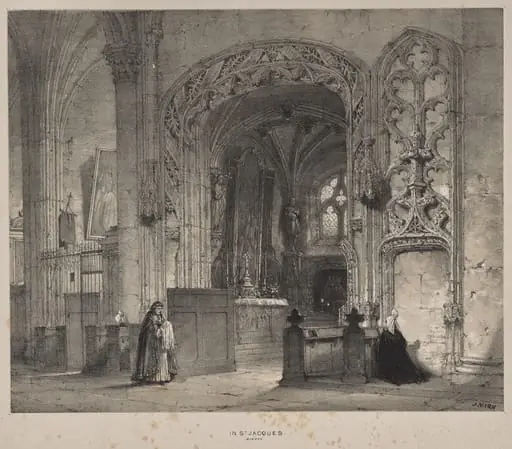 Architecture of the Middle Ages: Chapel in St. Jacques, Dieppe
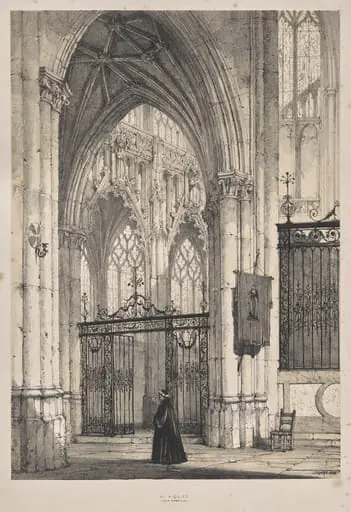 Architecture of the Middle Ages: Church of St. Riquier, near Abbeville
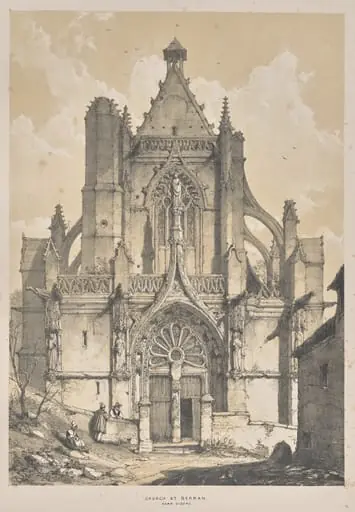 Architecture of the Middle Ages: Church at Serran, near Gisore
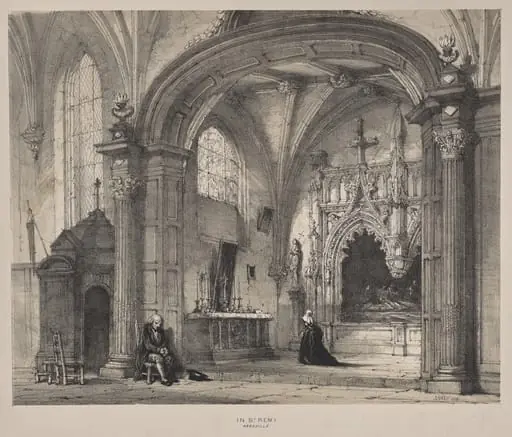 Architecture of the Middle Ages: In St. Remi, Abbeville
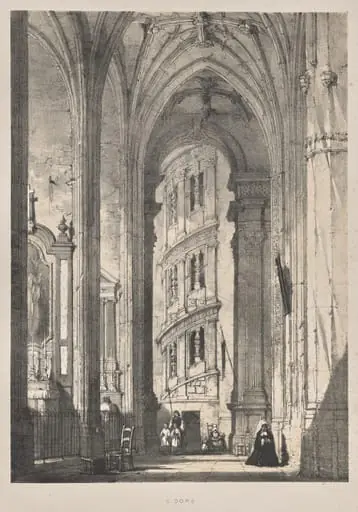 Architecture of the Middle Ages: Church of St. Gisors, Interior
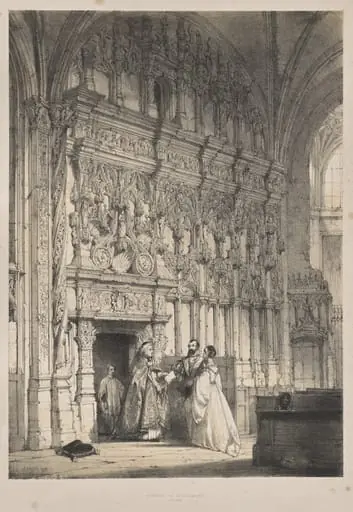 Architecture of the Middle Ages: Screen in St. Jacques, Dieppe