Artwork
Architecture of the Middle Ages: Screen in St. Jacques, Dieppe
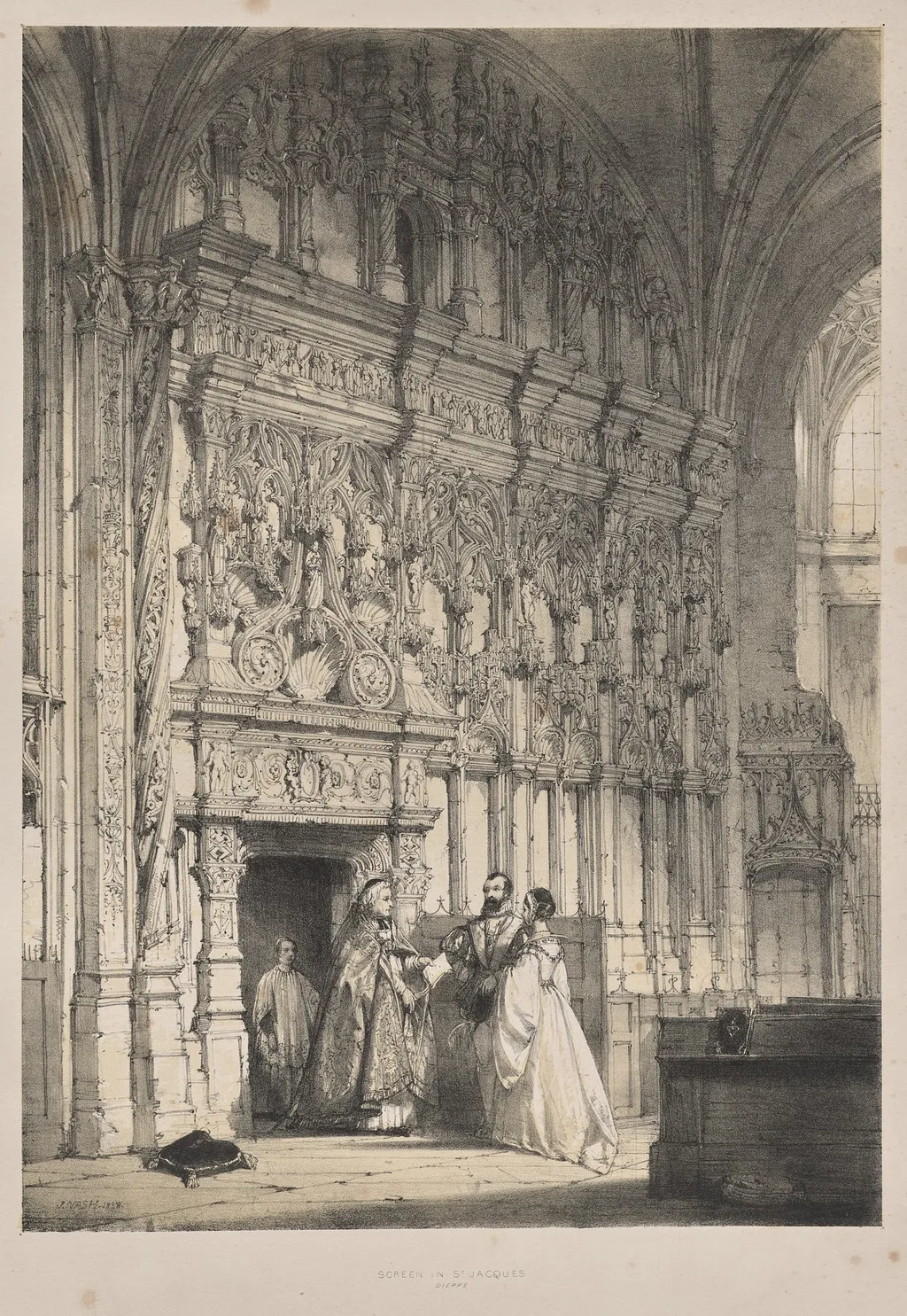
Architecture of the Middle Ages: Screen in St. Jacques, Dieppe is a print by the Romanticist artist Joseph Nash. It dates from 1838 and is held in the collection of the Cleveland Museum of Art.
About this work
Overview
The piece is held in the collection of The Cleveland Museum of Art and reflects his dedication to recording historical interiors with topographical accuracy.
Created in 1838 by British artist Joseph Nash, this watercolor captures a Gothic stone screen inside the Church of Saint-Jacques in Dieppe, France. Nash, known for his precise architectural studies, produced this work as part of a larger project to document medieval structures. The piece is held in the collection of The Cleveland Museum of Art and reflects his dedication to recording historical interiors with topographical accuracy.
Subject & Meaning
The scene depicts a liturgical screen, a common feature in medieval churches that separated the nave from the chancel. Three figures—clad in robes, a long dress, and plain attire—suggest a range of social or clerical roles, grounding the architecture in daily ritual. A dog resting in the corner adds a quiet, domestic note, contrasting with the ornate stonework and hinting at the church’s role as both sacred and communal space.
Technique & Style
Nash employed fine watercolor washes and delicate ink lines to render the intricate carvings of foliage, faces, and tracery. He emphasized chiaroscuro to model the depth of the stonework, using light to highlight recesses and shadows to define the relief. The composition avoids dramatic flair, instead favoring quiet observation, characteristic of his scholarly approach to architectural detail.
History & Provenance
This watercolor was made during Nash’s early period of architectural documentation, before his major publication *Mansions of England in the Olden Time*. It was likely created during a trip to northern France, where he studied Gothic interiors. The work entered The Cleveland Museum of Art’s collection through established acquisition channels, preserving its role as a record of 19th-century antiquarian interest in medieval France.
Context
In the 1830s, European artists and antiquarians increasingly turned to medieval architecture as a subject of historical study, reacting against industrial modernization. Nash’s work aligned with this revivalist impulse, contributing to a growing visual archive of ecclesiastical structures. His focus on Dieppe’s church reflects broader interest in Norman Gothic, a regional style noted for its elaborate stonework and spatial complexity.
Legacy
Nash’s watercolors, including this one, served as reference material for later historians and restorers. Though not widely exhibited, his systematic recordings helped preserve visual evidence of details now altered or lost. His method—attentive, restrained, and precise—influenced subsequent generations of architectural illustrators committed to documentary accuracy over artistic embellishment.
Artist & collection

Artist
Joseph Nash (17 December 1809 – 19 December 1878) was an English watercolour painter and lithographer, specialising in historical buildings. His major work was the 4-volume Mansions of England in the Olden Time, published from 1839–49.

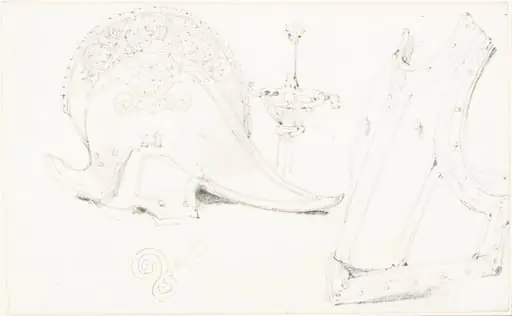 Study of a Helmet, Breastplate, and Rapier
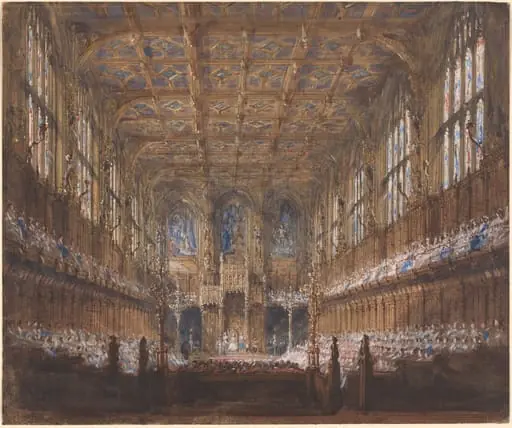 The State Opening of Parliament in the Rebuilt House of Lords
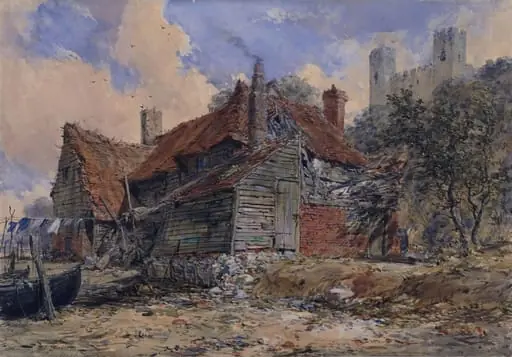 Rochester
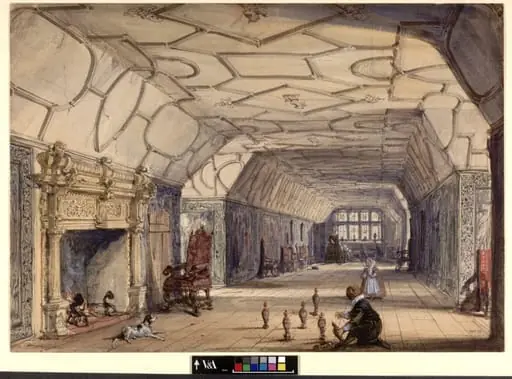 The gallery at Knole House, near Sevenoaks
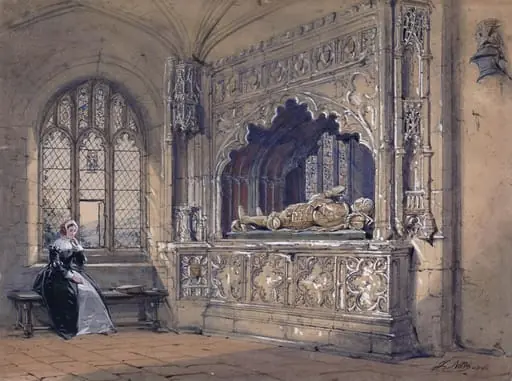 The supposed tomb of Thomas Fiennes, in Herstmonceux Church, Sussex, looking south-east from the North Chapel
 Speke Hall, Lancashire
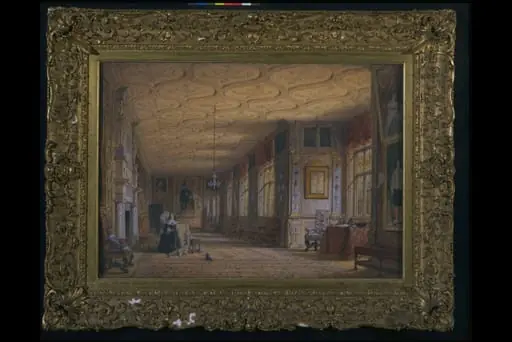 The Cartoon Gallery at Knole
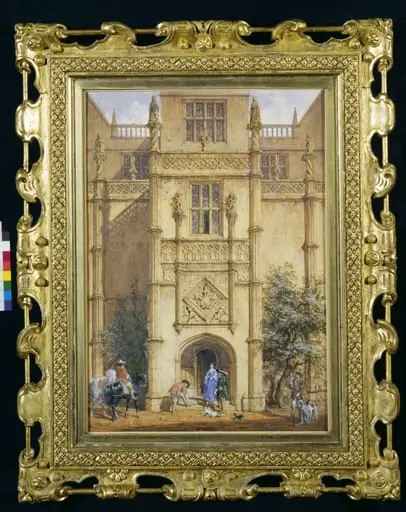 The Porch at Montacute House, Somerset
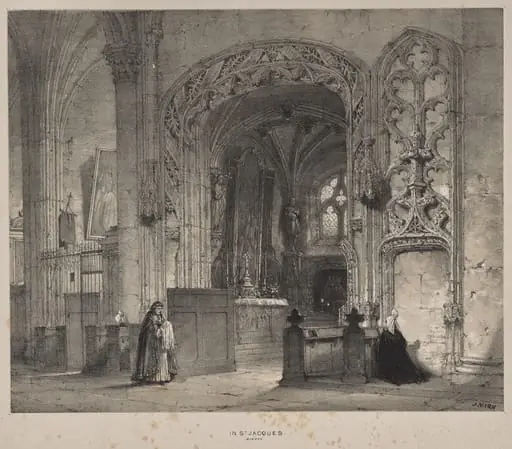 Architecture of the Middle Ages: Chapel in St. Jacques, Dieppe
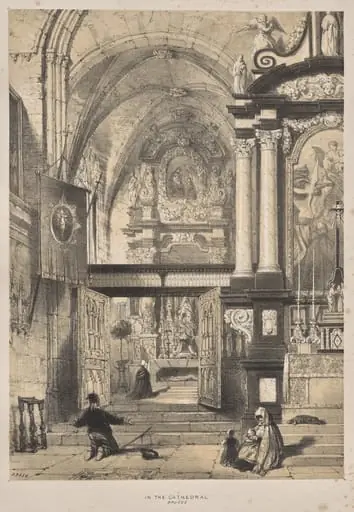 Architecture of the Middle Ages: In the Cathedral, Bruges
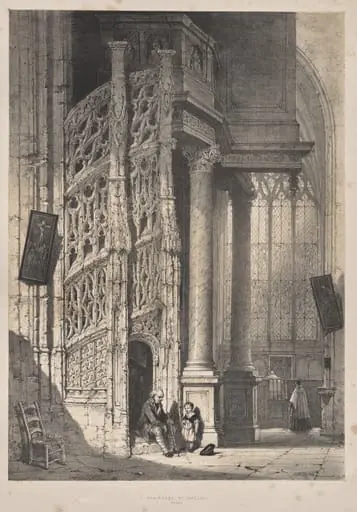 Architecture of the Middle Ages: Staircase, St. Maclou, Rouen
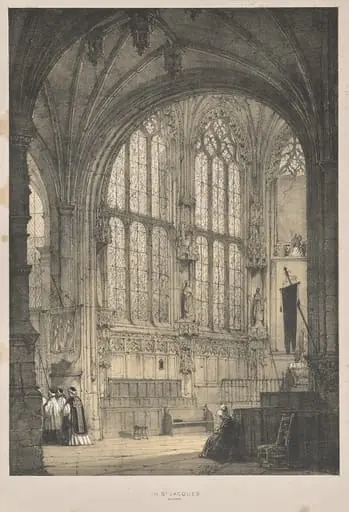 Architecture of the Middle Ages: In St. Jacques, Dieppe, East End, Interior
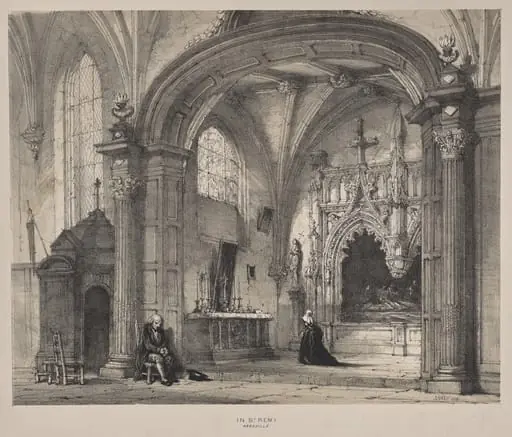 Architecture of the Middle Ages: In St. Remi, Abbeville
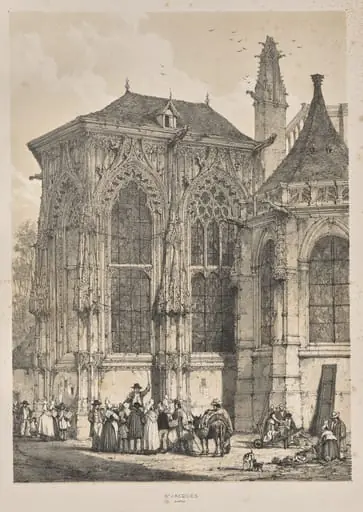 Architecture of the Middle Ages: St. Jacques, Dieppe, East End, Exterior
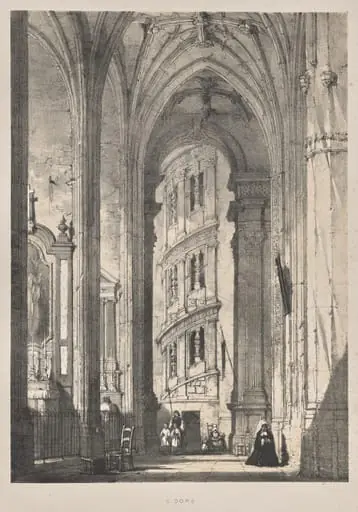 Architecture of the Middle Ages: Church of St. Gisors, Interior
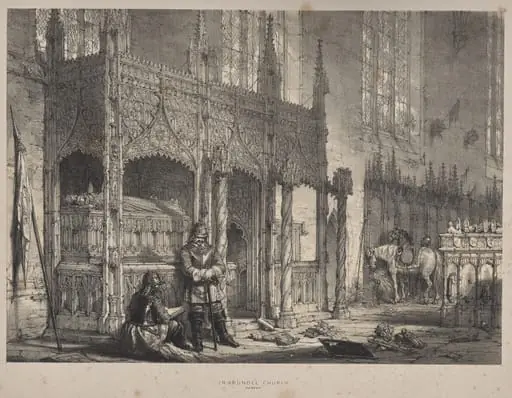 Architecture of the Middle Ages: In Arundel Church, Sussex
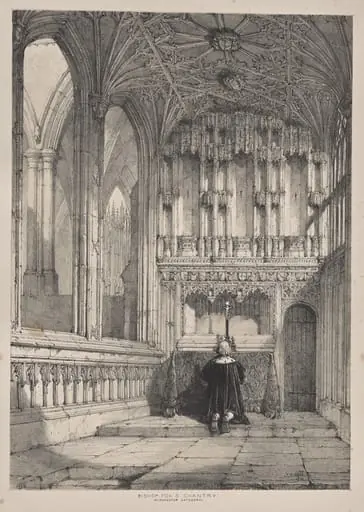 Architecture of the Middle Ages: Bishop Fox's Chantry, Winchester Cathedral
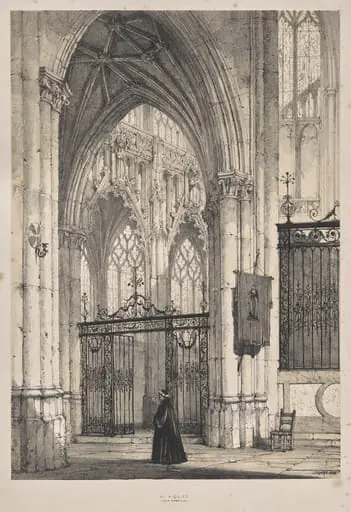 Architecture of the Middle Ages: Church of St. Riquier, near Abbeville
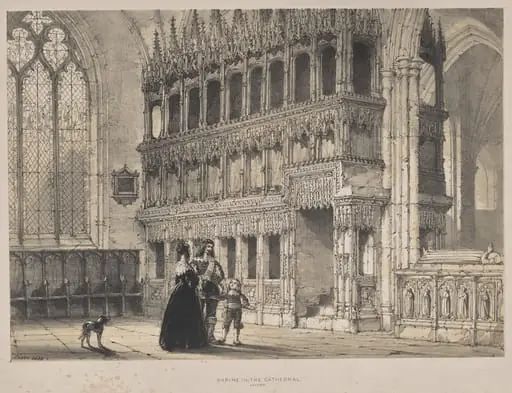 Architecture of the Middle Ages: Shrine of St. Fridswode, Cathedral, Oxford
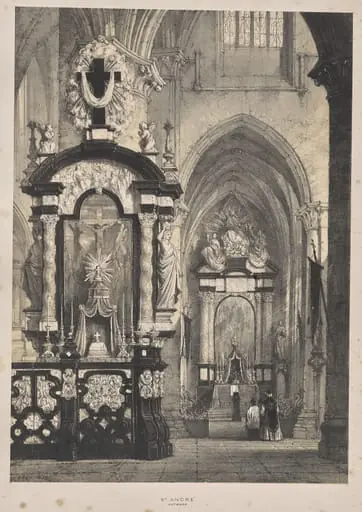 Architecture of the Middle Ages: St. Andre, Antwerp