Artwork
Architecture of the Middle Ages: St. Etienne, Rouen
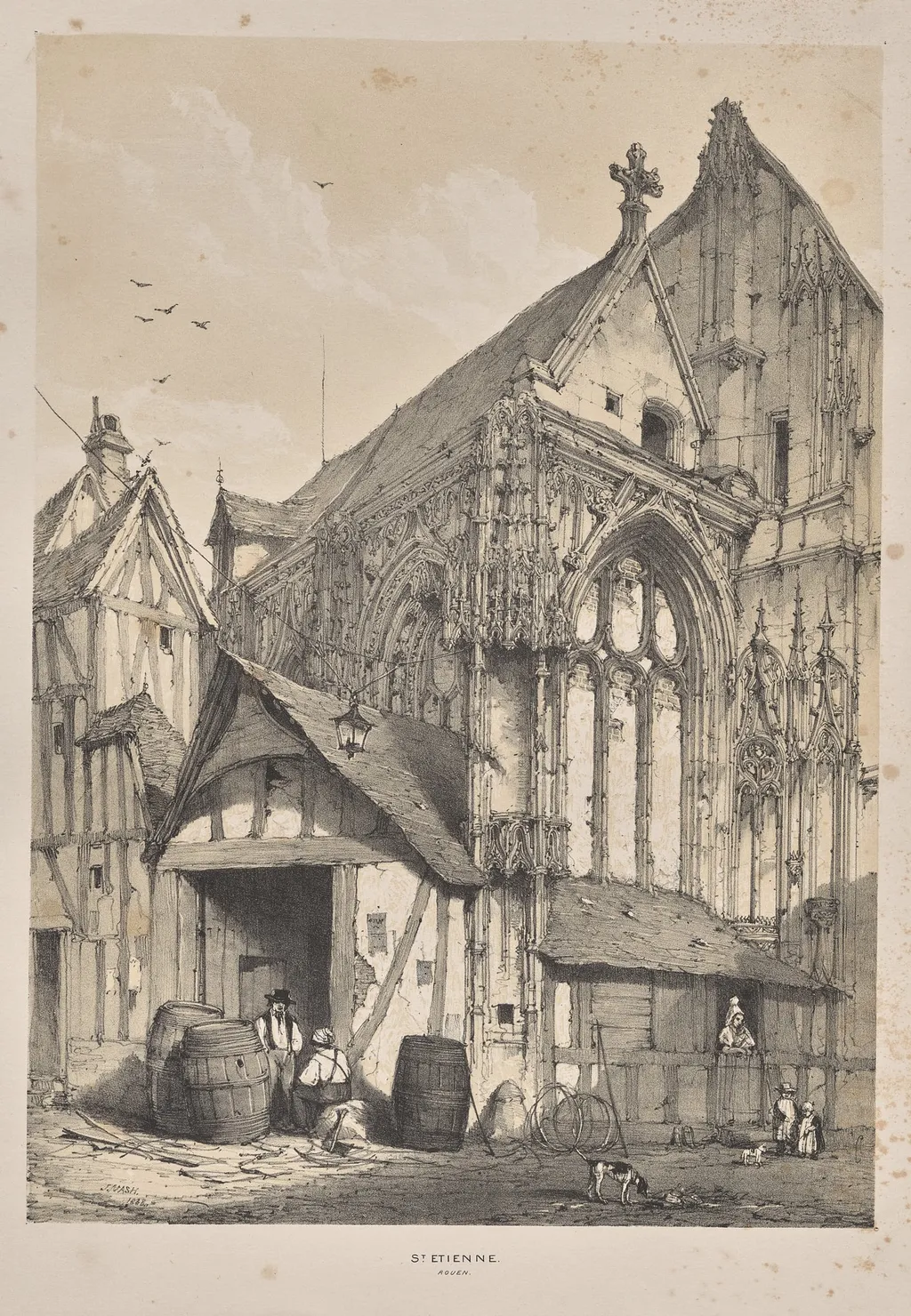
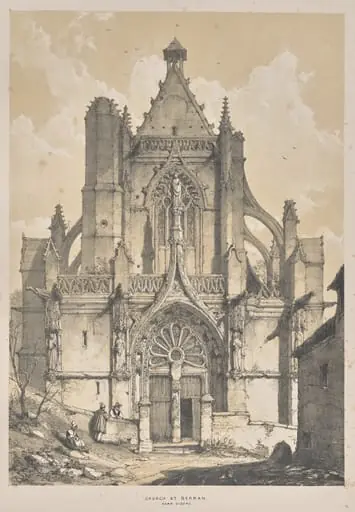
Architecture of the Middle Ages: St. Etienne, Rouen is a print by the Romanticist artist Joseph Nash. It dates from 1838 and is held in the collection of the Cleveland Museum of Art.
About this work
Overview
Created in 1838 by British artist Joseph Nash, this watercolor depicts the Church of Saint-Étienne in Rouen.
Created in 1838 by British artist Joseph Nash, this watercolor depicts the Church of Saint-Étienne in Rouen. Nash, known for his meticulous documentation of medieval buildings, produced this work as part of a broader effort to record England’s and France’s architectural heritage. The piece exemplifies his technique of combining topographical accuracy with atmospheric detail, reflecting a 19th-century interest in preserving visual records of historic structures.
Subject & Meaning
The painting captures the exterior of Saint-Étienne, a Romanesque-Gothic church in Rouen, with attention to its arched portals, sculpted stonework, and vertical proportions. Figures near the entrance suggest daily life around the building, grounding the structure in its social context. The inclusion of barrels and everyday objects implies the church’s integration into urban activity, countering purely idealized portrayals of the medieval past.
Technique & Style
Nash employed watercolor with layered washes to render the texture of aged stone and the play of light across surfaces. Fine linework defines architectural details like tracery and moldings, while subtle color gradations suggest depth and weathering. His approach avoids overt romanticism, favoring clarity and precision over dramatic effect, aligning with documentary aims rather than emotional expression.
History & Provenance
This work originated during Nash’s research for his multi-volume series *Mansions of England in the Olden Time*, though it depicts a French site. It was likely produced as a preparatory study or standalone illustration for publication. The watercolor entered private and institutional collections in the decades following its creation, valued for its fidelity to medieval architecture during a period of widespread restoration and demolition.
Context
In the 1830s, European antiquarians and artists increasingly turned to medieval architecture as subjects of scholarly and aesthetic interest. Nash’s work emerged alongside rising preservation movements and the influence of Gothic Revival ideals. His depictions contributed to a growing visual archive that shaped public perception of the Middle Ages, positioning historic buildings as cultural artifacts worthy of careful study.
Legacy
Nash’s watercolors, including this one, remain referenced in architectural history for their technical accuracy and observational rigor. Though overshadowed by more expressive Romantic works, his images provided foundational visual records for later scholars and restorers. The Church of Saint-Étienne, partially destroyed in the 20th century, now exists in part through such detailed 19th-century depictions.
Artist & collection
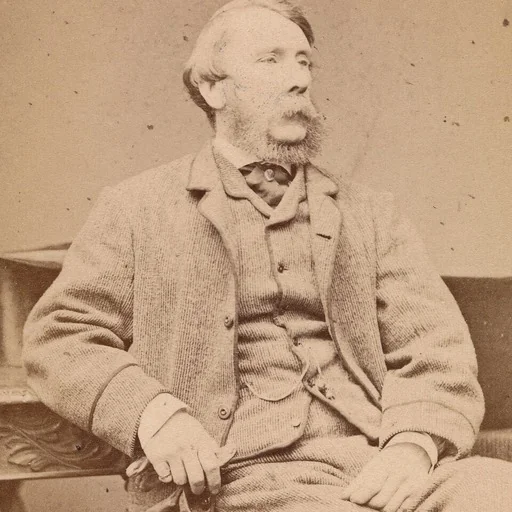
Artist
Joseph Nash (17 December 1809 – 19 December 1878) was an English watercolour painter and lithographer, specialising in historical buildings. His major work was the 4-volume Mansions of England in the Olden Time, published from 1839–49.

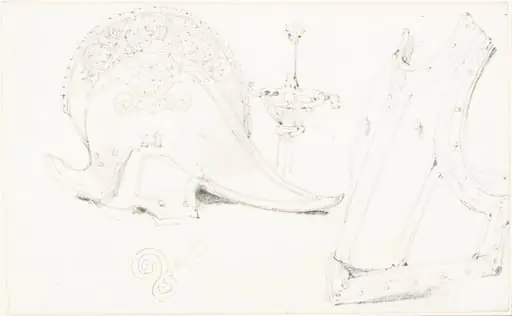 Study of a Helmet, Breastplate, and Rapier
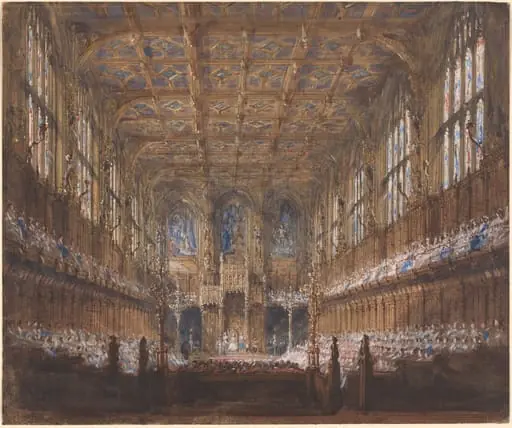 The State Opening of Parliament in the Rebuilt House of Lords
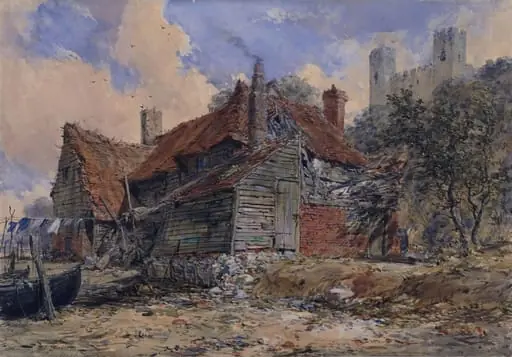 Rochester
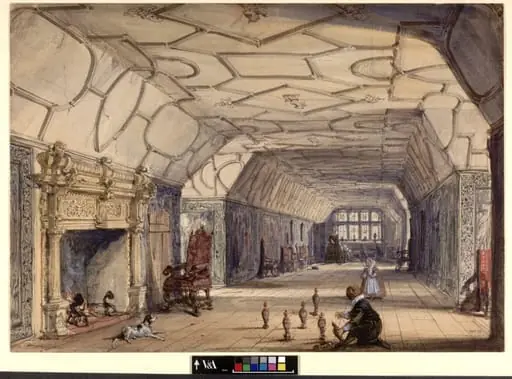 The gallery at Knole House, near Sevenoaks
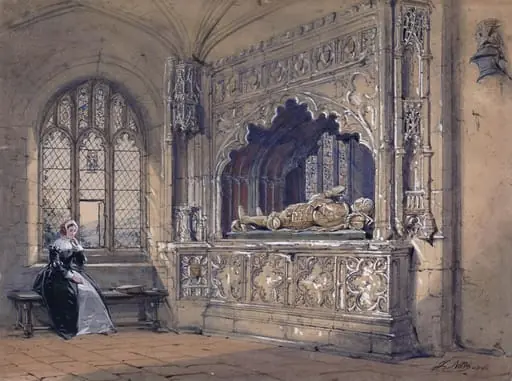 The supposed tomb of Thomas Fiennes, in Herstmonceux Church, Sussex, looking south-east from the North Chapel
 Speke Hall, Lancashire
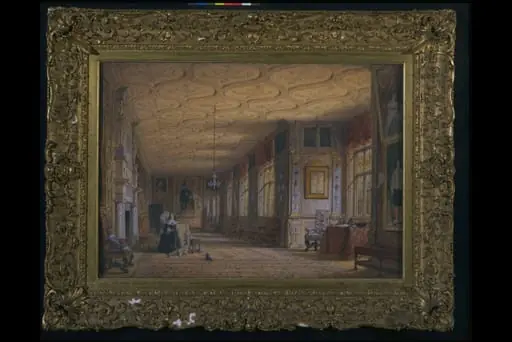 The Cartoon Gallery at Knole
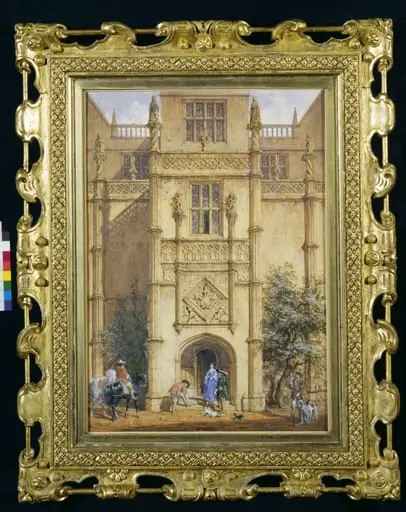 The Porch at Montacute House, Somerset
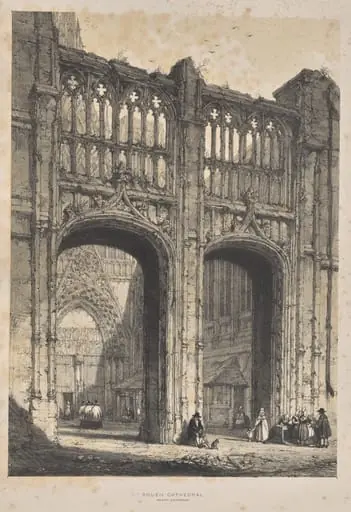 Architecture of the Middle Ages: Rouen Cathedral, North Entrance
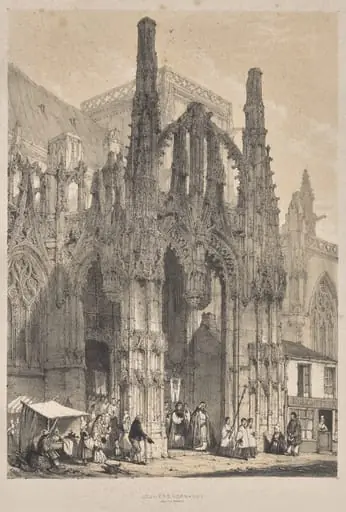 Architecture of the Middle Ages: Louviers, Normandy, South Porch
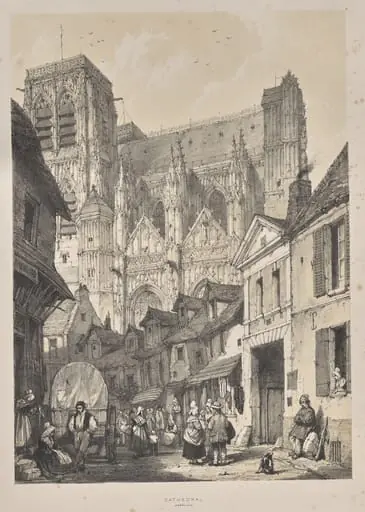 Architecture of the Middle Ages: Cathedral, Abbeville
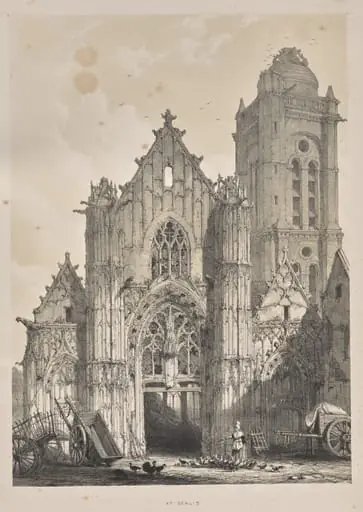 Architecture of the Middle Ages: At Senlis
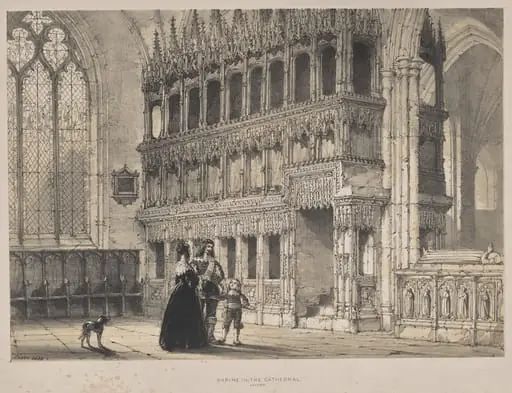 Architecture of the Middle Ages: Shrine of St. Fridswode, Cathedral, Oxford
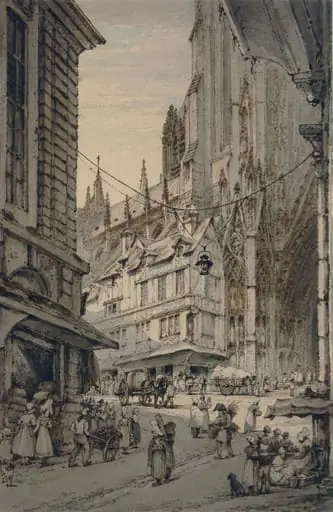 Rouen
Rouen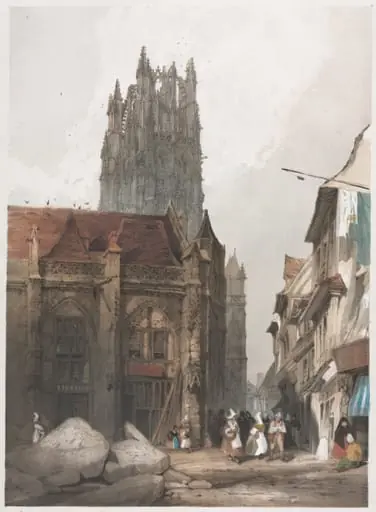 Picturesque Architecture in Paris, Ghent, Antwerp, Rouen: St. Laurent, Rouen, France
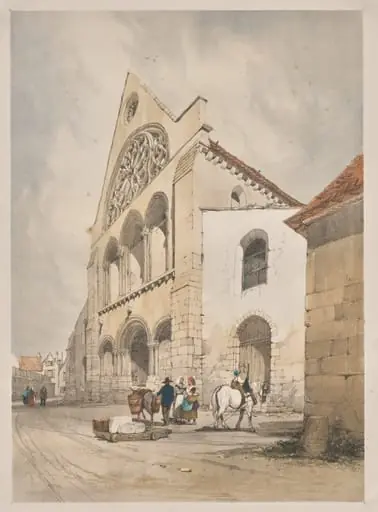 Picturesque Architecture in Paris, Ghent, Antwerp, Rouen: St. Andre, Chartres, France
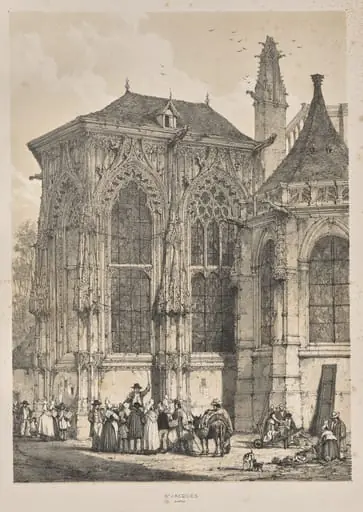 Architecture of the Middle Ages: St. Jacques, Dieppe, East End, Exterior
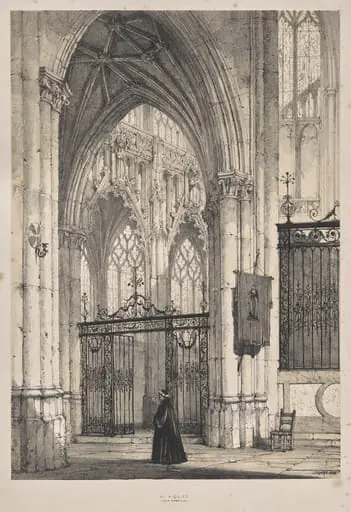 Architecture of the Middle Ages: Church of St. Riquier, near Abbeville
 Architecture of the Middle Ages: Church at Serran, near Gisore