Artwork
Dawn: Luther at Erfurt
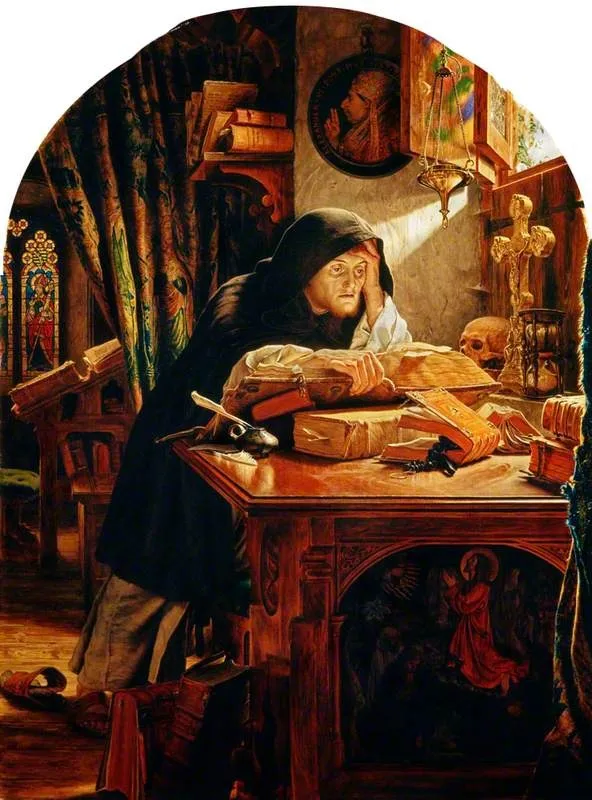
Dawn: Luther at Erfurt is an oil painting by the British Romanticist artist Joseph Noel Paton. It dates from 1861 and is held in the collection of the National Galleries Scotland.
About this work
Overview
Belonging to the British Romantic tradition, the painting emphasizes inner turmoil and spiritual awakening rather than dramatic action.
Painted in 1861 by the Scottish artist Joseph Noel Paton, *Dawn: Luther at Erfurt* is an oil-on-canvas work that captures a quiet, pivotal moment in the life of Martin Luther. Belonging to the British Romantic tradition, the painting emphasizes inner turmoil and spiritual awakening rather than dramatic action. It is part of the collection at the Scottish National Gallery, reflecting Paton’s engagement with historical and religious themes through a deeply personal visual language.
Subject & Meaning
The painting portrays Martin Luther in his study in Erfurt, moments before his theological breakthrough. He is shown seated, hooded and motionless, hands clasped, eyes lowered—not in prayer, but in intense inward reflection. The dim interior and the single sliver of dawn light suggest a transition: the darkness of doubt giving way to clarity. The surrounding books imply scholarly rigor, framing his revelation as the product of deep contemplation rather than divine intervention.
Technique & Style
Paton employs chiaroscuro to isolate Luther’s face and hands in a narrow band of light, contrasting sharply with the shadowed room. The brushwork is precise yet subdued, avoiding theatricality in favor of psychological realism. The texture of worn books and parchment adds tactile depth, while the muted palette—dominated by browns and grays—enhances the somber, introspective mood. Light functions not just as illumination but as a metaphor for emerging conviction.
History & Provenance
Created in 1861, the painting was produced during a period when British artists frequently turned to religious and reformist figures to explore themes of conscience and individualism. Paton, known for his literary and folkloric interests, chose Luther as a symbol of intellectual courage. The work entered the Scottish National Gallery’s collection shortly after its completion, where it has remained as part of the national heritage of 19th-century British art.
Context
In mid-19th-century Britain, interest in the Protestant Reformation surged alongside debates about faith, authority, and personal responsibility. Paton’s depiction aligns with broader cultural currents that idealized Luther as a solitary thinker challenging institutional dogma. Unlike earlier religious art, this image avoids grandeur or miracle; instead, it elevates quiet resolve, resonating with Victorian values of introspection and moral seriousness.
Legacy
Though less widely known than other Reformation-themed works, *Dawn: Luther at Erfurt* stands as a nuanced example of Romantic historiography in British painting. It influenced later depictions of intellectual figures by prioritizing psychological depth over narrative spectacle. The painting continues to be studied for its subtle interplay of light, solitude, and thought, offering a restrained yet powerful vision of conviction emerging from silence.
Artist & collection
Artist
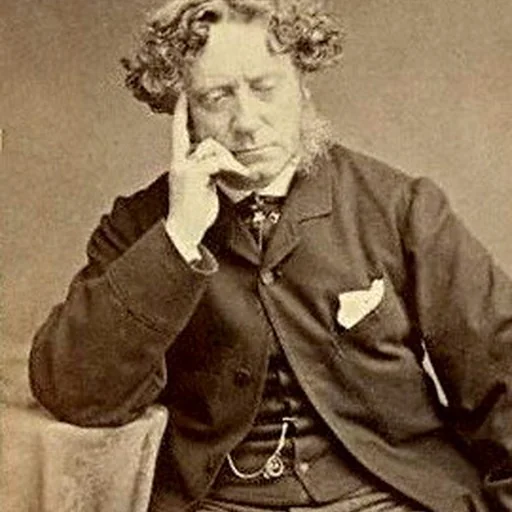
Sir Joseph Noel Paton (13 December 1821 – 26 December 1901) was a Scottish artist, illustrator and sculptor. He was also a poet and had an interest in, and knowledge of, Scottish folklore and Celtic legends.

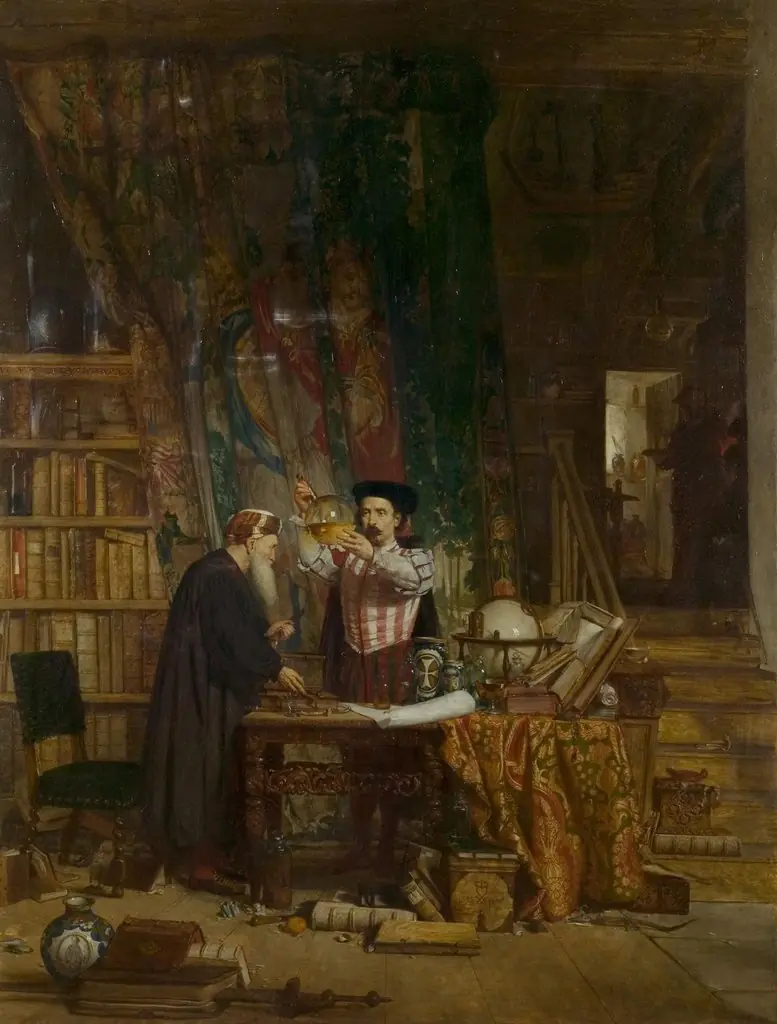 The Alchemist
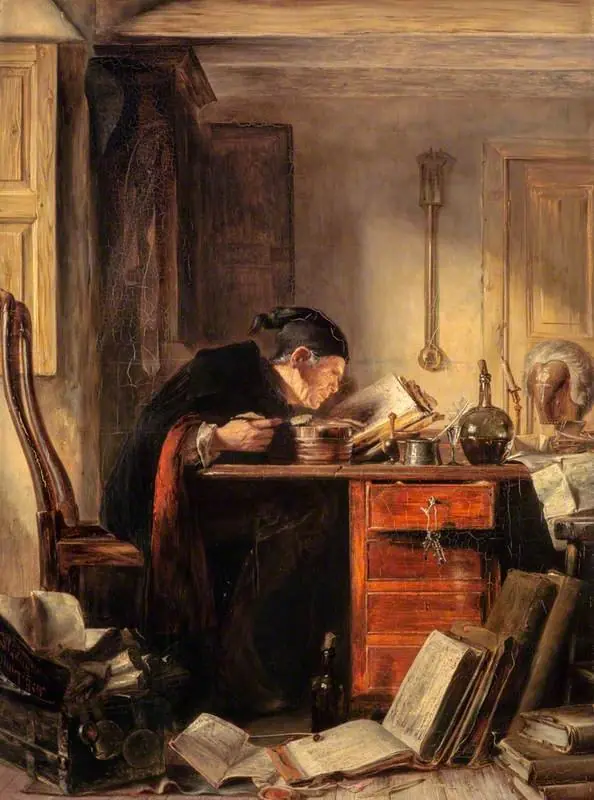 Bailie Duncan McWheeble at Breakfast (from Scott's 'Waverley')
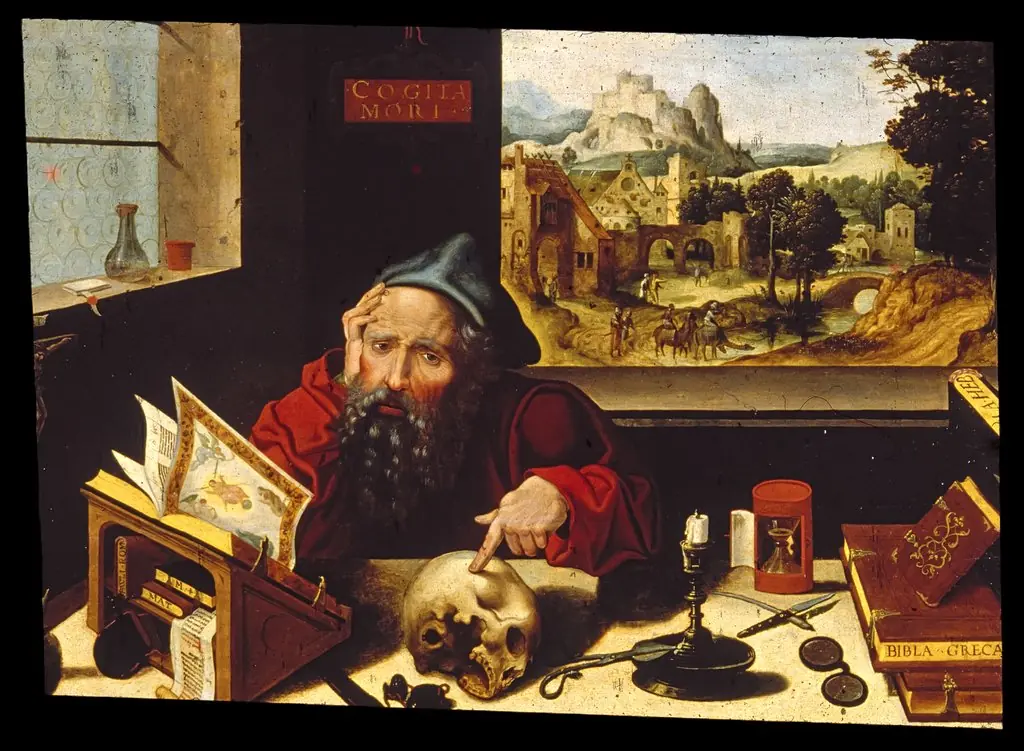 Saint Jerome in His Study
 De H. Hiëronymus in zijn studeervertrek
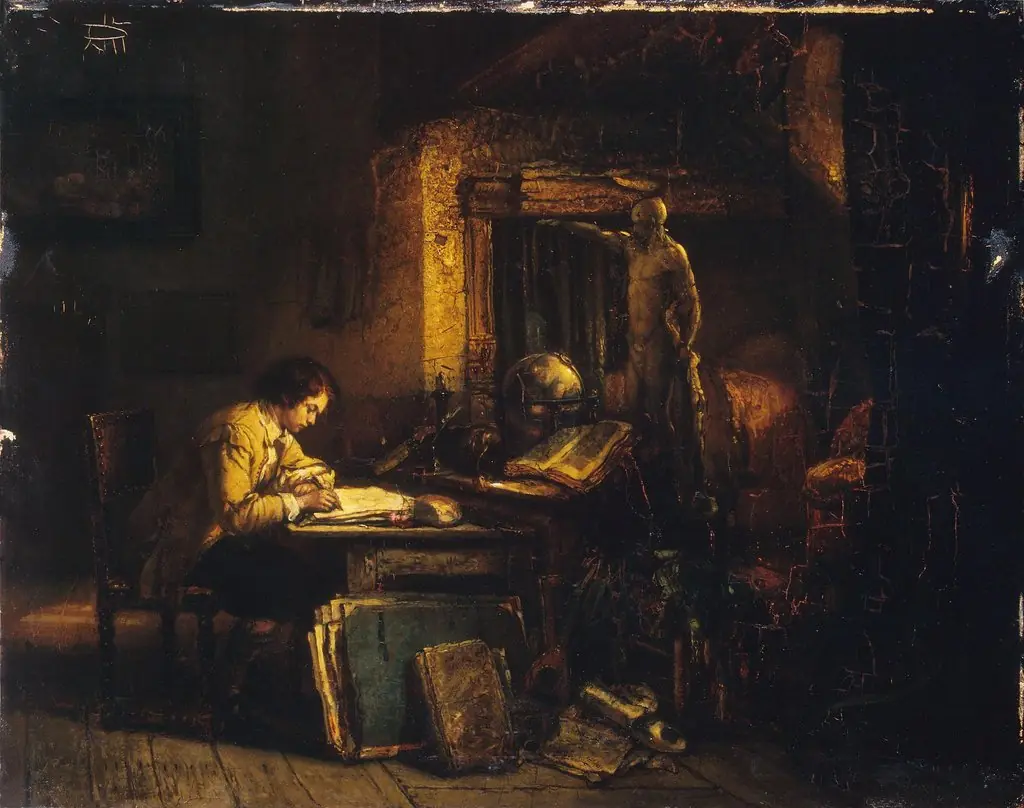 Artist in his Studio
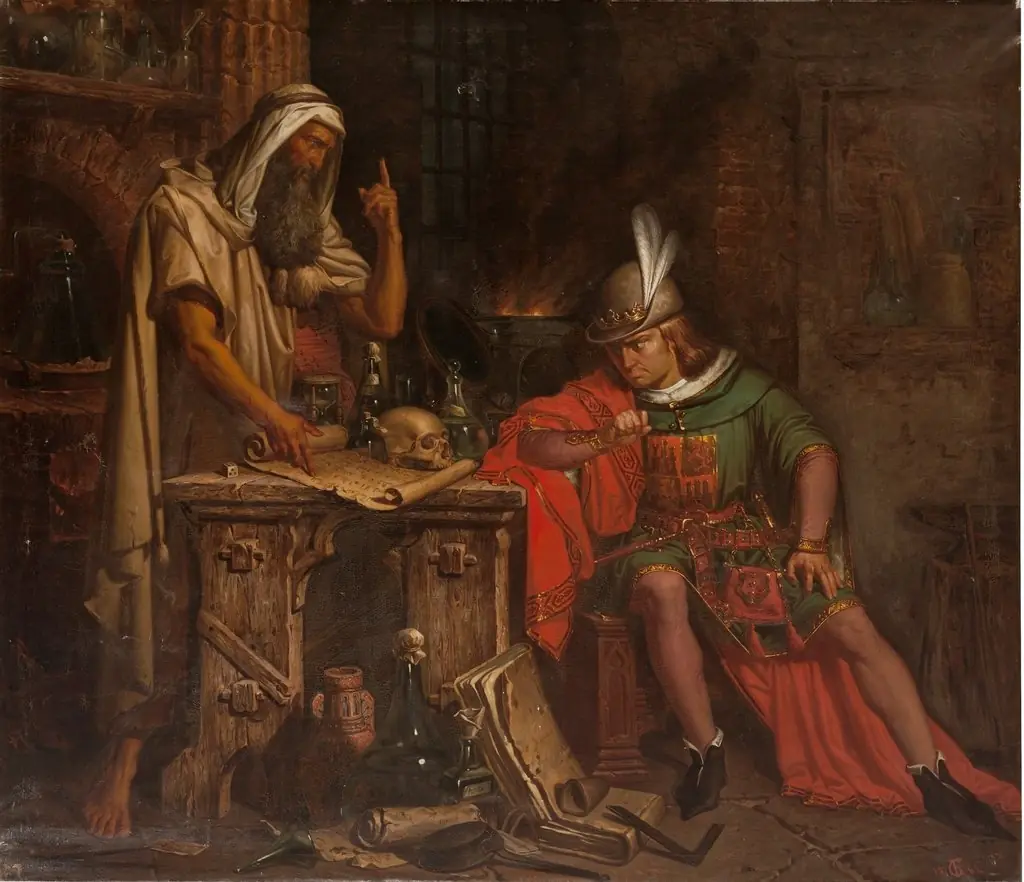 Don Pedro I de Castilla consulta su horóscopo a un moro sabio de Granada llamado Ben-Agatim
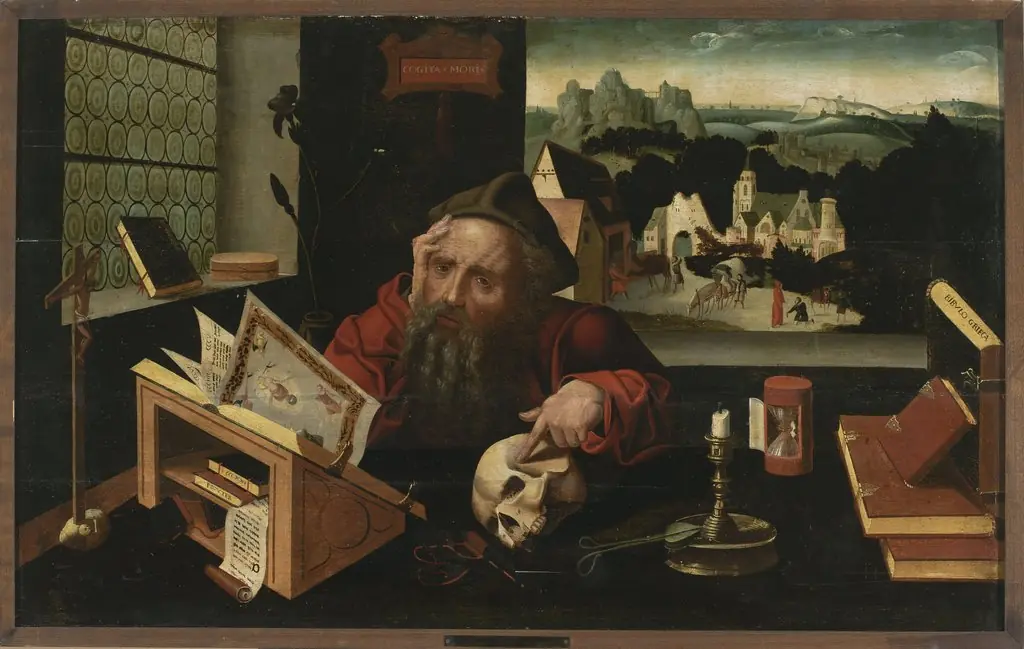 Saint Jerome meditating in his study
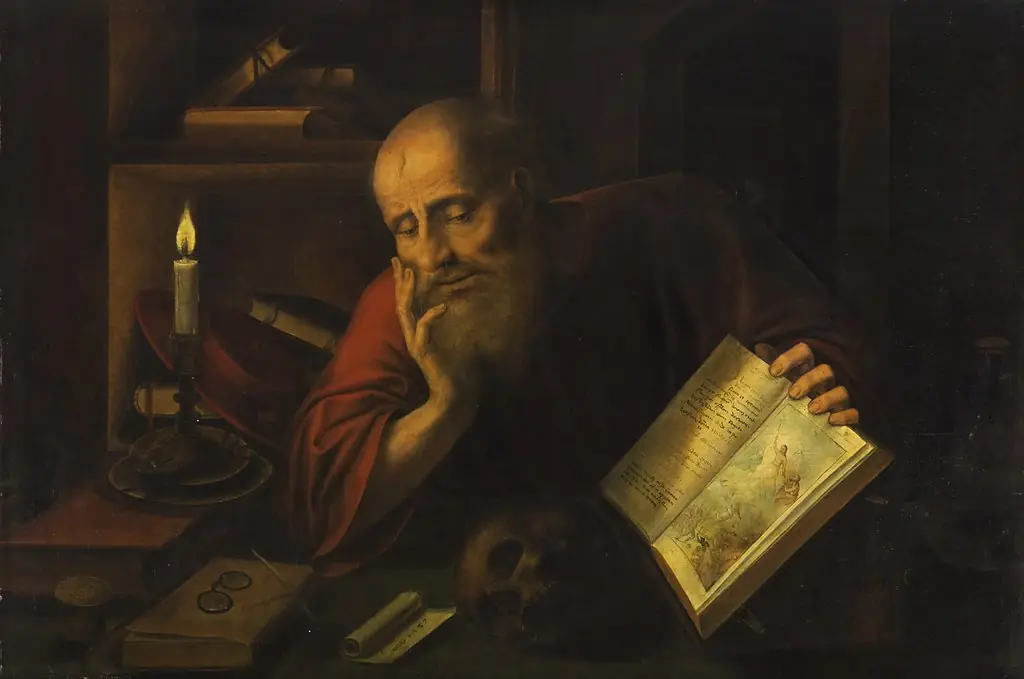 Saint Jerome
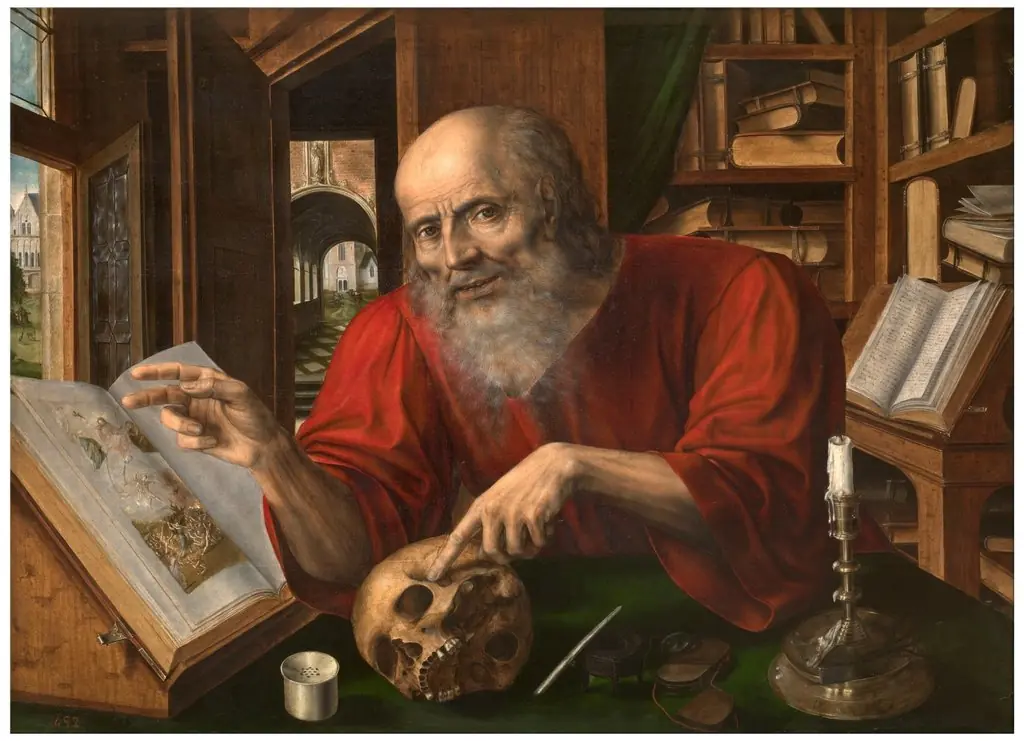 Saint Jerome
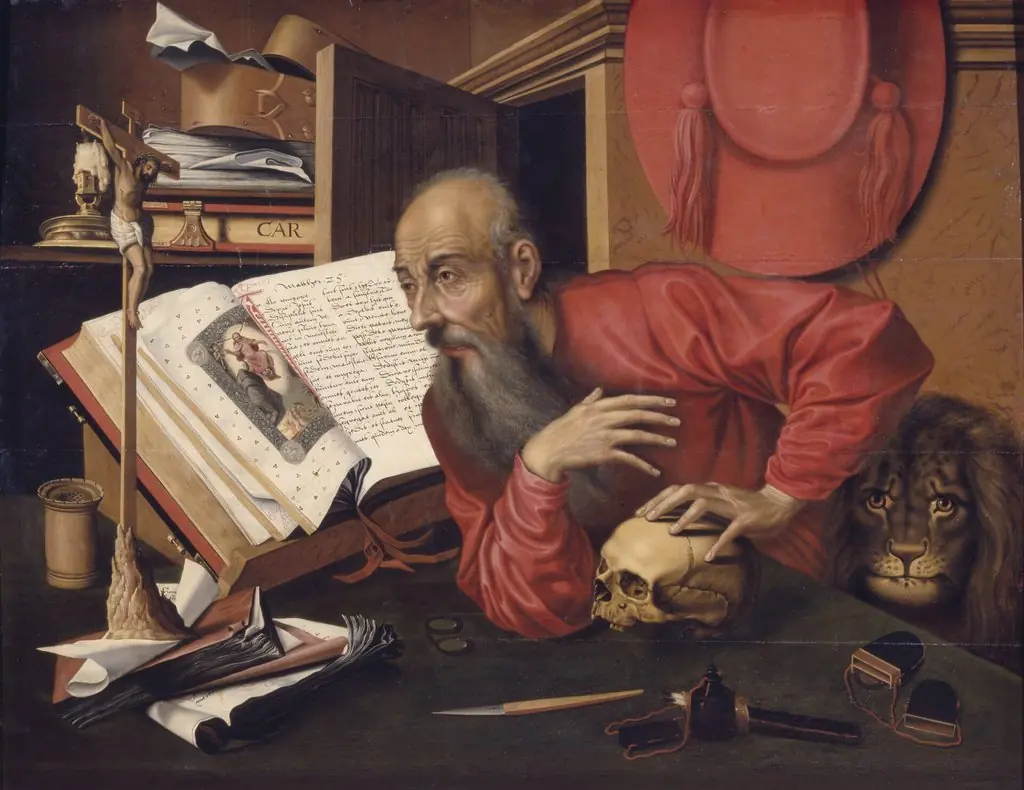 St Jerome
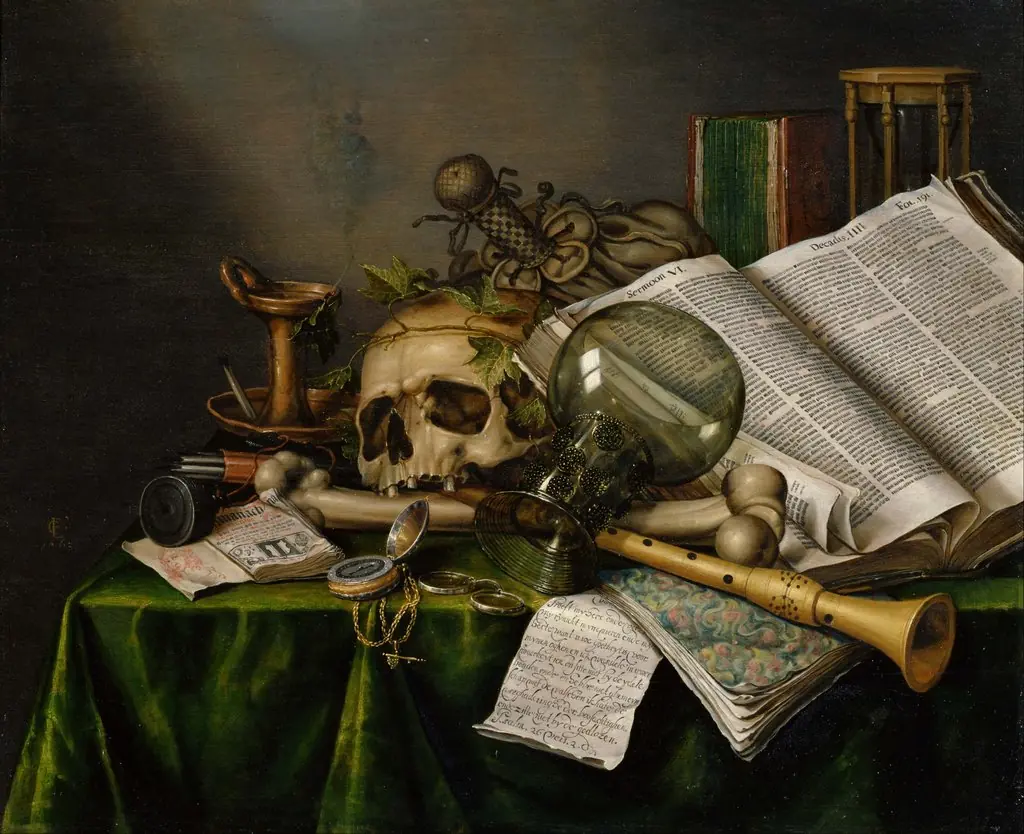 Vanitas, Still Life with Books and Manuscripts and a Skull
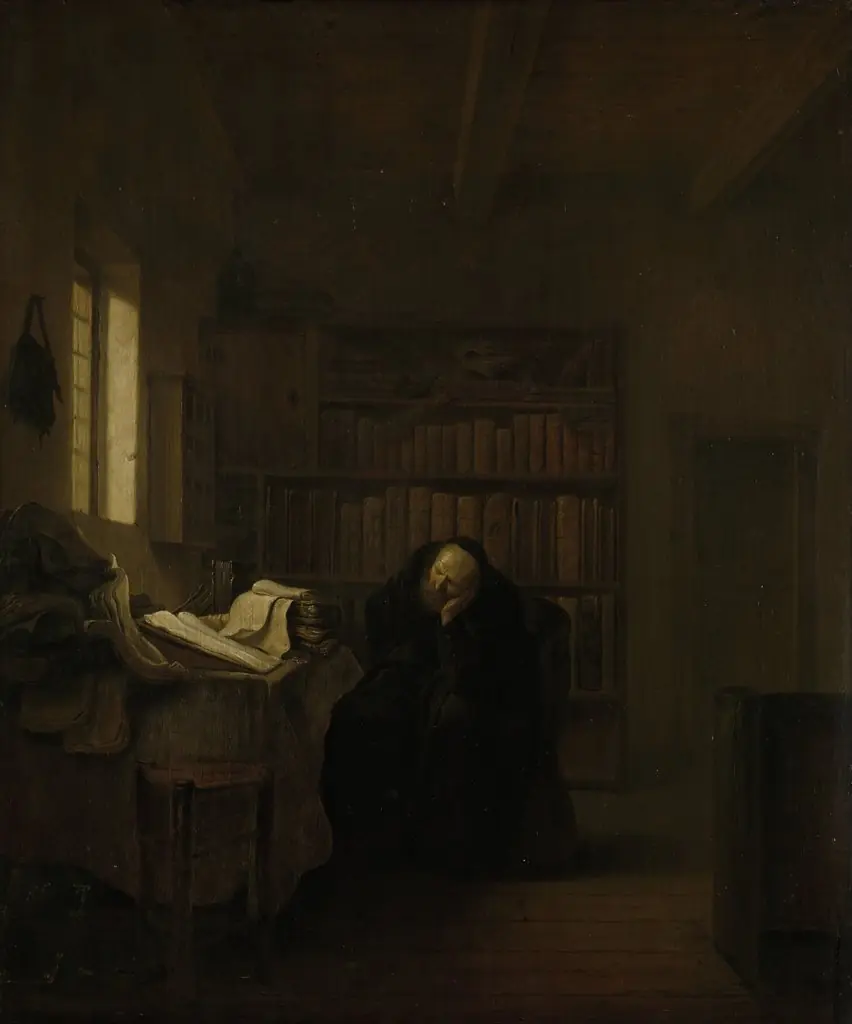 A scholar in his study